
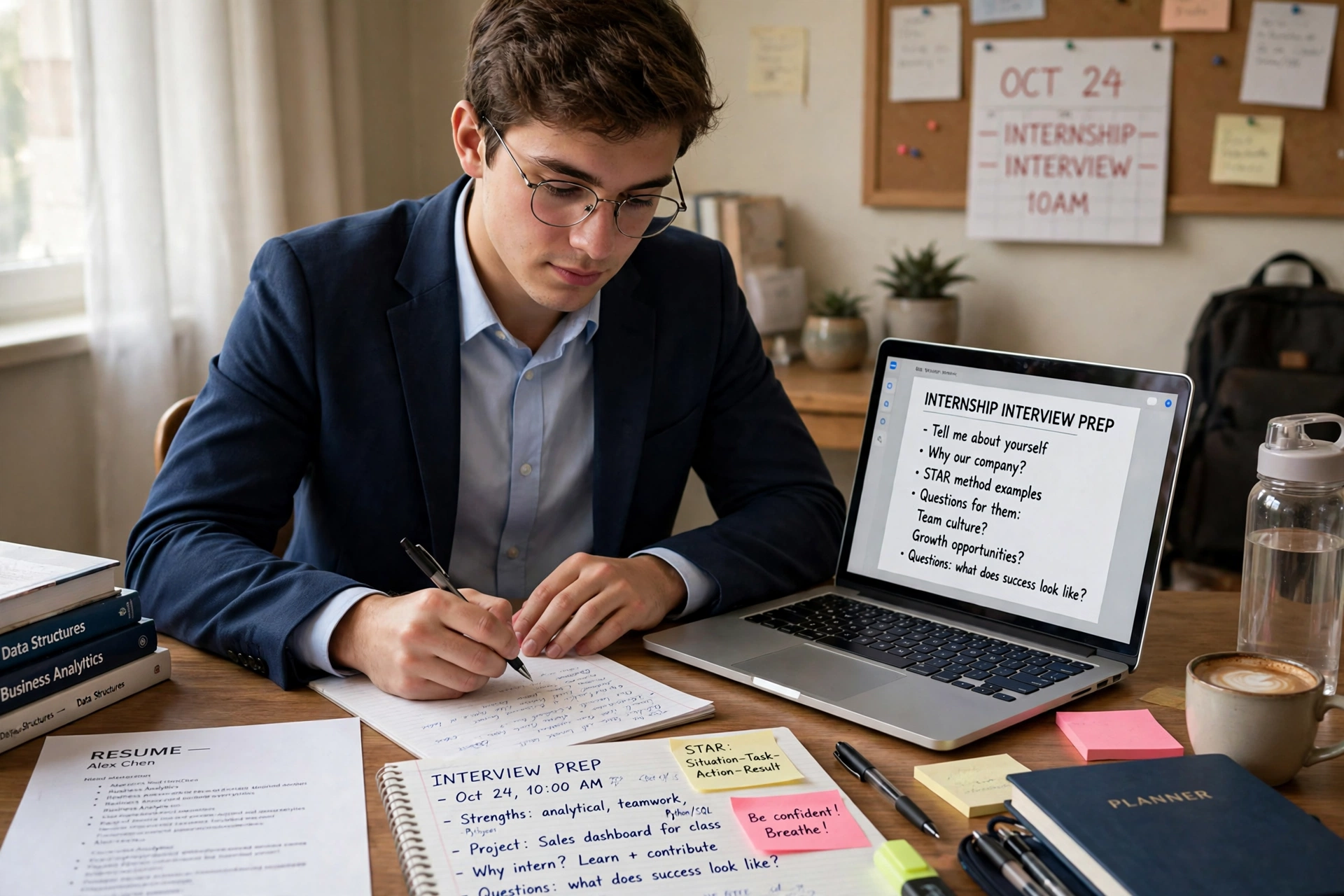
Good first internship interview advice is hard to find because most interview guides assume you already have experience to talk about. If this is your first interview ever, you do not have that — and that is fine. Internship interviews are different: the interviewer knows you are new, and they are judging your attitude, your preparation, and whether you actually want the role. This guide covers how to prepare, what to wear, what to say, and the mistakes that cost first-timers the offer.
- Internship interviewers expect no experience — they are looking for enthusiasm, preparation, and basic professionalism.
- Research the company for 30 minutes before the interview: what they do, who their customers are, and one recent news item.
- Prepare 3–4 stories from school, projects, volunteering, or part-time work — they are your “experience”.
- Dress one level smarter than the office: smart, clean, and comfortable beats stiff and overdressed.
- Always have questions ready for the interviewer — it is the easiest way to stand out.
Before the Interview: Prepare, Don’t Panic
Research the company (30 minutes is enough)
Visit the company’s website and read the “About” page, look at what they sell or do, and check their recent news or social media. You do not need to memorise anything — you need two or three facts you can mention naturally. “I saw you recently launched X” tells the interviewer you cared enough to look. Most candidates do not do even this much.
Know the role
Re-read the internship description and underline the skills it mentions. Then think of one example for each — from a class project, a club, a part-time job, or volunteering. A group project where you organised the team counts. A part-time job where you dealt with customers counts. School is experience, even if it does not feel like it.
Prepare your answers to the classics
You will almost certainly be asked some version of these: “Tell me about yourself”, “Why do you want this internship?”, “What are your strengths and weaknesses?”, and “Why should we hire you?”. Write short answers — two or three sentences each — and practise saying them out loud. Not word-for-word memorised (that sounds robotic), but familiar enough that you do not freeze.
For timing and what the process usually looks like, our guide to how long an internship interview takes explains the typical length and stages, so you know what to expect on the day.
What to Wear
Dress one level smarter than the people who work there. If the office is casual, wear smart trousers and a neat shirt or blouse. If it is formal, add a blazer. Clean shoes, tidy hair, minimal jewellery. The goal is to look like someone who took the interview seriously, not like someone in a costume. If you are unsure, our business casual guide has outfit ideas that work for most internship interviews.
For a video interview, the same rules apply from the waist up — and check your background. A tidy room, good light on your face, and a stable connection matter more than anything else. Test your camera and microphone the day before, not five minutes before.
During the Interview: How to Actually Do Well
- Arrive early: Ten minutes early is perfect. Twenty minutes early is awkward — wait nearby instead.
- Be warm from the first second: Smile, shake hands, say the interviewer’s name when you greet them. First impressions form fast.
- Listen before you answer: Take a breath. A short pause before answering looks thoughtful, not slow.
- Use examples, not claims: “I’m a team player” means nothing. “I organised a five-person project and we delivered it a week early” means everything.
- Be honest about what you do not know: “I haven’t used that tool yet, but I’ve used something similar and I learn fast” beats a bluff every time. Interviewers can tell.
- Show enthusiasm: Internships are for learning, and interviewers hire the candidate who actually wants to be there. Say so, plainly.
Questions to Ask the Interviewer
When they ask “Do you have any questions for us?”, the answer is always yes. Good ones for a first internship:
- What would a typical day look like for this intern?
- What skills do your best interns usually leave with?
- How is the intern supported — is there a mentor or a regular check-in?
- What does success look like in this role after three months?
- Is there anything about my application you would like me to explain more?
That last one is bold, and it works: it gives you a chance to fix any doubt they have, right there in the room. If you are exploring careers more broadly, our jobs for teens and jobs without a degree guides are useful next reads.
Mistakes First-Timers Make
- Not preparing at all: The single biggest reason first-timers fail. Thirty minutes of prep puts you ahead of half the candidates.
- Rambling: Keep answers short. If you have said the important thing, stop.
- Badmouthing anyone: Never criticise a teacher, a previous employer, or another company. It always reflects on you.
- No questions at the end: Saying “no, I’m fine” signals you are not interested. Always ask something.
- Forgetting to follow up: A short thank-you email the same day is polite, professional, and rare enough to be remembered.
Frequently Asked Questions
What should I say in my first internship interview?
Focus on your enthusiasm, what you have learned so far (school, projects, part-time work), and why this specific internship interests you. Use examples, not general claims.
How should I dress for an internship interview?
One level smarter than the office dress code: smart trousers and a neat top, plus a blazer for formal workplaces. Clean, tidy, and comfortable.
How long does an internship interview usually take?
Most run 20–45 minutes, often with one or two interviewers. Some companies add a short task or a second round — our timing guide explains the full process.
What if I have no experience at all?
That is normal for an internship. Talk about school projects, volunteering, clubs, and part-time work — interviewers count those as experience, and attitude matters more than a CV at this stage.
Should I send a thank-you email after the interview?
Yes. A short email the same day, thanking the interviewer and restating your interest, is professional and memorable. Keep it to three or four sentences.
Your first internship interview feels like a big deal because it is the first one. But the interviewer is not expecting a polished professional — they are expecting a keen beginner who prepared, showed up on time, and actually wants the job. Do the thirty minutes of research, prepare your three stories, dress smart, and ask a good question at the end. That is genuinely most of it.
2 thoughts on “First Internship Interview Advice: How to Prepare”