
How to Clean Windows Without Streaks
Streak-free windows are not about scrubbing harder. They are about removing dirt completely, leaving almost no cleaning solution behind, and letting the glass dry evenly. Most streaks are dried soap, minerals from tap water, lint from the wrong cloth, or residue left when a squeegee skips or leaves a wet edge. Fix those problems and the glass practically cleans itself.
This guide gives you the professional squeegee method step by step, three solution recipes, the right tools, and timing tricks that prevent streaks. It also covers the places people forget: the outside of the glass and the screens, tracks, and frames that send dirt back onto a clean pane.
Key Takeaways
- Use very little soap: one teaspoon of dish soap per gallon of water is plenty.
- A sharp, clean squeegee rubber and a dry edge cloth prevent most streaks.
- Clean in shade or on a cool, cloudy day so solution does not dry on the glass.
- Wipe edges and corners last, and never let dirty water run over clean glass.
- Clean screens and tracks first, or their dust will streak the finished pane.
Why Windows Streak in the First Place
A streak is usually a thin film left after water evaporates. That film can be soap, hard-water minerals, grease, old cleaner residue, or fibres from paper towels and worn cloths. Too much product makes the film thicker and more visible. Direct sun makes water dry before you can remove it, so the film sets in place.
Dirty tools cause a second kind of streak. A nicked blade leaves a line exactly where the nick is, every pass. A dusty cloth drags dust across the pane, and grey, gritty bucket water redistributes grime. Fresh solution, clean tools, and a checked blade solve half the problem.
Technique causes the rest. Wiping in circles, going back over a half-dry pane, or leaving a wet border around the frame creates uneven drying. Glass dries from the edges inward, so a puddle at the frame creeps back and dries as a line. The method below avoids that with controlled, overlapping passes and dry edges.
The Tools You Actually Need
You do not need a cart full of gadgets. For most homes, this short kit is enough, and the squeegee rubber matters most: a cheap, wobbly blade is the most common reason a first attempt disappoints.
- Squeegee, 10 or 12 inches: wide enough for standard windows, narrow enough to control, plus a spare rubber blade.
- Washer sleeve: a T-bar with a microfiber sleeve that holds solution and loosens dirt without scratching.
- Bucket: wide enough for the washer and squeegee; change the water when it turns grey.
- Microfiber cloths, at least four: flat-weave glass cloths for detailing, plus thicker ones for frames and sills.
- Dry detailing towel: a lint-free waffle-weave towel for edges, corners, and final touch-ups.
- Scraper: a fresh razor blade for paint specks and stickers only, always on wet glass, never on dry or tinted glass.
- Extension pole and old toothbrush: the pole for high panes, the brush and a vacuum for tracks and corners.
Skip paper towels for the final pass: they shed lint that reads as streaks from across the room. Wash microfiber separately, without fabric softener or dryer sheets, and air-dry it or tumble-dry on low.
Three Cleaning Solutions That Work
The best window solution is deliberately weak. More soap does not mean more cleaning power; it means more film to remove. Start with the basic recipe and only use a stronger mix for greasy kitchen windows or panes near a road.
1. The Everyday Recipe
Mix one gallon of cool or lukewarm water with one teaspoon of plain, unscented dish soap. Stir gently rather than whipping it into foam. You want just enough slip for the squeegee to glide, not a bucket of suds. If the solution feels slippery between your fingers, it is ready. It handles dust, pollen, fingerprints, and light grime.
2. The Vinegar Mix for Light Mineral Film
Combine one part white vinegar with one part distilled water, plus one drop of dish soap per cup. Vinegar dissolves light mineral deposits and haze from previous cleaners. Use it as a pre-wash on spotted panes, or as your main solution if tap water is hard. Keep it off stone sills, marble, and granite.
3. The Distilled-Water Finish for Hard-Water Areas
If tap water spots glasses in the dishwasher, it will spot windows too. For problem panes, finish with distilled water and a tiny drop of soap. It removes the mineral variable entirely, which matters most on large, sun-facing glass.
Avoid ammonia-based cleaner on tinted windows, abrasive powders, scouring pads, and sprays containing oils or waxes. On glass, that shine is a streak. If a window has old cleaner buildup, wash it twice with the everyday recipe.
The Squeegee Method, Step by Step
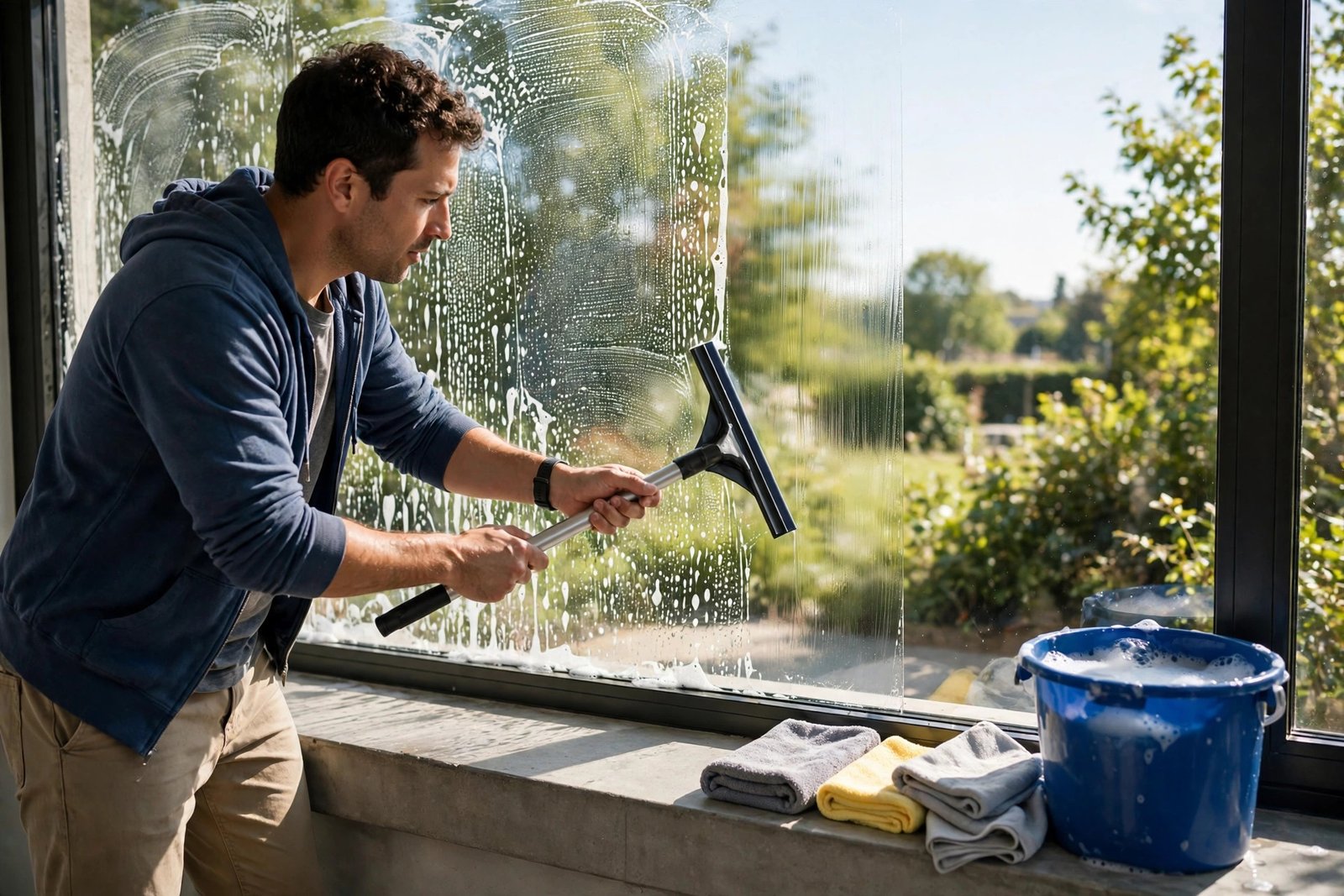
Work one window at a time, from top to bottom, and keep the glass wet until the squeegee pass. The moment a section starts to dry, you are polishing residue into place rather than cleaning it.
- Prep. Clear the sill, vacuum the track, and brush dust off the frame.
- Scrub. Dip the washer in solution, squeeze out excess, and scrub the pane in overlapping horizontal strokes, especially at the edges.
- Dry the top edge. Wipe a dry strip about one inch wide along the top, so the squeegee does not drag dirty water down.
- First pull. Place the squeegee at the top-left corner, blade flat, and pull straight down in one smooth stroke at about 30 degrees.
- Wipe the blade. After every stroke, wipe the rubber with a dry cloth; a wet or dirty blade creates a new line.
- Overlap. Start each next stroke about one inch over the previous dry edge, working left to right.
- Finish the edges. Wipe the bottom, sides, and corners with a dry towel, using one light touch, not rubbing.
- Check at an angle. Look at the glass from the side, against the light. Touch up only any visible spot with a barely damp cloth, then dry it.
If you see a line after a pass, check the blade first: a nick, grit, or twisted rubber explains most mystery lines. Professionals also fan the blade without lifting it, but straight pulls are the better starting point.
No Squeegee? The Two-Cloth Method
For small panes, dampen one flat-weave microfiber cloth in the everyday solution, wring it until barely damp, and wipe in straight, overlapping lines. Immediately follow with a second, completely dry glass cloth, buffing the same way. The first lifts dirt; the second removes moisture before it dries into a film. Never buff with a cloth once it becomes damp.
When to Clean: Sun, Temperature, and Season
Clean on a cloudy day, in the early morning, or in the late afternoon when the glass is cool to the touch. Direct sun heats the pane, evaporates the solution in seconds, and bakes minerals and soap onto the surface before the squeegee can remove them. If you must clean in sun, work in small sections, keep the glass generously wet, and squeegee each section immediately.
In cold weather, solution can ice and the blade stiffens and skips. Add about one tablespoon of rubbing alcohol per gallon, or wait for a milder day. In hot weather, work in the house’s shade, moving as it moves. Clean in spring after pollen peaks, and again in autumn. After a dusty storm or nearby construction, rinse first: scrubbing dry grit causes fine scratches that look permanently streaky.
Inside Versus Outside: Different Dirt, Different Approach
Inside glass collects fingerprints, cooking grease, pet nose prints, and a thin, even layer of dust. Outside glass collects pollen, road film, bird droppings, sprinkler minerals, and weather stains that are heavier at the bottom of the pane. Treating both sides the same way wastes effort and leaves the dirtier side under-cleaned.
Start inside, where work is lighter. Protect the sill and floor with a towel, and wring the washer well so drips do not run down the wall. Then move outside, where you can be generous with water. Rinse heavily soiled panes first, scrub the bottom edge twice, and change dark bucket water. For upper-storey windows, use an extension pole and the same straight-pull technique.
Clean inside panes vertically and outside panes horizontally, or vice versa. When a streak appears, its direction tells you instantly which side it is on.
Hard-Water Spots: Removal Without Damage
Hard-water spots are mineral deposits left when sprinkler water, rain mixed with dust, or tap water dries on glass. Fresh spots wipe away with the vinegar mix and a little dwell time. Older, etched spots feel rough to the touch and need more patience. Start gently and escalate slowly; aggressive scrubbing damages glass faster than minerals do.
For fresh spots, soak a cloth in equal parts white vinegar and distilled water, lay it on the spot for five minutes, then wipe and squeegee. For stubborn spots, apply a baking soda and water paste with a soft cloth in small circles, then rinse thoroughly. Test paste on a corner first, and never use it on coated, tinted, or low-emissivity glass without checking the manufacturer’s guidance. If a spot remains after two gentle treatments, it may be etched; professional polishing is safer than a stronger abrasive.
Prevention is easier than removal. Redirect sprinklers away from glass, wipe panes after watering the garden, and dry glass near a pool or hose after splashes. A summer of daily sprinkler spray can create spots that take an hour to remove; a weekly wipe takes two minutes.
Do Not Forget Screens, Tracks, and Frames
A clean pane behind a dusty screen looks dirty within days, because air movement pulls screen dust onto the glass. Remove screens, lay them flat, brush both sides, wash with the everyday solution and a soft brush, rinse, and dry fully before reinstalling. Replace torn or sagging mesh, which traps more dust.
Vacuum tracks, scrub them with a toothbrush and soapy water, and wipe them dry before closing the window. Dirty tracks also affect sealing and sliding, so this is maintenance as well as cleaning. Wipe frames and sills with a damp cloth and dry them immediately, especially painted wood, where standing water causes peeling.
The same gentle-first logic applies around the home, as in our guide to cleaning hardwood floors without damaging them. The same restraint helps other surfaces too, as shown in our guides to cleaning grout effectively and cleaning stainless appliances without streaks.
When the bucket turns grey, change it. Dirty water creates a dull, filmed finish.
Run a fingertip along the rubber before you start. Replace it at the first nick.
Final edge wipes must be dry. A damp cloth smears the border instead of clearing it.
Clean drips fall onto dirty glass, never onto finished glass.
One teaspoon of soap per gallon is enough. Extra soap leaves more film.
Check each pane against the light before moving on. Touch-ups take seconds now.
Frequently Asked Questions
Why do my windows still streak after I clean them?
Usually too much soap, a nicked blade, a lint-shedding cloth, or direct sun. Use one teaspoon of soap per gallon, wipe the blade after every pass, switch to flat-weave microfiber, and clean in shade. If streaks persist, wash twice: the first removes old cleaner buildup.
Is vinegar or dish soap better for cleaning windows?
Dish soap is better for everyday cleaning: it lifts grease and dirt and gives the squeegee slip. Vinegar is better as a targeted treatment for mineral film and old cleaner residue on spotted or hazy panes.
Can I clean windows in direct sunlight?
You can, but streaks are harder to avoid: sun dries solution before you can squeegee it off. If you must, work in small sections, keep the glass very wet, and squeegee immediately.
How do I remove hard-water spots from windows?
Soak the spots with equal parts white vinegar and distilled water for five minutes, then wipe and squeegee. For stubborn spots, use a gentle baking soda paste with a soft cloth and rinse well. Avoid abrasives on coated or tinted glass, and redirect sprinklers so new spots do not form.
How often should windows be cleaned?
Most homes benefit from a full clean twice a year, in spring and autumn, with spot-cleaning for fingerprints, pet marks, and bird droppings in between. Homes near busy roads, the coast, or construction may need quarterly cleaning.
Start With One Window
Pick one sun-facing window, mix the everyday solution, and follow the straight-pull steps above. Check it at an angle, detail the edges dry, and compare it with the window next to it.
Once the technique feels natural, work room by room, shaded side first, screens and tracks included. Clean glass lets in more light, sharpens the view, and makes every other surface look cleaner too.