
Knit Vest Outfit Ideas: How to Layer a Knit Vest
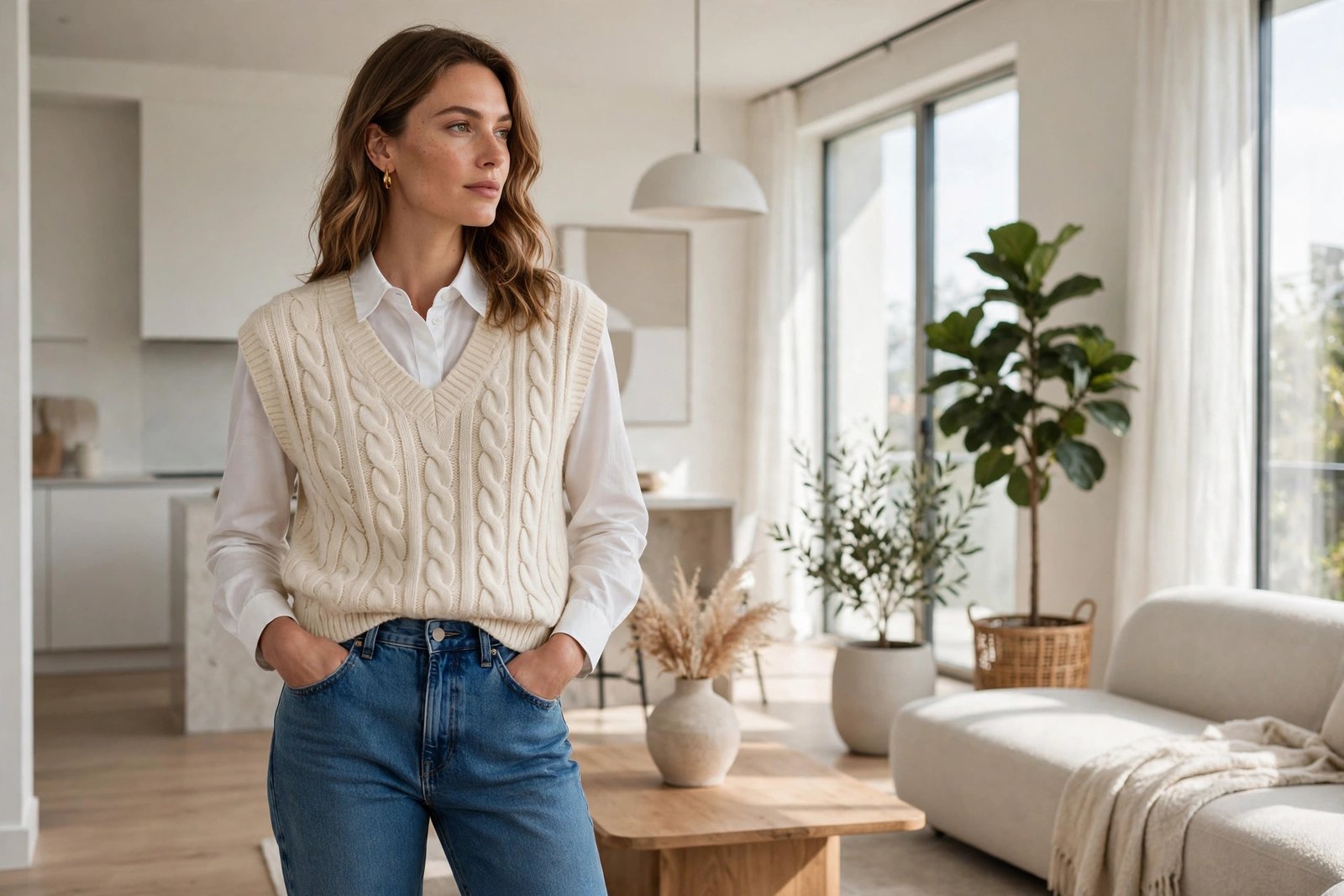
The knit vest — also called a sweater vest or tank top in knitwear terms — has gone from school-uniform staple to one of the most useful layering pieces in a modern wardrobe. Worn over a shirt or blouse, it adds warmth without the bulk of a full sweater, structure without the formality of a blazer, and instant visual interest to outfits that would otherwise be just a shirt and trousers. It is, in short, the easiest way to look like you thought about your outfit when you only added one piece.
This is a general styling guide, not a trend report tied to any one person: the knit vest works because of its shape and versatility, and this guide covers the fits, colours, fabrics and outfit formulas that make it work for work, for weekends, and for the tricky in-between weather of spring and autumn.
Key Takeaways
- A knit vest adds warmth and polish without sleeves — perfect for layering and for offices that run warm.
- The classic formula is simple: a crisp shirt or blouse underneath, a knit vest on top, trousers or a skirt below.
- Fit is everything: the vest should skim your body, not hang loose or pull tight across the bust or stomach.
- Start with neutrals — cream, grey, camel, navy — then add one patterned or coloured vest for personality.
- For work, keep it tailored; for weekends, go chunkier, looser and more playful with denim and trainers.
Why the Knit Vest Works So Well
Most layering pieces ask you to choose between warmth and mobility. A full sweater keeps you warm but hides your shirt and adds bulk under a coat. A blazer looks polished but can feel stiff and warm indoors. A knit vest splits the difference: it warms your core, leaves your arms free, shows off the shirt underneath, and slips easily under a coat, trench or blazer when you head outside.
Choosing Your Knit Vest: Fit, Fabric and Neckline
Fit
Look for a vest that follows your body without clinging. The shoulder seams should sit on your actual shoulders, the armholes should be high enough that your shirt does not bunch out of them, and the hem should end at or just below your waistband — long enough to tuck slightly or to sit neatly over high-waisted trousers. An oversized vest can work as a fashion statement, but only if it is deliberately oversized in a chunky knit; a fine-gauge vest that is simply too big just looks borrowed.
Fabric
Fine-gauge merino or cotton vests are the most versatile: smooth, smart and easy to layer under other pieces. Chunky cable-knit or ribbed vests are warmer and more casual, and they look best with simple bottoms so the texture can be the star. Cashmere blends feel luxurious and drape beautifully but need gentler washing. For a first vest, a mid-weight cotton or merino blend is the safest, hardest-working choice.
Neckline
V-necks are the classic choice because they frame a shirt collar and a necklace beautifully, and they lengthen the neck visually. Crew necks feel more modern and casual, and they work well over a T-shirt or a turtleneck. A collared vest, with its own little collar, can even replace the shirt underneath on mild days. If you wear a lot of collared shirts, start with a V-neck; if you prefer T-shirts and turtlenecks, a crew neck will get more wear.
The Colour Palette: Start Neutral, Add One Statement
Pattern deserves a word of caution. Argyle is the most famous knit-vest pattern, and it is charming in small doses, but a loud argyle vest plus a patterned shirt plus patterned trousers is visual chaos. The rule that never fails: if the vest is patterned, everything else should be plain. If the vest is plain, the shirt underneath can carry a stripe, a check or a small print. The same balance applies to other layered outfits — for example, the outerwear logic in our mens field jacket outfit ideas also works on contrast: one textured hero piece, calm layers around it.
4 Knit Vest Outfit Ideas
1. The Weekend Denim Look
Chunky cable-knit vest over a plain white T-shirt or a Breton stripe top, relaxed jeans, white trainers. The vest adds just enough interest that a simple jeans-and-T-shirt outfit looks styled rather than thrown on. A crossbody bag and sunglasses finish it. This is also a great formula for layering under a jacket on cooler days — the same idea behind a waxed jacket outfit, where one rugged outer layer does the heavy lifting over simple clothes.
2. The Vest Over a Dress
A sleeveless or short-sleeve dress with a cropped or waist-length knit vest worn over it turns a summer dress into an autumn outfit. Choose a vest in a contrasting colour — a rust vest over a cream dress, a navy vest over a floral dress — and keep the hem of the vest above the dress’s waistline so the proportions stay clear. Add tights and boots, and you have extended a dress’s season by months.
3. The Preppy Skirt Formula
Collared shirt, argyle or plain knit vest, pleated midi skirt, Mary Janes or loafers, knee-high socks in cold weather. This is the most traditionally preppy way to wear a vest, and it works beautifully for brunch, campus events and smart-casual days. Keep the skirt’s colour in the same family as the vest — navy and grey, camel and cream — for a cohesive look.
4. The Turtleneck Layer
For real cold weather, wear a fitted turtleneck under a chunky knit vest, then add a coat on top. The turtleneck covers your arms and neck, the vest adds core warmth and texture, and the coat seals the whole thing. It is warmer than a single thick sweater and far more flexible, because you can remove layers as rooms warm up. Tailoring fans will recognise the same layering discipline as a corduroy blazer outfit: texture on texture, but with one calm layer to keep it grounded.
Styling Rules That Keep a Knit Vest Modern
The shirt collar is half the look. Pop it slightly over the vest’s neckline, or let a turtleneck peek above a crew neck — never hide the layer underneath completely.
Patterned vest, plain shirt. Patterned shirt, plain vest. Both patterned is the fastest way to make a classic look feel costume-like.
Tuck the shirt in, or choose a vest that ends at the waistband. A shirt billowing out below a short vest breaks the outfit in half.
Chunky vest, slim bottoms. Fine vest, wider trousers or a fuller skirt. Matching chunky with chunky swallows your shape.
Roll shirt sleeves to just below the elbow for a relaxed look, or keep them full-length and neat for work. Half-rolled, bunching sleeves undo the vest’s polish.
Once you own a neutral vest, a coloured one — burgundy, olive, dusty pink — will get just as much wear and makes plain outfits feel new again.
3 Common Knit Vest Mistakes
Wearing a vest that is too tight. A vest that pulls across the stomach or gaps at the buttons (on button-front styles) is too small, full stop. Knit stretches, so a tight vest will only get looser and baggier with wear — start with a fit that skims comfortably.
Layering it under a tight jacket. A chunky vest under a slim blazer creates bunching at the arms and waist. If you want to add a jacket, choose a fine-gauge vest, or wear the jacket open over the vest rather than buttoned.
Treating it like a full sweater. A vest is not meant to be your only warm layer in deep winter, and wearing it alone over a thin shirt on a freezing day will leave you cold. It is a layering piece — pair it with a coat, or with a turtleneck underneath, when the temperature really drops. The romantic layering spirit is similar to our poetcore outfit ideas for men, where soft layers build warmth gradually rather than relying on one heavy piece.
Frequently Asked Questions
What do you wear under a knit vest?
A collared shirt is the classic choice, but T-shirts, turtlenecks, blouses and even thin long-sleeve tops all work. The layer underneath should be slimmer than the vest so it does not bunch, and its collar or neckline should be visible — that contrast is part of the look.
Are sweater vests in style?
Yes — sweater vests have moved from a passing trend to a wardrobe staple. The modern versions are better cut, softer and available in far more colours and textures than the boxy styles of the past, which is why they keep appearing in both workwear and weekend wardrobes.
Can I wear a knit vest to work?
Absolutely, in most offices. A fine-gauge vest in a neutral colour over a collared shirt with tailored trousers or a skirt reads as polished and professional. Save chunky, oversized or brightly patterned vests for casual Fridays or weekends.
How do I stop a knit vest from looking like a school uniform?
Avoid the full uniform combination — V-neck vest, white shirt, grey pleated skirt and knee socks all together. Break it up with modern pieces: jeans instead of a pleated skirt, trainers instead of school shoes, or a coloured vest instead of navy, and the look becomes contemporary immediately.
What is the difference between a sweater vest and a knit vest?
They are the same thing — “sweater vest” is the more common American term, “knit vest” and “tank top” are used elsewhere, and “slipover” is the older British name. All describe a sleeveless knitted top designed to be layered over a shirt or blouse.
Bringing It All Together
The knit vest earns its place because it solves a real wardrobe problem: how to look polished and stay comfortable when the weather, the office heating and your day all disagree. Start with one fine-gauge neutral vest and a crisp shirt you already own, wear it to work, then try it at the weekend over a T-shirt with jeans. Once you see how many outfits one vest unlocks, you will wonder why it ever left your wardrobe.