
Men’s Wool Overcoat Outfit Ideas: Classic Coats for Cold Weather
When the temperature truly drops, most jackets stop being enough. That is when the wool overcoat earns its place — the classic, knee-length, heavyweight coat that has dressed men for cold winters for over a century. Unlike a trench, which is built for rain, or a puffer, which is built for pure warmth, an overcoat is built for both warmth and presence: it keeps you warm and it makes everything underneath look more considered.
This is a garment guide to that classic coat. You will learn how to choose length, colour, and single versus double-breasted styles, how to wear an overcoat from the office to the weekend, and how to buy and care for a coat that should last a decade or more.
Key Takeaways
- A wool overcoat is a cold-weather investment: buy quality wool, a classic length, and a neutral colour first.
- Knee length is the most versatile; below-knee is most formal, above-knee is most casual.
- Single-breasted suits most men and layers easily; double-breasted is warmer and more formal but less forgiving on fit.
- Camel, charcoal, navy, and grey cover every occasion; black is sharpest but least versatile in daylight.
- Brush, hang, and dry-clean sparingly — good care doubles the life of a wool coat.
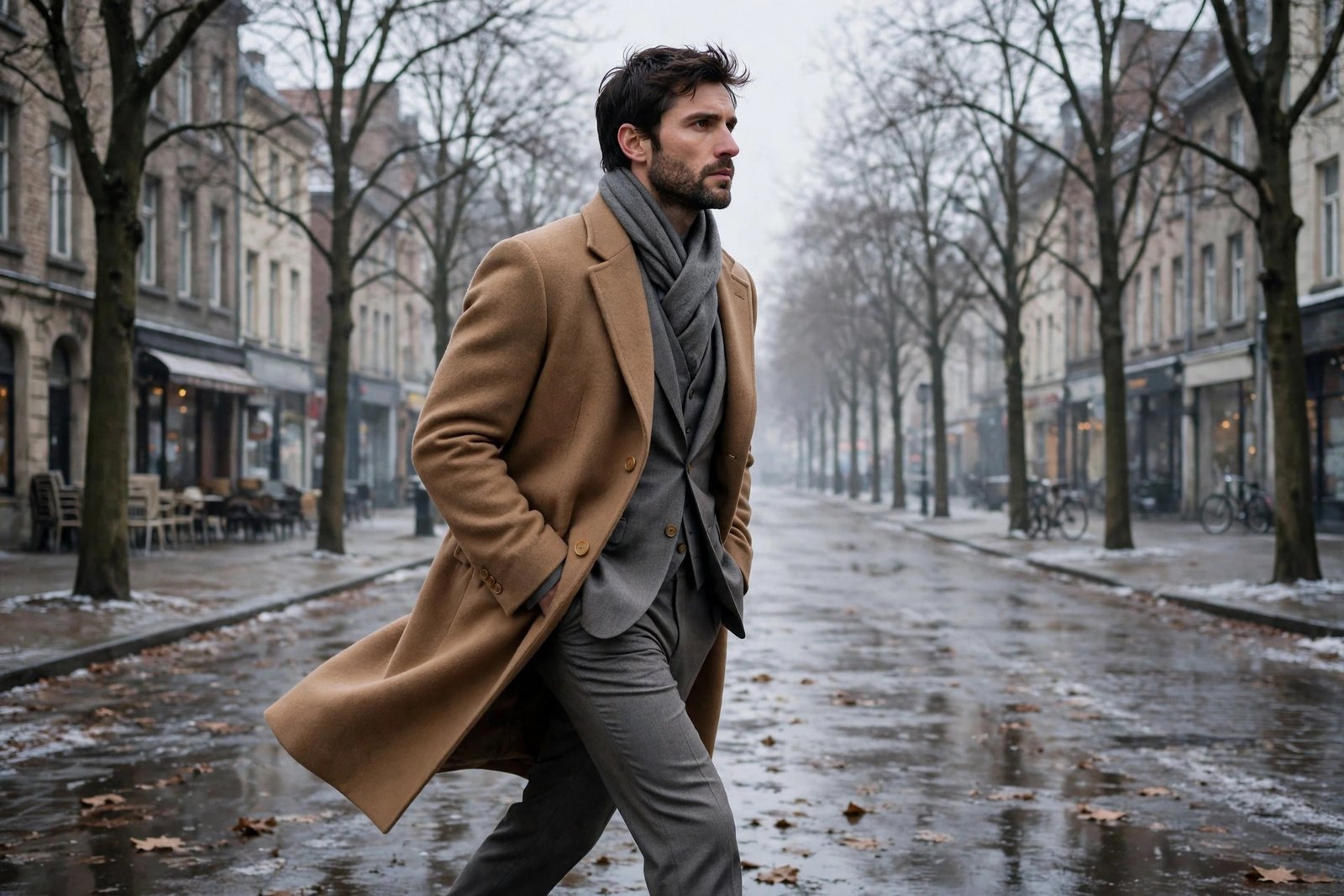
What Is a Wool Overcoat?
An overcoat is a long, heavy coat designed to be worn over a suit or jacket — hence the name. Traditional overcoats are made from wool or a wool-cashmere blend, cut to the knee or below, with a structured shoulder and a collar that can be turned up against the wind. The weight is the point: a good overcoat feels substantial when you put it on, drapes in a clean line, and blocks wind in a way no light jacket can.
Single vs Double-Breasted
Single-breasted overcoats have one row of buttons and a narrower overlap at the front. They are easier to wear open, easier to layer over a suit, and more forgiving if your weight fluctuates a little. For most men buying their first overcoat, single-breasted is the right choice — it is versatile, it never looks wrong, and it works with both formal and casual outfits underneath.
Double-breasted overcoats have two rows of buttons and a wider front overlap, which adds an extra layer of wool across the chest and therefore extra warmth. They look more formal and more structured, and they suit taller, broader men particularly well because the wider front balances the frame. The trade-off is fit: a double-breasted coat that does not close cleanly looks wrong in a way a single-breasted coat rarely does, so try it on over your thickest winter layers before buying.
Choosing Length and Colour
- Above-knee (mid-thigh to just above the knee): The most casual overcoat length and the easiest for driving and walking. It works well with jeans and boots, and suits shorter men who do not want a long coat swallowing their frame.
- Knee-length: The classic and the most versatile. It covers a suit jacket, protects your legs from wind, and looks right at the office and at dinner. If you buy one overcoat, buy this length.
- Below-knee: The most formal and dramatic, and the warmest because it covers more of you. It looks superb over full tailoring but can be impractical for very active days and overwhelming on shorter frames.
- Camel: The iconic overcoat colour — warm, distinctive, and beautiful against grey, navy, and black. It is a statement colour, so keep the rest of the outfit quiet.
- Charcoal and grey: The workhorse colours. They go with everything, hide winter wear well, and look equally right at the office and on weekends.
- Navy: Slightly softer than black and very versatile, especially over grey and brown outfits. A navy overcoat is the safest choice if you wear a lot of navy already.
7 Wool Overcoat Outfits: Office to Weekend
1. The Office Classic
Charcoal knee-length overcoat over a navy suit, white shirt, and dark tie, with black Oxford shoes. The overcoat is the outer layer, not part of the suit — take it off at your desk and hang it properly. This is the winter office uniform that has worked for generations because it respects both the weather and the workplace.
2. The Smart Casual Winter Day
Camel overcoat worn open over a grey roll-neck, dark jeans, and brown Chelsea boots. The roll-neck replaces the shirt-and-tie formality, the jeans keep it relaxed, and the camel coat lifts the whole outfit from ordinary to intentional. A similar relaxed-but-polished logic runs through men’s quarter-zip outfits for milder days, when the overcoat would be too much.
3. The Weekend Walk
Grey above-knee overcoat over a chunky knit, dark jeans, a scarf, and sturdy boots. The shorter length moves easily, the knit provides the warmth, and the scarf fills the collar gap where cold air gets in. Choose a scarf in a solid colour or a simple check — the coat is already doing the visual work.
4. The Evening Out
Black or navy overcoat over a dark shirt, black tailored trousers, and polished loafers or Derbies. For a dinner or theatre evening, the overcoat is your arrival piece: it makes the entrance, then comes off at the cloakroom. Inside, your outfit should be complete without it — never rely on the coat to carry an unfinished outfit.
5. The Cold Commute
Navy knee-length overcoat, layered over a suit or a blazer, with a scarf tucked inside the collar, leather gloves, and waterproof boots for the walk from the station. Practical details matter here: a collar you can turn up, pockets deep enough for gloves, and a coat long enough that rain and slush do not soak your trousers.
6. The Festive Gathering
Camel overcoat over a burgundy knit, charcoal trousers, and brown boots. The burgundy adds festive warmth without a novelty jumper, and the camel frames it beautifully. For the party itself, once the coat is off, the same colour logic appears in holiday party outfit ideas — rich tones, dark trousers, polished shoes.
Buying Tips: What to Check Before You Pay
Look for at least 80% wool; a little cashmere (10–20%) adds softness. Avoid coats that are mostly polyester — they will not breathe or drape the same way.
Always try an overcoat over the thickest layer you will wear under it. A coat that fits over a T-shirt but not a blazer is a coat you cannot wear in winter.
The shoulder seam should sit on your shoulder, not droop past it. A structured overcoat shoulder that is too wide cannot be easily altered.
A good overcoat is lined through the body and sleeves, which helps it slip on over a jacket and adds warmth. A half-lined coat is a cost-cutting sign.
Heavier wool (around 600–800g per metre) is warmer and drapes better, but it is also heavier to carry. Match the weight to your actual winter, not an imagined one.
A classic overcoat in charcoal or camel should last ten years. Spend more on the coat and less on trends — this is not the piece to chase fashion with.
Overcoat Care
Wool overcoats need less washing than you think and more brushing than you expect. Brush the coat after wearing it in rain or snow, using downward strokes, and hang it on a wide wooden hanger so the shoulders keep their shape. Let a wet coat dry naturally in a ventilated room, never on a radiator. Dry-clean only once or twice a season — over-cleaning strips wool’s natural oils and shortens its life. Between cleans, air the coat outside on a dry day and spot-clean small marks with a damp cloth.
For transitional weather when a full overcoat is too heavy, see men’s field jacket outfits and waxed jacket outfit ideas for lighter, wet-weather options.
Frequently Asked Questions
What length overcoat should I buy?
Knee length is the safest, most versatile choice for most men. Shorter men or very casual dressers may prefer above-knee, while taller men can carry below-knee for formal occasions. Always check the length over the clothes you will actually wear underneath.
Should I choose single or double-breasted?
Single-breasted is more versatile, easier to layer, and more forgiving on fit, so it suits most men as a first overcoat. Double-breasted is warmer and more formal, and suits taller or broader frames best, provided the fit is exact.
Can I wear an overcoat with jeans?
Yes — dark, well-fitting jeans with a knit and boots make a classic smart-casual overcoat outfit, especially with an above-knee or knee-length coat. Avoid light-wash or distressed jeans, which clash with the coat’s formality.
How warm is a wool overcoat?
A heavy wool overcoat over a suit or knit is comfortable down to around freezing, and with a scarf, gloves, and a warm layer underneath, well below that. It is not a technical expedition coat, but for city winters it is more than enough.
How often should I dry-clean my overcoat?
Once or twice a season is plenty for most wearers. Brush it regularly, air it out, and spot-clean marks. Over-cleaning damages wool, so save the dry cleaner for real dirt or the end-of-season refresh.
Bringing It All Together
A wool overcoat is not a trend purchase; it is a winter foundation. Choose knee length, single-breasted if you are unsure, in charcoal, navy, or camel, in wool that feels substantial in the hand. Wear it over suits, knits, and even a good hoodie, care for it with a brush and a proper hanger, and it will repay you for a decade of cold mornings. When spring returns and the overcoat goes back into its garment bag, lighter coats take over — but for the coldest months, nothing else in menswear does the same job with the same quiet authority, whether you are heading to the office, a festive dinner, or a winter walk.