
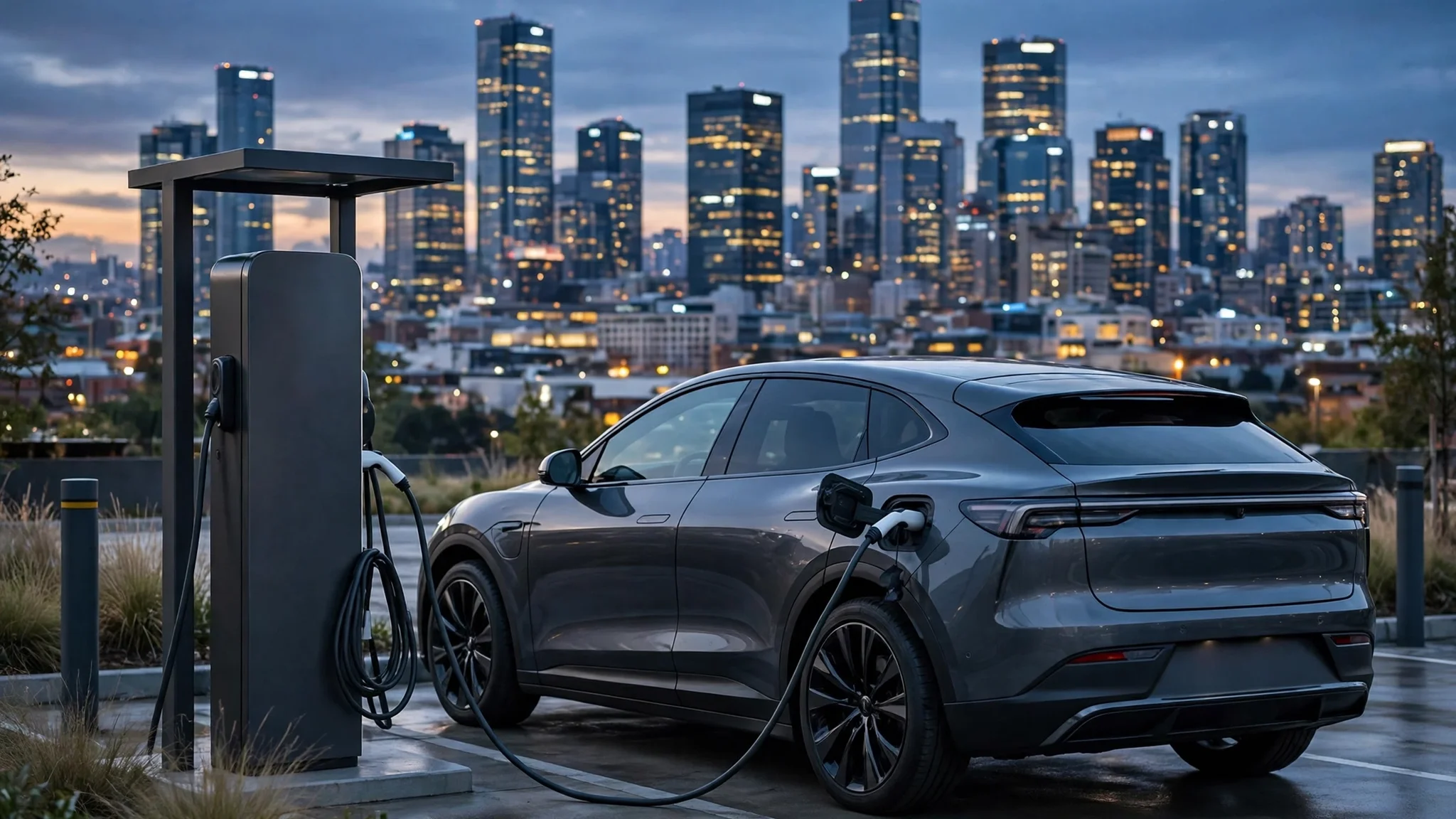
A few years ago, buying an electric car meant compromises: short range, slow charging, and a high price. In 2026, that picture has changed. The best electric cars 2026 offer 300 miles of range or more, charge from 10% to 80% in under 30 minutes, and cost no more than a comparable petrol car once fuel and maintenance are counted. This guide covers the best electric cars to watch in 2026, what has changed in the market, and what to check before you buy — whether you are ready to go electric now, or still deciding.
- The best electric cars in 2026 offer 250 to 350 miles of range, fast charging, and prices that are closing in on petrol equivalents.
- Tesla Model 3 and Model Y remain the benchmarks for range, charging, and software, but the competition is closer than ever.
- Hyundai, Kia, Volkswagen, and Ford all offer strong electric cars in 2026, with better build quality and longer warranties than Tesla in many cases.
- Charging at home overnight is the cheapest way to run an electric car — public fast charging costs far more.
- Check the real-world range, not the official figure, and check the charging speed, not just the battery size.
Electric Cars 2026: The Best Models to Watch
The electric cars 2026 market is led by a familiar set of names, but the gaps between them have narrowed. The Tesla Model 3 remains the benchmark for efficiency and range, with the Long Range version offering over 350 miles and access to Tesla’s Supercharger network, which is still the most reliable fast-charging network in most countries. The Model Y, the SUV version, is the best-selling electric car in the world, and its combination of space, range, and price is hard to beat. But Tesla’s advantage is no longer overwhelming: the Hyundai Ioniq 5 and Kia EV6 charge faster, the Volkswagen ID.4 and ID. Buzz offer more character, and the Ford Mustang Mach-E is a genuinely good car in its own right.
For buyers who want value, the Chevrolet Equinox EV and the Hyundai Kona Electric offer long range at a lower price, while the MG4 and the BYD Dolphin have brought genuinely affordable electric cars to markets where they are sold. At the premium end, the Porsche Taycan, the Audi e-tron GT, and the BMW i4 offer the performance and luxury that buyers of expensive petrol cars expect, with the silence and instant torque that only an electric car provides. And for families, the Kia EV9, a large three-row electric SUV, is the car that finally makes an electric family car practical without compromise. Our best electric cars 2025 guide covers last year’s models, many of which are still on sale at a discount and are worth considering if you want to save money.
Range, Charging, and Cost: What Actually Matters
Range is the number everyone asks about, and it is also the number most often misunderstood. The official range figure — the WLTP figure in Europe, the EPA figure in the US — is measured in ideal conditions, and real-world range is usually 10% to 20% lower, especially in cold weather or at motorway speeds. A car rated at 300 miles will typically deliver 240 to 270 miles in real use, which is still plenty for most people, since the average daily drive is under 40 miles. The more important number is the charging speed: how fast the car can add miles at a fast charger. A car that charges from 10% to 80% in 18 minutes, like the Hyundai Ioniq 5 and Kia EV6, is more useful on a long trip than a car with a bigger battery that charges slowly.
Cost is the other half of the equation. Electric cars still cost more to buy than equivalent petrol cars, but they cost far less to run: electricity is cheaper than petrol per mile, especially if you charge at home overnight on a cheap tariff, and maintenance is lower, because an electric motor has far fewer moving parts than a petrol engine. There are no oil changes, no exhausts, no clutches, and brake pads last longer because regenerative braking does most of the slowing down. Over five years, the total cost of an electric car is often lower than a petrol car, even with the higher purchase price. And if you are comparing running costs in general, our 2026 Subaru Outback guide covers a petrol car that is often cross-shopped with electric SUVs, and our cheap flights guide is a reminder that the cheapest journey is sometimes not the one you drive at all.
Charging at home vs public charging
Home charging is what makes an electric car work. A home wallbox charger, installed on your driveway or in your garage, charges the car overnight at the cheapest electricity rate, and you wake up to a full battery every morning. Without home charging, an electric car is harder to live with: public charging costs two to three times as much per mile, fast chargers are not always available when you need them, and the time spent charging is time you would rather spend doing something else. If you cannot charge at home, think carefully before buying an electric car, and check the public charging near your home and your workplace first. If you can charge at home, the experience is better than petrol in almost every way: no trips to the petrol station, no smell, no noise, and a car that is always ready.
Should You Buy an Electric Car in 2026?
The answer depends on your situation. If you have home charging, drive mostly in town and on motorways, and keep your cars for several years, an electric car in 2026 is a better choice than a petrol car for most people. The range is enough, the charging is fast enough, and the running costs are lower. If you cannot charge at home, tow heavy loads regularly, or drive very long distances in remote areas with few chargers, a petrol car or a hybrid is still the more practical choice, and there is no shame in waiting. The market is moving fast, and the cars of 2027 will be better and cheaper than the cars of 2026.
The other question is whether to buy new or used. Used electric cars are now a genuine bargain: early models that cost $50,000 new can be found for half that price after three years, and the battery degradation that people worried about has turned out to be far slower than expected. A three-year-old electric car with 90% of its original battery capacity is a good buy, especially if it has a long warranty. Check the battery health before you buy, and check that the car supports fast charging — some early models charge slowly, and that matters more than the battery size. For most buyers, the best value in 2026 is a two- or three-year-old electric car with a good battery and a fast charging speed, bought at a steep discount from new.
Frequently Asked Questions
What is the best electric car in 2026?
There is no single best car, but the Tesla Model 3 and Model Y lead on range and charging, the Hyundai Ioniq 5 and Kia EV6 lead on charging speed, and the Kia EV9 is the best large electric family car. The best car for you depends on your budget, your space needs, and whether you can charge at home.
How far can electric cars go in 2026?
Most new electric cars offer 250 to 350 miles of official range, with real-world range typically 10% to 20% lower. The longest-range models exceed 400 miles.
How long does it take to charge an electric car?
At home overnight, 6 to 8 hours on a wallbox. At a public fast charger, most new electric cars charge from 10% to 80% in 18 to 30 minutes.
Are electric cars cheaper than petrol cars?
They cost more to buy but less to run. Over five years, the total cost is often lower, especially if you charge at home on a cheap tariff. Maintenance is also lower, with fewer moving parts.
Should I buy a used electric car?
Yes, if you check the battery health and the fast charging speed. Used electric cars are a bargain in 2026, with battery degradation far slower than early fears suggested.
The best electric cars 2026 have one thing in common: they no longer ask you to compromise. The range is enough, the charging is fast enough, and the price is close enough that the decision is no longer about whether electric cars work — it is about which one fits your life. Test drive two, check the charging near your home, and do the maths on your own mileage. If the numbers work, the electric car is not the future any more. It is the present, and it is already better than the alternative for most people.