
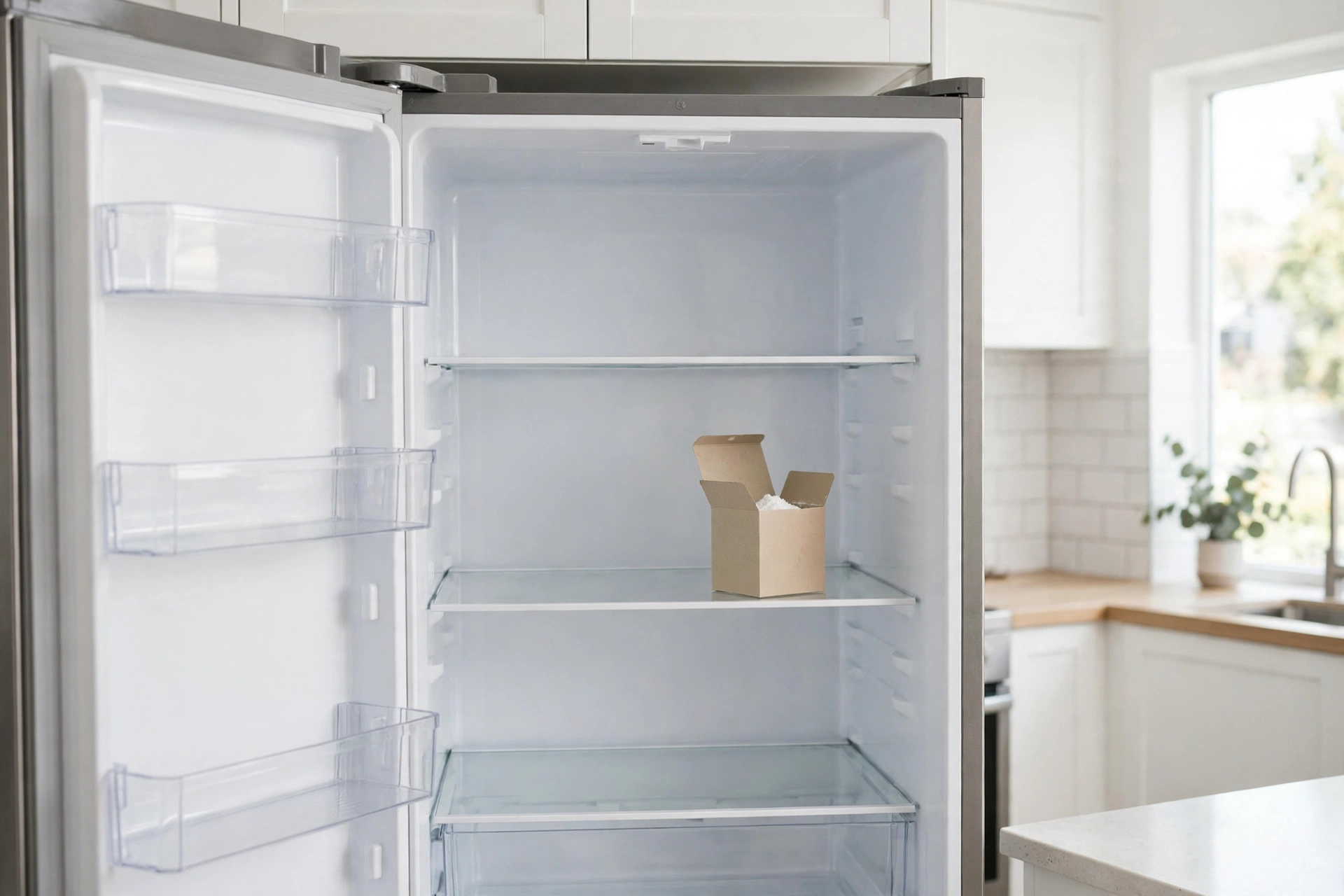
You open the fridge and the smell hits you before you see anything wrong. Learning how to remove odors from fridge is mostly detective work: find the source, clean it properly, and then use a natural absorber to finish the job. Baking soda does most of the heavy lifting, and the whole fix takes under an hour. Here is the method that works, the causes people miss, and how to keep the fridge smelling fresh afterwards.
- Start by finding and removing the source — usually an expired item, a spill, or food stored uncovered.
- Clean every surface with warm water and baking soda (1 tablespoon per litre), including the door seals and drawers.
- An open box of baking soda absorbs lingering smells; replace it every 30 days.
- White vinegar handles stubborn smells and disinfects without harsh chemicals.
- Keep food in sealed containers, check expiry dates weekly, and wipe up spills the day they happen.
How to Remove Odors from Fridge: Step by Step
Step 1: Empty the fridge and find the source
Take everything out, shelf by shelf, and check expiry dates as you go. The culprit is usually obvious once you look: a container of leftovers from two weeks ago, a bag of salad that turned to soup, or milk that went off unnoticed. Check the back of every shelf and the bottom of every drawer — smells hide where you cannot see. Throw away anything expired or suspicious, and set aside anything that needs a new container.
Step 2: Clean every surface
Remove the shelves and drawers and wash them in warm, soapy water. Wipe the inside walls, floor, and ceiling with a solution of warm water and baking soda — about one tablespoon per litre of water. Pay attention to the door seals, where spills collect and mould grows, and wipe the rubber gasket with a cloth dipped in the same solution. For stubborn smells, wipe the surfaces with undiluted white vinegar, leave it for 10 minutes, then wipe again with clean water. Vinegar smell disappears as it dries. Our refrigerator cleaning guide covers the full deep-clean routine if yours needs more than a quick wipe.
Step 3: Deal with the drip tray and drain
Many people miss the drip tray underneath the fridge and the drain hole at the back of the interior. Spilled liquids collect in both and go bad quietly. Pull the fridge out if you can, empty and wash the drip tray, and clear the drain hole with a cotton bud or a thin bottle brush. If your fridge has a water filter, check whether it is due for replacement — an old filter can cause smells too.
Step 4: Absorb what is left
Once the fridge is clean and dry, put an open box of baking soda on a middle shelf. It absorbs odours passively and lasts about 30 days — write the date on the box so you remember to replace it. For a stronger effect, place a small bowl of white vinegar or a few cotton balls soaked in vanilla extract on a shelf for 24 hours, then remove them. Activated charcoal bags work well too and last for months if you recharge them in sunlight occasionally.
Common Fridge Smells and What Causes Them
Sour milk smell
Almost always a spill — milk that leaked under a shelf or into a drawer track. Clean the area with baking soda solution and check the door seal, where milk collects and sours unnoticed.
Rotten food smell
Something expired that you have not found yet. Empty the fridge completely and check every container, including the ones at the back. Onions, garlic, and strong leftovers stored uncovered also perfume the whole fridge.
Chemical or plastic smell
Common in new fridges — the smell usually fades in a few days. Wipe the interior with baking soda solution, leave the door open for a few hours with the fridge empty, and it should clear. If it persists after a week, check the manual or contact the manufacturer.
Musty or mouldy smell
Check the door seals and the drain hole for mould. Wipe seals with vinegar, clear the drain, and dry everything thoroughly. Mould grows where moisture sits, so the fix is drying as much as cleaning.
How to Keep Your Fridge Smelling Fresh
Prevention is easier than the deep clean. Store leftovers in sealed containers, never open bowls — cling film is not enough for strong-smelling food. Check expiry dates once a week and wipe up spills the same day they happen. Keep the baking soda box in the fridge permanently and replace it monthly. And do not overfill the fridge: air needs to circulate for the cooling to work properly, and poor circulation makes smells worse. For more kitchen care, our dishwasher cleaning guide and microwave cleaning guide cover the rest of the appliances that pick up smells.
Frequently Asked Questions
Does baking soda really remove fridge odors?
Yes. An open box of baking soda absorbs odours from the air. It works best after you have cleaned the fridge and removed the source of the smell — it maintains freshness rather than fixing a dirty fridge on its own.
How long does it take for a fridge smell to go away?
After a proper clean, most smells clear within a few hours. If a smell lingers for more than a day, there is usually a second source you missed — check the freezer, the drain hole, and the drip tray.
Can I use vinegar to clean my fridge?
Yes. White vinegar is safe for fridge interiors, cuts grease, and kills many bacteria. Wipe surfaces with undiluted vinegar, leave it for 10 minutes, then wipe with clean water. The vinegar smell disappears as it dries.
What absorbs fridge odor the fastest?
Activated charcoal works fastest for lingering smells, followed by an open box of baking soda. Coffee grounds in a small bowl also absorb odours quickly, though they leave a coffee scent behind.
Why does my fridge smell even after cleaning?
Usually the source is still there — check the freezer, the drain hole at the back, the drip tray underneath, and the door seals. A smell that survives a full clean almost always has a second hiding place.
Knowing how to remove odors from fridge comes down to a simple order: find the source, clean with baking soda, then absorb what is left. Do that, keep a box of baking soda in there permanently, and your fridge will smell like nothing at all — which is exactly how a fridge should smell.
1 thought on “How to Remove Odors from Fridge: Fixes That Work”