
Why Is My AC Leaking Water Inside? 5 Causes and What to Do About Each
You walk into the room and notice it: a dark patch spreading across the ceiling, or a small puddle forming under your indoor air conditioner. Take a breath. An AC leaking water inside is one of the most common problems homeowners face, and in most cases the cause is simple and fixable.
Air conditioners naturally produce water as they cool your home, and your system is designed to drain that water away safely. When water shows up where it should not, the drainage system has failed somewhere — a clog, a crack, a frozen coil, or a part that has worn out. In this guide, you will learn how AC drainage is supposed to work, the five reasons it goes wrong, which fixes you can handle yourself, and when to call a technician.
Key Takeaways
- A clogged condensate drain line is the number one reason ACs leak water inside — and it is often a 20-minute DIY fix.
- A dirty air filter can freeze the evaporator coil; the melt-off floods the drain pan and overflows into your home.
- Shut the AC off as soon as you see water, and do not restart it until the pan is dry and the drain is clear.
- Refrigerant leaks, a rusted-through drain pan, or a failed condensate pump are jobs for a licensed HVAC technician.
- Monthly filter checks and a quarterly cup of vinegar in the drain line prevent most leaks before they start.
First, Understand Where AC Water Comes From
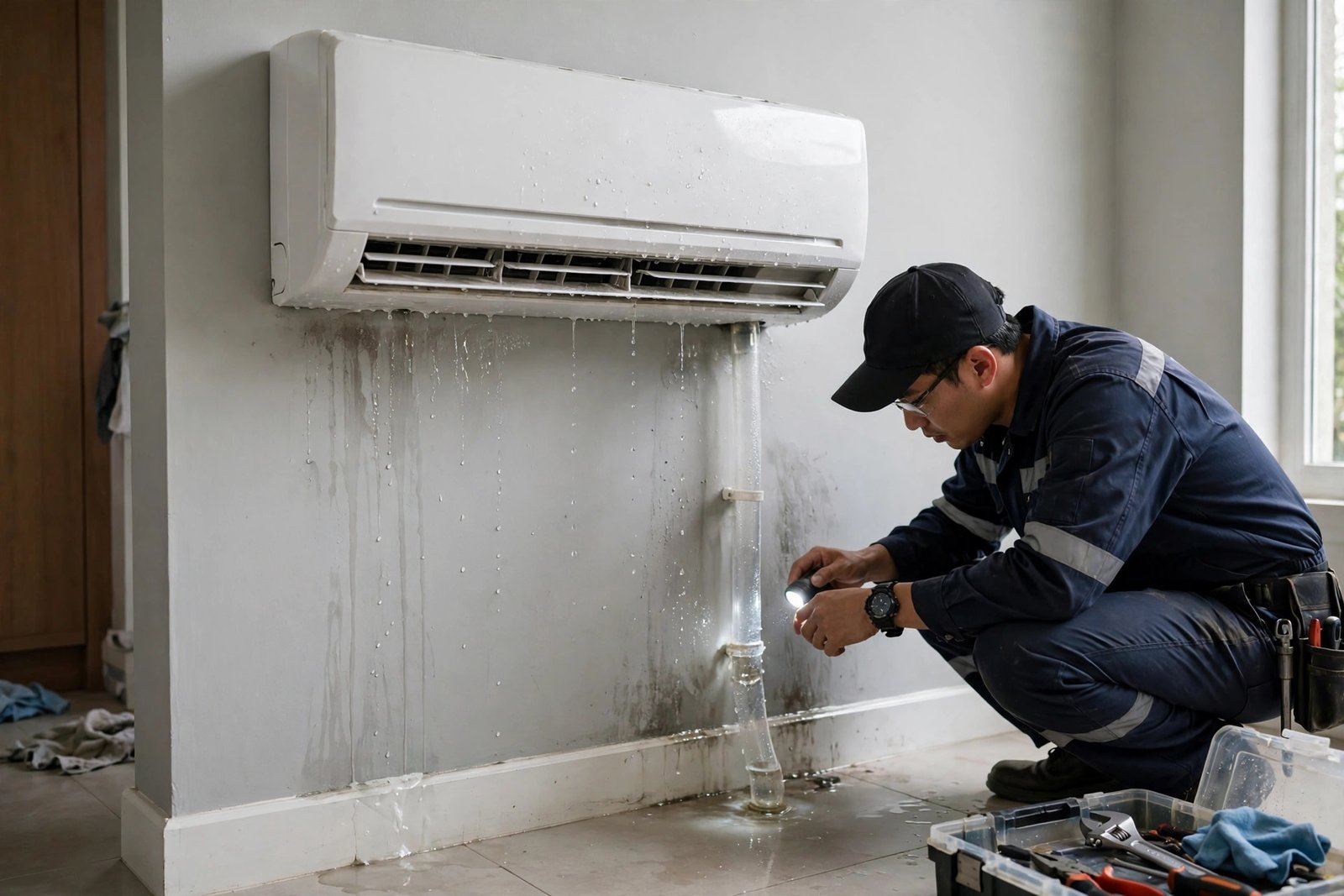
Your air conditioner wrings moisture out of the air — humidity condenses on the cold evaporator coil like it does on a glass of iced tea, up to 5 to 20 gallons on a humid day. That condensate drips into a shallow drain pan, then flows out through the condensate drain line, a PVC pipe only about three-quarters of an inch wide. It does not take much — algae, mold, dust — to choke that line off. Once water has nowhere to go, the pan overflows and water drips into your ceiling or walls. Remember this chain — coil, pan, drain line — and every cause below makes instant sense.
Cause 1: Clogged Condensate Drain Line (The Most Common Culprit)
This is the majority cause, so start here. The drain line is a dark, damp tube — perfect for algae, mold, and slime. Over months, buildup narrows the pipe until a chunk blocks it completely, water backs up into the pan, and the pan overflows into your ceiling or walls.
Signs: dripping near the indoor unit, a musty smell when the AC runs, or the system shutting off unexpectedly (a float switch killing power when the pan fills). The fix is DIY: with the AC off, pour a cup of distilled white vinegar into the drain line’s access vent, wait 30 minutes, and flush with water. For a stubborn clog, press a wet/dry vacuum hose tightly to the pipe’s outside end for a minute or two. Repeat the vinegar treatment every three months in cooling season — it is one of the highest-value items on any HVAC maintenance checklist.
Cause 2: A Damaged or Rusted Drain Pan
Sometimes the pipe is fine and the pan itself is the problem. Older systems have metal drain pans, and years of standing water will eventually corrode them. Once rust eats through, water drips straight down no matter how clear the drain line is. Plastic pans resist rust, but they can crack — especially after attic work or years of heat exposure.
A damaged pan usually shows up as a slow, steady drip directly beneath the air handler even when the line flows freely. Shine a flashlight in there and look for rust stains or pinholes. Pan replacement often means disconnecting parts of the system, so call a technician — and ask them to add a secondary safety pan and a float switch while they are at it, so the next problem shuts the system down before water reaches your ceiling.
Cause 3: Frozen Evaporator Coil (Often From a Dirty Air Filter)
The classic symptom: weak cooling first, then water. If your AC is blowing warm air and dripping at the same time, a frozen coil is the prime suspect. Turn the AC off completely so the ice can thaw — this takes several hours. Meanwhile, replace the air filter. If the old one was gray and clogged, you have found your culprit. If the coil freezes again with a clean filter, something deeper is wrong — a failing blower motor or duct problem — and that is technician territory.
How Often Should You Really Change the Filter?
The one-month rule exists for a reason, but your home decides the real schedule. Pets, renovation dust, and high pollen clog filters faster. Check monthly, and change the filter when you can no longer see light through it. A five-dollar filter is the cheapest leak insurance you will ever buy.
Cause 4: Low Refrigerant Levels
Low refrigerant causes the same frozen-coil chain reaction as a dirty filter, but the root problem is a leak in the sealed refrigerant lines — not a DIY job. Clues: the coil freezes with a fresh filter, faint hissing near the indoor or outdoor unit, or cooling that has been worsening for weeks. Refrigerant handling requires certification, so turn the system off to protect the compressor and call a pro. Running low on refrigerant too long can burn out the compressor, turning a few-hundred-dollar repair into a few-thousand-dollar one.
Cause 5: Poor Installation, Bad Slope, or a Failed Condensate Pump
Sometimes the problem was built in. Condensate lines work by gravity, so the pipe must slope steadily downward. A sag, kink, or flat run lets water pool and grow algae, and a joint that was never properly glued can separate over time — dumping water into the wall or attic.
Then there is the condensate pump. If your air handler sits in a basement below the drain exit, a small pump pushes water uphill — and pumps fail. Quick check: pour a little water into the pump reservoir and confirm it kicks on. If it does not, and you are not comfortable with basic wiring, have a technician replace it.
Safety first: water near electrical components is genuinely dangerous. If water is dripping into the air handler’s electrical compartment or pooling near the breaker box, shut the AC off at the breaker — not just the thermostat — and call a technician before touching anything.
What You Can Safely Fix Yourself
Work through this list in order, with the system powered off:
- Turn the AC off at the thermostat and give any ice time to melt completely before you restart cooling.
- Replace the air filter if it looks dirty at all — this alone resolves a surprising share of leaks.
- Clear the drain line with vinegar and a flush, or a wet/dry vacuum on the outdoor end for stubborn clogs.
- Empty and inspect the drain pan — sop up standing water and look for cracks or rust holes.
- Check the condensate pump if you have one: pour water into the reservoir and confirm it pumps out.
If the leak stops, you are back in business. If water returns within a day or two, or you found rust, cracks, or recurring ice, call a professional.
When to Call a Technician (No Shame in It)
Call a licensed HVAC technician when: the coil refreezes with a clean filter, you suspect a refrigerant leak, the pan is rusted or cracked, the drain line is disconnected inside a wall or ceiling, or water has reached electrical components. Also call if the system is under warranty — DIY repairs can void coverage, and a warranty visit may cost nothing.
4 Habits That Keep Your AC From Leaking Again
One cup of distilled white vinegar down the access vent every three months dissolves algae before it can form a clog.
Hold it up to the light — if you cannot see through it, replace it. This prevents frozen coils, the second-biggest cause of leaks.
This inexpensive safety device shuts the AC off when the drain pan fills, stopping a leak before it reaches your ceiling.
An annual pre-season check catches low refrigerant, weak blowers, and drain slope problems while they are cheap to fix.
Frequently Asked Questions
Is it normal for my AC to produce water?
Yes — producing water is completely normal. What is not normal is water appearing inside your home. Visible water means the drainage chain has broken somewhere.
Can I still run my AC if it is leaking water?
No — turn it off until you know the cause. Running it keeps producing condensate, which means more water damage. Let any ice thaw, clear the drain, and restart only once the pan stays dry.
How much does it cost to fix an AC water leak?
A DIY drain-line clearing costs almost nothing. Professional drain cleaning or pan replacement typically runs $100–$400, while refrigerant leak repairs can reach $400–$900. Compressor damage from running too long on low refrigerant is far more expensive.
Why does my AC leak water only sometimes?
Intermittent leaks usually mean a partial clog or an occasional freeze-thaw cycle. On very humid days the system produces more condensate — enough to overwhelm a half-blocked drain. Do not ignore it; partial problems become full blockages.
Can a leaking AC cause mold?
Yes, and quickly. Damp drywall and drain pans grow mold within 24–48 hours of water exposure. Dry the area thoroughly with fans, and if drywall stayed wet for more than a day or two, have that section checked or replaced.
Dry Pan, Clear Line, Cool Home
An AC leaking water inside feels alarming, but the fix is usually boring in the best way: a clogged drain line, a dirty filter, or a pan that needs attention. Work the DIY checklist first — power off, new filter, clear drain, dry pan — and you will solve most leaks in an afternoon. Save the service call for refrigerant, electrical issues, and anything that keeps coming back.
Want to stay ahead of problems like this? Fold a quarterly drain-line flush and monthly filter checks into your home maintenance routine, and book a spring HVAC tune-up before cooling season. Your ceilings — and your wallet — will thank you.
2 thoughts on “Why Is My AC Leaking Water Inside? Fix It Fast”