
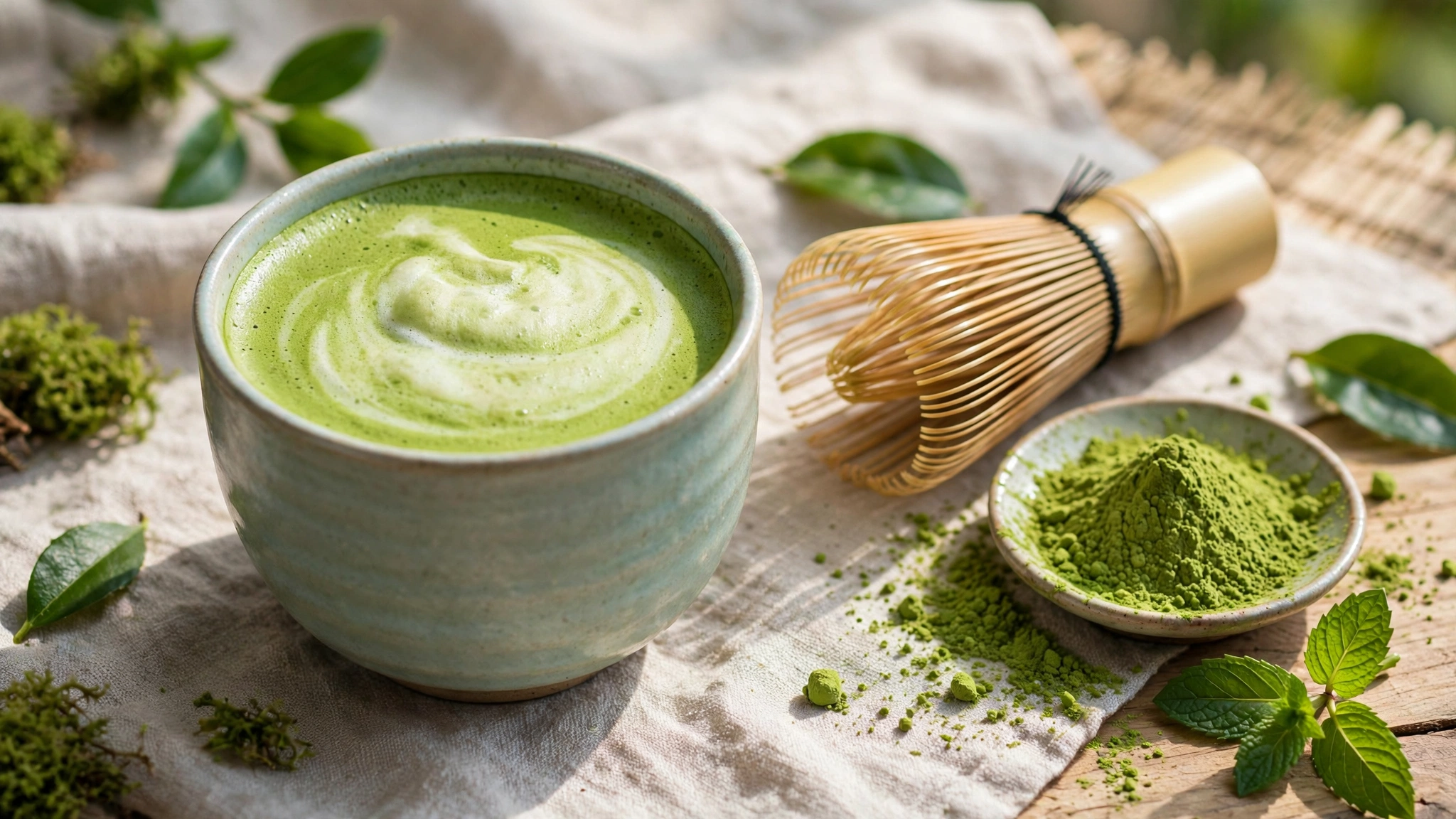
It is bright green, it is everywhere — lattes, smoothies, desserts, skincare — and it has been drunk for nearly a thousand years. So what is matcha? This guide explains what matcha actually is, how it differs from ordinary green tea, its benefits, the types to buy, how to make it properly, and the mistakes that ruin a good cup.
- Matcha is powdered green tea: shade-grown leaves, stone-ground whole, so you drink the entire leaf.
- Because you consume the whole leaf, matcha has more caffeine and antioxidants than steeped green tea — about 70 mg of caffeine per cup.
- Ceremonial grade is for drinking straight; culinary grade is for lattes, smoothies and baking.
- Real matcha is vivid green and costs more than the dull, yellow-green imitations — colour is the quality test.
- Whisk it with hot (not boiling) water — 80°C — or it turns bitter.
What Is Matcha? The Basics
Matcha is green tea in powdered form. The tea plants are shade-grown for about three weeks before harvest, which boosts their chlorophyll (hence the vivid green) and their amino acids — especially L-theanine, the compound behind matcha’s calm, focused feeling. After harvest, the leaves are steamed, dried, de-stemmed and stone-ground into a fine powder. Unlike regular green tea, where you steep the leaves and throw them away, with matcha you whisk the powder into water and drink the whole leaf.
That difference matters. Because you consume the entire leaf, matcha delivers more caffeine (around 70 mg per serving, about two-thirds of a cup of coffee) and more antioxidants than a cup of steeped green tea. The caffeine arrives with L-theanine, which smooths the buzz into a calm alertness — the reason matcha drinkers describe it as focused energy rather than a jolt. For another popular drink explained honestly, our Ryze mushroom coffee review covers the coffee world’s equivalent trend.
What Is Matcha: Benefits, Honestly
Matcha is rich in catechins, a type of antioxidant, and studies link green tea consumption with better focus, a modest metabolism boost and heart health support. The L-theanine plus caffeine combination is the most interesting part: it promotes alertness without the jitteriness some people get from coffee. That said, matcha is not a miracle — it is a healthy drink, not a medicine, and the benefits are modest and long-term, not instant.
The honest version: matcha is a genuinely good swap for a second coffee, it is low in calories when drunk plain, and it tastes wonderful when made well. The health claims that promise dramatic results are oversold — enjoy it for the taste and the ritual, and consider the antioxidants a bonus. For the wider world of cosy drinks, our Medicine Ball Starbucks guide (published today) covers another comfort cup.
What Is Matcha: Ceremonial vs Culinary Grade
There are two main grades. Ceremonial grade is made from the youngest, most tender leaves, stone-ground slowly: it is smooth, sweet and meant to be whisked with water and drunk straight. Culinary grade is stronger, slightly more bitter, and made for lattes, smoothies, baking and cooking — where milk, sugar and other flavours balance it. Paying ceremonial prices for a latte is a waste; using culinary grade for a straight cup is a disappointment.
Buy from a reputable tea seller, not a generic supermarket brand if you can help it, and check the origin: Uji in Japan is the most famous matcha region. Store it sealed, cool and dark — matcha oxidises quickly, and an opened tin loses its colour and flavour within a couple of months. Buy small tins, use them up, and buy fresh. Our how to clean a coffee maker applies the same fresh-and-clean logic to your drinks setup.
How to Make Matcha Properly
The traditional method is simple: sift 1–2 teaspoons of matcha into a bowl (sifting prevents lumps), add about 60 ml of hot water at 80°C — never boiling, which makes it bitter — and whisk briskly with a bamboo whisk (chasen) in a fast M or W motion until frothy, about 15 seconds. Then add more water to taste, or pour over ice, or add steamed milk for a latte.
No whisk? A small milk frother, a shaker bottle or even a jar with a lid works — shake hard for 30 seconds. For a latte, whisk the matcha with a little hot water first, then add warm milk and a touch of honey or vanilla. The key is always the same: sift, don’t boil, whisk well.
What Is Matcha Used For Beyond Tea?
Matcha’s vivid colour and gentle flavour make it a favourite in cooking: matcha lattes, smoothies, overnight oats, pancakes, cookies, ice cream and even face masks. In baking, culinary grade is perfect — the green colour survives the oven and looks beautiful. In smoothies, a teaspoon adds colour, a gentle energy lift and an earthy note that pairs well with banana and mango.
Start with small amounts: a little matcha goes a long way, and too much makes everything bitter. And remember that matcha contains caffeine — a matcha dessert late at night is still a caffeinated dessert. For more kitchen inspiration, our apple pie filling recipe and Christmas breakfast recipes cover the seasonal table.
What is matcha made of?
Shade-grown green tea leaves, steamed, dried and stone-ground into a fine powder. You whisk the powder into water and drink the whole leaf.
Is matcha healthier than green tea?
It is more concentrated: because you drink the whole leaf, matcha has more caffeine and antioxidants per cup than steeped green tea.
How much caffeine is in matcha?
About 70 mg per serving — roughly two-thirds of a cup of coffee — balanced by L-theanine for a calm, focused energy.
What is the difference between ceremonial and culinary matcha?
Ceremonial grade is smooth and sweet, for drinking straight with water. Culinary grade is stronger and more bitter, made for lattes, smoothies and baking.
What is matcha? A thousand-year-old tea, a vivid green powder, a calm kind of energy — and, when you make it well, one of the most satisfying drinks there is. Start with a good tin, sift it, whisk it, and taste the difference.
1 thought on “What Is Matcha? Benefits, Types & How to Use”