
How to Clean a Coffee Maker: The Complete Homeowner’s Guide
A clean coffee maker is the difference between a bright, balanced cup and a bitter, lifeless one. Mineral scale and stale coffee oils build up inside every machine, dulling flavor long before anything looks dirty. Learning how to clean a coffee maker takes about fifteen minutes of active effort, and your first cup afterward will taste noticeably better.
This guide covers vinegar versus citric acid descaling, step-by-step routines for drip machines, single-serve brewers, and French presses, a cleaning schedule that keeps your machine in shape, and troubleshooting fixes for bitter taste, slow brewing, and strange odors.
Key Takeaways
- Descale every one to three months, depending on water hardness and daily use.
- Citric acid is gentler and odor-free; white vinegar is cheaper but needs extra rinsing.
- Wash the carafe, filter basket, and exterior weekly — descaling alone is not enough.
- Bitter coffee is almost always caused by mineral buildup or stale oils, both fixable.
- Check your manufacturer’s guidance first, since some warranties require specific descalers.
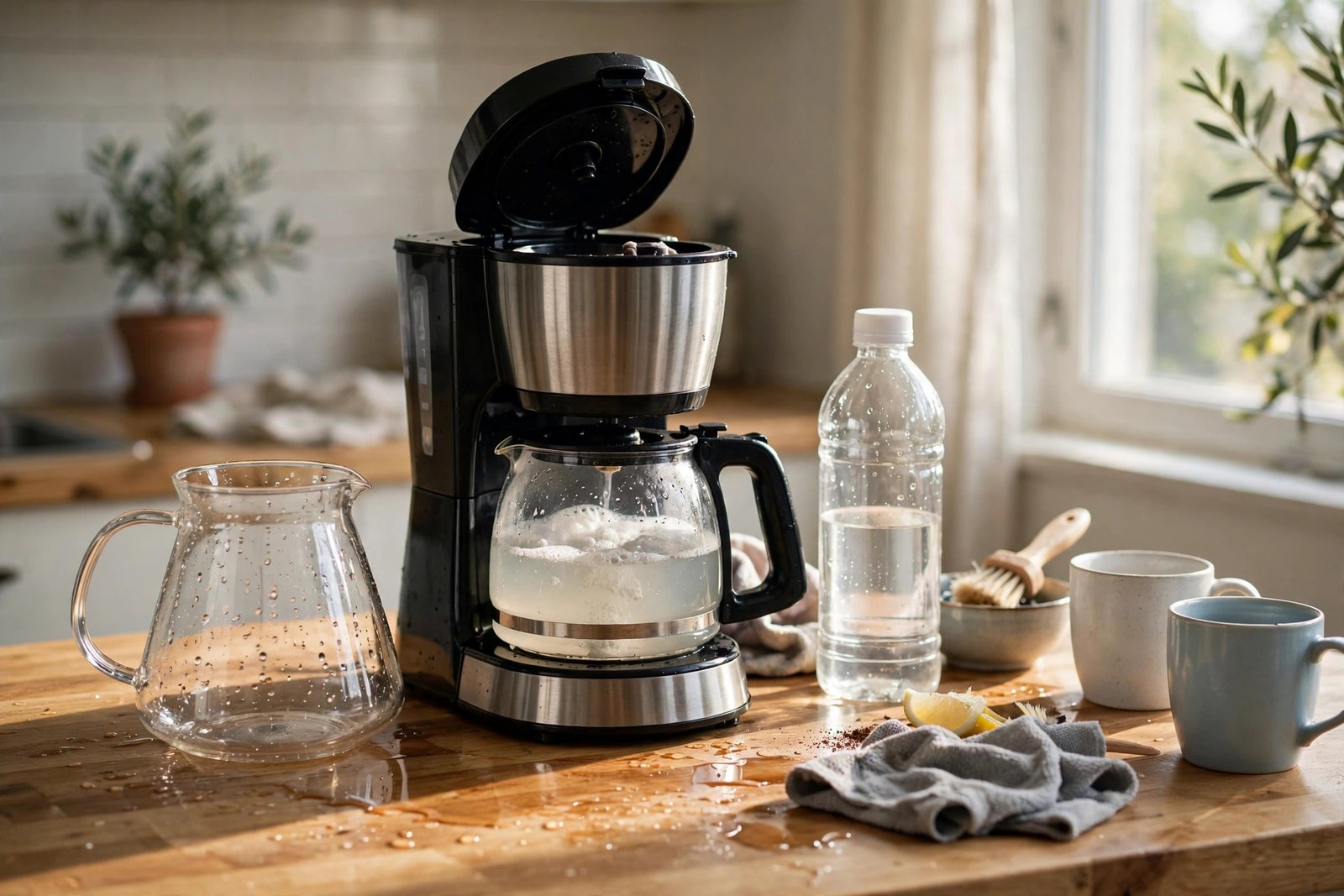
Why Your Coffee Maker Needs Regular Cleaning
Two enemies live inside every coffee maker: mineral scale and coffee oil residue. Scale from calcium and magnesium in tap water coats the heating element, water lines, and spray head. As it builds up, water flows slower and heats less evenly — why an older machine brews sluggishly and tastes flat and bitter. Coffee oils go rancid fast, and the thin film they leave on the carafe adds a sour, off flavor within days.
A neglected machine is also a hygiene issue: warm, damp, dark spaces are ideal for yeast and mold, making coffee makers among the germiest kitchen appliances. The fix is easy, though — the same deep-clean logic that works when you learn how to clean a dishwasher applies here: remove the buildup, sanitize the contact surfaces, and the machine performs like new.
How Often Should You Clean Your Coffee Maker?
The right schedule depends on water hardness and brewing volume, but this simple routine keeps any machine in peak condition:
- After every use: empty the carafe, rinse the brew basket, wipe the warming plate, and compost the grounds.
- Weekly: wash the carafe, lid, and filter basket with warm soapy water; wipe the exterior and drip tray.
- Monthly: run a full descaling cycle if you have hard water or brew several pots a day.
- Every two to three months: descale even with soft water or moderate use. Mark it on your calendar — out of sight really is out of mind with this appliance.
Hard water means leaning toward monthly. Filtered water slows scale but not coffee oils, so the weekly wash-down still matters.
Vinegar vs. Citric Acid: Choosing Your Descaler
Both dissolve mineral scale effectively — they differ in cost, convenience, and how they treat your machine.
White Vinegar: The Cheap, Powerful Classic
Plain distilled white vinegar is the most popular coffee maker cleaner because it is cheap and effective. Mix it one-to-one with water, run half through a brew cycle, pause thirty minutes, then finish the cycle and follow with at least two full fresh-water cycles to rinse. That rinsing step is non-negotiable — skip it and your next pot will taste like salad dressing. Vinegar’s downsides: a strong smell during cleaning, the extra rinsing, and the fact that repeated use can wear down rubber seals, which some manufacturers warn against.
Citric Acid: The Odorless, Gentle Professional Pick
Citric acid powder — found in the canning aisle or online — is what many appliance technicians prefer. It dissolves scale as effectively as vinegar but is odorless, rinses faster, and is gentler on rubber seals. Dissolve one to two tablespoons in a full reservoir of warm water, run a brew cycle with a soak pause, then rinse with one or two plain-water cycles. The only trade-offs: you have to buy it and measure the dose, since an overly concentrated solution can etch aluminum parts in older machines.
What About Baking Soda?
Skip it for descaling — baking soda is alkaline, so it cuts grease and odors but barely dissolves mineral scale, the main problem inside a coffee maker. Save it for scrubbing the carafe’s exterior.
How to Clean a Drip Coffee Maker, Step by Step
Drip machines are the most common coffee makers. Set aside about thirty minutes, most of it hands-off.
Step 1: Wash the Removable Parts
Remove the carafe, lid, and filter basket and wash them in warm, soapy water with a non-abrasive sponge. If the carafe has a brown film, soak it ten minutes first; for stubborn stains, soak half an hour with two tablespoons of baking soda added.
Step 2: Run the Descaling Cycle
Fill the reservoir with your descaling solution, place the empty carafe, start a brew cycle, pause halfway for thirty minutes, then complete the cycle. For an old or never-descaled machine, repeat with fresh solution.
Step 3: Rinse Thoroughly
Dump the solution and run at least two full reservoirs of plain fresh water through. When the brewed water comes out with no sour smell, you are done.
Step 4: Wipe the Exterior and Warming Plate
While the rinse cycles run, wipe the exterior with a damp cloth and dish soap. Scrub the warming plate — burnt residue there feeds bitter flavors — and clear the spray head with a soft brush or old toothbrush. Dry everything before reassembling.
Cleaning Other Coffee Maker Types
Not every household brews the same way, so here is how to adapt the routine to the machine you own.
Single-Serve Pod Brewers
Pod brewers need the same descaling process, plus extra maintenance points. Empty and scrub the drip tray and pod holder weekly, and run a plain-water cleansing brew after sugary drinks. Once a month, clear the exit needle with a paper clip — clogged needles cause partial cups and slow brewing. Replace water filter cartridges on the manufacturer’s schedule.
French Press
The French press is the easiest of all: disassemble the plunger, screens, and beaker after each use and wash every part in hot soapy water. Scrub the mesh filter weekly, since oils build up fastest there, and dry metal parts completely to prevent rust. A French press never needs descaling, since water only touches it briefly.
Espresso Machines
Backflush the group head with plain water daily and with espresso machine cleaner weekly — grounds cake onto the group screen fast at espresso pressure. Descale every one to two months with a citric-acid-based descaler rather than vinegar, which can damage brass and copper boilers. Wipe and purge the steam wand after every use; dried milk clogs wands quickly.
Troubleshooting Common Coffee Maker Problems
When your machine misbehaves, try these fixes before assuming anything is broken.
- Bitter or sour coffee: the classic symptom of scale and rancid oils. Run a full descaling cycle and scrub the carafe and basket — that solves it nine times out of ten.
- Slow brewing or gurgling: scale is restricting water flow. Descale twice in a row and clean the spray head above the filter basket.
- Musty smell: wash everything with hot soapy water, descale, and leave the reservoir lid open between uses so it dries out.
- Plastic taste: common with new machines — run three to four water-only cycles before the first brew to flush manufacturing residue.
- Leaking: check the reservoir seating first. Persistent leaking usually means a worn gasket or cracked reservoir — replacement parts are cheap.
A freshly cleaned coffee maker changes more than your morning cup — it changes the whole kitchen. The same way learning how to clean an oven removes lingering burnt-on odors, descaling your coffee maker eliminates the stale, sour smell an old machine gives off. Once the kitchen smells fresh, keep the momentum going with ideas on how to make your house smell good for the rest of the home.
7 Pro Tips for a Longer-Lasting Coffee Maker
Filtered water cuts scale buildup roughly in half, meaning fewer descaling sessions and a longer-lived heating element.
An hour on the warming plate turns good coffee bitter and bakes oils onto the carafe. Brew what you will drink.
Leave the lid open so moisture evaporates. A dry reservoir is a mold-free reservoir.
By the time coffee tastes bitter, scale is already heavy. Calendar reminders beat taste-testing.
Grounds clog the shower head above the basket, causing uneven extraction. A monthly scrub keeps cups balanced.
Wet grounds left sitting go stale fast. Empty and rinse the basket right after brewing.
Some brands require their own descaling solution. Using vinegar against the manual’s advice can void coverage.
Frequently Asked Questions
Can I use vinegar to clean my coffee maker?
Yes. Run a half-and-half mix of distilled white vinegar and water through a brew cycle, pause halfway for thirty minutes, finish the cycle, then rinse with at least two plain-water cycles. Some manufacturers advise against vinegar for rubber seals, so check your manual.
Is citric acid better than vinegar for descaling?
For most people, yes: it dissolves scale just as well, has no odor, rinses faster, and is gentler on seals. Dissolve one to two tablespoons per full reservoir of warm water. Vinegar wins only on price and availability.
How often should I descale my coffee maker?
Every one to three months — monthly with hard water or heavy use, every two to three months with soft water and light use. Wash the carafe and basket weekly regardless.
Why does my coffee taste bitter even with fresh beans?
Bitter coffee is usually a machine problem, not a bean problem. Mineral scale and rancid coffee oils are the two most common causes — both fixed with a descaling cycle plus a scrub of the carafe and filter basket.
Can a dirty coffee maker make you sick?
It can harbor yeast, mold, and bacteria in the warm, damp reservoir — enough to upset sensitive stomachs. Regular descaling and weekly washing of all removable parts keeps it hygienic.
Brew Your Best Cup Tomorrow Morning
Knowing how to clean a coffee maker is one of the highest-return kitchen skills: thirty minutes every month or two, and every cup tastes like the beans you paid for. Descale this weekend, set a calendar reminder for the next cycle, and make the weekly carafe wash part of your routine.
Ready for the rest of the kitchen? Once your coffee maker is sparkling, the dishwasher and oven are the next biggest flavor and odor upgrades — a truly clean kitchen starts with the appliances you use every day.
2 thoughts on “How to Clean a Coffee Maker: The Complete Homeowner’s Guide”