
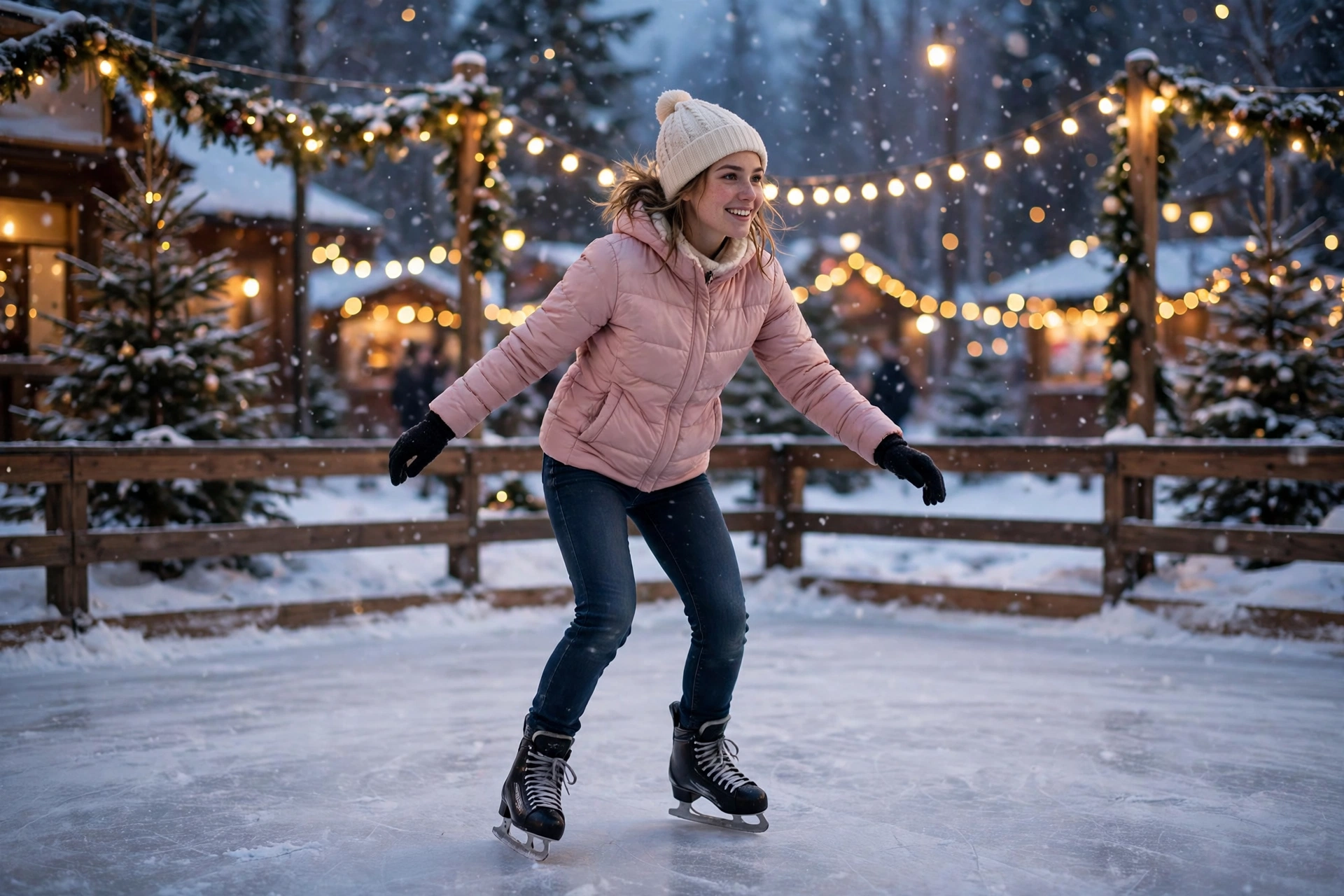
Learning how to ice skate is one of those skills that looks effortless until you try it — and then, after an hour or two, it starts to click. Whether you are heading to a Christmas rink with friends, taking your kids for their first time, or finally trying the sport you have always meant to learn, this guide covers the basics: what to wear, how to stand, how to move, how to stop, and how to fall without hurting yourself.
- Start with rented skates that fit snugly, laced tightly around the ankle for support.
- Keep your knees bent, your weight forward over the balls of your feet, and your arms out for balance.
- Move with small marching steps first, then work up to a glide — do not try to run.
- Learn the snowplow stop early: it is the simplest way to stop safely.
- Fall forwards onto your hands and knees if you can, and get up by kneeling on one skate first.
What to Wear and Bring for Ice Skating
Dress warmly but in layers you can move in. A warm jumper, gloves, and long socks are the essentials — gloves matter more than you think, because your hands are the first thing to touch the ice. Wear thick socks that reach above the skate, and avoid jeans that are too stiff or too loose; stretchy trousers or leggings work better.
Most rinks rent skates, and rental skates are fine for a first session. Make sure they fit snugly: your toes should just touch the front, and your heel should not lift when you walk. Lace them tightly, especially around the ankle — loose laces are the most common reason beginners feel wobbly. If you have your own skates, get the blades sharpened before your first session; dull blades make everything harder.
How to Ice Skate: The Basics
Standing up on skates
Stand with your feet shoulder-width apart, knees slightly bent, and your weight over the balls of your feet — not on your heels. Lean slightly forward from the ankles, not from the waist. Keep your arms out to the sides for balance, and look ahead, not down at your feet. Looking down pulls your weight forward and makes you fall. It feels strange for the first ten minutes, and then your body starts to figure it out.
Moving forward
Start by marching in place: lift one foot, then the other, just like walking. Once that feels steady, start gliding. Push off gently with one skate at a slight angle while the other glides straight ahead, then switch. Small steps are better than big ones — big pushes throw you off balance. Let the glide do the work. The ice is doing half the job for you; your job is to stay over your skates.
Turning
Turn by leaning gently in the direction you want to go and turning your shoulders with it. Start with wide, slow turns. As you get more confident, you can cross one foot over the other in a crossover, which is how skaters turn quickly. Do not rush this — wide turns at low speed are how you stay upright.
How to stop
Learn the snowplow stop first. Glide slowly, then turn both toes inward and push the inside edges of your blades into the ice, like a snowplough. You will slow down and stop. It is not elegant, but it works, and it is the stop every beginner should learn before anything else. The T-stop — dragging one skate behind the other at a right angle — comes later, once you are comfortable gliding.
Your First Time on the Ice: A Simple Plan
Give yourself a full session to get comfortable. Spend the first 15 minutes near the barrier, practising standing, marching, and small glides while holding on. Then let go of the barrier and skate a slow lap, focusing on bent knees and looking ahead. Try a snowplow stop every few minutes so it becomes automatic. By the end of an hour, most people can glide around the rink slowly and stop without grabbing the wall.
If you want to improve faster, a single group lesson is worth more than five solo sessions. An instructor will fix the small things — your posture, your weight placement — that are hard to spot yourself. Many rinks offer beginner lessons that include skate hire, and they are usually cheap. If you are planning a winter outing, our cosy winter bedroom ideas will make coming home to a warm house part of the day, and our budget Christmas decor ideas will get the house looking the part for the season.
Ice Skating With Kids
Kids learn faster than adults, mostly because they are closer to the ground and less afraid of falling. Put them in a helmet for the first few sessions, dress them warmly, and hold their hands for the first few laps. Many rinks have penguin or seal-shaped skating aids that kids can push around for support — they are genuinely useful, not just cute. Keep the first session short, about 30 to 45 minutes, and end on a high note with hot chocolate rather than pushing until someone is cold and miserable.
Frequently Asked Questions
Is ice skating hard to learn?
The first hour is hard. After that, most people can glide and stop. Like cycling, it clicks suddenly — one lap you are wobbling, the next you are skating. Expect to be comfortable within two or three sessions.
How long does it take to learn to ice skate?
Most people can skate slowly around a rink after one or two sessions. Confident turning, stopping, and skating backwards take a few weeks of regular practice, and a lesson speeds that up a lot.
What should I wear ice skating?
Warm layers, gloves, and thick socks. Avoid very loose clothing that can catch on skates, and skip the scarf — it can get caught. A helmet is a good idea for children and for nervous first-timers.
Can I ice skate if I have never done it before?
Yes. Rinks are built for beginners, with rental skates, barriers to hold, and staff who expect people to fall. Start near the barrier, take small steps, and build up slowly.
Is ice skating good exercise?
Yes — it works your legs, core, and balance, and it is low-impact compared to running. An hour of gentle skating burns a solid number of calories without feeling like a workout.
Ice skating is one of the few winter activities that is genuinely fun from the very first try, even when you are terrible at it. The wobbling is part of it, the falling is part of it, and the moment it clicks — when you glide instead of shuffle — is worth every bruise. Book a rink, dress warm, wear gloves, and give yourself an hour. You will leave wanting to go back. And when you do, our winter hair care tips will help with the cold-weather aftermath.