
Winter Hair Care Tips for Dry, Damaged Hair
Winter is unkind to hair. Cold wind, dry indoor heating, wool hats, and hot showers all conspire to strip moisture, create static, and snap fragile ends. If your hair feels rough, looks dull, or breaks more easily from December to February, the season is almost certainly the cause. The good news is that winter hair damage is largely preventable, and much of it is reversible with a few changes to how you wash, dry, and protect your hair.
This guide covers a complete winter hair care routine for dry and damaged hair: gentler washing, deep conditioning, heat protection, hat-friendly styling, and the trims and treatments that keep hair healthy until spring. Whether your hair is fine, thick, curly, or colour-treated, these tips will help it survive winter in better shape.
Key Takeaways
- Wash less often in winter, and always with lukewarm water and a moisturising shampoo.
- Deep-condition weekly; a hair mask is the single most effective winter hair treatment.
- Reduce heat styling, and always use a heat protectant when you do use heat.
- Protect hair from wind and hats with silk linings, loose styles, and leave-in conditioner.
- Trim split ends regularly; damaged ends travel upward if left uncut.
- Eat and sleep well: hair health reflects overall nutrition, hydration, and rest.
Wash Gently and Less Often
The first winter change is washing frequency. Most people can wash two to three times a week in winter, rather than daily, because cold air already dries the scalp and hair. Over-washing strips natural oils that protect the hair shaft, leading to frizz, static, and breakage. On non-wash days, a little dry shampoo at the roots, or simply tying hair back, keeps it looking fresh without another wash cycle.
When you do wash, use lukewarm water, never hot. Hot water opens the hair cuticle and lets moisture escape, leaving hair rough and dull. Choose a moisturising or repairing shampoo, ideally sulphate-free if your hair is colour-treated or very dry, and focus shampoo on the scalp, letting the rinse clean the lengths. Follow every wash with conditioner on the mid-lengths and ends, never on the roots, and leave it in for two to three minutes before rinsing with cool water to seal the cuticle. A warm bath is a winter comfort, but keep hair out of very hot water, and our guide to the benefits of a hot bath before bed includes tips for protecting hair during bath time.
Deep-Condition Weekly and Treat Damage
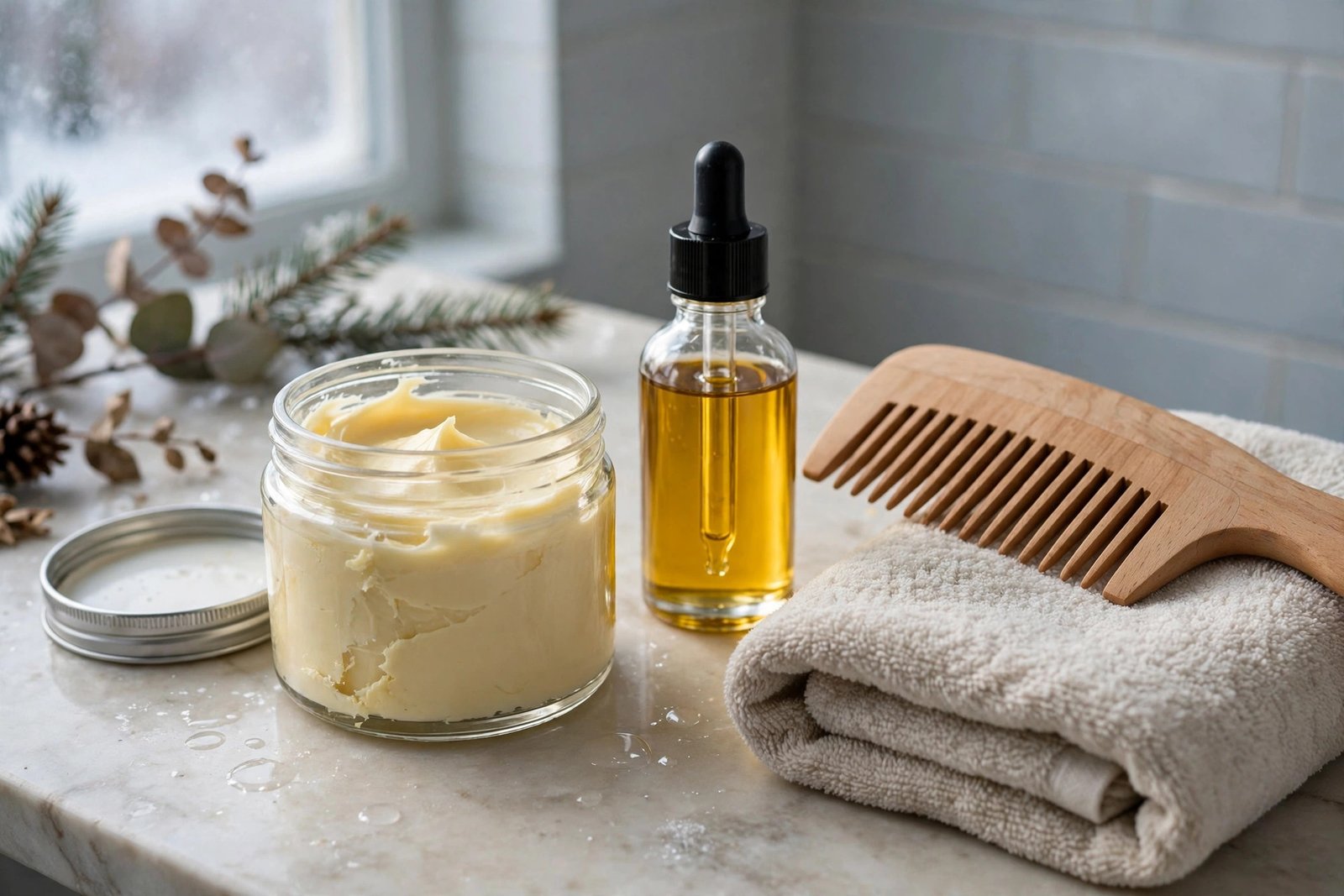
A weekly hair mask is the single most effective winter treatment for dry, damaged hair. Choose a mask rich in nourishing ingredients like shea butter, argan oil, keratin, or coconut oil, and apply it to damp, towel-dried hair from mid-length to ends. Leave it for ten to twenty minutes, or longer under a shower cap for a deeper treatment, then rinse thoroughly. If your hair is fine, use a lighter mask and rinse well to avoid heaviness; if it is thick or curly, a richer mask and a longer leave-in time work better.
Leave-in conditioner is the daily companion to the weekly mask. A small amount through the lengths after washing smooths frizz, detangles gently, and adds a protective layer against wind and indoor dryness. For very damaged ends, a drop of hair oil, such as argan or jojoba, seals split ends temporarily and adds shine. Avoid overloading hair with products, though: buildup makes hair look dull and heavy. Clarify once a month with a gentle clarifying shampoo if you use many styling products. Building hair care into a calm routine helps consistency, and our cozy self-care routine ideas show how to make it a ritual you actually enjoy.
Protect Hair From Hats, Wind, and Heat
Hats are essential in winter, but they cause friction, flattening, and static. The fix is simple: choose hats lined with silk or satin, or wear a silk scarf under a wool hat, so hair slides instead of catching. Wear hair in a loose braid or low bun under a hat rather than a tight ponytail, which breaks hair at the tie point. When you come indoors, remove the hat gently and run a little leave-in conditioner or a drop of oil through the ends to restore smoothness.
Heat styling deserves a winter break. Blow-drying on high heat, straightening, and curling all damage already-dry hair further. When you must use heat, always apply a heat protectant first, use the lowest effective temperature, and let hair air-dry partially before blow-drying. On no-heat days, embrace natural texture with a braid, a bun, or soft waves from overnight braiding. A consistent morning routine makes this easier, and our winter morning routine ideas include time-saving hair steps that protect rather than punish your hair.
Winter Hair Care Shortcuts
A silk or satin pillowcase reduces friction and breakage overnight, especially for curly and fragile hair.
Use a wide-tooth comb on damp hair, starting from the ends upward, and never rip through knots.
Regular small trims remove split ends before they travel up the hair shaft and cause more breakage.
A final cool rinse seals the cuticle, adds shine, and helps conditioner stay effective longer.
Silk-lined hats or a silk scarf under a wool hat prevents friction, static, and hat hair.
Protein, iron, omega-3 fats, and vitamins from a balanced diet support strong, healthy hair growth.
Frequently Asked Questions
Why does hair get so dry in winter?
Cold air holds little moisture, heated indoor air is very dry, and hot showers, hats, and heat styling all strip oils from the hair shaft, leaving it rough, dull, and prone to breakage.
How often should I wash my hair in winter?
Two to three times a week suits most people in winter. Over-washing strips natural oils, while dry shampoo or tying hair back keeps it fresh on non-wash days.
What is the best winter treatment for damaged hair?
A weekly deep-conditioning mask is the most effective treatment, paired with daily leave-in conditioner and a drop of hair oil on the ends for protection and shine.
How do I prevent hat hair and static?
Wear silk-lined hats or a silk scarf under wool hats, style hair loosely underneath, and smooth a little leave-in conditioner through the ends after removing the hat.
Can winter hair damage be reversed?
Mostly yes. Deep conditioning, trims, and gentler habits restore moisture and smoothness over a few weeks, though severely split ends must be trimmed rather than repaired.
Healthy Hair Through Winter
Winter hair care is about protection more than products. Wash gently and less often, deep-condition weekly, reduce heat, shield hair from hats and wind, and trim regularly. Do those things consistently, and your hair will come out of winter softer, stronger, and shinier than it went in. Start this week with one change, a weekly mask or a silk pillowcase, and let the rest of the routine follow.
1 thought on “Winter Hair Care Tips for Dry, Damaged Hair”