
One-Pot Winter Soup Recipes for Easy Weeknights
Winter weeknights ask a lot of dinner: it must be warm, filling, fast, and — ideally — leave only one pot to wash. One-pot soups deliver all four. A pot of soup simmers while you do other things, tastes better the next day, and turns humble ingredients — lentils, root vegetables, beans, a few sausages — into a meal that feels like real cooking. The formulas below are not rigid recipes; they are templates you can adapt to whatever is in the cupboard, which is exactly what weeknight cooking needs.
The beauty of one-pot soup is that the technique barely changes: soften aromatics, add the main ingredients and liquid, simmer until everything is tender, and finish with something bright — herbs, lemon, a swirl of cream or a grating of cheese. Master that arc and you can improvise soup all winter without ever opening a cookbook. Here are the five templates worth knowing, plus the freezer system that turns one cooking session into a week of dinners.
Key Takeaways
- Every great one-pot soup follows the same arc: aromatics, main ingredients, liquid, simmer, bright finish.
- Lentil, bean, potato, noodle and tomato soups cover a full week of variety from one technique.
- Finish with brightness — lemon, herbs, vinegar or cheese — or the soup tastes flat no matter how long it cooks.
- Soups freeze beautifully for up to 3 months; freeze in single portions, without cream or pasta added.
- One pot, one board, one knife: keep prep minimal by cutting everything roughly and directly into the pot.
- Day-two soup is better soup — flavours deepen overnight, so always cook a double batch.
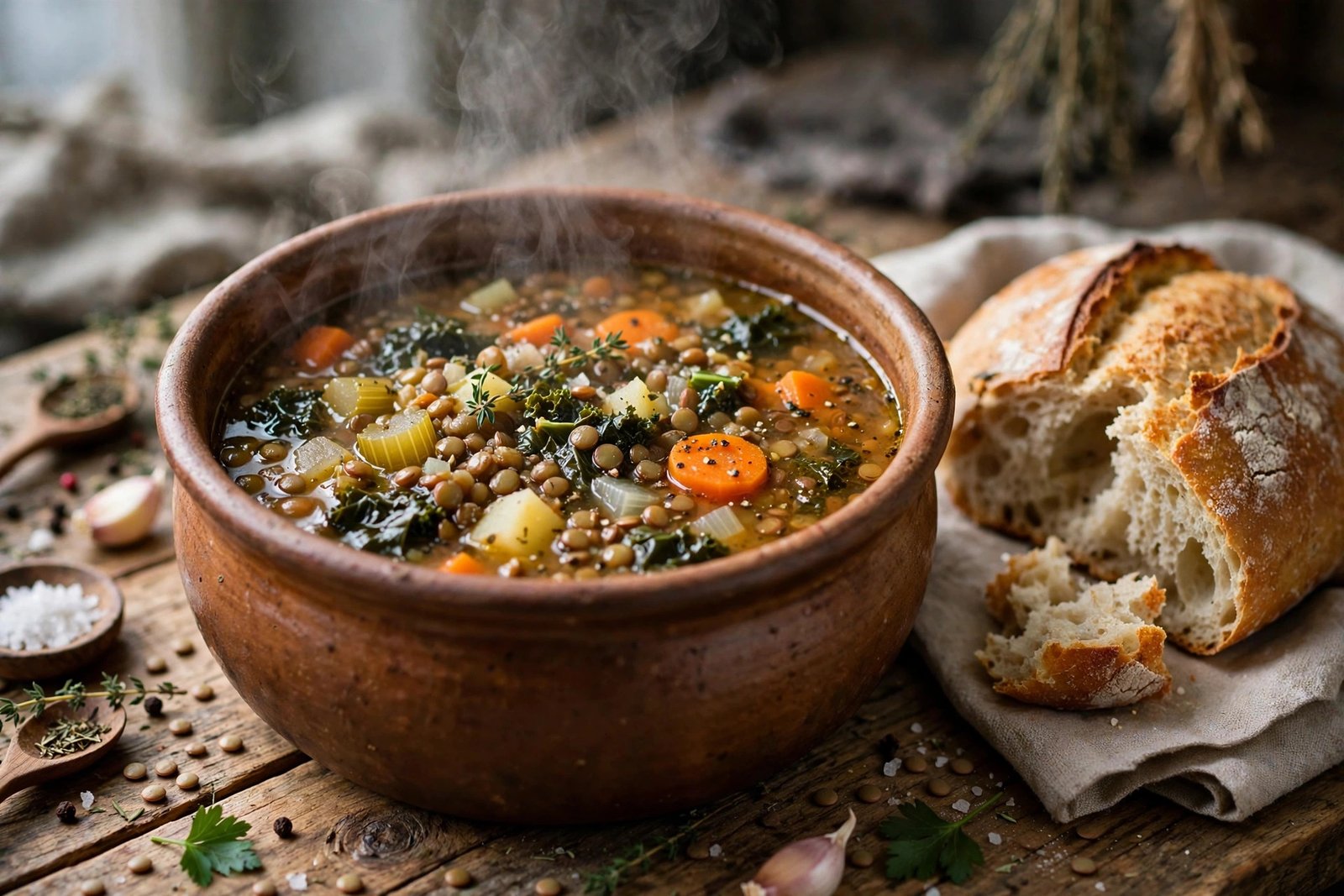
1. The Weeknight Lentil Soup
Red lentil soup is the fastest genuinely satisfying soup there is — ready in about 30 minutes, from store-cupboard ingredients, with no soaking and no precision. Soften an onion, two carrots and garlic in olive oil, add a teaspoon each of cumin and coriander, stir in a cup of red lentils and a litre of stock, and simmer until the lentils collapse into a thick, golden soup. Blend half for a creamy texture with some body left, then finish with lemon juice and a handful of herbs. It is high in protein and fibre, naturally vegan, and costs very little per bowl.
Variations keep it from getting boring: add a can of coconut milk and a spoon of curry paste for a spiced version; stir in spinach at the end for a green version; top with crumbled feta and toasted seeds for a more substantial meal. Serve with crusty bread or flatbread, and you have a dinner that feels far more considered than the effort it took. Lentils also freeze perfectly, so a double batch gives you two more dinners for the price of one cooking session. For more cosy bowl ideas, see our November cosy soup recipes.
2. Hearty Bean and Sausage Soup
When the evening is cold and everyone is hungry, bean and sausage soup is the answer. Brown sliced sausages in the pot first — the fond they leave behind is free flavour — then soften onion, carrot and celery in the same fat, add garlic, a can of tomatoes, two cans of beans (cannellini or borlotti), stock and a parmesan rind if you have one. Simmer for 25 minutes and finish with a splash of vinegar and a shower of parmesan. The result is thick, smoky, deeply savoury, and substantial enough to be the whole meal.
This is also the best soup for using up the fridge: a handful of kale, a sad-looking courgette, half a cabbage — all of it belongs here. For a lighter version, use chicken sausages or skip the meat and add a smoked paprika and an extra can of beans. The key technique is not to rush the sausage browning: properly browned sausages give the soup a depth that no amount of stock cubes can fake. Pair it with the make-ahead sides from our make-ahead Thanksgiving side dishes if you are feeding a crowd.
3. Creamy Potato and Leek Soup
Potato and leek soup is winter comfort in its purest form — silky, mild, and loved by children and adults alike. Soften sliced leeks and an onion gently in butter (do not brown them; the soup should stay pale), add diced potatoes and stock, and simmer until the potatoes fall apart. Blend until smooth, then finish with cream, a knob of butter and plenty of black pepper. The classic version needs nothing else, but it welcomes toppings: crispy bacon, grated cheddar, chives, or a swirl of good olive oil.
The mistake to avoid is boiling the soup hard after adding cream, which can split it — keep the heat low once the dairy goes in. For a lighter version, blend in a can of white beans instead of cream; you get the same silky body with more protein and no dairy. Potato soup also reheats beautifully, but do not freeze the cream version — freeze it before adding cream, then stir the cream in when you reheat. A loaf of cranberry orange bread alongside turns this simple soup into a proper winter supper.
4. Chicken Noodle and Tomato: The Family Favourites
Chicken noodle soup earns its reputation: it is genuinely restorative, endlessly adaptable, and children will eat it without negotiation. Poach chicken thighs in stock with carrot, celery and onion, lift them out to shred, return the meat with egg noodles and simmer briefly. Finish with lemon, dill or parsley. The thighs (not breast) matter — they stay tender through simmering and give the broth more flavour. For a shortcut version, a good rotisserie chicken stirred into stock with vegetables and noodles gets you 90% of the way in 20 minutes.
Tomato soup is the other family classic, and the one-pot version beats canned soup easily. Soften onion and garlic, add two cans of good tomatoes, a pinch of sugar, stock and a handful of basil, simmer 20 minutes and blend with a splash of cream. Roasting the tomatoes first deepens the flavour, but it is optional on a weeknight. Both soups freeze well (noodles separately for the chicken version, to avoid mush), and both pair with a grilled cheese sandwich for the definitive winter comfort dinner. For freezer-friendly baking to go with them, our freezer-friendly holiday baking ideas stock the freezer alongside the soup.
The Freezer System: One Cook, a Week of Dinners
Soup takes the same time whether you make one portion or eight. Always cook double and freeze half.
Freeze soups without cream, pasta or noodles, then add those fresh when reheating for the best texture.
Freeze in labelled single portions in flat bags — they thaw faster and stack neatly.
Cool soup quickly in a sink of cold water, then freeze within two hours for food safety.
Move tomorrow’s soup to the fridge tonight. Reheat until piping hot, and never reheat twice.
A squeeze of lemon, fresh herbs or grated cheese at serving revives even a twice-frozen soup.
Frequently Asked Questions
How long do one-pot soups take on a weeknight?
Most are ready in 30–45 minutes, with only 10–15 minutes of active work. Lentil soup is fastest at about 30 minutes; bean and sausage soup takes around 40.
How long can I freeze homemade soup?
Up to 3 months in a sealed container or bag. Freeze in single portions, without cream or pasta, and label with the date and contents.
Why does my soup taste flat?
It almost always needs a bright finish: lemon juice, vinegar, fresh herbs or a salty cheese. Salt alone cannot fix a soup that lacks acidity and freshness.
Can I freeze soup with cream or noodles in it?
It is better not to. Cream can split and noodles turn mushy when frozen and reheated. Freeze the base, then add cream or noodles fresh.
Is soup actually filling enough for dinner?
Yes, when it includes protein and fibre — lentils, beans, chicken or sausage — plus bread on the side. A thin vegetable-only broth is a starter, not a meal.
Start With Lentils Tonight
If you cook one soup this week, make it the red lentil soup: thirty minutes, one pot, ingredients you probably already own, and a freezer portion for a night when you really do not feel like cooking. Once the one-pot habit is in place, winter weeknights get noticeably easier — warmer, cheaper, and with far less washing up. That is a trade worth making every single week of the season.