
Winter Home Fragrance Ideas: Candles & Simmer Pots
Walk into a home that smells like winter — cinnamon, pine, orange, a hint of woodsmoke — and you instantly feel at ease, even before you see a single decoration. Scent is the most powerful atmosphere-maker we have, and it works faster than lighting, music or decor. Winter is also the season when fragrance matters most: windows stay shut, heating dries the air, and cooking smells linger longer, so a deliberate home scent does real work, not just decorative work.
This guide covers the three best ways to scent a home in winter — candles, simmer pots and diffusers — plus the art of scent layering: combining different fragrances across rooms so the whole house smells coherent rather than like a candle shop exploded. Done well, your home will smell like the season itself.
Key Takeaways
- Winter’s best scent families: warm spice (cinnamon, clove), wood (cedar, pine, sandalwood), citrus (orange, bergamot) and vanilla/amber.
- Candles give atmosphere and the strongest scent throw; simmer pots are cheapest and most natural; diffusers give constant, flameless background scent.
- Layer scents by room: one lead scent for shared spaces, complementary accents in bedrooms and bathrooms.
- Never mix competing strong scents in one room — one fragrance per room, always.
- Safety first: never leave candles or simmer pots unattended, and keep diffusers away from pets’ resting areas.
- Ventilate briefly even in winter — fresh air makes fragrance noticeable again instead of background noise.
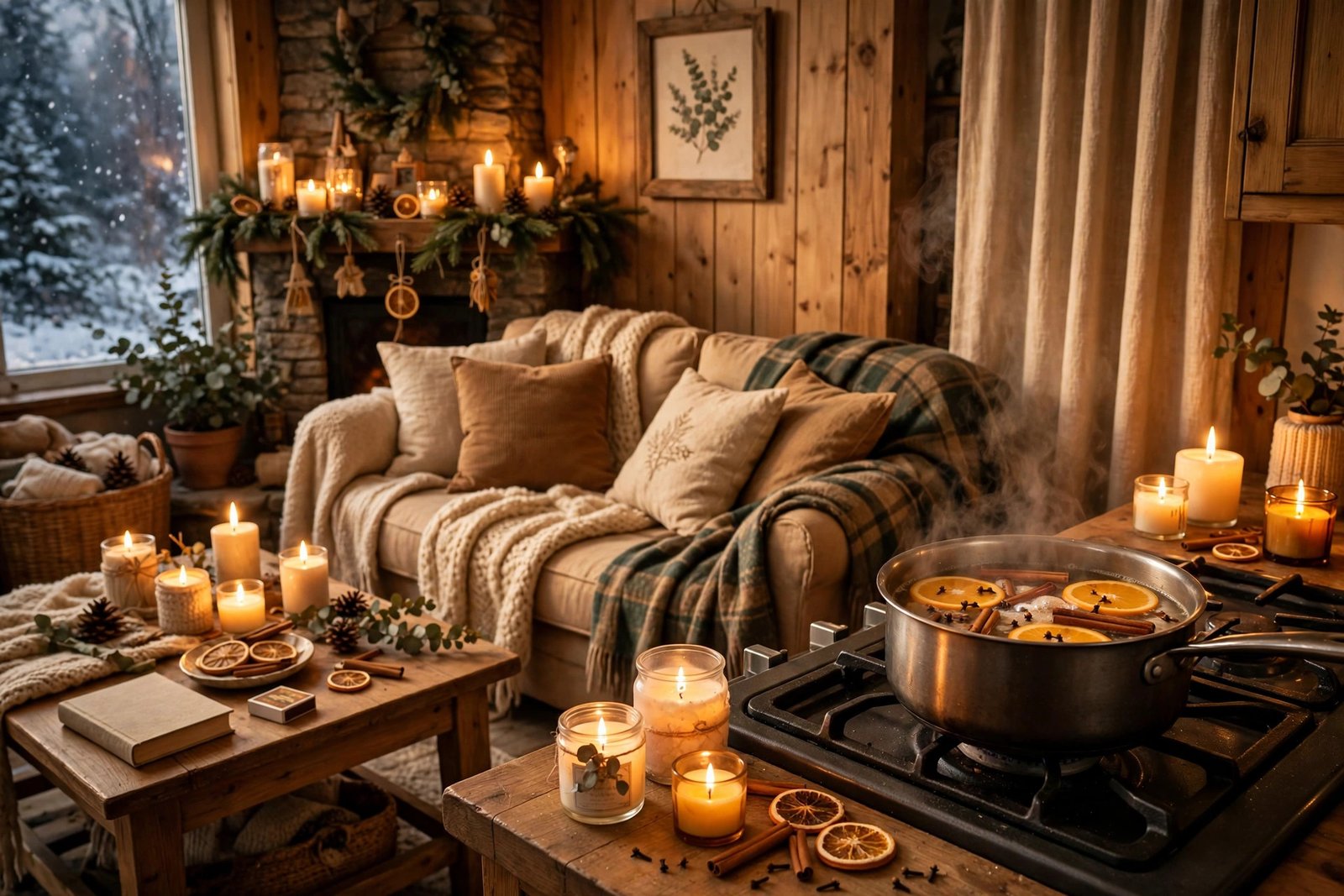
Candles: Atmosphere and Scent in One
Candles are winter’s default for a reason: they give light, warmth and fragrance in a single object. For the best scent throw, choose soy or beeswax candles with a good fragrance load — cheap paraffin candles often smell strong in the jar and faint in the room. One large candle scents a living room; two smaller ones at opposite ends work better than one giant candle in a big, open-plan space. Burn a candle for at least an hour so the wax pool melts fully to the edges — this prevents tunnelling, where the candle burns a hole down the middle and wastes half its wax.
Winter candle scents worth trying: spiced orange and clove for the living room, cedar and pine for a woodsy feel, vanilla and amber for bedrooms (both are calming and sleep-friendly), and a fresh fir or eucalyptus for the bathroom, where a clean scent balances the warmth elsewhere. Trim the wick to about 5 mm before each burn for a cleaner flame and less soot, and never burn a candle for more than four hours at a stretch. If you like making your own, our guide to making beeswax candles at home is a lovely winter project — and homemade candles make excellent gifts. For the wider scent picture, our room-by-room guide to making your house smell good covers every space.
Simmer Pots: The Cheapest, Most Natural Option
A simmer pot — a pot of water with aromatics gently heated on the stove — is the oldest home fragrance trick and still one of the best. It costs almost nothing, uses ingredients you already have, and fills the house with a real, natural scent that no candle quite replicates. The classic winter recipe: water, sliced orange, cinnamon sticks, whole cloves, a star anise and a few sprigs of rosemary or pine. Simmer on the lowest heat for one to three hours, topping up the water every hour so the pot never runs dry.
Variations are endless: apple slices and cinnamon for a baked-apple feel; lemon, rosemary and vanilla for a fresh, clean scent; cranberries, orange and pine for a festive pot that looks as good as it smells. Simmer pots are ideal for the hour before guests arrive — the scent builds gradually and greets people at the door. The only rules: never leave a simmer pot unattended, never let it boil dry (which scorches the pot and smells terrible), and make a fresh pot each day rather than reusing one, since the aromatics lose their scent and can develop bacteria. A simmer pot pairs beautifully with the cosy textures in our cosy winter bedroom ideas and winter living room layering ideas.
Diffusers and Room Sprays: The Flameless Background
Reed diffusers are the set-and-forget option: no flame, no heat, just constant, gentle fragrance for weeks. They work best in smaller rooms — bathrooms, bedrooms, hallways — where a candle’s throw would be too strong or a flame impractical. Flip the reeds every few days to refresh the scent, and place the diffuser where air moves past it (near, not on, a radiator or a doorway) so the fragrance circulates. Choose a diffuser scent in the same family as your candles to keep the house coherent — if the living room smells of cedar, a cedar or pine diffuser in the hallway extends the feeling rather than fighting it.
Room sprays and linen sprays are the quick fix: a spritz on curtains, cushions or bedding refreshes a room in seconds and is ideal for guest bedrooms before visitors arrive. They are not a substitute for a real scent source — they fade fast — but they are the perfect finishing touch. For a natural option, a spray bottle with water, a splash of vodka (as a preservative) and a few drops of essential oil makes an effective homemade linen spray. Avoid plug-in diffusers in rooms where pets sleep, and check essential oil safety for cats and dogs before diffusing — some oils, including tea tree, are toxic to pets.
Scent Layering: Making the Whole House Smell Coherent
Scent layering is the difference between a house that smells nice in one room and a house that smells wonderful everywhere. The principle is simple: pick one lead scent family for the shared spaces (living room, hallway, kitchen) and use complementary accents in private rooms. For example, a warm spice lead — cinnamon, clove and orange — in the living areas, with vanilla-amber in the bedroom and fresh fir in the bathroom, feels like one home with different moods, not three different homes.
The rules that keep layering from turning into chaos: one fragrance per room, never two competing candles in the same space; keep the intensity matched (a strong candle in the living room plus a strong diffuser in the adjacent hallway will clash, so make one of them subtle); and ventilate briefly each day, even in winter — ten minutes of fresh air resets your nose, so the fragrance becomes noticeable again instead of fading into background noise. Nose blindness is real: if you can no longer smell your own home’s scent, guests still can, so resist the urge to keep adding more.
Winter Fragrance Tips
Two competing fragrances in one room smell like a shop, not a home. Pick one and commit.
A 5 mm wick burns cleaner, with less soot and a better scent throw, than a long, mushrooming wick.
Candles and simmer pots need supervision. Blow out candles when you leave the room, always.
Check the water every hour. A pot that boils dry scorches and smells awful for days.
Some essential oils are toxic to cats and dogs. Check safety before diffusing in pet areas.
Ten minutes of fresh air resets your nose and makes your home’s fragrance noticeable again.
Frequently Asked Questions
What are the best winter home fragrance scents?
Warm spice (cinnamon, clove), wood (cedar, pine, sandalwood), citrus (orange, bergamot) and vanilla/amber. These families feel seasonal without smelling like a candle shop.
How do I make a simmer pot?
Fill a pot with water, add sliced orange, cinnamon sticks, cloves and rosemary or pine, and simmer on the lowest heat for 1–3 hours, topping up the water hourly. Never leave it unattended.
Are candles or diffusers better for winter?
Candles give stronger scent and atmosphere for living spaces; diffusers give constant, flameless background scent for smaller rooms. Most homes benefit from both, in different rooms.
Can I mix different scented candles in one house?
Yes, across different rooms — but keep one fragrance per room, and stay within complementary scent families so the house smells coherent rather than chaotic.
Are essential oils safe around pets?
Some are not — tea tree and several others are toxic to cats and dogs. Check each oil before diffusing, and never diffuse in a room where a pet cannot leave.
Start With a Simmer Pot This Evening
You do not need to buy anything to make your home smell like winter tonight. Slice an orange, add cinnamon and cloves from the spice cupboard, and set a pot simmering on the lowest heat. Within an hour, the house will smell the way winter should — warm, spiced, and welcoming. Then, when you are ready, add a candle in your favourite winter scent and a diffuser in the hallway, and you will have a home that smells as good as it looks, all season long.