
Garage Storage Ideas: A Homeowner’s Guide to a Tidy, Functional Garage
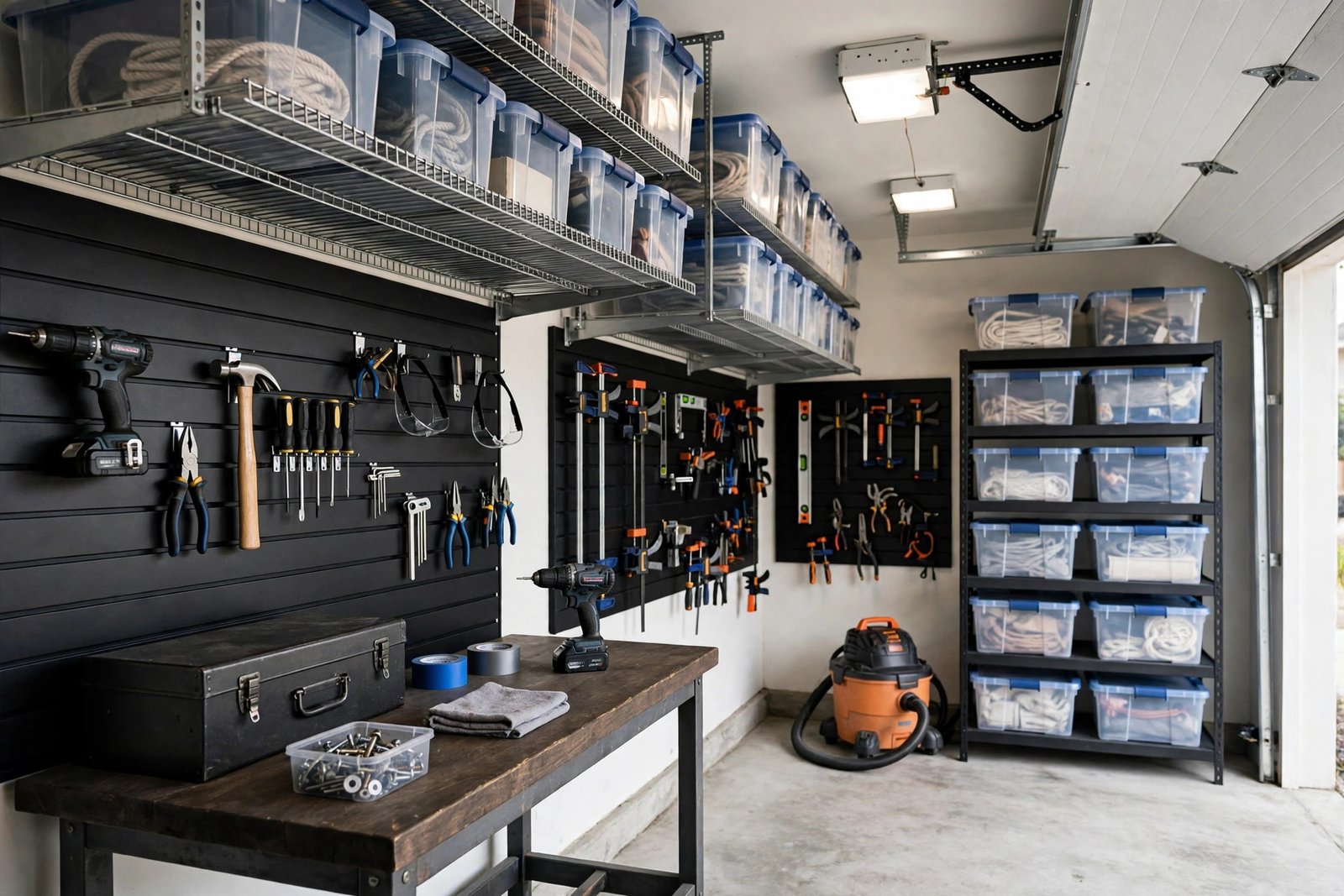
Most garages fail at storage for a simple reason: they were never planned. Boxes stack wherever they land, the floor becomes a permanent obstacle course, and the car ends up in the driveway. The good news is that turning it around does not require a full remodel — with smart zones, wall systems, and the ceiling, you can reclaim most of a two-car garage in a single weekend.
This guide walks you through the systems that actually work: slatwall and pegboard panels, overhead racks, labeled bins, and zone-based layouts that keep everything findable. You will also find budget projects, safety tips, and the mistakes that turn garages into expensive junk drawers.
Key Takeaways
- Divide the garage into zones (tools, sports, seasonal, auto) before buying any storage products.
- Walls and ceilings hold the most unused space — get items off the floor first.
- Labeled, clear bins beat cardboard boxes for durability, pest resistance, and visibility.
- Overhead racks are ideal for bulky, rarely used items like holiday decor and camping gear.
- A purge before organizing cuts the job in half and stops you from buying storage for things you don’t need.
Step 1: Purge Before You Organize
Every garage organization project should start with an honest sort. Pull everything out onto the driveway — yes, everything — and make three piles: keep, donate or sell, and toss. Broken holiday lights, half-empty paint cans from a decade ago, and single mismatched shoes are not storage problems; they are clutter. Removing them first means fewer bins and a layout that actually fits.
Be ruthless with duplicates. Two hammers and four nearly identical tool sets are common garage finds — keep the best of each and let the rest go. A good rule of thumb: if you have not touched it in two years and it has no seasonal or emergency purpose, it does not earn floor, wall, or ceiling space.
Step 2: Plan Your Garage in Zones
The single most transformative garage storage idea is also the simplest: assign every area a job. A zoned garage means nothing drifts, because everything has a home. For a typical two-car garage, four or five zones cover nearly everything:
- Tool & workshop zone: along one wall, close to a power outlet and good light. Hand tools, power tools, hardware organizers, and a small workbench live here.
- Sports & recreation zone: near the garage door so bikes, balls, and kids’ gear can be grabbed on the way out.
- Seasonal & bulk zone: on overhead racks or high shelves — holiday decor, camping gear, luggage, and decorations you touch once a year.
- Auto care zone: car-cleaning supplies, emergency kit, and fluids in one labeled bin or cabinet near where you park.
- Household overflow zone: pantry extras, recycling center, and cleaning supplies in a single compact cabinet so they stop colonizing corners.
The same zone thinking that makes a small closet work — see our guide on how to organize a small closet — works at garage scale. Group by use, not by size or shape, and the system maintains itself.
Wall Storage: Your Biggest Unused Surface
Garage walls are usually the largest underused area in the entire home. Getting gear onto the walls frees the floor for the car and your feet, and it makes tools visible instead of buried. There are three wall systems worth knowing, and you can mix them across zones.
Slatwall Panels
Slatwall is the workhorse of garage walls: horizontal grooves accept hooks, baskets, and shelves that slide and lock into place. It looks clean, holds serious weight when screwed into studs, and the layout is changeable — when your gear changes, you move hooks instead of reinstalling brackets. Cover the workshop wall with slatwall and you will wonder how you ever managed without it.
Pegboard (Done Right)
Pegboard gets a bad reputation because most installations are flimsy. Done right — a framed sheet with proper stand-offs, screwed into studs — it is an excellent, budget-friendly tool wall. Trace each tool’s outline on the board so its home is obvious; you will notice at a glance what has not been put back.
Cabinets and Lockable Storage
Wall-mounted cabinets handle what looks messy on open hooks: chemicals, paints, and anything out of kids’ reach. Mounting them off the floor keeps them safe from water, eases sweeping, and adds visual calm. Keep solvents and pesticides in a locking cabinet — a cluttered chemical shelf is a fire and health hazard.
Overhead Racks: Storage You Never Have to Look At
The ceiling above a parked car is hundreds of square feet of dead space. Overhead racks — steel platforms hung from the ceiling joists — are made for it. They are the single best garage storage idea for bulky, low-frequency items: holiday decorations, camping tents, luggage, spare car parts, and keepsake boxes.
A few installation rules matter. Mount into joists or structural framing, never just drywall. Keep the load centered and balanced, and respect the rack’s rated weight — most quality racks hold 250 to 600 pounds when installed correctly. Leave a few inches of clearance above the rack so you can slide bins in and out, and check that the garage door’s travel path is clear. Store items in sealed, clear bins up there; cardboard degrades in heat, and a label facing the garage door means you never need a ladder to identify what is stored.
4 Budget Garage Storage Projects
Spend a Saturday pulling everything out, sorting keep/donate/toss, and sweeping the floor. Cost: nothing. Payoff: half your clutter disappears before you spend a dollar.
Beveled wood strips on the wall plus matching cleats on shelves and tool holders create a fully movable system for the cost of lumber and screws. Custom, strong, and re-arrangeable.
Two parallel rails mounted to joists let labeled totes slide in overhead — a low-cost DIY version of a commercial overhead rack for lightweight seasonal gear.
A single rolling cart holds the supplies for your current project (paint, tools, drop cloths) and tucks against the wall when you are done. One cart replaces five scattered piles.
Bins, Labels, and the Details That Keep It Tidy
The systems above create the structure; bins and labels are what keep it alive long term. Choose clear, heavy-duty totes so contents are visible, and label every bin on at least two sides with large, readable labels. Group like with like — all painting supplies in one bin, all car-care in another — and never mix zones in a single bin. Small plastic drawer units are perfect for screws, bolts, and anchors, the same way the right containers transform a kitchen. Our pantry organization ideas guide covers decant-and-label systems you can lift directly for the garage.
A final detail: keep the floor visible. If you can see most of your garage floor, the space feels twice as big and you will actually park the car in it. Floor-standing items should earn their spot — a bike on a floor stand is fine; three mystery boxes in the middle of the floor are not.
Garage Storage in Small or Shared Spaces
Not every garage is a spacious two-car bay. Single-car and shared garages need the same systems with tighter discipline: go vertical first with floor-to-ceiling shelving on one wall, choose slim-profile cabinets so the walkway stays comfortable, and use folding workbenches that collapse against the wall.
Where space is truly tight, space-saving furniture ideas for small homes translate directly — folding tables and wall-mounted drop-leaf surfaces work just as well in a garage as in a studio apartment.
Safety Rules for Garage Storage
Garages hold the home’s most hazardous everyday items, so a few safety rules are non-negotiable:
- Store flammables safely. Gasoline, solvents, and aerosols belong in approved containers in a cool, ventilated spot — never beside the water heater or furnace.
- Lock up chemicals and sharp tools. If children visit or live in the home, pesticides, paints, and power tools need locking cabinets.
- Respect weight ratings. Overloading a rack or shelf is a slow-motion disaster. Distribute heavy items low and keep them off overhead racks.
- Keep exits and the door clear. Nothing should block the path to the house door or the garage door’s travel zone.
- Ventilate when working. If your workshop zone involves painting, staining, or glue, crack the garage door for airflow.
Frequently Asked Questions
What is the best way to store things in a garage?
Use a zone-based system: wall storage (slatwall or pegboard) for tools you use often, overhead racks for bulky seasonal items, and labeled bins for everything else. Keeping items off the floor frees space for the car and makes the garage easier to clean and maintain.
How do I organize a garage on a small budget?
Start with a free purge — removing what you don’t need cuts storage costs dramatically. Then add a DIY french cleat or pegboard wall for tools, use clear labeled totes instead of cardboard, and build ceiling-hung tote slides from lumber for cheap overhead storage. You can transform a garage for well under a few hundred dollars.
What should I not store in a garage?
Avoid storing things sensitive to heat, cold, or humidity: important documents, photographs, delicate electronics, and food. Flammable liquids need approved containers and proper ventilation, and anything of real value belongs inside the house rather than in an unsecured garage.
Are overhead garage racks safe?
Yes, when installed into ceiling joists and kept within their rated weight limit. Mount into structural framing (never drywall alone), keep the load balanced and centered, and leave clearance for the garage door’s travel path. Inspect the mounting hardware yearly.
How do I keep my garage organized long term?
Every item needs a labeled home and zones must stay separated. Trace tools on the pegboard so missing items are obvious, do a ten-minute reset monthly, and use a one-in-one-out rule for new gear.
Bringing It All Together
The best garage storage ideas are not products — they are decisions. Purge first, zone the space, move everything possible onto walls and the ceiling, and label what remains. Do that, and your garage stops being the place where things disappear and becomes the most functional room in the house.
Start this weekend with the free part: pull everything out, sort it honestly, and sweep the floor. Once you can see the space, the zones will suggest themselves — and fitting the car inside again will feel like a small victory worth celebrating.