
How to Organize a Small Closet: Smart Ideas That Double Your Space
A small closet is rarely the real problem. Most closets feel cramped because every inch is doing the wrong job — a single lonely rod, a shelf stacked so high nothing on it is reachable, and a floor that has quietly become a shoe graveyard. Learning how to organize a small closet is less about square footage and more about giving every item a deliberate home.
In this guide, you will find a complete system for small closet organization: the one-hour declutter reset, the measurements to take before you buy a single organizer, the vertical tricks that unlock double the hanging space, and the low-cost bins, hangers, and hooks that actually earn their keep. Whether you are working with a narrow reach-in closet, a hallway coat closet, or a tiny apartment wardrobe, these ideas scale to fit.
Key Takeaways
- Declutter before you organize: empty the whole closet and sort everything into keep, donate, repair, or toss.
- Measure your rod length, shelf depth, and clearances before buying any organizer.
- Go vertical — double-hang rods and over-the-door storage unlock the inches you already own.
- Zone the closet by category and frequency of use so every item has a fixed address.
- A five-minute weekly reset keeps a small closet organized for good.
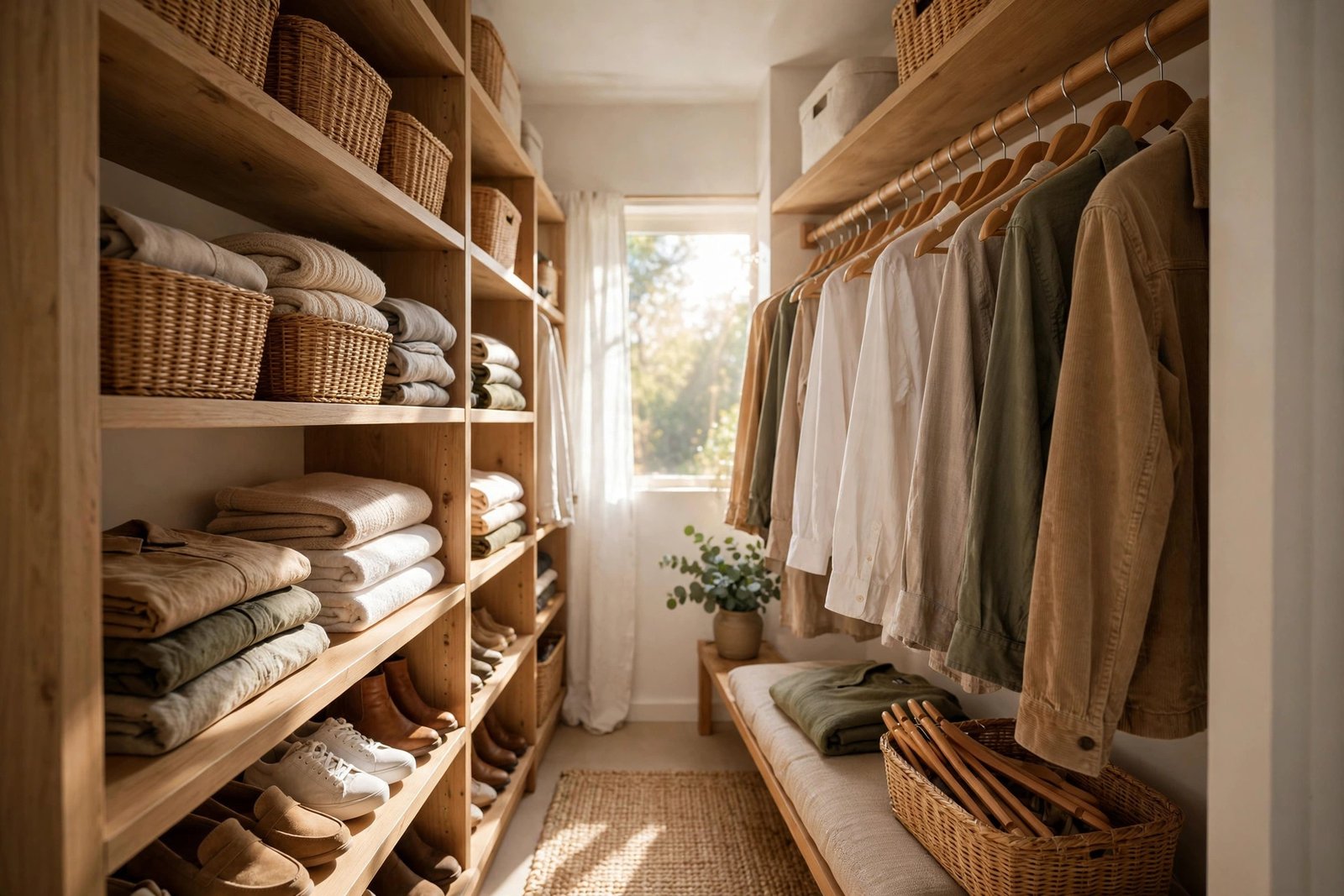
Start With a One-Hour Declutter Reset
No organizer can fix a closet that holds twice what it should. Before you measure, shop, or rearrange a single thing, pull everything out. Yes — everything. Pile it on the bed, wipe down the empty shelves and rod, and sort every item into four piles: keep, donate, repair, and toss.
Be honest about the middle categories. If you have not worn it in a year, it no longer fits your life, or it needs a repair you keep postponing, it does not earn space in a small closet. This is where a minimalist mindset pays off — if you are building toward a calmer home overall, these minimalist home decor ideas show how owning less makes every room easier to keep beautiful.
Finish the reset with the one-in-one-out rule: every new item that enters the closet must replace one that leaves. In a small closet, this single habit prevents ninety percent of future clutter.
Measure First, Buy Organizers Second
The most expensive small closet organization mistake is buying organizers before measuring. Bins an inch too wide, a rod doubler that collides with the door, a shoe rack that blocks the swing — all of it is avoidable with a tape measure and five minutes.
Write down four numbers: the usable length of your hanging rod, the depth of each shelf, the clearance from the floor to the lowest shelf, and the space behind the door when it closes. Take a photo of the empty closet too — you will reference it more than you think while shopping.
- Standard reach-in closets run about 24 inches deep — bins deeper than that will stick out past the frame.
- Double-hang sections need roughly 40 inches of height for shirts and 80 inches for dresses and coats.
- Leave at least 2 inches of clearance above hanging clothes so hangers slide freely.
Go Vertical: Unlock the Hidden Inches
Small closets almost always have unused air. The average reach-in closet has thirty to forty percent of its volume sitting empty — above the top shelf, below short hanging clothes, behind the door. Going vertical is the single highest-impact move in small closet organization, and it costs almost nothing.
Double-hang everything you can
If you have one rod at standard height, you can almost always add a second rod halfway down. A hanging rod doubler or a simple tension rod creates two tiers: shirts and folded pants up top, longer items on the full-length section beside them. This one change genuinely doubles hanging capacity, and it costs less than a takeaway dinner.
Claim the back of the door
The inside of the closet door is prime real estate. An over-the-door organizer holds shoes, scarves, belts, sunglasses, and jewelry without touching a single inch of shelf or floor space. Choose a slim fabric version so the door still closes flat — bulky plastic racks defeat the purpose in a small closet.
Zone Your Closet Like a Boutique
Professional organizers do not sort by color first — they sort by zone. Assign every category a fixed address: daily wear at eye level and within easy reach, workwear grouped together, occasion and seasonal pieces up high or at the far end, accessories corralled in one dedicated spot.
Zones work because they remove decisions. When gym clothes, work shirts, and weekend outfits each live in their own lane, putting laundry away takes seconds and getting dressed takes less. Label the zones on shelf edges or bin fronts for the first month until the habit sticks — then the system maintains itself.
Small Closet Organization Ideas for Clothes
Clothes are the bulk of what a closet holds, so small changes here multiply fast. Start with visibility: if you cannot see it, you will not wear it, and it is just expensive filler taking up rod space.
Switch to slim, matching hangers
Bulky plastic and wire hangers waste up to a third of your rod. Slim velvet hangers are a fraction of the width, grip clothes so nothing slides off, and — because they match — instantly make the closet look calmer and more spacious. Replace them in one go for maximum effect rather than mixing old and new.
File-fold shelves and drawers
Stacked piles topple; filed clothes do not. Fold t-shirts, jeans, and sweaters into neat rectangles and stand them upright like files in a drawer or bin, fold-edge up. You can see every item at a glance, nothing gets buried, and pulling one piece never collapses the whole stack. It is the fastest upgrade for deep shelves.
Tame Shoes, Bags, and Awkward Corners
Shoes multiply in the dark corners of small closets. Give them a strict boundary: a low-profile slanted shoe rack or a single row along the floor, one pair deep, heels alternating with toes. If a pair cannot fit inside the boundary, the one-in-one-out rule applies — no exceptions, no “guest pairs” living on the floor.
Bags lose their shape and eat shelf space, so hang them instead — S-hooks on the rod or a row of adhesive hooks on the side wall keeps totes and handbags visible and crease-free. The deep top shelf, meanwhile, is for labeled bins holding out-of-season clothes, never for mystery piles you avoid opening.
Keep It Organized With a Five-Minute Weekly Reset
The best small closet organization system is the one you maintain, and maintenance should be boring, not heroic. Once a week — Sunday evening works well — spend five minutes rehanging strays, refiling the drawer that drifted, and returning the one pair of shoes that migrated to the hallway.
Pair the reset with laundry day and it becomes invisible. Put-away happens the moment clothes come off the line, the donate bag gets tied off when it fills, and the closet stays in its organized state indefinitely. Systems beat willpower, every time.
8 Quick Wins for Any Small Closet
A battery puck light or LED strip turns a dark closet into one you can actually see — visibility is half of organization.
One low bin for laundry-to-be keeps dirty clothes from colonizing the clean zone.
Drawer dividers or small trays stop socks, belts, and ties from spreading across shelves.
A single valet hook on the wall ends morning rummaging for good.
Vacuum bags compress bulky winter coats into flat, stackable slabs for the top shelf.
When something stops earning its spot, it leaves the closet the same day.
A phone photo of the organized closet is your reset reference when things drift.
A closet packed to 80 percent stays organized; one at 100 percent never does.
Frequently Asked Questions
What is the best way to organize a very small closet?
Declutter first, then go vertical: double-hang the rods, add over-the-door storage, and use shelf bins as drawers. Zone everything by category so each item has a fixed address, and keep it there with a five-minute weekly reset.
How can I fit more clothes in a small closet?
Slim velvet hangers reclaim up to a third of rod space, a double-hang rod literally doubles hanging capacity, and file-folding lets shelves and bins hold far more while keeping every item visible.
How do I organize a small closet with no drawers?
Treat shelf-top bins as drawers, add a hanging fabric organizer for folded items, and file-fold inside everything. Clear bins or labeled fronts keep the whole setup easy to navigate.
Should I organize my closet by color or by category?
Category first, color second. Group by type and frequency of use — work, casual, occasion — then arrange each group light to dark. You get both logic and the satisfying boutique look.
How often should I declutter my closet?
Do a full reset once or twice a year and follow the one-in-one-out rule year-round. A small closet punishes neglect faster than a big one, so the weekly five-minute reset matters most of all.
Your Small Closet, Upgraded
A small closet that is organized beats a big closet that is not — every single morning. Start this weekend: empty it, measure it, zone it, and hang it right. The whole transformation takes an afternoon and costs less than one impulse shopping trip.
If you love making small spaces work harder, explore our small home decor ideas for the rest of the house, or see how a spare closet can pull double duty with our home office decor ideas. A little planning turns the smallest footprint into the hardest-working corner of your home.
1 thought on “How to Organize a Small Closet: Smart Ideas That Double Your Space”