
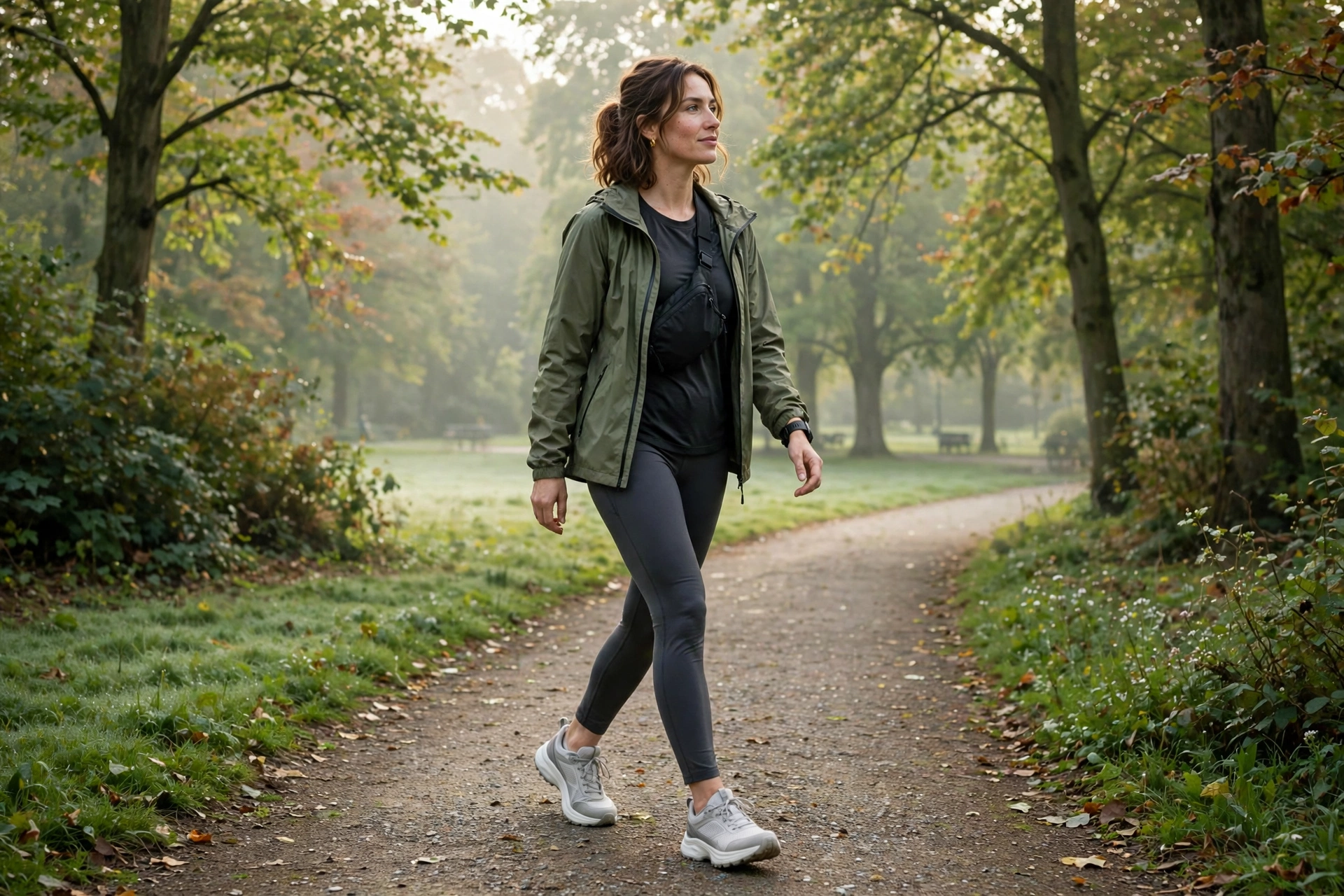
Walking is the most underrated exercise there is — free, gentle on the joints, and good for almost everything. But the wrong shoes can turn a pleasant walk into sore feet, aching knees, and blisters by mile two. The best walking shoes for women combine proper cushioning, arch support, a roomy toe box, and a lightweight design that disappears on your feet. This guide compares the top picks for 2026, explains what to look for based on your foot type, and covers how to break in a new pair without pain.
- The best walking shoes balance cushioning and support — too soft and your feet tire, too firm and they ache.
- Look for: a roomy toe box, good arch support, a heel-to-toe drop of 8–12mm, and a weight under 300g per shoe.
- Top picks in 2026: Brooks Ghost 16, New Balance Fresh Foam 880, Hoka Bondi 8, Asics Gel-Nimbus 26, and Skechers Go Walk 7.
- Buy walking shoes in the afternoon, when feet are slightly swollen, and leave a thumb’s width at the toe.
- Replace walking shoes every 300–500 miles, or when the cushioning feels flat.
What Makes a Great Walking Shoe?
Walking shoes are not running shoes, and the difference matters. A walking shoe needs a lower heel-to-toe drop (the height difference between heel and forefoot), a more flexible forefoot for the heel-to-toe roll of walking, and cushioning tuned for impact rather than speed. The best walking shoes have a stable heel counter that holds your foot in place, a roomy toe box that lets your toes spread naturally, and a grippy outsole that works on wet pavement as well as dry.
Fit is everything. A shoe that is perfect on paper but pinches your little toe will sit in the cupboard. Try shoes on in the afternoon, when your feet are at their largest, and wear the socks you will actually walk in. Walk around the shop for at least five minutes, and check three things: your heel does not slip, your toes do not touch the front, and the widest part of your foot matches the widest part of the shoe. And if you are building a walking routine into a busy life, our work-life balance guide shows how a daily walk fits into a sustainable routine without taking over your day.
Best Walking Shoes for Women in 2026
The Brooks Ghost 16 (around $140) is the best all-rounder in this guide. It has soft, responsive cushioning, a smooth heel-to-toe transition, and a fit that suits most foot shapes. It is not the lightest shoe here, but it is the most comfortable over long distances, and it comes in wide widths — a real advantage. The New Balance Fresh Foam 880 (around $140) is the best for high arches, with plush cushioning and a secure, comfortable fit that works for all-day wear as well as dedicated walks.
The Hoka Bondi 8 (around $165) is the best for maximum cushioning: a thick, soft midsole that makes every step feel gentle, ideal for hard pavements and for walkers with knee or joint concerns. It looks chunky, but it is surprisingly light. The Asics Gel-Nimbus 26 (around $160) suits walkers who want a premium feel and excellent grip, especially in wet weather. And the Skechers Go Walk 7 (around $85) is the best budget pick: light, slip-on, machine-washable, and genuinely comfortable — the easiest shoe on this list to live with every day. For outfit ideas to pair with your new shoes, our Mary Jane shoes outfit ideas show how comfortable footwear can still look polished.
Choosing Walking Shoes for Your Foot Type
Flat feet need structure. Look for a stability shoe with a firm midsole and a supportive arch — the Brooks Adrenaline GTS and the Asics GT-2000 are the classic choices, and both come in women’s walking versions. High arches need cushioning: a neutral shoe with a soft, thick midsole (like the New Balance 880 or the Hoka Bondi) absorbs impact that a rigid arch cannot. Wide feet need a shoe that actually comes in wide — do not size up in a narrow shoe, because the length will be wrong and your heel will slip.
If you have plantar fasciitis, bunions, or another foot condition, the shoe matters even more. A firm heel counter, a roomy toe box, and good arch support are non-negotiable, and a removable insole lets you swap in a custom orthotic. Some walkers also benefit from a rocker sole, which reduces the work your foot does with each step. And whatever your foot type, break new shoes in gradually: wear them for short walks first, and do not take a brand-new pair on a long hike or a holiday. Our how to stop procrastinating guide applies here too — the hardest part of a walking habit is the first step out the door, and comfortable shoes remove the most common excuse.
How to Make Walking Shoes Last Longer
Walking shoes typically last 300–500 miles, or about 6–12 months of daily use. The cushioning wears out before the outside looks worn, so judge by feel, not appearance: if your feet ache after walks that used to feel easy, or if the shoe leans to one side when placed on a flat surface, it is time to replace them. Do not use walking shoes for running or for gym workouts — the different impact patterns wear them unevenly.
Care is simple: remove the insoles after wet walks and let the shoes air-dry (never on a radiator, which warps the midsole), brush off mud before it dries, and wash fabric shoes in the machine on a gentle cycle when they get dirty. Keep them out of direct sunlight when drying, and stuff them with newspaper to hold their shape. A little care easily adds months to a good pair.
Frequently Asked Questions
What are the most comfortable walking shoes for women?
The Brooks Ghost 16 and Hoka Bondi 8 are the most comfortable all-rounders in 2026. For a budget pick, the Skechers Go Walk 7 is light, cushioned, and easy to slip on.
Should walking shoes be tight or loose?
Neither — they should fit snugly at the heel and midfoot with a thumb’s width of space at the toes. Your feet swell during a walk, so a shoe that feels perfect in the morning may pinch by the afternoon.
How often should I replace my walking shoes?
Every 300–500 miles, or when the cushioning feels flat and your feet ache after walks that used to feel easy. For most daily walkers, that means a new pair every 6–12 months.
Can I use running shoes for walking?
You can, but walking shoes are better: they have a lower heel-to-toe drop, a more flexible forefoot, and cushioning tuned for walking impact. Running shoes work in a pinch, especially cushioned ones like the Ghost or Bondi.
Are expensive walking shoes worth it?
Up to about $150, yes — you get better cushioning, a better fit, and a longer life. Above that, the gains are small. The best value is usually a previous-year model of a top shoe, discounted by 30–40%.