
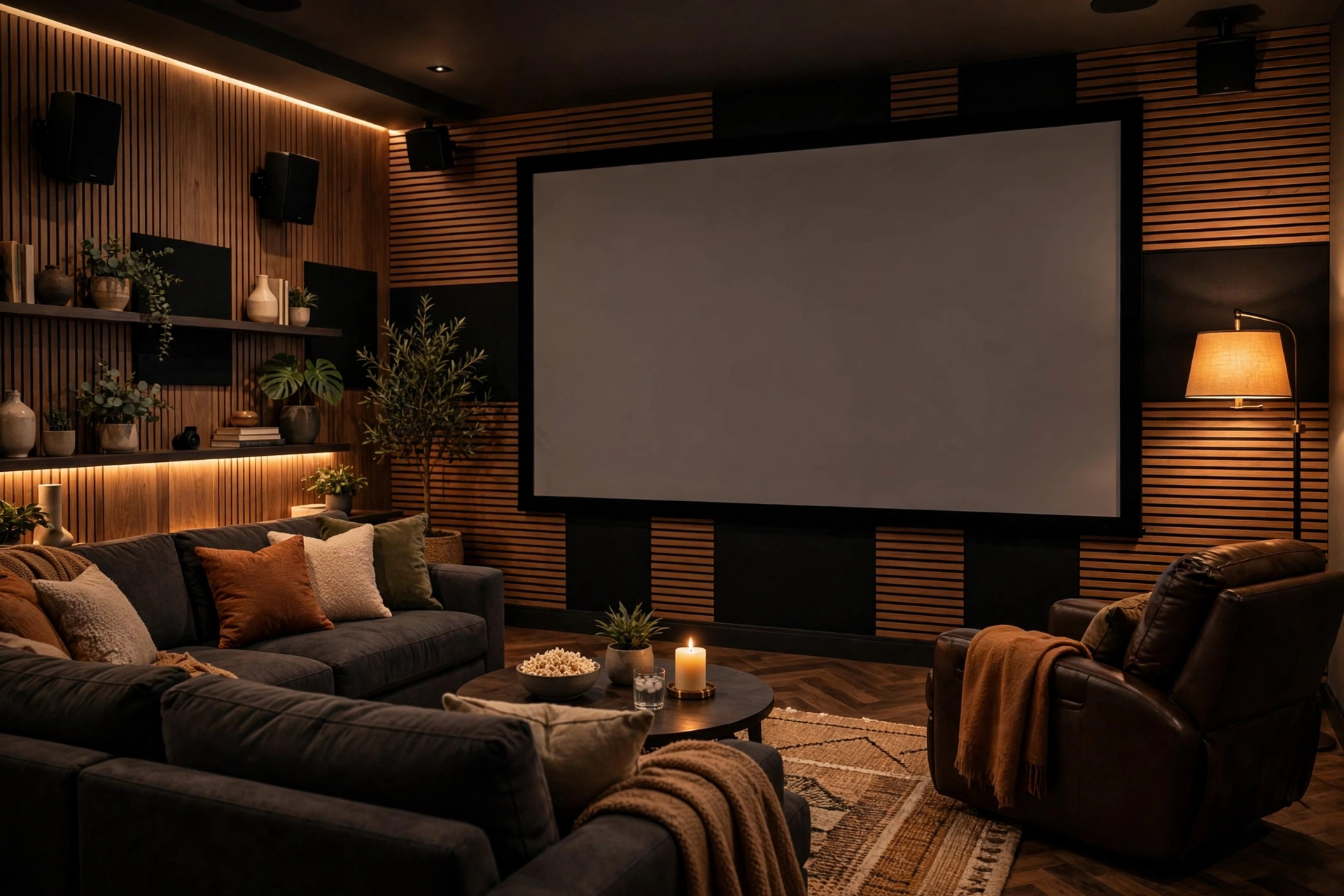
A good home theater setup turns an ordinary evening into a cinema night, and it does not require a dedicated room or a five-figure budget. Whether you have a spare bedroom, a living room corner or a basement, the same principles apply: the right screen size for your seating distance, sound that surrounds you, seating you can sink into, and lighting that disappears when the film starts. This guide walks through a home theater setup for every budget, from a simple starter kit to a full cinema room.
- Screen size depends on seating distance — sit about 1.5 times the screen’s diagonal away for the best view.
- Sound matters more than picture for the cinema feeling: a soundbar is a big upgrade, and a 5.1 system is a transformation.
- Control the light first — blackout curtains or a dark wall make a bigger difference than a more expensive TV.
- Start with the screen and sound, then add seating and lighting; you can build a great setup in stages.
Home Theater Setup: Planning the Room
Start with the room, not the shopping list. Measure the seating distance — the space between where you sit and where the screen will go — because that decides your screen size. A good rule is to sit about 1.5 times the screen diagonal away: for a 65-inch TV, that is roughly 8 feet; for a 75-inch, about 9–10 feet. A rectangular room works best, with the screen on the short wall and seating facing it. Dark walls or a dark accent wall behind the screen reduce reflections and make the picture pop; if you cannot paint, a dark curtain behind the screen helps. Control the light with blackout curtains or blinds, because even a great TV looks washed out in a bright room. Keep the layout simple: screen, seating, speakers, and a clear path for cables. For the wider home, our home decor ideas guide has room-by-room inspiration.
The Screen: TV or Projector?
For most people, a TV is the right choice. A 65-inch or 75-inch 4K TV with HDR gives a bright, sharp picture in any light, needs no maintenance, and is simple to set up. Choose an OLED or a good QLED panel if your budget allows — the contrast and colour are visibly better, especially in dark scenes. A projector makes sense if you want a truly cinematic image over 100 inches and you can control the light. A projector needs a dark room, a screen or a smooth white wall, and a little more patience — but the image is enormous, and for film lovers it is worth it. Either way, mount the screen so its centre is roughly at eye level when seated; a TV mounted too high is the most common home theater mistake. If your budget is tight, spend on the screen first and add sound later.
The Sound: Where the Cinema Feeling Lives
Sound is the upgrade that changes everything. The built-in speakers on a TV are thin and flat; even a modest soundbar adds depth, dialogue clarity and bass. A soundbar with a separate subwoofer is the best value for most rooms. If you want the full cinema effect, a 5.1 surround system — front left, centre, front right, two rear speakers and a subwoofer — places sound around you: rain behind you, a car passing left to right, dialogue anchored to the screen. Place the centre speaker directly under or above the screen, the front speakers at ear height, and the subwoofer in a corner. Run the room calibration that comes with your receiver or soundbar — it tunes the sound to your actual room and makes a real difference. And keep the volume sensible: great sound at a moderate volume beats loud, muddy sound every time.
Seating and Lighting
Seating should be comfortable for a two-hour film. A deep sofa with good back support works perfectly; dedicated theater recliners are a luxury, not a necessity. Arrange seating so every seat has a clear view and nobody is craning their neck. Add a side table for drinks and a soft throw for cold evenings. Lighting should be layered and dimmable: a warm floor lamp for before the film, and LED strip lighting behind the TV (bias lighting) that reduces eye strain and makes the picture look better. Smart bulbs let you dim everything from your phone when the film starts. For the finishing touches, our Christmas staircase decor ideas and winter home fragrance ideas show how small details change a room’s mood.
Home Theater Setup by Budget
Under $500 — The Starter
A 55-inch 4K TV and a basic soundbar. Add blackout curtains and a comfortable sofa you already own. This setup already feels like a big upgrade from watching on a laptop.
$500–$1,500 — The Sweet Spot
A 65-inch 4K TV with HDR, a soundbar with a subwoofer, bias lighting behind the TV, and a streaming device. This is the setup most people should aim for — genuinely cinematic without a dedicated room.
$1,500–$5,000 — The Cinema Room
A 75-inch OLED or a projector with a screen, a 5.1 surround system with a receiver, acoustic panels or heavy curtains, and dedicated seating. This is a room you will use every week.
Over $5,000 — The Full Build
A 4K projector with a fixed screen, a 7.1 or Dolby Atmos system, acoustic treatment, tiered seating and full light control. Wonderful — but only worth it if you watch films several times a week.
Common Home Theater Mistakes
The most common mistakes are simple: a TV mounted too high, a soundbar placed inside a cabinet where its sound is muffled, speakers at the wrong height, and a room that is too bright. Another is buying on specifications alone — a TV with great numbers in a bright, echoey room will look and sound worse than a modest TV in a well-set-up room. And do not forget cable management: a few cable clips or a trunking channel keep the room looking finished and stop anyone tripping over a wire. Take an evening to set the room up properly, calibrate the sound, and sit in every seat to check the view. The result is a room you will actually use, night after night.
What is the best home theater setup for a small room?
A 55–65 inch TV, a soundbar with a subwoofer, blackout curtains and a comfortable sofa. Keep the layout simple and the screen at eye level.
Should I buy a TV or a projector for a home theater?
A TV is brighter, simpler and better in a room with any light. A projector is better if you want a screen over 100 inches and can make the room properly dark.
Do I need surround sound for a home theater?
Not to start — a good soundbar is a huge upgrade. Surround sound is the next step when you want the full cinema effect.
How far should I sit from the TV?
About 1.5 times the screen’s diagonal: roughly 8 feet for a 65-inch TV and 9–10 feet for a 75-inch TV.
What is the most important part of a home theater setup?
Light control and sound. A dark room and good audio make a bigger difference than a more expensive screen.