
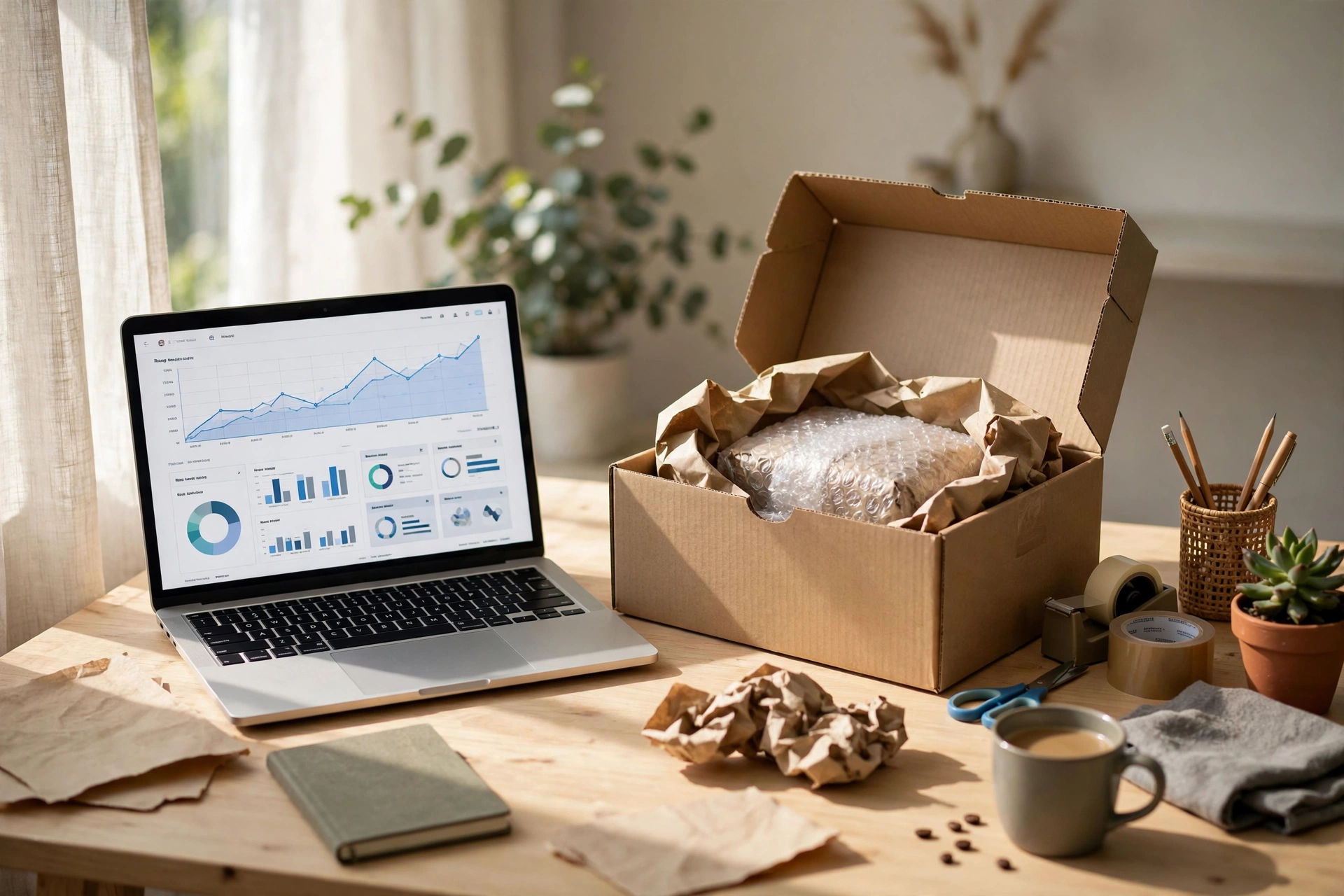
You have probably seen the ads: start an online store with no stock, no warehouse, and no money upfront. That is the promise of dropshipping, and like most promises that sound too good, it is half true. So what is dropshipping, really? It is a way of selling products online without ever holding them yourself. A customer orders from your store, you pass the order to a supplier, and the supplier ships it straight to the customer. You never touch the product. You make money on the difference between what the customer pays you and what the supplier charges you.
- Dropshipping means you sell products you never stock: the supplier ships directly to your customer.
- Your profit is the gap between your selling price and the supplier’s price, minus fees and ads.
- Startup costs are low, but so are the margins — most dropshippers earn a small percentage per sale.
- Your real job is marketing and customer service, not products.
- The biggest risks are slow shipping, poor quality, and suppliers who disappear.
How Dropshipping Actually Works
The process has four steps. First, you set up an online store — usually on Shopify, WooCommerce, or a similar platform — and list products you have chosen from a supplier’s catalogue. Second, a customer buys something from your store and pays you. Third, you forward the order to your supplier and pay them their price. Fourth, the supplier packs the product and ships it to your customer, usually with your store’s name on the package. The customer often never knows a third party was involved.
That is the whole model, and the appeal is obvious: no warehouse, no boxes piled up in your spare room, no money tied up in stock that might not sell. You can test a product by listing it, and if nobody buys it, you have lost nothing but the time it took to list it. The downside is equally obvious: you have no control over the product. If the supplier sends the wrong item, or a broken one, or takes three weeks to ship it, the customer blames you — because as far as they are concerned, you are the shop. If you are thinking about earning online more broadly, our how to make money online guide compares dropshipping with other options side by side.
How Much Money Can You Actually Make?
This is where the ads get dishonest. Dropshipping margins are thin — typically 10 to 30 percent on each sale, and often less after advertising costs, platform fees, and payment processing. Sell a product for 30 dollars that costs you 20 from the supplier, and you have 10 dollars of gross profit. Spend 7 dollars on ads to get that sale, and you are left with 3. That is the real maths, and it is why most dropshippers need a lot of sales to make a meaningful income.
The people who do well usually do one of two things: they sell a product with a genuinely good margin, like something they can buy for 5 dollars and sell for 25, or they build a real brand around a niche and keep customers coming back. The people who fail usually pick a random trending product, spend money on ads, and give up after a week. Dropshipping is not passive income — it is a retail business where someone else does the warehousing. If you want a steadier online income idea, our passive income ideas post is an honest look at what actually earns money over time.
Where do dropshippers find suppliers?
Most beginners start with AliExpress, which is a marketplace of mostly Chinese suppliers who will ship single items directly to customers. It is cheap and easy, but shipping can take two to four weeks, and quality varies a lot. More serious sellers use supplier directories like SaleHoo or Worldwide Brands, or they contact manufacturers and wholesalers directly and ask if they dropship. The best suppliers are usually found by asking: if you sell pet products, for example, contact a pet wholesaler and ask about dropshipping terms. A supplier in your own country, even if the price is higher, is often worth it — faster shipping and easier returns mean happier customers and fewer refunds.
Starting a Dropshipping Store: The Honest Steps
Pick a niche first, not a product. “Home organisation” is a niche; “a random LED light” is a product. A niche gives you a store that makes sense, customers who come back, and products that go together. Research the niche properly: are people actually buying these things, who else is selling them, and can you offer something different — better photos, a clearer store, faster shipping, a real story?
Then choose your platform. Shopify is the easiest for beginners and has dropshipping apps built in. WooCommerce on WordPress is cheaper but needs more setup. Either way, your store needs to look like a real shop: clear product photos, honest descriptions, a returns policy, and a contact page with a real email address. Customers are suspicious of stores that look thrown together, and rightly so. Order a sample of your main product before you list it — the 20 dollars it costs will tell you more about quality and shipping time than any supplier’s promises. And set up your store’s legal basics: a refund policy, a privacy policy, and a clear statement of shipping times. If you plan to blog about your store, our how to start a blog guide covers the content side that brings in free traffic over time.
The Risks Nobody Mentions in the Ads
The biggest risk is quality control. You never see the product, so you are trusting the supplier’s photos and promises. A customer who receives a flimsy, cheap version of what they saw online will leave a bad review, ask for a refund, and never come back. The second risk is shipping time. A customer who waits three weeks for a ten-dollar item will not order again, and if they paid for fast shipping, you are the one who has to explain the delay. The third risk is the supplier disappearing — dropping your product, raising prices overnight, or going out of business — which leaves your store with dead listings and no way to fulfil orders.
There are also legal and platform risks. Selling trademarked or counterfeit products can get your store shut down. Payment processors can hold your money if your refund rate is high. And advertising platforms can ban your ad account if your ads overpromise. None of this means dropshipping is a scam — it is a legitimate business model used by plenty of real stores. It just means it is a business, with real work, real costs, and real risk, and anyone telling you otherwise is selling you a course.
Frequently Asked Questions
What is dropshipping in simple terms?
Dropshipping is selling products online without holding stock. When a customer orders from your store, your supplier ships the product directly to them, and you keep the difference between the selling price and the supplier’s price.
Is dropshipping legal?
Yes, dropshipping is legal. You still need to follow normal business rules: pay taxes on your income, respect trademarks, and honour your refund and returns policies.
How much money do I need to start dropshipping?
You can start with under 100 dollars for a store subscription and a domain name. The real cost is advertising — most beginners spend a few hundred dollars testing products before they find one that sells.
Is dropshipping still profitable in 2026?
It can be, but margins are thin and competition is high. The sellers who profit treat it as a real retail business — good products, a clear niche, fast shipping, and honest customer service — not a get-rich-quick scheme.