
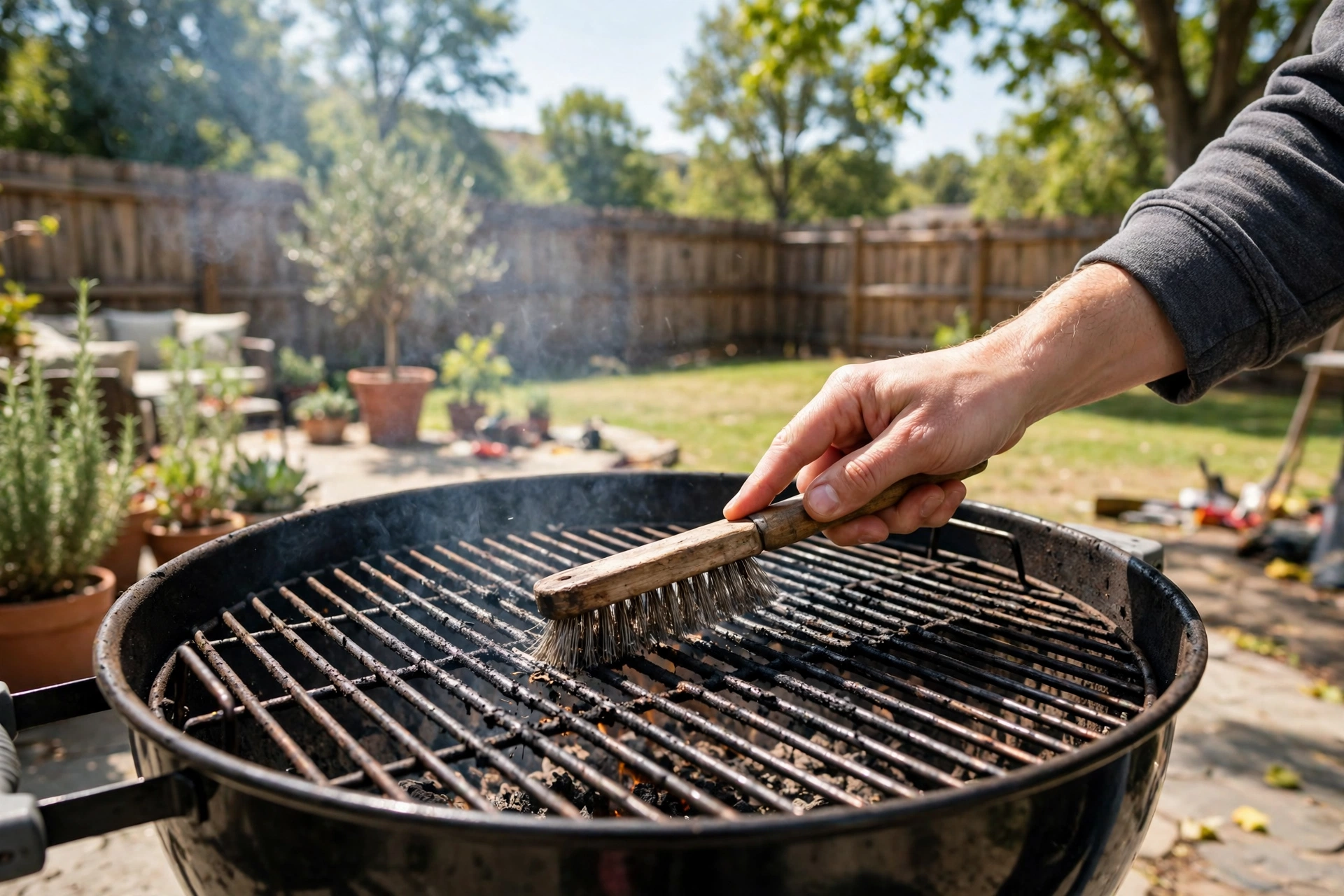
A dirty grill does more than look bad. Old grease catches fire, burnt food makes everything taste bitter, and a clogged grate cooks unevenly. Learning how to clean a grill properly takes fifteen minutes after each cookout and one deep clean a season, and it is the difference between a grill that lasts five years and one that lasts fifteen. The secret is timing: clean it while it is warm, not after it has gone cold.
- Clean the grates while the grill is still warm — heat loosens grease and burnt food.
- Burn off the residue on high heat for 10 to 15 minutes, then brush.
- A wire brush, a ball of foil, or half an onion all work on the grates.
- Empty the grease trap every time; a full trap is a fire risk.
- Do one deep clean each season: grates, burners, drip tray, and the inside of the lid.
The After-Every-Cook Clean (15 Minutes)
The best time to clean a grill is right after you finish cooking, while it is still hot. Turn all the burners to high and close the lid for ten to fifteen minutes. The heat burns the leftover food and grease to ash. Then turn the burners off, open the lid, and brush the grates with a wire grill brush while they are still warm. The ash comes off easily. If you do not have a wire brush, a ball of crumpled aluminium foil held with tongs works just as well, and half an onion rubbed across the hot grate cuts through grease and leaves the grill smelling fresh.
Once the grates are brushed, wipe them with a cloth dampened with a little oil — it stops them rusting and keeps food from sticking next time. Empty the grease trap or drip tray, because a full tray is the most common cause of grill fires. Then close the lid and leave the grill to cool. That is the whole routine, and it takes less time than washing the dishes. Do it every time and the deep clean becomes a quick job instead of a dreaded one. For the rest of the kitchen, our how to clean a glass stovetop guide uses the same gentle approach on a surface that scratches easily.
The Deep Clean (Once a Season)
Once a season, give the grill a proper deep clean. Start by disconnecting the gas — turn off the tank and unhook it — or unplug an electric grill. Remove the grates and soak them in hot soapy water for half an hour, then scrub them with a wire brush or a non-scratch scouring pad. While they soak, scrape the inside of the grill with a putty knife or a grill scraper to remove the built-up grease and carbon. Vacuum or brush the debris out of the bottom.
For a gas grill, check the burner tubes: spiders love to nest in them, and a blocked burner is a common cause of uneven cooking. Run a thin wire or a pipe cleaner through each burner hole, and make sure the gas flows evenly from every hole. Wipe the inside of the lid with hot soapy water — the black coating inside is mostly carbon, not paint, and it will come off. Wash the outside with soapy water and a soft cloth. For a charcoal grill, the deep clean is simpler: empty the ash completely, scrub the bowl and the grate, and check the vents move freely. Ash left in a grill absorbs moisture and causes rust, so never leave it sitting in the bottom. The same soak-and-scrub thinking works indoors too — our how to clean a shower drain guide is the bathroom version of the same job.
Cleaning the grates by material
Cast iron grates need the most care: scrub them, dry them completely, and rub them with a thin layer of oil to stop them rusting. Never soak cast iron for hours, and never put it in the dishwasher. Stainless steel grates are the easiest — they can be soaked, scrubbed, and even put in the dishwasher if they fit. Porcelain-coated grates need a soft brush, not a wire one, because a wire brush can chip the coating and expose the steel underneath to rust. If the coating is already chipped and rusting, it is time to replace the grate rather than keep cleaning it.
What Not to Do
A few common mistakes make the job worse. Do not use oven cleaner on a grill — it is too harsh, it leaves residue that gets into food, and it can damage the finish. Do not use a wire brush with loose bristles: a bristle that falls off and ends up in food is a real hazard, so check the brush before each use and replace it when the bristles start to bend or fall out. A bristle-free brush, a wooden scraper, or a ball of foil are safer alternatives. Do not pressure-wash a gas grill — water gets into the burners and the igniter and causes problems that are expensive to fix.
And do not forget the cover. A grill cover keeps rain off and slows rust, but only if the grill is clean and dry underneath it. Covering a dirty, greasy grill just traps moisture against the metal and makes the rust worse. Clean it, dry it, oil the grates lightly, then cover it. Store the cover itself clean and dry too, or it will hold damp against the grill all winter. For more outdoor cleaning, our how to remove coffee stain from carpet guide is the indoor equivalent of the same stubborn-stain thinking.
Frequently Asked Questions
How often should I clean my grill?
Brush the grates after every cookout while the grill is still warm, and do a full deep clean once a season. Empty the grease trap after every use.
What is the best way to clean grill grates?
Heat the grill on high for 10 to 15 minutes to burn off residue, then brush the warm grates with a wire brush, a ball of foil, or half an onion. Soak stubborn grates in hot soapy water.
Can I use oven cleaner on a grill?
No. Oven cleaner is too harsh for a grill, leaves residue that can get into food, and can damage the finish. Hot water, soap, and a brush are enough.
How do I stop my grill from rusting?
Clean it after every use, dry it completely, rub the grates with a thin layer of oil, and keep it covered when it is not in use. Never leave ash sitting in a charcoal grill — it absorbs moisture and causes rust.