
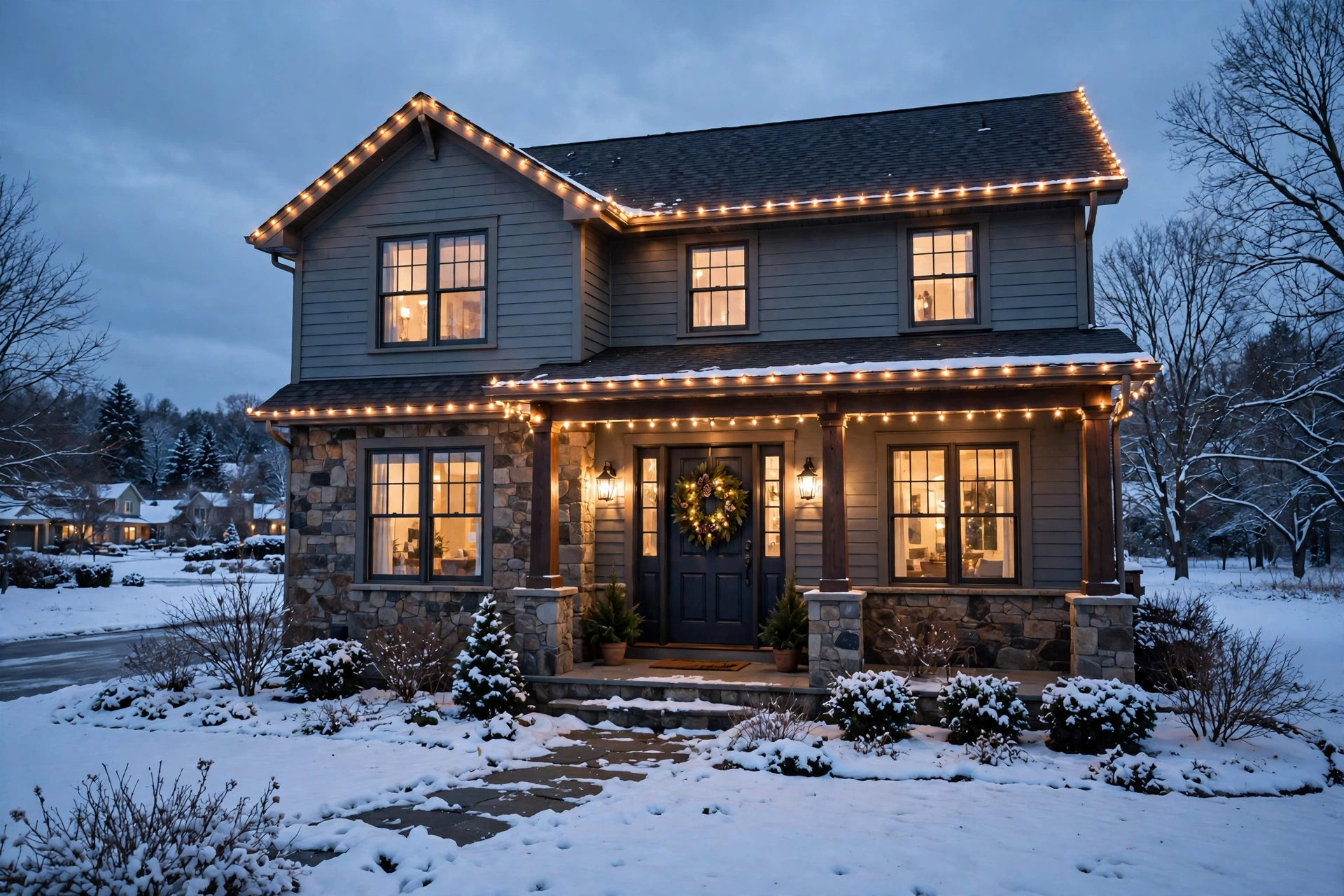
The houses everyone slows down for at Christmas are not the ones with the most lights. They are the ones where every light looks like it belongs. Good outdoor christmas lights ideas start with a plan, not a shopping trip: one focal point, one colour of light, and a layout that flatters your house instead of burying it. You can do the whole thing in a weekend, and you do not need a ladder the size of a fire truck.
- Pick one focal point — the roofline, the front door, or one tree — and build around it.
- Warm white lights suit almost every house; cool white can look harsh on brick and wood.
- Measure before you buy: rooflines, windows, and trees all need more lights than you think.
- Use outdoor-rated lights, clips (never nails or staples), and a timer.
- Put lights up in daylight and test them before you climb anything.
Start With a Plan, Not a Shopping Trip
Walk out to the street and look at your house the way a visitor would. Where does the eye land first? Usually it is the front door, the roofline, or a big tree in the yard. That is your focal point, and it gets the most lights. Everything else is supporting detail. The houses that look cluttered are the ones where every surface got the same treatment — roof, windows, bushes, fence, mailbox — with no hierarchy at all.
Sketch the house on a piece of paper and mark where the lights will go. Measure the roofline, the windows, and the path. A standard string of lights covers about 25 feet, and you will need more than you think: rooflines eat length fast, and trees need far more lights than they look like they do. A small tree needs 100 lights; a big one needs 300 or more. Buy one extra string of each type you use, because a dead string mid-December is much harder to match than to replace. For the front door itself, our Christmas door decorating ideas pair a lit wreath with the lights for a finished entryway.
Roofline Lights: The Classic That Always Works
The roofline is the single most effective place for outdoor lights. One clean line of lights along the eaves outlines the whole house and makes it visible from down the street. C7 or C9 bulbs — the big, old-fashioned kind — look best on a roofline because they are bright enough to read from a distance. Mini lights work too, but they disappear from the street unless they are packed tightly.
Use plastic clips made for gutters or shingles, and never use nails or staples: they damage the roof and they are a fire risk. Put the clips up first, then hang the lights, working from the power source outward so you are not dragging a live string across the roof. Always work in daylight, with someone holding the ladder, and never climb a wet or icy roof. If the roof is steep or high, this is the one job worth paying someone to do — a professional install costs less than a fall. Once the roofline is done, our front porch Christmas decorating ideas show how to carry the same lights down to the porch for a finished look.
Warm white vs multicolour
Warm white is the safe choice and the one that suits most houses. It looks like candlelight, it flatters brick, wood, and stone, and it never clashes with anything else in the yard. Multicolour lights are cheerful and nostalgic, and they suit a house with kids or a playful style — but they need to be the only colour story in the yard, or the whole thing turns into noise. Cool white looks modern and crisp on a white or grey house, but it can look cold and harsh on a warm brick one. If you cannot decide, buy warm white for the roofline and use multicolour on one tree: you get both, and the house still looks planned.
Trees, Bushes, and the Yard
Wrapping a tree is the job most people underestimate. Start at the trunk and work outward, wrapping each branch from the inside out so the light comes from within the tree rather than just sitting on the surface. For a small tree, wrap the trunk and the main branches. For a big tree, wrap the outer branches too, and add a net light over the top for even coverage. Net lights are also the easiest way to cover bushes: drape one over the top, tuck the edges in, and you are done in five minutes.
The pathway is the detail that makes the whole display feel welcoming. Line the walk with small stake lights or luminarias — paper bags with a candle or a battery light inside — and the house feels like it is inviting people in. Keep the path clear and the lights low so nobody trips. A lit wreath on the garage, a pair of lanterns by the door, or a simple lighted deer in the yard can be the finishing touch, but one yard decoration is usually enough. Two or three start to compete, and the house disappears behind the display.
Safety and Power: The Boring Part That Matters Most
Only use lights rated for outdoor use, and check the box before you buy — indoor lights are not built for rain. Connect strings end to end only up to the number printed on the box, usually three to five, and never plug an outdoor string into an indoor outlet with an extension cord running through a window. Use a proper outdoor extension cord and a covered outlet, and keep all connections off the ground where they can sit in a puddle.
Check every string for damage before you hang it: cracked bulbs, frayed wires, and loose sockets are all reasons to throw a string away, not to tape it up. LED lights are worth the switch if you are still using old incandescent strings — they use a fraction of the power, they stay cool, and they last for years. And when the season ends, take the lights down within a few weeks, coil them loosely around your arm, and store them in a dry box. Tangled lights in a damp garage are the reason half of them do not work next December. For more ways to make the outside of the house look good in winter, our Christmas decoration ideas cover the whole house, inside and out.
Frequently Asked Questions
How many Christmas lights do I need for my house?
Measure your roofline and add 10 percent for sag and corners. A small house usually needs 200 to 300 lights on the roofline; a large one needs 500 or more. Trees need 100 lights per foot of height as a rough guide.
When should I put up outdoor Christmas lights?
Put them up in late November, in daylight, before the cold sets in. Switch them on from the first weekend of December. Taking them down in January, before the worst winter weather, keeps them in good shape.
Are LED Christmas lights better than incandescent?
Yes, for outdoor use. LEDs use far less power, stay cool, and last much longer. They cost more upfront but you can connect more strings together safely.
How do I hang Christmas lights without damaging my roof?
Use plastic clips made for gutters or shingles. Never use nails, staples, or screws — they damage the roof and create a fire risk, and they void most roofing warranties.