
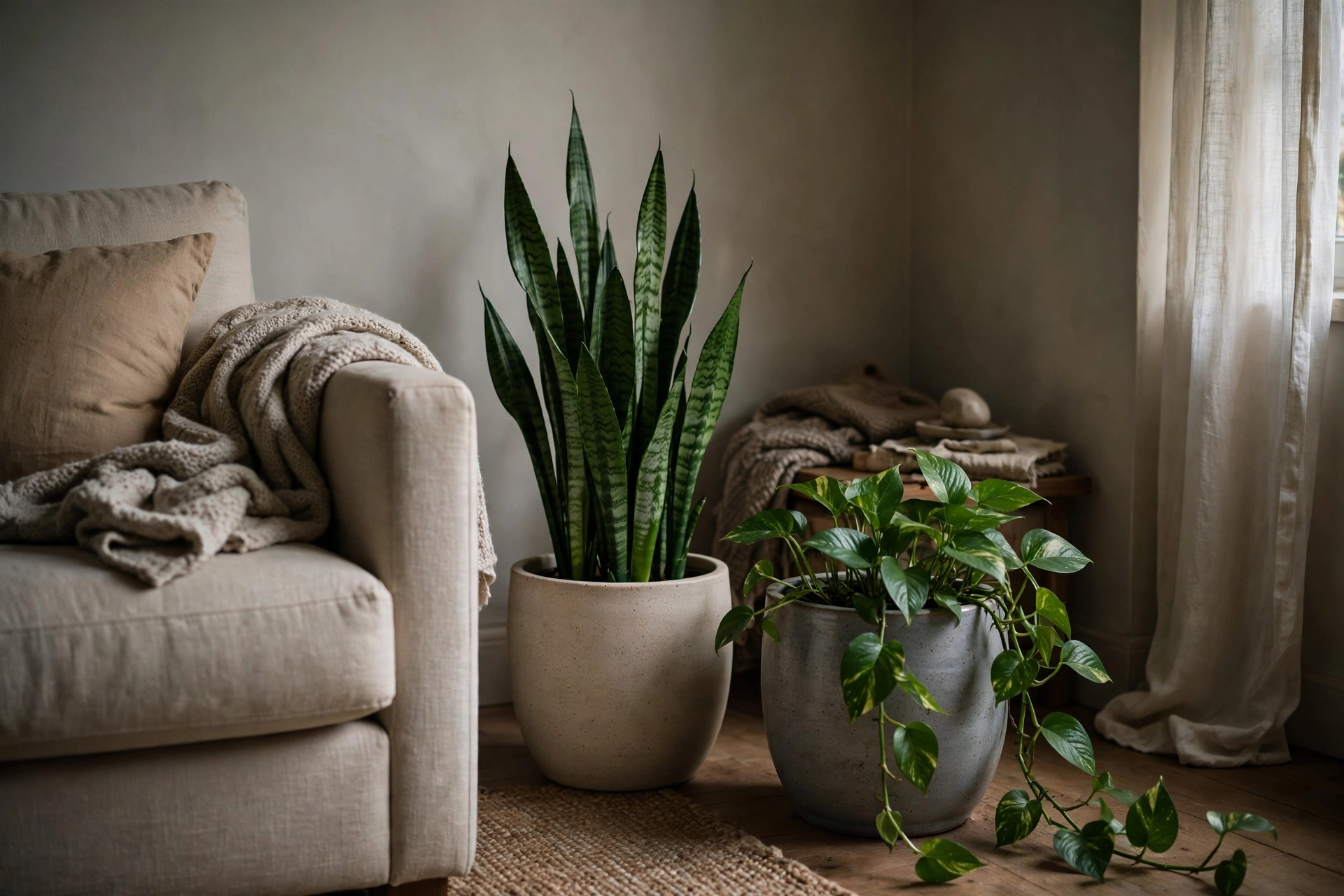
Not every room gets good light, and that is fine. The best low light houseplants are the ones that evolved under a forest canopy, where direct sun never reaches them. They grow slowly, ask for very little, and turn a dark corner into something alive. If you have killed a plant or two in a north-facing room, the problem was almost never you. It was the plant — it wanted sun you could not give it. These are the ones that want what your room already has.
- “Low light” means a few feet from a north-facing window, not a windowless room.
- Snake plants, ZZ plants, and pothos are the most forgiving choices for beginners.
- Low-light plants grow slowly, so they need less water and less feeding.
- Overwatering kills more low-light plants than darkness ever does.
- Rotate the pot every few weeks so the plant grows evenly instead of leaning toward the window.
What Counts as Low Light?
Low light is one of the most misunderstood terms in houseplant care. It does not mean no light. It means indirect light — the kind you get a few feet from a north-facing window, or in a room with a small window, or in a spot that gets a couple of hours of gentle morning sun and shade the rest of the day. A plant in a windowless bathroom with the door shut will not survive, no matter how tough it is. A plant three feet from a north window will do just fine.
A simple test: hold your hand a foot above the plant’s leaves at midday. If you can see a soft shadow, there is enough light for a low-light plant. If you can barely see your hand, it is too dark. If the shadow is sharp and dark, that is bright light, and a different set of plants would be happier there. If you are setting up a whole room around plants, our home office decor ideas show how to place greenery where it looks good and grows well.
The Toughest Low Light Houseplants
The snake plant is the classic for a reason. It tolerates low light, missed waterings, dry air, and neglect, and it actually likes being a bit pot-bound. Its upright leaves suit modern rooms, and it releases oxygen at night, which makes it a good bedroom plant. Water it only when the soil is fully dry — in winter, that can mean once a month.
The ZZ plant is nearly as tough, with glossy dark leaves that look expensive and a rhizome underground that stores water for dry spells. It grows slowly and stays neat, which makes it ideal for a desk or a shelf. Pothos is the most versatile of the lot: it trails from a hanging basket, climbs a moss pole, or sits on a shelf and spills over the edge. Its leaves will stay smaller and greener in low light, which is normal — the big variegated leaves you see in photos need more sun to keep their pattern. If you like plants that earn their keep, our plants that repel mosquitoes list includes a few that work indoors too.
More good choices for dark rooms
Peace lilies flower in low light where most flowering plants will not, and they droop dramatically when thirsty — which is actually helpful, because they tell you exactly when they need water. Spider plants are nearly impossible to kill and produce baby plantlets you can pot up for free. The cast iron plant lives up to its name: it survived Victorian parlours with coal smoke and gas light, so your living room is easy by comparison. Philodendron, especially the heartleaf variety, trails beautifully and handles shade well.
One warning: variegated plants — the ones with white or yellow patterns on their leaves — need more light than their plain green cousins. In low light they slowly turn back to green, which is the plant’s way of making more chlorophyll to survive. Buy the plain green version for a dark room and save the variegated ones for a brighter spot.
Watering: Less Is More
Low-light plants grow slowly, and slow growth means slow drinking. The number one killer of low-light houseplants is not darkness — it is overwatering. In a dim room, soil stays wet for much longer, and roots sitting in wet soil rot. The rule is simple: check the soil before you water. Push your finger an inch into the soil. If it feels damp, wait. If it feels dry, water thoroughly until it runs out of the drainage hole, then empty the saucer.
Most low-light plants are happy being watered every two to three weeks in winter and every one to two weeks in summer. A pot with drainage holes is not optional — it is the difference between a plant that lives for years and one that rots in a month. If your pot has no hole, either drill one or use it as a decorative cover with a plastic nursery pot inside. Our bedroom decor ideas include plant placement tips for the room where low-light plants do some of their best work.
Feeding, Cleaning, and Keeping Them Happy
Low-light plants need very little food. Feed them at half strength, once a month, only in spring and summer when they are growing. Feeding in winter, when the plant is barely growing, just builds up salts in the soil and burns the roots. If you see brown leaf tips, the usual culprit is either too much fertiliser or the salts in tap water — try letting tap water sit out overnight before using it.
Wipe the leaves with a damp cloth every few weeks. Dust blocks light, and in a low-light room the plant cannot afford to lose any. While you are at it, check the undersides of the leaves for pests and turn the pot a quarter turn so the plant grows straight instead of leaning toward the window. That is the whole maintenance routine: water rarely, feed lightly, wipe the leaves, turn the pot.
Frequently Asked Questions
What is the easiest low light houseplant?
The snake plant. It tolerates low light, infrequent watering, and dry air, and it grows slowly enough that you will not need to repot it for years. The ZZ plant is a close second.
Can houseplants survive with no natural light at all?
No. Every plant needs some light to photosynthesise. A windowless room needs a grow light — even a simple LED bulb on a timer for 8 to 10 hours a day will keep a low-light plant alive.
How often should I water low light houseplants?
Only when the top inch of soil is dry — usually every two to three weeks in winter and every one to two weeks in summer. Overwatering is the most common cause of death for these plants.
Why are my low light plant’s leaves turning yellow?
Usually overwatering or poor drainage. Let the soil dry out fully, check that the pot drains, and remove the yellow leaves. If the soil smells sour, the roots may be rotting and the plant needs fresh, dry soil.
Do low light plants clean the air?
A little, but not as much as the old headlines claimed. A few plants will not purify a whole room. Their real benefit is simpler: they make a room feel alive, calm, and cared for, and that is worth plenty on its own.
The right low light houseplants do not fight your home — they fit it. Pick a snake plant or a pothos, water it only when the soil is dry, and give it a wipe and a turn now and then. A dark corner does not have to stay empty. It just needs the right plant.