
Kitchen Storage Ideas for Small Kitchens
A small kitchen does not have to mean a cramped, cluttered kitchen — it just means every cabinet, shelf, and inch of wall has to work harder. The smartest kitchen storage ideas for small kitchens are about unlocking space you already own: the backs of cabinet doors, the wall above the counter, and the dark corners where things disappear.
In this guide you will find practical cabinet upgrades like pull-out shelves, vertical wall-rail storage, small-space pantry zones, and a counter-clearing system you can maintain on a busy weeknight. Everything here is renter-friendly where possible and designed for real, everyday kitchens.
Key Takeaways
- Pull-out shelves and risers double usable cabinet space without any renovation.
- Walls are storage: rails, pegboards, and floating shelves free up cabinet real estate.
- Zone your kitchen — cooking, prep, coffee, and cleaning supplies each get a home.
- Clear counters stay clear when every daily-use item has a dedicated spot.
- Start with one cabinet and one drawer: small wins make the whole kitchen feel bigger.
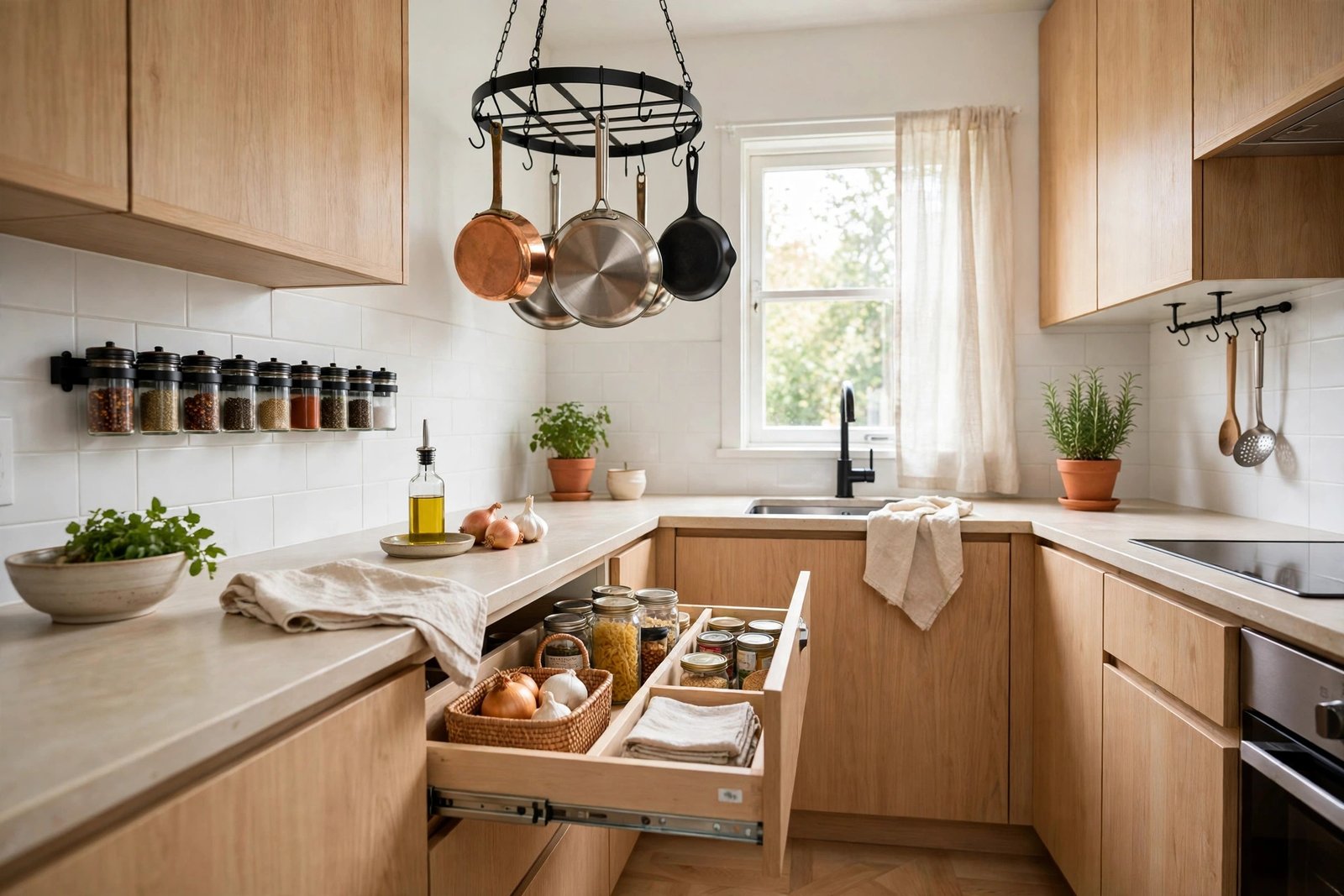
Start With a Storage Audit: What Your Small Kitchen Really Needs
Before buying a single organizer, pull everything out of one problem cabinet and sort it into three piles: daily use, weekly use, and “why do I own this.” Most small kitchens are full of duplicates, expired spices, and gadgets that have not been touched in a year — a brutal ten-minute purge often reveals enough room for everything that matters.
Then notice where you cook. The golden rule of kitchen storage in tight quarters is to keep daily-use items within arm’s reach of their point of use: pots near the stove, prep tools near the counter, and spices within one step of both. For a deeper cabinet-by-cabinet system, our guide on how to organize kitchen cabinets walks through sorting, grouping, and labeling every shelf.
Cabinet Upgrades That Instantly Double Your Storage
Standard cabinets waste an astonishing amount of space. A deep lower cabinet with no pull-outs can hide half its contents behind the front row, and tall upper cabinets stack items three deep where only the front is reachable. These two upgrades fix that without a renovation.
Pull-Out Shelves and Sliding Baskets
A sliding pull-out shelf turns a deep base cabinet into a drawer you can see into, roughly doubling what fits because nothing hides in the back anymore. Two-tier pull-outs work brilliantly under the sink too. If you rent, look for no-drill wire pull-outs that rest on the cabinet floor — they install in minutes and move with you.
Shelf Risers, Door Racks, and the Backs of Doors
A simple shelf riser gives upper cabinets a second level for mugs and bowls, instantly doubling shelf capacity for about the price of a takeaway coffee. The inside of cabinet doors is equally valuable: slim mounted racks hold spice jars, measuring cups, or cling film on space that was doing nothing. Stacking pots with lid holders or vertical file-style dividers stops the classic avalanche every time you reach for a pan.
Use Your Walls: Vertical Kitchen Storage Ideas
In a small kitchen the walls are your biggest untapped asset. Moving even a few categories of items out of cabinets and onto the wall frees cabinet space for the bulky things that truly need to be enclosed, and it puts daily tools exactly where your hands already are.
Wall Rails, Pegboards, and Magnetic Strips
A stainless wall rail with S-hooks above the prep counter holds utensils, scissors, and a small herb pot right where you cook. Magnetic knife strips are a classic small-kitchen win: they free an entire drawer or counter block while keeping knives visible and safe. A pegboard panel on a narrow stretch of wall — even the side of a cabinet — adapts over time, holding everything from measuring cups to a small tablet for recipes.
Floating Shelves Above the Counter and Sink
One or two floating shelves above the counter turn dead wall space into a home for daily dishes, glasses, and pretty jars. Keep only what you use weekly on open shelves, and give the once-a-year roasting pan a high cabinet. Style them with breathing room between groups so they read as styled, not stuffed.
Pantry Zones for Small Kitchens (Even Without a Pantry)
Few small kitchens have a walk-in pantry, but almost every kitchen has a cabinet, narrow closet, or rolling cart that can act like one. The trick is zoning: group dry goods by use instead of scattering them wherever a gap appears. For a full system on bins, labels, and rotation, see our pantry organization ideas guide.
The One-Cabinet Pantry That Works
Dedicate a single cabinet to dry goods and outfit it like a tiny pantry: clear stackable canisters for flour, rice, and pasta; a tiered riser so canned goods never hide in back rows; and a lazy Susan in the corner for oils and vinegars. Decanting into uniform canisters lets you see at a glance what is running low, ending the duplicate-buying cycle that clogs small kitchens.
Clear the Counters: A System That Actually Sticks
Counter clutter is the number one reason small kitchens feel chaotic — and it is a landing problem more than a storage problem. Mail, keys, and gadgets pile up because they have nowhere else to go. The fix is a “landing strip” just outside the kitchen: a small tray or wall pocket in the hallway for keys and mail, so they never reach the counter.
Then limit the counter to true daily essentials — typically the coffee maker, a knife block or strip, and one utensil crock — and give everything else a real home. Appliances you use less than weekly, like the stand mixer or food processor, belong in a cabinet on a pull-out shelf or on a garage cart. Overflow that genuinely does not fit can live in a labeled zone elsewhere; a tidy organized garage makes an excellent backstage area for bulk buys and seasonal kitchen gear.
7 Small-Kitchen Storage Tricks Worth Trying This Weekend
Two spring tension rods stood vertically in a cabinet keep baking sheets, cutting boards, and trays filed upright instead of stacked.
Adhesive hooks under upper cabinets hold mugs by their handles, freeing a full shelf and putting coffee cups right by the kettle.
A roll-up or rack-style over-sink dish drainer uses the air above the sink — counter space you were not using anyway.
The side of the fridge is free real estate: a magnetic caddy holds spices, paper towels, or a shopping list pad.
Corner cabinets, deep shelves, even the fridge: a turntable means nothing gets lost in the back again.
The 4-inch strip under base cabinets fits a shallow drawer — perfect for baking sheets, placemats, or rarely used linens.
Every new gadget means an old one leaves. This single rule keeps small kitchens from slowly filling up again.
3 Mistakes That Make Small Kitchens Feel Smaller
Buying organizers before decluttering. Pretty bins cannot fix overflow — they just organize the excess. Purge first, measure your shelves, then buy only what fits the space and the stuff.
Hiding everything behind closed doors. Enclosing every single item means you forget what you own and buy duplicates. A little open storage — shelves, rails, jars — keeps inventory visible and the kitchen feeling airy.
One “miscellaneous” drawer. The junk drawer is where small kitchens go to die. Give it ten minutes: add a divider tray, and let only true small essentials (batteries, tape, a pen) live there.
Frequently Asked Questions
How can I add storage to a small kitchen without renovating?
Focus on no-drill upgrades: pull-out wire shelves in base cabinets, shelf risers in uppers, adhesive hooks under cabinets, a wall rail for utensils, and a rolling cart for pantry overflow. Together they can effectively double your usable storage with zero construction.
Where should I store pots and pans in a tiny kitchen?
Keep everyday pots near the stove in a base cabinet with a pull-out shelf or vertical dividers so pans file upright. Rarely used pieces can go up high, and bulky duplicates should be donated.
What is the best way to organize a small kitchen pantry?
Zone one cabinet or cart by use and use clear stackable canisters plus a tiered riser so everything is visible. A lazy Susan handles corner dead space, and labels keep everyone putting things back in the right zone.
How do I keep my kitchen counters clear in a small kitchen?
Create a landing strip outside the kitchen for keys and mail, limit the counter to true daily essentials, and give every appliance a cabinet or cart home. If something has no home, purge or relocate it — do not leave it on the counter.
Are open shelves a good idea in a small kitchen?
Yes, when used selectively. One or two floating shelves for daily dishes free cabinet space and make the kitchen feel larger. Keep only weekly-use items on open shelves and store rarely used pieces in closed cabinets.
Make Your Small Kitchen Feel Twice as Big
Kitchen storage ideas for small kitchens work best as a system: audit and purge first, upgrade cabinets with pull-outs and risers, move daily tools to walls and rails, zone your pantry by use, and defend your counters with a landing strip. Do those five things and your kitchen will feel — and function — like a much bigger room.
This weekend, start with the smallest possible win: empty one cabinet, keep only what you use, and add a single shelf riser. That one cabinet will show you how much space you have been sitting on — and the rest of the system follows naturally.
2 thoughts on “Kitchen Storage Ideas for Small Kitchens (No Renovation)”