
How to Get Rid of Mice in the Walls: Signs, Removal, and Prevention
Scratching in the walls at night is one of the most unsettling sounds a homeowner can hear. It usually means mice have found shelter inside your wall cavities, where they nest in insulation, gnaw on wood and wiring, and travel between rooms through gaps you cannot see. The good news is that mice in walls are very solvable, provided you act on three fronts at once: remove the mice already inside, seal the entry points that let them in, and remove the food and shelter that attracted them in the first place. Doing only one of those three is why so many infestations return.
This guide covers how to confirm mice are really in your walls, how to find where they entered, the safest removal methods for homes with children and pets, and a prevention checklist that keeps them out for good. It also explains when a problem has grown beyond do-it-yourself methods and a professional is the smarter, safer choice. If you are dealing with other household pests too, our guide to signs of termites in your home will help you tell different pest damage apart.
Key Takeaways
- Night-time scratching, small dark droppings, and a musty urine smell are the clearest signs of mice in walls.
- A mouse can squeeze through a gap as small as 6 millimetres — about the width of a pencil.
- Trapping plus sealing entry points works; poison alone rarely solves a wall infestation and risks dead mice in cavities.
- Seal gaps with steel wool and caulk or cement, never foam alone, which mice chew straight through.
- Store food in sealed glass or metal containers and remove pet food overnight to cut off the food supply.
How to Tell If Mice Are in Your Walls
Mice are nocturnal, so the first sign is usually sound: light scratching, scurrying, or gnawing inside a wall, ceiling, or under the floor, most often between dusk and dawn. The sound tends to move along the wall rather than staying in one spot, and it often stops when you tap the wall, then resumes minutes later. Other pests make similar sounds, so confirm with physical evidence before you act. Squirrels are louder and active during the day, rats make heavier thumping sounds, and insects produce a faint, steady rustling rather than distinct scurrying.
Look for droppings near the wall base, inside kitchen cupboards, and around the water heater or boiler. Mouse droppings are small, dark, and rice-shaped, roughly 3 to 6 millimetres long, and fresh ones are soft and dark while old ones turn grey and crumbly. You may also find gnaw marks on skirting boards, food packaging, or electrical cables, shredded nesting material such as insulation, paper, or fabric tucked into corners, and a stale, musty smell near the affected wall. If you find greasy rub marks along a wall base or pipe, mice have been using that route repeatedly. Place a small piece of white paper or a dusting of flour near a suspected route overnight; footprints and tail drags in the morning confirm activity and show you the exact path.
Why Mice Choose Your Walls
Wall cavities offer everything a mouse needs: warmth, darkness, protection from predators, and nesting material in the form of insulation. Mice do not need much food to survive in a wall — a few crumbs, a pet food bowl left out overnight, bird seed stored in the garage, or food in a pantry with cardboard packaging is enough. In autumn, as temperatures drop, mice actively seek indoor shelter, which is why wall noises often start in October and November. Older homes with gaps around pipes, vents, and foundations are especially vulnerable, but even new homes have dozens of small entry points where utilities enter the building.
Understanding this helps you target your response. Mice are not in your walls because your home is dirty; they are there because it is warm and accessible. That means cleaning alone will not solve the problem, and neither will trapping alone if the gaps remain open. The permanent solution always combines removal, exclusion, and sanitation.
Finding the Entry Points
Walk the outside of your home slowly, from ground level to the eaves, looking for any gap larger than a pencil width. Check the places mice use most often: where gas, water, and electrical lines enter the house; gaps around air-conditioning units and dryer vents; cracks in the foundation; gaps under doors and around garage doors; loose roof tiles and vents; and joints where different building materials meet, such as brick and wood siding. Inside, check under sinks where pipes pass through walls, behind the oven and fridge, around the water heater, and in the attic where insulation may be disturbed.
Mark every gap you find with painter’s tape or a chalk mark before you start sealing, because it is easy to lose track. Work from the ground up, and do not seal the final exit until you are confident the mice inside have been removed, or you risk trapping live mice in the cavity, where they will die and create odor problems. A good rule is to trap for at least a week, confirm no new droppings or sounds for three consecutive nights, and then seal the last gaps.
Safe Removal: Trapping Done Right
Snap traps remain the most effective and humane do-it-yourself option when used correctly. Use several traps, not one: for a suspected wall infestation, set six to twelve traps along walls, behind appliances, and near droppings, with the trigger end facing the wall, since mice run along edges rather than across open floors. Bait with a pea-sized amount of peanut butter, chocolate, or hazelnut spread pressed firmly onto the trigger so the mouse must work for it, rather than a loose piece of cheese it can steal. Check traps every morning, wear gloves when handling them, and reset or replace traps that have caught a mouse.
Electronic traps and live-catch traps are alternatives. Electronic traps kill quickly and let you dispose of the mouse without touching it, but they cost more per unit. Live-catch traps require you to release the mouse at least two miles from your home, in suitable habitat away from other houses, or it will return. Avoid glue traps, which cause prolonged suffering and are now restricted or banned in many places. Place traps out of reach of children and pets, inside cupboards or behind appliances, and never in a room where a pet roams unsupervised. If you have a dog that chases traps, use tamper-resistant bait stations or trap covers designed for pet-safe placement.
A Word of Caution About Poison
Rodenticide baits can kill mice, but they are a poor first choice for wall infestations. A poisoned mouse often dies inside the wall cavity, where you cannot reach it, and the smell can last two to four weeks. Poison also creates secondary poisoning risk: a pet, owl, or cat that eats a poisoned mouse can be seriously harmed. If you choose to use poison at all, use it only in sealed, tamper-resistant bait stations placed outdoors or in locked areas, keep it away from children and pets entirely, and understand that it does not replace sealing entry points. In most homes, trapping plus exclusion solves the problem more cleanly and more permanently.
Sealing and Cleaning Up After Removal
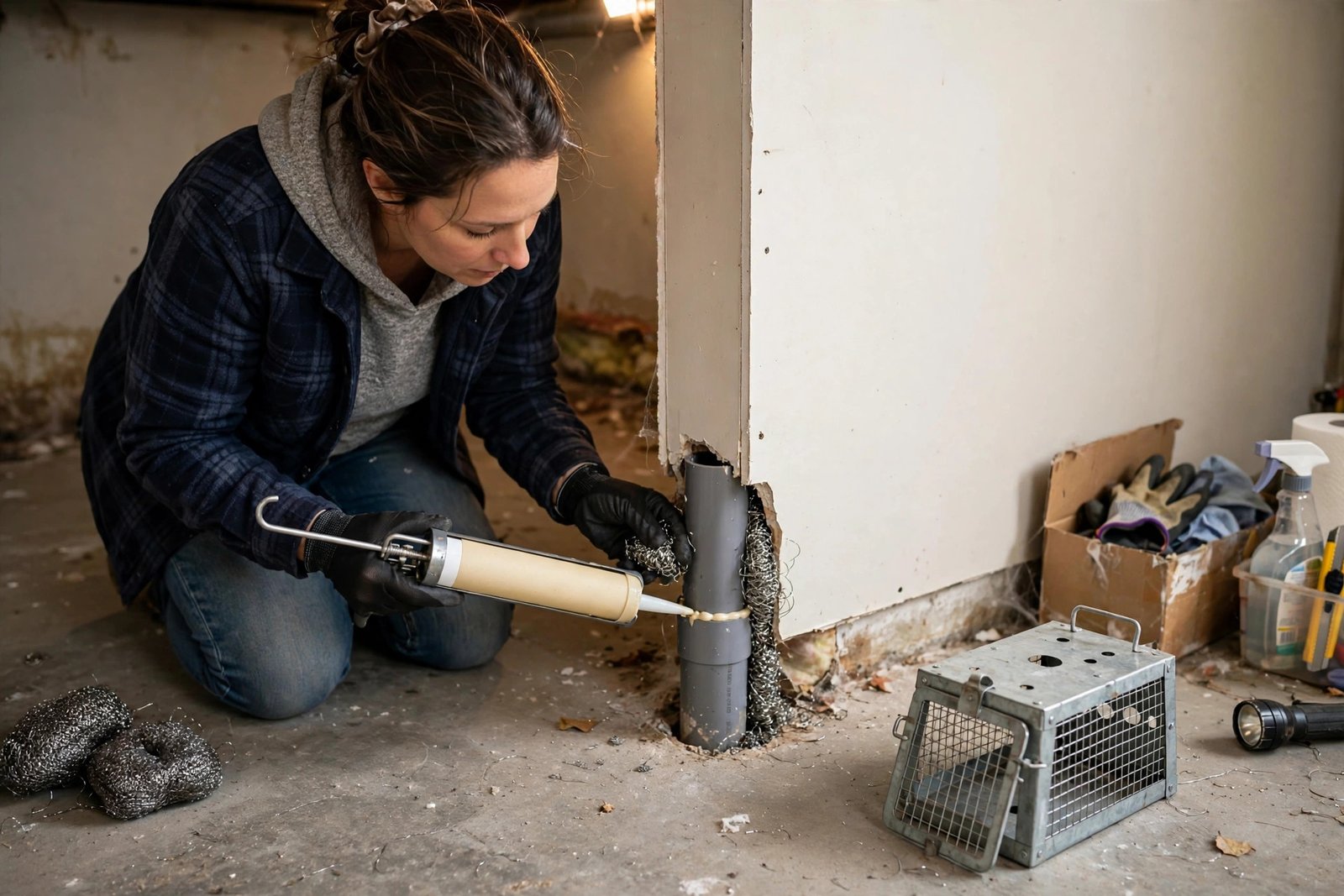
Seal gaps with materials mice cannot chew through: stuff steel wool tightly into small holes, then cover it with caulk, expanding foam over the steel wool, or cement for larger gaps. Cover vents with fine metal mesh of 6 millimetres or smaller, fit door sweeps to exterior and garage doors, and seal around pipes with metal escutcheon plates or cement. Do not rely on foam, plastic, rubber, or wood alone, because mice gnaw through all of them. For larger openings around vents or eaves, use sheet metal or hardware cloth screwed firmly into place.
Once the mice are gone and gaps are sealed, clean the affected areas safely. Wear gloves and a dust mask, ventilate the room, and spray droppings and nesting material with a disinfectant before wiping them up — never sweep or vacuum dry droppings, which can spread airborne particles. Wash hard surfaces with disinfectant, launder soft furnishings that were near nesting areas, and dispose of contaminated food packaging. Check wiring in the affected wall area for gnaw damage; if you see exposed copper or scorch marks, call an electrician before restoring power to that circuit, because gnawed wiring is a genuine fire risk.
Prevention: Keeping Mice Out for Good
Prevention is mostly about food, shelter, and access. Store dry food, cereals, rice, and pet food in sealed glass, metal, or thick plastic containers, and never leave pet food out overnight. Keep kitchen counters clean, wipe up crumbs daily, and take out rubbish regularly in bins with tight-fitting lids. Outside, keep firewood stacked at least 20 feet from the house and 18 inches off the ground, trim tree branches and shrubs so they do not touch the roof or walls, and clear clutter from the garage and garden, which provides nesting material and cover. Fix leaking taps and pipes, because mice, like all pests, are drawn to water sources.
Re-inspect your home every autumn before the cold season, and after any building work that creates new gaps. A ten-minute walk around the house each September, checking door sweeps, vents, and pipe entries, catches most new entry points before mice do. If you garden, store bird seed and grass seed in metal containers rather than bags, and clean up fallen fruit promptly. These habits, combined with sealed entry points, make your home a poor choice for mice compared with the many easier shelters outdoors. For broader pest prevention, see our guides to how to get rid of termites yourself and how to get rid of silverfish for methods that complement mouse-proofing.
Tips That Make Removal Faster
One trap rarely solves an infestation. Six to twelve traps along walls catch mice faster and show you where activity is heaviest.
Mice avoid new objects at first. Leave traps in place for several days so mice get used to them before they trigger.
Steel wool plus caulk or cement stops chewing. Foam alone is a temporary fix mice will defeat within days.
Pick up pet bowls before bed and store food in sealed containers. A hungry mouse enters traps far more readily.
Wait for three consecutive nights with no sounds and no fresh droppings before you declare the problem solved and seal the last gap.
Mice in walls often travel to the attic. Inspect insulation for tunnels and droppings, and seal attic entry points as well.
Frequently Asked Questions
How long does it take to get rid of mice in the walls?
Most small infestations clear within one to two weeks of consistent trapping. Larger infestations or homes with many entry points may take three to four weeks, especially if sealing is delayed.
Can mice in walls damage my house?
Yes. Mice gnaw wood, insulation, and electrical wiring, contaminate insulation with droppings and urine, and can cause fires if wiring is damaged. Inspect wiring in affected areas once the mice are removed.
Will mice leave the walls on their own?
Rarely. Walls provide warmth, shelter, and nesting material, so mice stay unless food runs out or they are removed. Without sealing, new mice will also move into the same cavities.
Is it safe to use poison if I have pets?
Poison carries real risk to pets through direct eating and secondary poisoning from eating a poisoned mouse. Trapping and sealing are safer for pet households, and poison should only be used in tamper-resistant stations if at all.
When should I call a professional?
Call a professional if trapping fails after three weeks, if you hear mice in multiple walls, if you find extensive wiring damage, or if droppings appear in many rooms. Professionals can inspect wall cavities and seal entry points you cannot safely reach.
Quiet Walls Again
Getting rid of mice in the walls comes down to a clear sequence: confirm the signs, trap consistently, seal every pencil-sized gap with chew-proof materials, and remove the food and shelter that drew them in. Do all four, and the scratching stops for good. Skip the sealing, and you will be trapping again next autumn. Start tonight by listening, checking for droppings, and setting your first traps along the affected wall — your quiet nights are closer than they sound.