
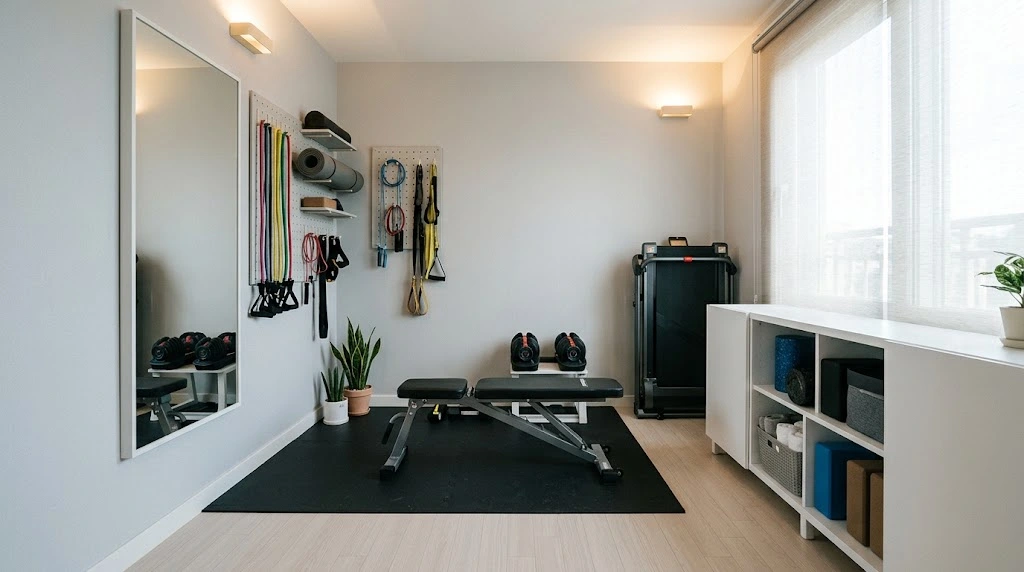
20 Home Gym Decor Ideas for a Stylish, Motivating Workout Space
The best home gym decor ideas combine practical equipment placement, comfortable flooring, good lighting, organized storage, and colors that make you want to exercise. Whether you have a spare room, a garage, or one small corner of your apartment, thoughtful design can turn an ordinary area into a welcoming home workout space.
You do not need expensive machines or a professional interior designer. Start with the space you have, choose equipment that matches your fitness goals, and decorate around safety and everyday convenience. These ideas will help you create a home gym that looks good, works efficiently, and is easier to keep tidy.
Key Takeaways
- Choose flooring that suits your equipment and protects the surface underneath.
- Use mirrors, layered lighting, and a simple color palette to make the gym feel brighter.
- Store weights, resistance bands, and accessories where they are easy to reach but not in walking paths.
- Plan enough clear space for each exercise and the equipment manufacturer’s safety requirements.
- Decorate for your actual routine instead of buying equipment you are unlikely to use.
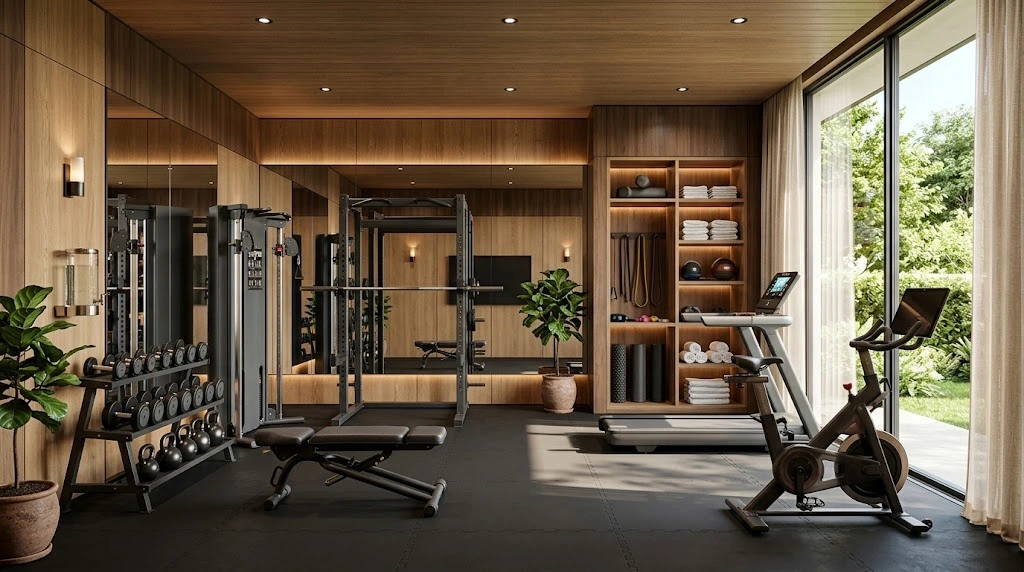
1. Choose a Clear Home Gym Design Theme
A consistent theme helps your workout area look intentional rather than like a collection of exercise equipment. Modern minimalist, industrial, natural, and luxury-inspired styles can all work well in a home gym.
For a minimalist gym, use neutral walls, a few carefully chosen accessories, and closed storage. An industrial look can combine darker colors, metal shelving, and simple lighting. For a natural atmosphere, consider warm wood details, soft green accents, and a small plant positioned away from equipment.
Choose one main style and two or three supporting colors. Repeating those colors across your mats, storage boxes, towels, and accessories creates a coordinated appearance without requiring a full renovation.
2. Install Durable, Workout-Friendly Flooring
Flooring is one of the most important home gym design decisions because it affects comfort, noise, grip, cleaning, and equipment stability. Rubber gym flooring is a common option for weight areas, while suitable exercise mats can work for stretching, yoga, and bodyweight workouts.
Before purchasing flooring, check the existing floor, the weight of your equipment, and the product’s intended use. Heavy lifting may require a more robust setup than light exercise. Interlocking tiles can make installation easier, but their thickness, seams, and stability should suit the activity.
3. Use Mirrors to Make the Room Feel Bigger
Mirrors can make a small home gym feel more open and help you observe exercise technique. A large wall mirror can also reflect light, making a basement workout area feel less enclosed.
Place mirrors where they do not create glare or distracting reflections. Use securely installed gym mirrors or an appropriate safety-backed product, and make sure the mounting method is suitable for the wall. Keep mirrors away from places where dropped weights or moving equipment could strike them.
4. Create a Bright, Layered Lighting Plan
Good lighting makes equipment easier to see and helps the room feel inviting. If possible, use natural daylight without allowing glare to interfere with screens or mirrors. Combine general ceiling lighting with focused lighting where you read workout instructions, adjust equipment, or stretch.
For a calming yoga corner, softer indirect lighting may suit the mood. For strength training, choose lighting that provides clear visibility across the workout area. Keep decorative lamps, cords, and light fixtures outside exercise and equipment-clearance zones.
5. Choose Colors That Support Your Workout Mood
Color can influence the atmosphere of a room, although there is no single color proven to improve every person’s exercise performance. The right choice is the one that feels comfortable and supports the kind of training you enjoy.
- Warm white and beige: Create a bright, understated background.
- Sage and olive green: Suit natural, calm, wellness-inspired spaces.
- Charcoal and black: Give a gym a bold, contemporary appearance.
- Muted blue: Adds a cool, composed feel to a workout room.
- Small accent colors: Add energy through towels, storage bins, or wall art.
Use a neutral base if your equipment already has several different colors. This keeps the room from feeling visually crowded.
6. Add Wall Art That Reflects Your Fitness Goals
Wall art gives your home gym personality. Choose framed fitness illustrations, simple typography, nature photography, or personal milestones that remind you why you exercise.
Keep decorations firmly attached and away from equipment movement. Avoid heavy frames above benches, treadmills, or free-weight areas. If you prefer a clean look, one large statement piece can be more effective than covering every wall.
7. Organize Weights and Accessories With Smart Storage
Clutter is one of the quickest ways to make a home gym feel cramped. Dedicated storage helps you find equipment quickly and reduces the chance of tripping over dumbbells, bands, or foam rollers.
Use stable racks for weights, wall hooks for suitable accessories, and shelves or labeled bins for smaller items. Store heavier equipment low when appropriate, and anchor tall storage units according to the manufacturer’s instructions.
Leave walkways and exits clear. A tidy room is not only more attractive; it is easier to use consistently.
8. Design a Functional Small Home Gym
A small home gym can work in a spare bedroom, a compact office, or an unused corner of a living space. The key is to prioritize versatile equipment and preserve a clear exercise area.
Resistance bands, adjustable dumbbells, a workout bench that stores appropriately, and a folding mat may suit a compact setup. Select items based on the exercises you actually do, and check the space needed for full movement before buying anything.
Use vertical storage, light wall colors, and equipment that can be safely moved or stored. Avoid filling every empty corner; open floor space is part of the design.
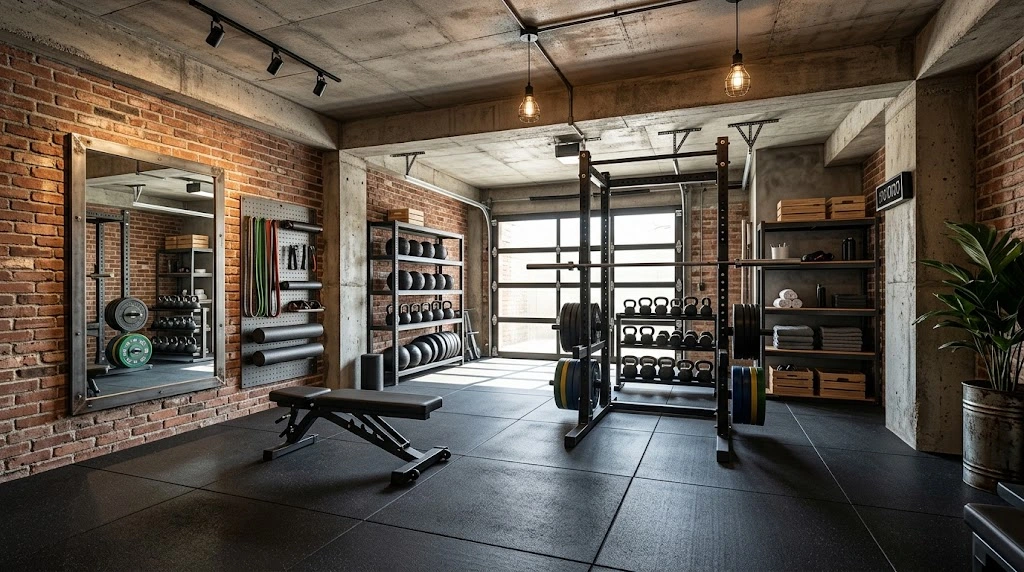
9. Make a Garage Gym Look Finished
A garage can offer useful room for strength training, cycling, or functional fitness. Start by checking moisture, ventilation, temperature, electrical safety, and the condition of the floor. A clean, dry environment is more practical than decorating over unresolved problems.
Rubber flooring in designated exercise areas, organized racks, bright lighting, and a consistent wall color can make the space feel like a dedicated gym. Make sure vehicles, garage doors, storage items, and other household uses do not interfere with equipment operation or safe movement.
If you are installing heavy machines or lifting substantial loads, verify the floor’s suitability and follow the equipment manufacturer’s installation instructions.
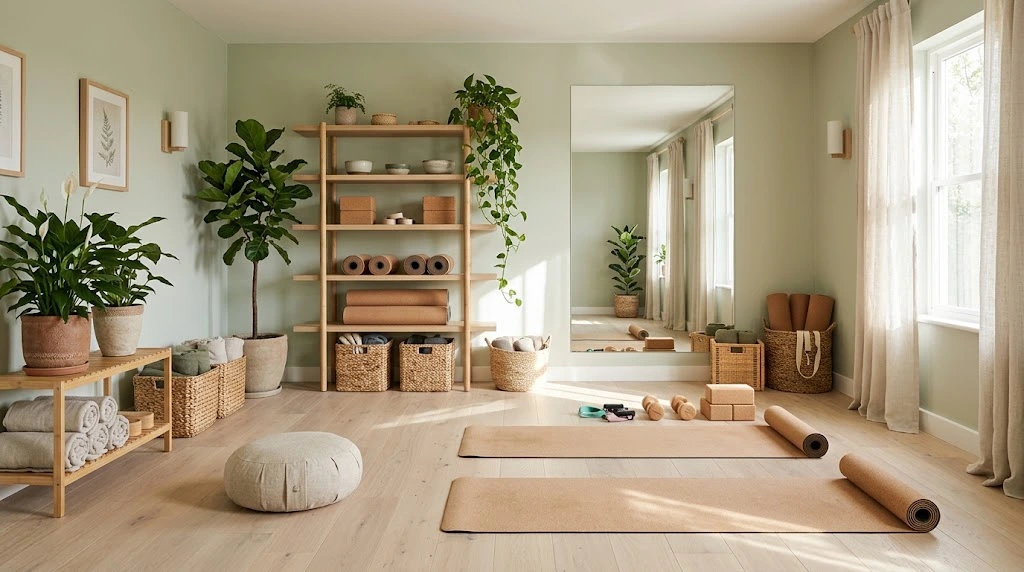
10. Add a Dedicated Yoga and Stretching Corner
Not every home gym needs to be filled with machines. A separate area for mobility, yoga, warm-ups, and cooldowns can make the space more versatile.
Keep a mat, blocks, straps, and a foam roller in a nearby basket or shelf. Use a clear wall, comfortable lighting, and a simple visual focal point to distinguish the corner from the strength-training area.
Make sure the floor provides suitable grip and that you have enough room to extend your arms and legs without hitting furniture.
11. Bring in Natural Details Carefully
Plants and natural textures can soften the appearance of a room filled with metal equipment and rubber flooring. A plant on a stable shelf or in a protected corner can add color without taking up valuable training space.
Choose plants suited to the room’s actual light and temperature. Keep pots away from equipment, walkways, electrical outlets, and areas where they could be knocked over. If the gym is poorly ventilated or has extreme temperatures, choose decor that can tolerate those conditions.
12. Make Your Equipment Part of the Design
Large equipment can dominate a room, so plan the layout before you decorate. Group similar activities where practical: cardio equipment in one zone, free weights in another, and stretching space in a clear area.
Keep the manufacturer’s recommended clearance around moving parts and allow safe access to controls. Do not place a treadmill where its user could run into a wall, furniture, or a doorway. Heavy weights should have a suitable lifting surface and safe storage location.
Choose a manageable set of equipment instead of trying to recreate a commercial gym. A setup you can use comfortably is more valuable than one that looks impressive but restricts movement.
13. Use Wall-Mounted Storage to Save Floor Space
Wall-mounted hooks and racks can help store resistance bands, jump ropes, towels, and other lightweight accessories. This keeps the floor clearer and makes the room look organized.
Before installing wall storage, identify the wall construction and use fixings rated for the load. Not every wall is suitable for heavy racks. Keep hanging equipment away from doors, mirrors, electrical fixtures, and exercise paths.
If drilling is not an option, consider a stable freestanding rack or storage cabinet that does not obstruct movement.
14. Add a Practical Recovery Station
A small recovery station can hold a foam roller, massage ball, stretching strap, towel, and water bottle. A simple shelf or basket is often enough.
Keep the area separate from weights and moving equipment. If you use a screen for guided stretching, position it where you can see it without twisting into an awkward position. Keep charging cables secured and out of walkways.
15. Choose Ventilation and Temperature Comfort Over Extra Decor
A beautiful room will not feel good to use if it becomes excessively hot, humid, or stuffy. Consider safe ventilation, a suitable fan, and a comfortable temperature based on the room and your workout.
Place fans where they cannot interfere with moving equipment or become a tripping hazard. Do not block ventilation openings, and use electrical devices according to their safety instructions. If a basement or garage has persistent dampness, address the underlying moisture issue before adding flooring or furnishings.
16. Create a Home Gym on a Budget
You can improve the look of your home gym without buying everything at once. Prioritize essentials that directly support your workout and make the space safer or easier to use.
- Declutter the room before purchasing storage.
- Repaint a wall if the existing finish is worn or visually distracting.
- Use labeled bins for small accessories.
- Choose one or two affordable decorative accents instead of many small items.
- Buy equipment based on your routine, available space, and realistic budget.
- Check used equipment carefully for damage, instability, recalls, or missing safety parts.
Spend first on suitable flooring, safe equipment, and essential storage. Decorative upgrades can come later.
17. Compare Home Gym Styles Before You Start
Use this comparison to decide which design direction fits your room, workout habits, and budget.
| Gym style | Best suited for | Decor choices | Planning priority |
|---|---|---|---|
| Minimalist | Small rooms and multipurpose spaces | Neutral colors, simple storage, limited accessories | Keep the floor clear |
| Industrial | Garages and dedicated workout rooms | Metal racks, darker accents, practical lighting | Ventilation and equipment clearance |
| Natural wellness | Yoga, mobility, and mixed workouts | Warm wood details, soft green accents, plants | Comfortable, uncluttered movement space |
| Compact apartment | Bedrooms and small corners | Foldable accessories, vertical storage, light colors | Safe storage and flexible layout |
| Luxury modern | Dedicated home gym rooms | Coordinated finishes, mirrors, layered lighting | Balance appearance with usability |
18. Keep the Gym Quiet and Comfortable
Noise matters when your home gym shares walls with bedrooms, neighbors, or living areas. Suitable rubber flooring, equipment mats, and careful placement may help reduce some impact and vibration, depending on the building and activity.
Check the flooring and equipment manufacturer’s recommendations, especially for treadmills and heavy weights. Avoid assuming that a thin mat will solve every noise problem. For heavy lifting in apartments or upper floors, consider building restrictions and seek professional advice where needed.
19. Personalize the Space Without Overcrowding It
Your gym should feel like part of your home. A framed training goal, a favorite color, a neatly displayed set of towels, or a small collection of meaningful items can make the space more personal.
Keep personal objects away from moving equipment and areas where weights are handled. Avoid fragile decorations on unstable shelves. The most successful decor is attractive but does not interrupt the workout.
20. Finish With a Simple Weekly Reset Routine
Good design is easier to maintain when everything has a place. At the end of a workout, return weights to their racks, put bands and accessories away, and wipe down equipment according to its care instructions.
Once a week, check for loose fittings, damaged cables, worn mats, unstable storage, or clutter that has entered exercise paths. Follow the manufacturer’s maintenance schedule for machines and accessories.
This small routine helps your gym remain clean, attractive, and ready to use. It also makes it easier to notice potential equipment problems before the next workout.
How to Plan Your Home Gym Decor Step by Step
- Measure the room: Record wall lengths, ceiling height, door swings, outlets, and any fixed obstacles.
- Define your workouts: List the activities and equipment you will actually use.
- Map the layout: Reserve clear movement areas and follow equipment clearance instructions.
- Choose the floor: Match the surface to the exercises, loads, and existing floor.
- Plan storage and lighting: Keep accessories accessible and the training area well lit.
- Add decor last: Introduce mirrors, wall art, color accents, and plants only where they will not create hazards.
Frequently Asked Questions About Home Gym Decor Ideas
How can I decorate a home gym on a small budget?
Start by decluttering, choosing a simple color scheme, and organizing existing equipment. Add suitable flooring, basic storage, and one or two decorative accents before investing in expensive upgrades.
What is the best color for a home gym?
There is no single best color for everyone. White, beige, and soft gray can create a bright background, while green, blue, or darker accents can suit different personal styles and workout preferences.
How do I make a small home gym look bigger?
Use light colors, a mirror installed safely, vertical storage, and compact equipment. Keep walkways clear and avoid filling every wall and corner with decorations.
What flooring is best for a home gym?
Suitable rubber flooring is often used for weight-training areas, while exercise mats can suit stretching and bodyweight workouts. Choose according to your equipment, floor structure, activity, and manufacturer guidance.
Are mirrors a good idea in a home gym?
Yes, mirrors can make a room feel larger and help you observe your exercise technique. Install them securely and keep them away from areas where weights or moving equipment could hit them.
How can I decorate a garage home gym?
Begin with moisture control, ventilation, safe flooring, good lighting, and organized equipment storage. Then use a consistent wall color and a few durable accessories to create a finished look.
How do I organize a home gym without taking up floor space?
Use suitable wall hooks, stable racks, shelves, and labeled bins. Make sure installations can support their loads and do not block exits, walkways, or equipment movement.
What equipment should a beginner put in a home gym?
Choose equipment based on your intended routine and available space. A workout mat, resistance bands, and appropriately selected weights may support many beginner routines, but the right choices depend on your goals and ability.
How do I make a home gym look modern?
Use a consistent palette, simple storage, clear lighting, coordinated equipment finishes, and restrained wall decor. Keep practical needs and safe movement more important than appearance.
Can I create a home gym in my bedroom?
Yes. Choose compact equipment, use storage that keeps the floor clear, and position the workout area so it does not block the bed, door, or access to essential furniture.
Safety and Trustworthy Home Gym Planning
Decor should never replace safe equipment setup. Follow the instructions supplied with each machine, use appropriate flooring, keep emergency exits clear, and ensure storage is stable. Check that mirrors, shelves, and wall-mounted accessories are installed for their intended loads.
For exercise guidance, consult a qualified fitness professional when needed. For home gym equipment, review the manufacturer’s specifications and safety instructions. The U.S. Consumer Product Safety Commission also provides product-safety information at CPSC.gov. For general physical activity guidance, see the World Health Organization’s physical activity fact sheet.
Editorial note: These design recommendations are general guidance. Room dimensions, building structure, equipment requirements, and individual needs vary. Verify technical and safety requirements for your specific setup.
About This Guide
This guide is prepared for homeowners and renters looking for practical ways to design a comfortable, attractive home workout area. It focuses on accessible decor ideas, space planning, storage, lighting, and equipment considerations rather than promoting one particular product or gym style.
For stronger editorial trust, publish this section with your real author name, relevant interior design or fitness experience, and a genuine author profile. Do not add credentials or professional qualifications unless they can be verified.
Create a Home Gym That Fits Your Lifestyle
The best home gym is not necessarily the biggest or most expensive. It is a space that fits your routine, keeps equipment organized, and makes exercise feel convenient. Start with safe flooring and a functional layout, then build your chosen style with lighting, color, storage, and personal details.
Looking for more inspiration for your home? Explore more ideas on our website.
Explore Home Decor Ideas