
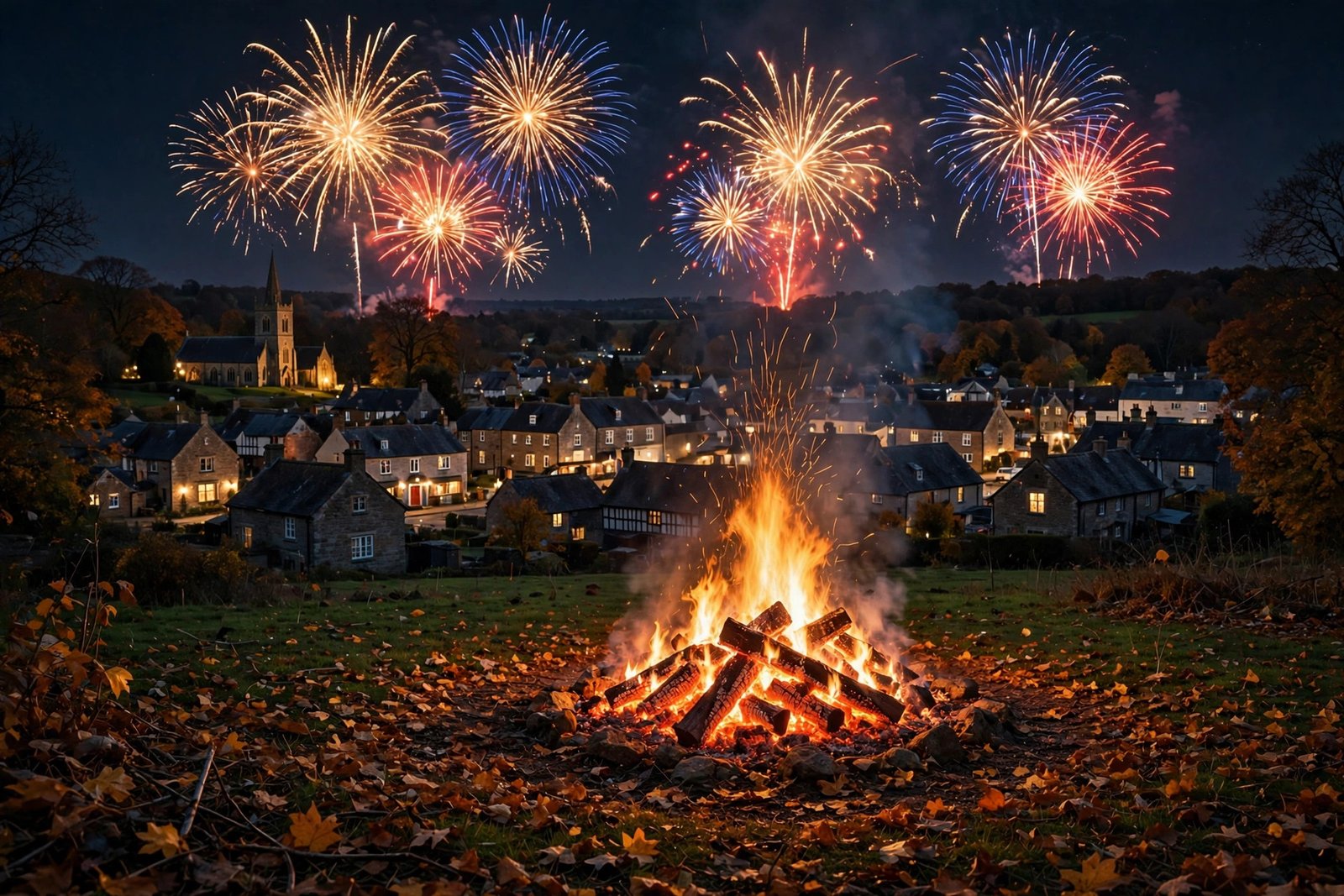
Guy Fawkes Night: History, Traditions and How Britain Celebrates on 5 November
Every 5 November, bonfires light up across Britain, fireworks fill the sky, and an effigy known as “the guy” burns on top of the fire. The rhyme every British schoolchild learns — “Remember, remember, the fifth of November” — is not about fireworks. It is about a plot to blow up Parliament in 1605, a man named Guy Fawkes, and a night that has been marked, in one form or another, for more than four hundred years. Bonfire Night 2026 falls today, Thursday 5 November, with many large displays taking place over the weekend of 6–8 November.
This guide explains the history behind the night, how its traditions developed, how it is celebrated today, and how to enjoy it safely — whether at a large organised display or a small gathering at home. For where to go this year, see our Bonfire Night 2026 UK events guide, which lists major displays and dates.
- 5 November marks the failure of the Gunpowder Plot of 1605, when Guy Fawkes was caught guarding explosives under Parliament.
- Bonfires were lit in celebration the night the plot was foiled — and the tradition never stopped.
- Modern Bonfire Night = organised displays, bonfires, fireworks, toffee apples, parkin and sparklers.
- Organised displays are far safer than home fireworks; sparklers burn hotter than most people realise.
1. The Gunpowder Plot of 1605
In 1605, England was ruled by the Protestant King James I, and Catholics faced severe restrictions. A small group of Catholic conspirators, led by Robert Catesby, planned to blow up the House of Lords during the State Opening of Parliament on 5 November, killing the King and many MPs, in the hope of restoring a Catholic monarch. Guy Fawkes, a soldier with explosives experience, was given the job of guarding the gunpowder — 36 barrels of it — stored in a cellar beneath the Lords.
The plot was foiled after an anonymous warning letter, and Fawkes was discovered in the cellar in the early hours of 5 November, with matches and the gunpowder. He and the other conspirators were arrested, tried for treason, and executed in early 1606. Londoners, ordered to celebrate the King’s deliverance, lit bonfires that very night — the first Bonfire Night, though nobody called it that yet.
2. How Bonfires Became a Tradition
Within months, Parliament passed an act making 5 November a day of thanksgiving, and bonfires became an annual event. Over the centuries, the night absorbed other customs: burning an effigy of Fawkes (the “guy”), children asking for “a penny for the guy” to buy fireworks, and later, fireworks themselves, which were originally a military and celebratory technology. The religious and political edge of the night faded over time, and by the twentieth century Bonfire Night was primarily a community celebration: a fire, fireworks, food and neighbours.
Some places kept distinctive local traditions. Lewes in Sussex is famous for its torchlit processions and large effigies, often of contemporary public figures as well as Fawkes. Ottery St Mary in Devon carries flaming tar barrels through its streets. Those local celebrations are spectacular, but they are also crowded and intense — best enjoyed as a spectator at an organised event, not attempted at home.
3. The Guy: Why an Effigy Burns
The “guy” is a scarecrow-like effigy, traditionally made from old clothes stuffed with straw or newspaper, with a mask or painted face, and placed on top of the bonfire to burn. Historically it represented Guy Fawkes himself. Children once made guys and displayed them on street corners, asking passers-by for “a penny for the guy” to fund fireworks — a custom that has largely faded as organised displays replaced street bonfires.
Today, most large displays burn a guy as a nod to tradition, and some burn effigies of other figures as satire — a practice that occasionally causes controversy, as it did in Lewes over the years. For a home bonfire, a guy is optional: many families skip it entirely and simply enjoy the fire and fireworks. There is no rule that a bonfire needs an effigy to count as Bonfire Night.
4. Bonfire Night Food: Toffee Apples, Parkin and More
Bonfire Night food is warming, sweet and designed to be eaten outdoors with cold hands. Toffee apples — apples dipped in hard toffee on a stick — are the signature treat. Parkin, a sticky ginger oat cake from Yorkshire and Lancashire, is the traditional cake. Bonfire toffee, treacle toffee, hot soup, jacket potatoes, mulled drinks for adults and hot chocolate for children complete the menu.
If you are hosting, keep food simple and portable: soup in mugs, potatoes wrapped in foil, toffee apples ready-made, and a thermos of something hot. Guests standing around a fire do not want a sit-down meal; they want something warm they can hold. And keep food away from the fire and fireworks area — sugar, sparks and small children are a combination that needs distance.
5. Fireworks and Sparklers: Enjoying Them Safely
Fireworks are the centrepiece of modern Bonfire Night, and organised displays are the safest way to enjoy them: professional operators, safe distances, and no handling of explosives by the public. If you attend a display, follow the marshals’ instructions, keep children close, and protect pets by keeping them indoors with curtains drawn and a safe hiding place.
Home fireworks carry real risks and legal rules: in the UK, fireworks can only be sold and used within certain dates and hours, and some types are restricted to licensed professionals. Sparklers deserve special respect — they burn at over 1,000 degrees Celsius, far hotter than a cooking oven, and are a leading cause of Bonfire Night burns in children. Children should wear gloves, hold sparklers at arm’s length, never wave them near faces, and drop them into a bucket of water afterwards, never onto the ground.
6. Bonfire Night Today: Community, Not Controversy
Modern Bonfire Night is, for most people, a community event rather than a political one. Schools, sports clubs, charities and councils run displays that raise money and bring neighbourhoods together, and the night’s history is taught as history — a failed plot, a king saved, a tradition that stuck. The rhyme survives because it is catchy, not because most celebrants hold strong views about 1605.
That community spirit is the best way to enjoy the night: go to an organised display, dress warmly, bring a torch for the walk home, eat a toffee apple, and watch the sky. Four hundred years after a plot failed in a cellar under Parliament, Britain still lights a fire to remember it — and that, in itself, is a remarkable piece of living history.
Frequently Asked Questions
Why is Bonfire Night on 5 November? Because 5 November 1605 was the night Guy Fawkes was caught guarding gunpowder beneath Parliament, foiling the Gunpowder Plot.
What is “the guy”? An effigy, traditionally representing Guy Fawkes, made from old clothes and straw and burned on the bonfire. It is optional at home bonfires.
Are home fireworks legal in the UK? Some are, within restricted sale and use periods and with safety rules. Organised displays are safer and simpler — check local rules before buying any fireworks.
Why do people eat toffee apples on Bonfire Night? Apples are in season in November, toffee is warming and portable, and the combination became a traditional outdoor treat for the night.
Remember, remember the fifth of November — not just for the fireworks, but for the story behind them. Enjoy the fire, eat the toffee apple, and spare a thought for the night in 1605 when a bonfire first marked a plot that failed.