
Best Home Security System: A Homeowner’s Guide to Total Peace of Mind
Choosing the best home security system is not about buying the most expensive box on the shelf. It is about matching the right protection to the way you actually live. A family that travels monthly needs something very different from a work-from-home couple or a large suburban house with a garden, a garage, and three entry doors. The right system quietly watches your doors, windows, and the people inside while you get on with your life.
This guide cuts through the marketing noise: what “best” really means, how monitored and DIY options compare, which features are worth paying for, and where to place every sensor and camera — plus styling advice so your security gear blends with your home decor.
Key Takeaways
- The best home security system fits your home size, lifestyle, and budget — there is no one-size-fits-all winner.
- Professionally monitored systems suit frequent travelers and larger homes; self-monitored DIY kits suit hands-on homeowners who want no monthly fees.
- Prioritize entry sensors, a video doorbell, motion detection, and cellular plus battery backup before spending on extras.
- Cover every ground-floor door and accessible window, then layer cameras at the main entry points.
- Security can look good: match device finishes to your hardware and conceal wiring for a clean, intentional look.
What Actually Makes a Home Security System “the Best”?
The best home security system is the one that is armed, reliable, and fast when it matters — not the one with the longest spec sheet. A system with twenty features you find annoying will spend its life disarmed, while a simpler setup you trust protects you every day. After a year of ownership, homeowners value the same things: alerts that arrive in seconds, equipment that stays online, and a system the whole family can arm without a manual.
Judge any system against these five fundamentals before you look at anything else:
- Fast, dependable alerts. Intrusion, smoke, and leak alerts should reach your phone in seconds, not minutes, even when you are away from home.
- Complete entry-point coverage. Every ground-floor door and accessible window needs a sensor. Partial coverage is the most common weakness in real installations.
- Backup power and connectivity. Cellular backup and a battery reserve keep the system working through power cuts and Wi-Fi outages, which is exactly when you need it most.
- Smart-home compatibility. The system should play nicely with your locks, lights, and voice assistants so security becomes part of your daily routine rather than a separate chore.
- Honest total cost. Add up equipment, installation, and monthly fees over three years. The “cheapest” system on day one is often the most expensive by year three.
The 3 Main Types of Home Security Systems
Almost every home security system on the market falls into one of three categories. Understanding the trade-offs will narrow your choice faster than comparing a hundred product pages.
1. Professionally Monitored Systems
With professional monitoring, a central station watches your system around the clock. When an alarm triggers and you do not answer the verification call, they dispatch police or fire services for you. It is the strongest option for frequent travelers or anyone who wants a professional responding at 3 a.m. The trade-off is a monthly fee of roughly twenty to sixty dollars, often with a one-to-three-year contract.
2. Self-Monitored DIY Systems
Self-monitored systems send alerts straight to your phone, and you decide what to do — call a neighbor, check the camera feed, or phone emergency services. There is usually no monthly fee beyond optional cloud storage, and installation is a weekend project with adhesive sensors and a smartphone app. It suits hands-on homeowners who want full control without a contract. The honest limitation: if you are asleep or on a flight, nobody else is watching.
3. Hybrid and No-Contract Options
Many modern systems let you start self-monitored and add professional monitoring month to month, with no long contract. Try the system on your own terms, then switch monitoring on during a long holiday and off when you are home for months. When comparing plans, check whether the fee includes cellular backup and video storage — those two add-ons turn a basic kit into a resilient system.
7 Features Genuinely Worth Paying For
See and speak to visitors from anywhere and record every approach to your front door. The single highest-impact device for most homes.
Slim contact sensors on every entry point form the backbone of intrusion detection — cheap, reliable, and faster than camera-based detection.
Interior motion detection catches what perimeter sensors miss, and pet-immune models ignore animals under a set weight.
When power or Wi-Fi fails, cellular backup keeps alerts flowing. Look for at least 24 hours of battery reserve in the base station.
Keyless entry with unique codes for family, cleaners, and guests, plus auto-lock when you leave. Smart-panel integration makes the front door genuinely intelligent.
The best home security system guards against more than break-ins. Sensors for smoke, carbon monoxide, and water leaks prevent disasters statistics say are far more likely.
Cloud clips are convenient, but local storage keeps footage safe if your internet drops. Systems offering both give you the best of each world.
Where to Place Every Sensor and Camera
Even the best home security system underperforms when devices are placed badly. Walk your property the way an intruder would and think in layers: deter at the boundary, detect at the perimeter, confirm inside.
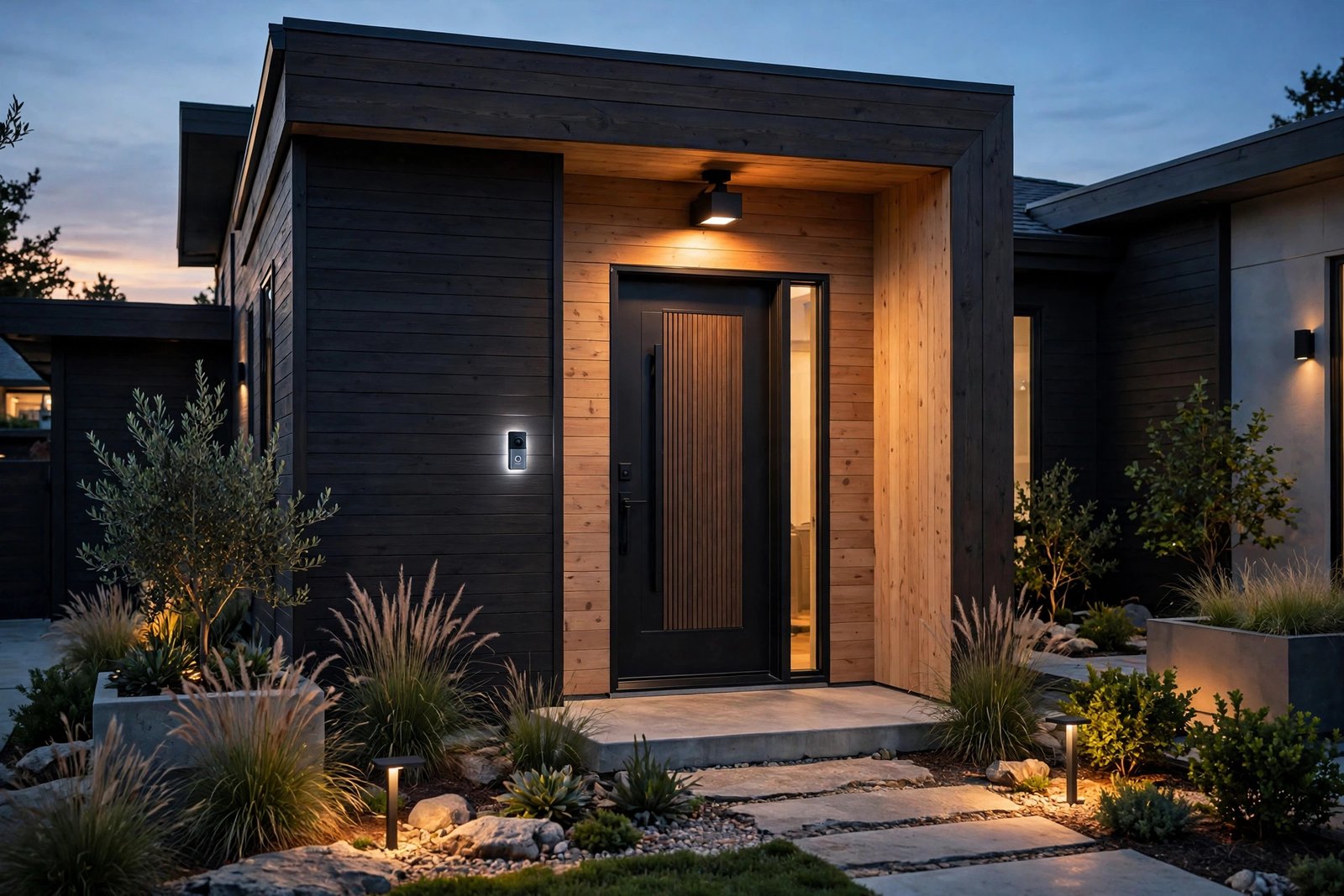
Start at the front entrance, the most targeted entry point of any home. A video doorbell plus a smart lock here does more for real-world safety than any other single upgrade, and good lighting multiplies the effect. If you are refreshing your entryway too, browse these home entrance decor ideas to keep it welcoming while you harden it — a stylish porch and a secure porch are not opposites.
Next, cover the living areas. The living room holds the most foot traffic and the most valuable electronics, so one well-placed motion sensor or discreet indoor camera covers the heart of the home. Our home decor ideas for living room show layouts where a small sensor on a bookshelf or a camera styled into a gallery wall disappears entirely.
Do not forget lighting as a security layer. A well-lit exterior is one of the strongest deterrents there is, and layered path, porch, and accent lighting makes cameras far more effective at night. The techniques in our home light decor ideas for Christmas adapt beautifully to year-round security lighting that looks intentional rather than industrial.
Finally, protect the sides and rear: back doors, patio sliders, and garden-facing ground-floor windows are the second most common entry points. One outdoor camera for the backyard plus sensors on every accessible window closes the loop.
5 Mistakes Homeowners Make With Security Systems
- Securing only the front door. Only a third of break-ins come through the front door. Back doors, windows, and garage entries need equal attention.
- Ignoring upper floors. Any window reachable from a flat roof, balcony, or trellis counts as ground floor. Sensor it accordingly.
- Leaving the system disarmed. The priciest system protects nothing when it is off. Use geofencing or scheduled arming so “away” mode engages automatically.
- Weak Wi-Fi at the edges. Cameras at the far corners of your property drop offline on weak signals. A mesh Wi-Fi node near the extremities fixes most “camera offline” headaches.
- Never testing the system. Test every sensor, camera, and the alarm response quarterly. Batteries die silently, and a sensor knocked loose during cleaning may never report.
Security That Looks Good: Blending Tech With Your Decor
Security equipment used to look like it belonged in a warehouse — that era is over. Most leading devices now come in white, black, and bronze finishes that coordinate with modern door hardware, and slim sensors are barely thicker than a coin. Match the finish to your handles and light fixtures so devices read as part of the design.
Concealment is the other half of the trick. Run camera cables through eaves and soffits, tuck the base station inside a ventilated cabinet, and use paintable cable raceways where drilling is not an option. Indoor cameras sit happily on bookshelves between frames and plants. Aim for a home where guests notice the beautiful living room first and only spot the security gear when you point it out.
Frequently Asked Questions
How much does the best home security system cost?
A solid DIY starter kit runs about $150 to $400 upfront with no monthly fee, while professionally monitored systems typically cost $20 to $60 per month plus equipment. Compare the three-year total: a “cheap” kit with pricey cloud storage can overtake a monitored plan.
Do I really need professional monitoring?
Not everyone does. If you are usually reachable and comfortable responding to alerts yourself, self-monitoring is perfectly valid. Professional monitoring earns its fee when you travel, work nights, or want emergency dispatch without relying on your own availability.
Will a home security system lower my insurance?
Often, yes. Many insurers offer 5 to 20 percent discounts for monitored alarm systems, and smaller ones for DIY setups with cameras. Ask your insurer what documentation they need before you buy.
Can I install a home security system myself?
Most modern DIY systems are designed for self-installation with adhesive sensors, wireless cameras, and app-guided setup — usually under two hours. Hardwired systems and anything involving mains electrical work are better left to professionals.
What happens if the power or Wi-Fi goes out?
Quality systems switch to battery power and cellular backup automatically, keeping sensors and alerts alive for 24 hours or more. Cameras may pause recording without Wi-Fi unless they have local storage — one more reason to favor systems with both options.
Your Next Step Toward a Safer Home
The best home security system matches your home, your habits, and your budget — armed every day, not just on paper. Start with the fundamentals: sensors on every ground-floor entry, a video doorbell at the front, motion detection inside, and cellular backup underneath it all. Add cameras and smart locks as budget allows, and test the whole setup once a season.
Ready to make your entrance both beautiful and secure? Explore our home entrance decor ideas for styling inspiration, then layer in lighting techniques from our holiday lighting guide. A home that looks cared for is one intruders tend to skip.
2 thoughts on “Best Home Security System: A Homeowner’s Guide to Total Peace of Mind”