
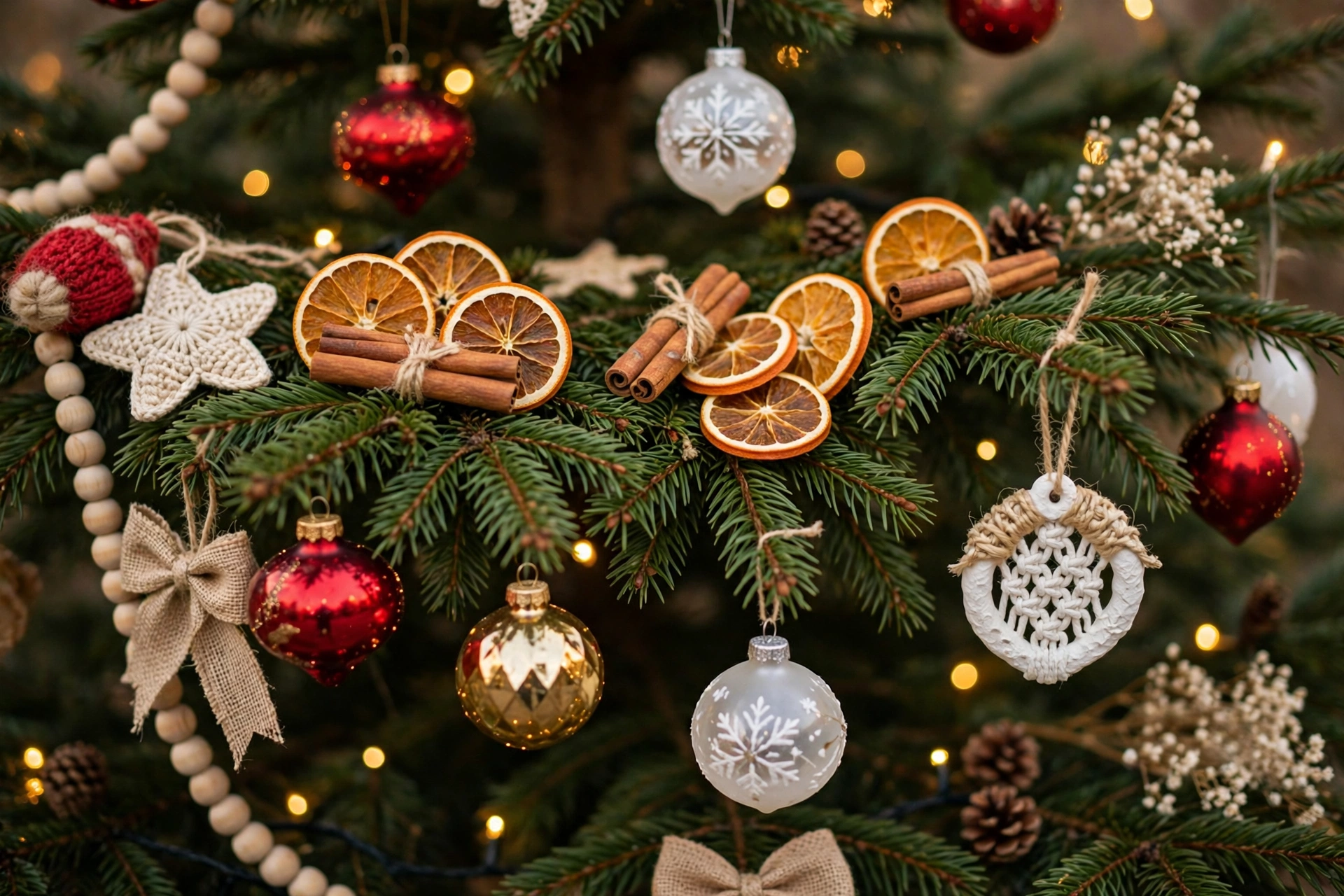
Ornaments are the part of Christmas decorating that carries the memories. The bauble from your first flat, the handmade one your child made at school, the glass bird you bought on holiday — they all hang on the same tree, and that is what makes it yours. Good christmas ornament ideas are not about buying a matching set. They are about building a tree that looks collected over time, even if half of it came from this year’s shopping trip.
- Mix sizes: big ornaments for depth, small ones to fill gaps, one or two statement pieces.
- Pick two colours and one metallic, and repeat them through the whole tree.
- Handmade ornaments make a tree feel personal; shop-bought ones make it look finished.
- Hang heavier ornaments closer to the trunk and lighter ones on the tips.
- Store ornaments wrapped individually so next year starts with all of them intact.
The Colour Rule That Makes Any Tree Look Good
Every tree that looks pulled together follows the same rule: two main colours and one metallic. Red and green with gold is the classic. White and silver with a touch of blue feels snowy and calm. Pink and gold is soft and modern. Navy and copper looks rich against dark green branches. The colours matter less than the discipline — when every ornament fits the palette, the tree reads as one design instead of a random collection.
That does not mean the sentimental ornaments have to go. The handmade ones, the odd ones, the ones that do not match anything — they are the reason the tree is yours. Give them a home on the tree anyway, but cluster them together in one area, or hang them on the back of the tree where they are still part of the story. The rest of the tree follows the palette, and the personal pieces get their own little corner. If you are still choosing your palette, our Christmas colour palette guide walks through the combinations that work best in real rooms.
Handmade Ornaments Worth Making
Handmade ornaments are the ones people ask about, and most of them take less than half an hour. Dried orange slices are the easiest: slice an orange thin, dry the slices in a low oven for a few hours, thread them with string, and they look like they came from a craft fair. Cinnamon stick bundles tied with twine smell wonderful and double as napkin rings on the table. Salt dough ornaments — flour, salt, and water, cut into shapes and baked — are the classic kids’ project, and a coat of paint makes them look far better than their ingredients suggest.
For something a little fancier, try filling clear glass baubles with fake snow, small pine sprigs, or glitter. They take five minutes and they look like they cost ten times what they did. Pinecones, baked at a low heat to dry them out and kill anything living in them, make lovely ornaments with a dab of white paint on the tips to look like snow, or a ribbon to hang them by. Paper stars folded from old maps or sheet music are another easy win — they cost nothing and they catch the light beautifully. If you like making things with the kids, our Christmas crafts for kids post has more projects that actually turn out well.
Ornaments for every room, not just the tree
Ornaments do not have to live on the tree. A bowl of baubles on the coffee table, a few hanging from a branch in a vase, or a string of them across a window all use the same pieces in a different way. Small ornaments make great gift toppers — tie one to a present instead of a bow and the wrapping is done. And a single beautiful ornament in a small frame or a glass cloche makes a lovely hostess gift. Keep a few spare ornaments aside when you decorate the tree, because you will find uses for them all over the house.
Classic Ornaments That Never Go Out of Style
Some ornaments are classics for a reason. Glass baubles in solid colours are the workhorse of every tree: they catch the light, they fill space, and they never look dated. Glass birds, icicles, and finials add the delicate detail that makes a tree look expensive. Wooden ornaments — stars, reindeer, little houses — bring warmth and work especially well on a tree with a natural or rustic feel. Metal ornaments in gold or copper add shine without colour, which is useful if your palette is already busy.
The trick with shop-bought ornaments is to buy them in groups, not one at a time. A set of six matching baubles in one colour does more for the tree than six different singles. And buy a few more than you think you need — ornaments break, and a matching set with one missing is harder to fix than a set with spares in the box. End-of-season sales are the best time to buy the good glass ones: January prices are often half of December prices, and they keep for years. For the rest of the tree, our Christmas tree inspo post shows how different ornament styles look on real trees.
How to Hang Ornaments So They Stay Put
Ornaments fall off for two reasons: weak hooks and bad placement. Use proper ornament hooks or ribbon, not the flimsy wire that comes in the box. Hang heavy ornaments close to the trunk, where the branch is strong, and light ones on the tips. Hang them at different depths — some near the trunk, some on the outer branches — so the tree has dimension instead of looking flat. And step back every ten minutes to check the balance: if one side looks heavier than the other, move a few pieces around.
Keep ornaments away from the bottom branches if you have toddlers or pets, and put the unbreakable ones down low where little hands can reach them. That way the kids can “help” decorate without anyone crying over a shattered bauble. When the season ends, wrap each ornament in tissue paper and store them in divided boxes, with the most fragile ones on top. A tree that starts next year with all its ornaments intact is a tree that gets better every year. For more ideas on decorating the whole house, our Christmas decoration ideas cover the tree, the table, and the front door.
Frequently Asked Questions
How many ornaments do I need for a Christmas tree?
A rough guide is 10 ornaments per foot of tree height — so a 6-foot tree needs about 60. That includes baubles, statement pieces, and filler like pinecones and ribbon.
What are the best handmade Christmas ornaments?
Dried orange slices, cinnamon stick bundles, salt dough shapes, and filled clear baubles are the easiest and the most popular. All of them take under an hour and cost very little.
How do I make my ornaments match my tree?
Pick two main colours and one metallic, and buy ornaments in those colours. Keep sentimental or unmatched pieces clustered in one area so the rest of the tree stays on palette.
How should I store Christmas ornaments?
Wrap each one in tissue paper and store them in divided boxes, with fragile glass on top. Never pile them loose in a bag — that is how most ornaments break.