
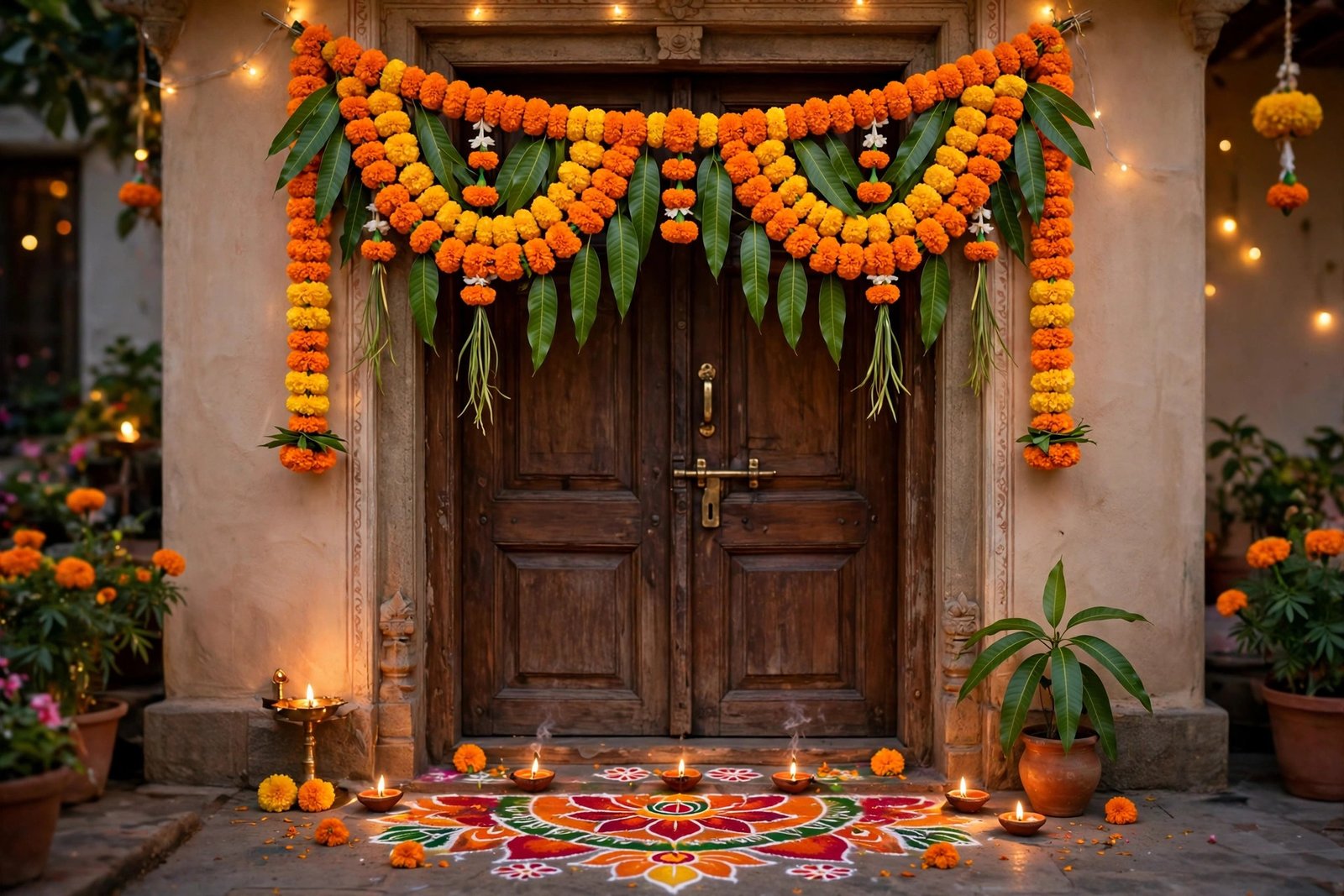
Toran Door Decor Ideas for Diwali 2026
The toran is the first thing guests see on Diwali — a garland hung above the door that says, before a single word is spoken, that this home is celebrating. Traditionally made of mango leaves and marigold, the toran has evolved into one of the most creative corners of festival decor: fabric, beads, mirrors, lights, and DIY versions that last the whole week. With Dhanteras on Friday, November 6 and Lakshmi Puja on Sunday, November 8, 2026, this is the perfect weekend to hang yours.
This guide covers every style — fresh, fabric, beaded, and handmade — plus how to hang a toran securely, pair it with the rest of your entrance, and keep it looking fresh through Bhai Dooj on Wednesday, November 11.
Key Takeaways
- Hang the toran so it frames the door, not blocks it — guests should pass under it comfortably.
- Fresh marigold looks best but lasts 2–3 days; fabric and beaded torans last all week and for years.
- Match the toran to your door width: it should span the frame with a gentle drape, not stretch tight.
- Pair the toran with two diyas and a rangoli for a complete, traditional entrance.
- DIY torans from fabric scraps, paper, or beads are easy, personal, and budget-friendly.
Marigold Torans: The Classic
Nothing beats fresh marigold for colour and fragrance. A traditional marigold toran strings orange and yellow flowers with green mango leaves into a band that hangs across the top of the door, often with small mango-leaf bunches at intervals. Buy flowers the day before hanging, string them on strong thread or thin wire, and mist lightly to keep them fresh. In cooler November weather, a marigold toran stays vibrant for two to three days — hang it on Saturday, November 7 for peak freshness on Lakshmi Puja.
For a fuller look, double the strands: two parallel garlands, one slightly longer than the other, create depth. Add a few rose buds or white jasmine between marigold clusters for contrast. If your door gets direct sun, hang the toran in the morning and bring it into shade during the hottest hours, or accept that the outer flowers will fade and plan a quick refresh on the festival day itself.
Mango Leaf Torans: Green, Traditional, Auspicious
Mango leaves are the oldest toran material and still deeply traditional — fresh green leaves are considered auspicious and are hung to invite prosperity. A simple mango-leaf toran is just leaves strung on thread, but the effect is elegant, especially on wooden doors or against white walls. Mango leaves dry out faster than marigold, so hang them the day before the festival and mist them morning and evening.
Combine mango leaves with marigold for the classic look: a band of leaves with marigold bunches hanging at intervals, or a leaf base with flower clusters at the centre and ends. This combination suits every home style, from traditional to modern, and photographs beautifully against a lit doorway.
Fabric Torans: Colour That Lasts
Fabric torans are the practical favourite of 2026. Made from silk, brocade, or cotton in jewel tones, they come in ready-made designs with tassels, mirrors, and embroidery, and they last for years. A fabric toran is ideal if you want to decorate a week early, if your door is in harsh sun or wind, or if you simply want to reuse the same beautiful piece every Diwali.
Choose colours that complement your door: deep red and gold suit wooden doors, while emerald, pink, or purple pop against white or pastel walls. Look for torans with a sturdy backing band and loops or hooks at the ends — flimsy ones sag by mid-week. After the festival, fold fabric torans in tissue paper and store them flat so embroidery and mirrors stay intact.
Beaded and Mirror Torans: Sparkle at the Door
Beaded torans bring sparkle: strands of glass beads, crystals, or wooden beads hanging in a curtain across the door frame, often with small bells that chime as guests enter. Mirror-work torans — small mirrors stitched into fabric — catch fairy light and diya glow, making the entrance shimmer in the evening. These styles suit modern homes and flats particularly well, where a fresh-flower toran might be impractical.
Keep beaded torans out of strong wind (tangles) and hang them from a firm rod or hooks rather than adhesive strips, which fail under weight. A beaded toran also makes a lovely interior doorway decoration — hang one between the living room and dining area to carry the festive feel inside. For porch and entry styling that complements a statement toran, our festive porch decor ideas cover lighting, planters, and seating that frame a doorway beautifully.
DIY Torans: Five Easy Ideas
Making your own toran is simpler than it looks and far more personal. Try one of these: (1) Paper flower toran — cut marigold-style flowers from crepe paper and string them with green paper leaves; (2) Fabric scrap toran — knot strips of old silk scarves or saree borders onto a ribbon band; (3) Pom-pom toran — string wool pom-poms in festive colours for a playful, kid-friendly door; (4) Dried orange and cinnamon toran — thread dried orange slices, cinnamon sticks, and star anise for a fragrant, rustic look; (5) Origami toran — fold paper cranes or fans and hang them in a row for a modern, artistic entrance.
DIY torans are also the best option for renters: they are light, hang from removable hooks, and leave no marks. Involve children in the paper or pom-pom versions — a toran they helped make is a memory, not just decor. For more handmade festival inspiration, our handmade decoration ideas share the same satisfying, low-cost spirit.
Hanging and Pairing: The Complete Entrance
Hang the toran from two small hooks or nails at the top corners of the door frame, or from a tension rod inside the frame for a no-damage option. The bottom of the toran should sit at least 15 cm above the tallest guest’s head — nobody should duck. If the toran has hanging strands, keep the centre strands shorter than the side ones so the doorway stays clear.
Complete the entrance in three layers: toran above, rangoli below, and diyas on either side. Add a doormat in a festive colour, a small planter or two, and fairy lights around the frame if you want extra glow. The whole composition should take a guest about three seconds to read: warm, welcoming, festive. For broader entrance styling — consoles, mirrors, and lighting that work year-round — see our home entrance decor ideas.
Caring for Your Toran Through the Week
Fresh torans need daily misting and a shade break in strong sun; replace any wilted flowers on Lakshmi Puja morning for a fresh look in photos. Fabric and beaded torans just need a gentle shake and a check that hooks are secure. After Bhai Dooj, compost fresh flowers and leaves, and store reusable torans clean and dry. A toran that survives the week in good shape is one you will happily hang again next year.
Frequently Asked Questions
Which toran lasts longest?
Fabric and beaded torans last for years with careful storage. Fresh marigold lasts 2–3 days, mango leaves about 1–2 days in warm weather.
Can I hang a toran without nails?
Yes — use removable adhesive hooks rated for the toran’s weight, a tension rod inside the frame, or over-door hooks. Test the hold before the festival day.
How wide should a toran be?
About 10–15 cm wider than your door frame, so it drapes softly at the sides. For double doors, choose a toran made for wider frames or hang two matching ones.
Do torans suit modern homes?
Absolutely. Beaded, mirror-work, and minimalist fabric torans suit contemporary doors beautifully — choose simpler designs and a restrained colour palette.
A toran is a small thing with a big job: it turns a doorway into a welcome. Whether you string fresh marigold, hang a treasured fabric piece, or craft one from paper with the kids, the moment it goes up, Diwali has officially arrived at your home.