
When to Buy Christmas Decor: Best Time to Shop Guide
Every year the same question appears in November: have I left it too late, or am I buying too early? Christmas decor prices move in a predictable rhythm, and knowing that rhythm can easily save you a third or more on trees, lights, ornaments and outdoor displays. The trick is not a single magic sale day. It is matching what you buy to the right window — early for choice, late for discounts, and mid-season only for the pieces you genuinely cannot wait for.
This guide maps the full buying calendar, from summer clearance and autumn launches through Black Friday, December markdowns and the January sales, and explains what to buy in each window. It also covers the traps: the “sale” that is not a sale, the impulse tree bought in a panic, and the storage mistake that wipes out your savings. Shop with a list, buy in the right window, and your December budget stretches much further.
Key Takeaways
- Best choice: September–October, when new ranges launch and popular styles are still in stock.
- Best prices before Christmas: Black Friday week and the first December weekend for lights and trees.
- Deepest discounts: 26 December–January, often 50–75% off — ideal for next year’s stock-up.
- Buy lights and outdoor decor earliest; they sell out first and rarely go on deep sale pre-Christmas.
- Always check last year’s prices before trusting a sale label, and keep receipts for faulty lights.
- Shop with a room-by-room list so a bargain never becomes clutter you store for years.
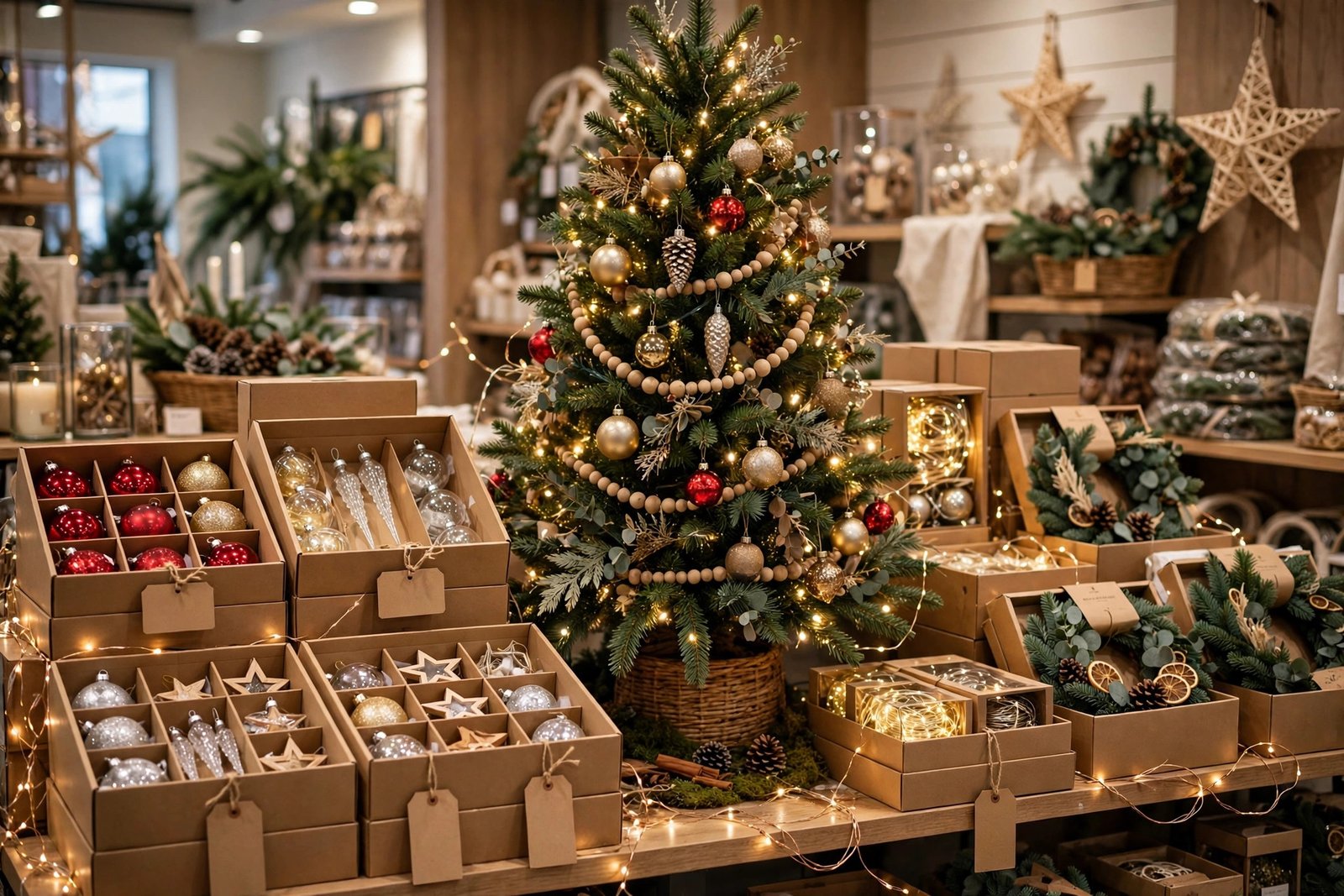
September to October: The Choice Window
If you want a specific tree, a particular ornament collection or a trending colour palette, September and October are your months. Retailers launch Christmas ranges in early autumn, and the best pieces — realistic artificial trees, popular garland styles, sought-after bauble sets — sell out well before December. Buying early also gives you time to test lights, check the tree fits the room, and return anything faulty without the December rush.
The downside is price: early-season stock is usually full price, with only modest launch offers. So buy early only what you must have in a specific style, and leave generic items — plain baubles, ribbon, wrapping paper — for later sales. This is also the right time to audit what you already own. Open last year’s boxes before you shop, note what is broken or missing, and write a list. Half of all Christmas overspending is buying duplicates of things already in the loft. For ideas on what your list should include, browse our Christmas home decor ideas before you head to the shops.
Black Friday and Early December: The Value Window
Black Friday week, in late November, is now the best pre-Christmas value window for big-ticket items: artificial trees, large light sets, outdoor projectors and pre-lit garlands. Retailers compete hard, and genuine discounts of 20–40% are common on these items. The first weekend of December brings a second wave of offers as shops try to capture last-minute decorators, particularly on tableware, textiles and smaller ornaments.
Be disciplined here. A Black Friday deal is only a deal if the item was on your list. Compare the “was” price against other retailers, not just the store’s own claim, and check whether the discount applies to the size and colour you actually want — the headline deal is often on the least popular variant. Buy lights in this window if you have not already: good outdoor lights sell out by mid-December, and the remaining stock is rarely discounted. Our Christmas outdoor home decor ideas will help you prioritise what the outside of the house actually needs.
Mid to Late December: The Panic Window
From about 15 December onwards, prices stop falling and availability starts shrinking. This is the panic window, and it is the most expensive time to buy. If you still need something, buy it — a half-decorated house on Christmas Eve is worse than a full-price garland — but expect limited choice, especially in popular colours and tree heights. Delivery cut-offs also bite here: order early in this window or collect in store.
One exception is fresh greenery. Real wreaths, garlands and trees are best bought in mid-December anyway, because they last longer when they have spent less time indoors. A real tree bought in the first week of December and kept watered will still look good on Christmas Day, but one bought in late November may be shedding by then. For fresh items, freshness beats discounts every time. If budget is tight overall, our affordable home decor ideas include plenty of low-cost festive touches that do not depend on sale timing at all.
Boxing Day and January: The Stock-Up Window
The deepest discounts of the year arrive the day after Christmas. Trees, ornaments, lights, wrapping paper and advent calendars routinely drop 50–75%, and the savings are real — provided you buy for next year, not for now. The smart January shopper buys: next year’s tree if the current one is ageing, a spare set of lights, the ornament collection in the palette they plan to use next year, and wrapping paper and cards at a fraction of their autumn price.
There are two rules for January shopping. First, only buy what you have storage for, and label the box “Christmas 2027” before it goes into the loft — unlabelled January bargains become next December’s mystery boxes. Second, test lights before you store them, and keep the receipt with the box until next December. A bargain light set that fails after eleven months in storage is not a bargain. Also resist the clearance sections for novelty items: a 75%-off inflatable you never wanted is still money spent. If you are planning a full refresh, our home decor ideas for 2026 will help you choose a direction before the sales tempt you in five directions at once.
What to Buy When: A Quick Calendar
January: trees, lights, ornaments, wrapping paper and cards for next year. February–August: keep an eye on clearance and second-hand finds; summer is when display stock and ex-display trees occasionally appear. September–October: specific statement pieces, trending palettes, and anything likely to sell out. November (Black Friday): big-ticket trees and light sets. Early December: tableware, textiles, finishing touches. Mid-December: fresh greenery and real trees. Late December: only what you genuinely still need — accept the price and move on.
One more timing tip: set price alerts in October for the two or three most expensive items on your list. A ten-minute alert setup beats hours of sale-hunting, and it catches the flash deals that appear outside the big sale weeks. And if you are decorating a new home, buy the tree and lights first — everything else can be layered in over successive years, but a home without a lit tree in December feels unfinished no matter how many baubles you own.
Smart Christmas Shopping Tips
Open every box first. Most households already own 70% of what they plan to buy.
Write the list by room, set a total, and stop when the total is reached — sales are not a reason to exceed it.
Check at least one other retailer before believing a discount claim, especially on trees and lights.
Plug every set in the day you buy it, not on decorating day, while returns are still easy.
One spare light set and one spare fuse pack beat a second box of ornaments you already own.
Mark every clearance purchase with the year it is for, and store it where you will find it next autumn.
Frequently Asked Questions
When is the cheapest time to buy Christmas decorations?
After Christmas, from 26 December through January, when discounts of 50–75% are common. The trade-off is that you store the items for a year before using them.
Is Black Friday actually good for Christmas decor?
Yes, for big items like artificial trees and large light sets, where genuine 20–40% discounts appear. Verify the original price elsewhere before buying.
When should I buy a real Christmas tree?
Mid-December is ideal: the tree stays fresh through Christmas Day. A tree bought in late November may shed heavily by the 25th.
Do Christmas lights sell out before December?
Good outdoor light sets often do, especially in popular lengths and warm white. Buy lights by early December at the latest.
Should I buy decorations in September?
Only specific statement pieces or trending styles likely to sell out. Generic items are cheaper in November and January sales.
How do I avoid overspending in the January sales?
Shop from a written list for next year, buy only what you have storage for, and skip novelty clearance items you never wanted at full price.
Shop the Calendar, Not the Panic
Christmas decorating does not have to mean December overspending. Buy statement pieces early for choice, big items on Black Friday for value, and next year’s stock in January for depth of discount. Audit first, list by room, test everything, and label what you store. Do that, and the same beautiful house costs noticeably less — year after year.