
Affordable Home Decor Ideas That Look Expensive
The secret behind the best affordable home decor ideas is that style has never been about price. Expensive-looking rooms are built on the same principles whether the budget is two hundred dollars or twenty thousand: a cohesive palette, good lighting, and the discipline to edit. Once you understand what actually makes a room look polished, you can get there with thrift-store finds, a can of paint, and a little creativity.
In this guide you will find affordable home decor ideas for every room, the thrift-and-DIY strategies that deliver the biggest transformation per dollar, and the styling tricks designers use to make budget pieces look custom. Everything here is realistic for a normal budget — no “just buy a designer sofa” advice.
Key Takeaways
- Paint, lighting, and textiles deliver the biggest style upgrade for the smallest spend.
- Thrifted furniture with good bones beats cheap new furniture every time.
- A unified color palette makes mixed, budget pieces look intentional and expensive.
- DIY art and styling — not new purchases — are the fastest way to refresh a room.
- Shop your own home first: rearranging and restyling costs nothing.
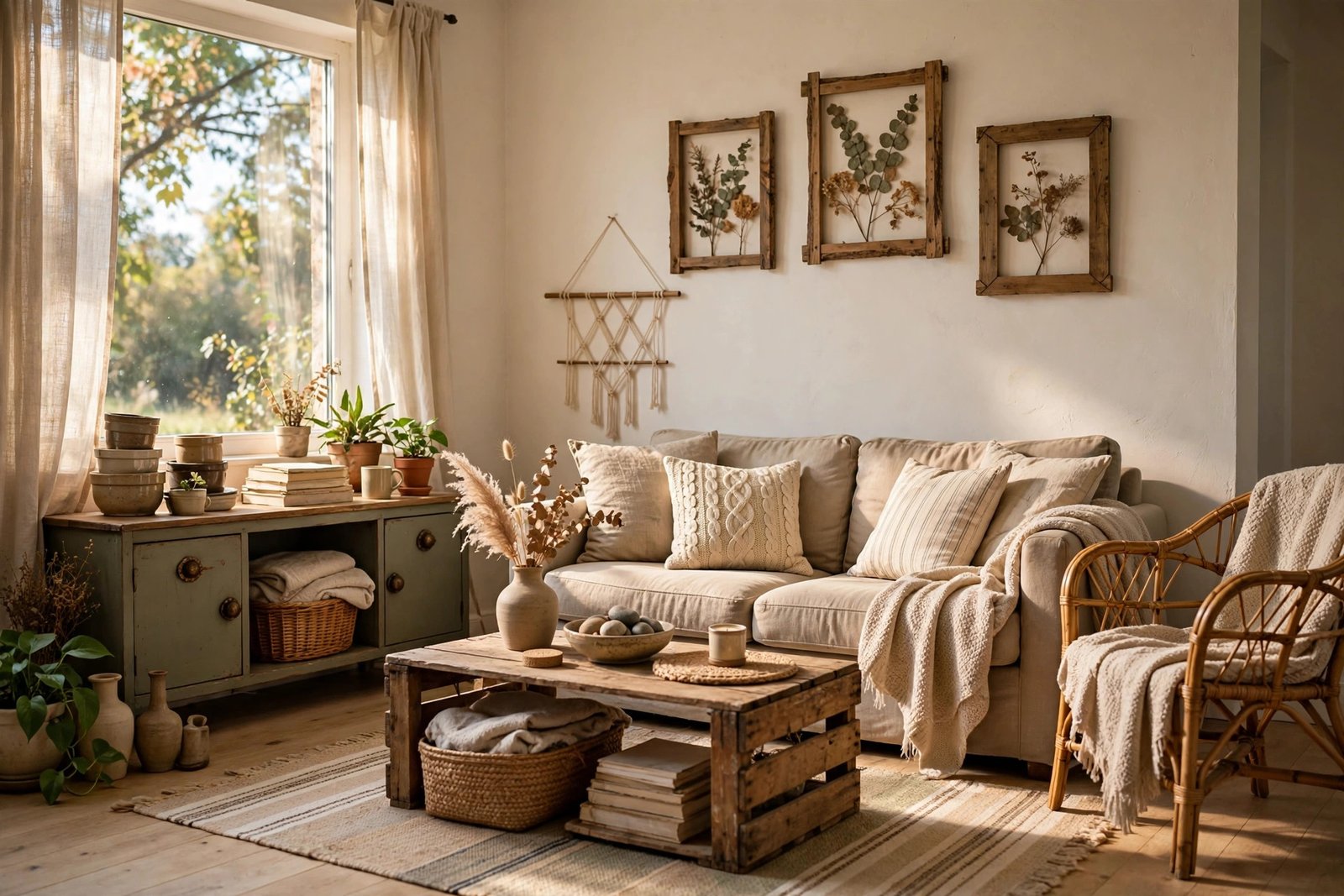
Why Budget Rooms Look Expensive (or Don’t)
Walk into a room that looks expensive and you will notice the same things: the colors relate to each other, the lighting is warm and layered, and nothing looks accidental. None of that requires money — it requires decisions. The rooms that look cheap are usually the ones with five competing color stories, harsh overhead lighting, and clutter competing for attention.
Five principles make affordable home decor ideas work like expensive ones:
- Commit to a palette. Two neutrals plus one accent, repeated in every room, makes thrifted and new pieces look like a set.
- Fix the light first. Warm bulbs and a second lamp source change a room’s mood more than any furniture purchase.
- Go big on scale. One large mirror or oversized art print reads expensive; a cluster of tiny decor items reads cluttered.
- Hide the cheap details. Swap plastic switch plates, dated hardware, and flimsy curtain rods — small fixes with outsized impact.
- Edit ruthlessly. A sparse, intentional room always looks more expensive than a full, random one.
Thrift Like a Designer: Finding Gems for Less
Thrift stores, flea markets, and online marketplaces are the backbone of affordable home decor. The trick is knowing what to look for: solid wood furniture with good lines, heavy ceramic vases, brass or iron details, and quality frames. These are the pieces that age well and cost a fortune new. For inspiration on what vintage pieces can do for a room, browse these vintage home decor ideas — secondhand finds are often the most characterful things in a well-decorated home.
What to Always Buy Secondhand
Some things are better bought used. Solid wood dressers, side tables, and dining chairs are routinely better quality secondhand than their flat-pack equivalents at the same price. Large mirrors, baskets, picture frames, and lamps are thrift-store gold — a coat of spray paint or a new shade makes them look brand new. Books, ceramics, and glassware are nearly free and add instant collected character to shelves.
What to Buy New
Spend your actual dollars where hygiene and comfort matter: mattresses, upholstered seating you will use daily, and anything electrical like lamps and cords. Textiles like curtains and bedding are also worth buying new — they are hard to find secondhand in good condition, and affordable retailers sell linen-look options that elevate everything around them.
DIY Decor Projects With Real Impact
A weekend project can transform a room for the cost of supplies. If you are new to DIY decorating, these DIY home decor ideas cover beginner-friendly projects that need little more than paint, basic tools, and an afternoon.
Start with paint — it is the single highest-impact, lowest-cost change in decorating. A fresh coat of warm white on tired walls, a bold color on one accent wall, or painted kitchen cabinets can make a home feel renovated for under a hundred dollars. Beyond paint, try framing large-scale art yourself: print a favorite photo or abstract design at a copy shop in poster size and frame it in an inexpensive large frame for gallery impact at a fraction of the price.
Other high-impact, low-cost DIYs: spray-paint mismatched frames a single color for a unified gallery wall, recover dining chair seats with new fabric and a staple gun, and turn a thrifted dresser into a bathroom vanity or entryway console with new hardware. Each of these reads custom — and custom always looks expensive.
Dollar-Store Decorating Done Right
Dollar stores and discount shops can fill the gaps in your decor for almost nothing, but strategy matters. The best buys are simple, neutral items: glass vases and candle holders, plain frames, storage baskets, faux greenery stems, and basic kitchen textiles. Styled well, no one will guess the price. For room-by-room dollar-store strategies, see these dollar tree home decor ideas.
The rule for discount shopping: buy shapes, not finishes. A well-proportioned glass vase is a well-proportioned glass vase at any price — and a coat of matte spray paint can turn a shiny plastic-looking find into something that passes for ceramic. Avoid anything with printed words, glitter, or fussy details; simple and neutral always looks more expensive than decorated and cheap.
Room-by-Room Affordable Upgrades
Living room: Rearrange the furniture first — it is free and often transformative. Add one large thrifted mirror to bounce light, swap in neutral cushion covers, and style the coffee table with a tray, a plant, and a stack of books. Total cost can stay under fifty dollars.
Bedroom: New bedding changes the whole room. Crisp white sheets, a textured throw, and two extra pillows make any bed look boutique-hotel fresh. Hang curtains high and wide to make windows — and the room — feel larger.
Kitchen: Swap cabinet hardware for modern pulls, add a runner rug, and clear the counters down to three beautiful things. A row of matching jars for staples makes open shelving look styled rather than stored.
Bathroom: Matching towels, a new shower curtain, and a small plant or eucalyptus bunch in a vase create a spa feeling for very little. Decant soaps into simple dispensers to hide branded packaging.
8 Under-$25 Decor Wins
Swap every cool-white bulb for 2700K warm white. The coziest upgrade in decorating costs a few dollars per bulb.
One large mirror doubles light and makes rooms feel twice their size. Look for solid frames to paint.
Solid linen-look covers in two neutrals unify a mismatched sofa instantly — no sewing needed.
A fresh bunch in a simple vase adds life and color to any surface for the price of a coffee.
One can of matte black or brass spray paint unifies mismatched frames, vases, and hardware.
Identical baskets or boxes on open shelves turn visual clutter into a deliberate, styled look.
Frame fabric remnants, calendar pages, or your own abstract canvas for large-scale art under $25.
Modern pulls on kitchen or dresser drawers read as a renovation for a few dollars per piece.
3 Budget Mistakes That Look Cheap
Buying the cheapest version of everything. One well-chosen thrifted piece beats three flimsy new ones. Buy less, but buy better — even on a budget.
Skipping the plan. Random sale purchases create a random-looking home. Decide your palette and needs first, then shop with a list — especially at thrift stores.
Ignoring scale. Tiny rugs, small art on big walls, and undersized curtains make rooms feel cheaper than they are. When in doubt, go one size bigger than feels safe.
Frequently Asked Questions
How can I decorate my home with no money?
Start free: declutter, rearrange furniture, and restyle shelves with things you already own. Then add paint and thrifted finds — the two cheapest ways to make a visible change. Good styling costs nothing and changes everything.
Is it better to buy cheap new furniture or secondhand?
Secondhand, almost always. A solid wood dresser from a thrift store will outlast and out-look a flat-pack piece at the same price. Save new purchases for mattresses, daily-use upholstery, and textiles.
What should I prioritize first when decorating on a budget?
Paint and lighting first — they change how every other piece looks. Then textiles like curtains and bedding, which cover the largest visual areas. Furniture comes last, and thrifted is fine.
Bringing It All Together
Affordable home decor ideas prove one thing over and over: great rooms are designed, not purchased. Pick your palette, fix your lighting, thrift the big pieces, DIY the details, and edit like you mean it. Do that, and guests will assume you spent far more than you did.
Start this weekend with the free stuff — walk through your home, move three pieces to new spots, and remove ten things you do not love. Then check out our DIY home decor ideas for your first budget project. Your most stylish room might be the one you already own.