
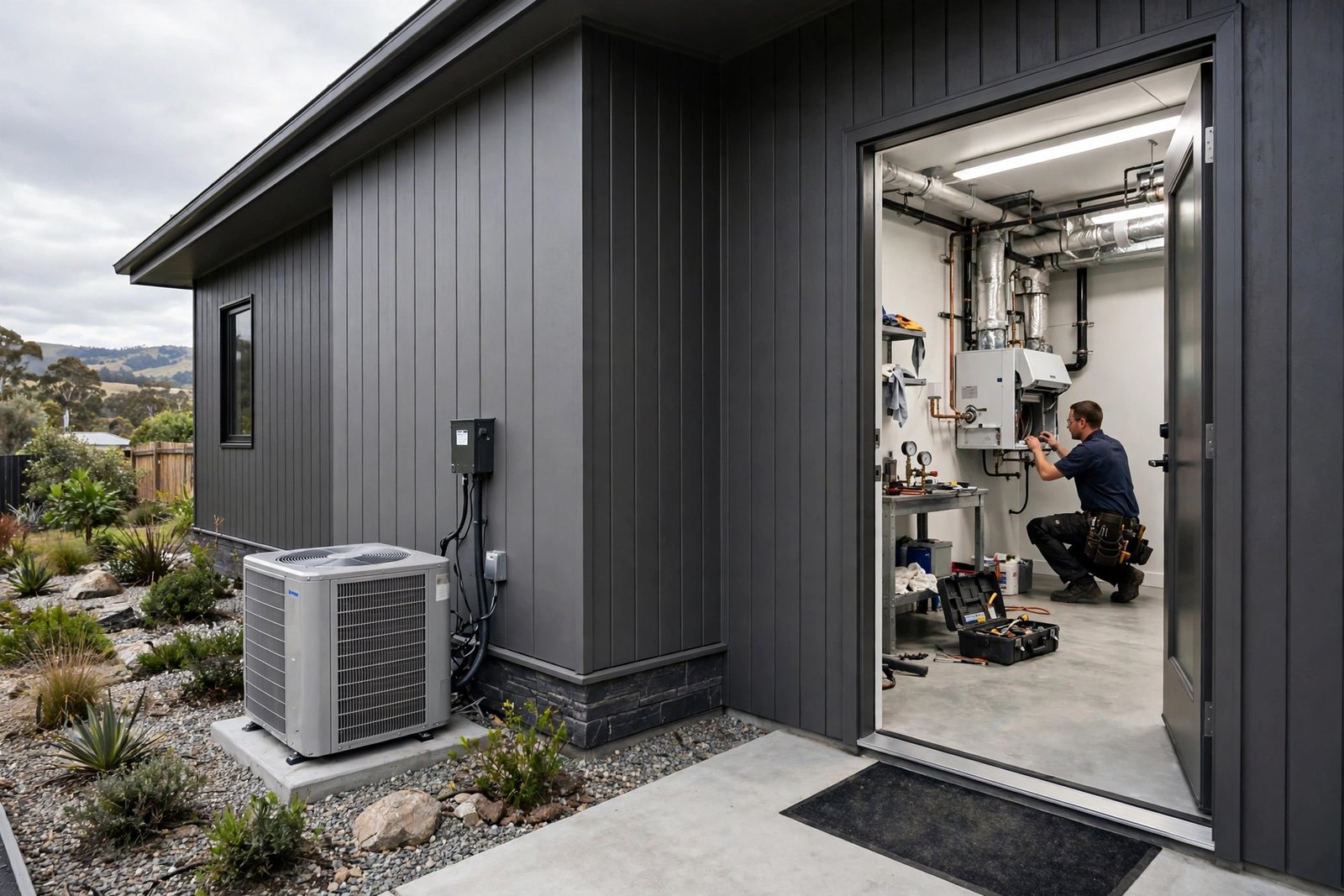
What Is HVAC? A Homeowner’s Plain-English Guide
If you have ever called a technician, shopped for a new furnace, or stared at a quote full of acronyms and wondered what any of it meant, you are not alone. HVAC stands for Heating, Ventilation, and Air Conditioning — the three jobs your home’s climate system performs every single day, usually without you thinking about it at all.
In this guide, you will learn what HVAC actually means in plain English, how the three parts work together, what the main system types look like, what all the parts are called, and how to tell whether your own system is doing its job. By the end, you will be able to read a technician’s report, compare a quote, or describe a problem without feeling out of your depth.
Key Takeaways
- HVAC stands for Heating, Ventilation, and Air Conditioning — one integrated system, not three separate machines.
- The thermostat is the brain, the furnace or heat pump is the muscle, and the ductwork is the delivery network.
- Ventilation is the forgotten third of HVAC: it controls fresh air, humidity, and indoor air quality.
- Most homes have one of four system types: split, packaged, ductless mini-split, or hybrid heat pump.
- Knowing your system’s age, size, and filter type makes every service call cheaper and faster.
What Does HVAC Stand For?
HVAC is short for Heating, Ventilation, and Air Conditioning. Those three words describe the three things the system is responsible for: warming your home in winter, cooling it in summer, and moving fresh, filtered air through it all year round. The reason they are grouped together is that in most modern homes, one system does all three jobs, sharing the same ductwork, the same blower fan, and the same thermostat.
The Three Parts, Explained One by One
1. Heating: How Your Home Gets Warm
Heating is the “H” in HVAC, and in most homes it comes from one of three sources. A gas furnace burns natural gas or propane in a heat exchanger, warming air that a blower fan pushes through the ducts. An electric furnace does the same job with heating elements, like a giant toaster, and is common in homes without a gas line. A heat pump, meanwhile, does not create heat at all — it moves heat from the outdoor air into your home, even on a cold day, which is why it can be remarkably efficient.
Older homes may also have boilers, which heat water and circulate it through radiators or underfloor pipes instead of blowing warm air. If you are not sure which type you have, look for the big metal box in your basement or utility closet: a furnace has ducts coming out of the top, while a boiler has pipes.
2. Ventilation: The Part Everyone Forgets
Ventilation is the “V” in HVAC, and it is the part homeowners most often ignore — until something goes wrong. Ventilation does three things at once: it brings in fresh outdoor air, exhausts stale indoor air, and controls humidity. Without it, a tightly sealed modern home would trap cooking odors, cleaning chemicals, moisture from showers, and carbon dioxide from breathing.
In a typical forced-air home, ventilation happens partly through the duct system itself, which circulates and filters the air, and partly through dedicated exhaust fans in bathrooms and kitchens. Some newer homes add a heat recovery ventilator (HRV) or energy recovery ventilator (ERV), which brings in outdoor air while recovering most of the heat or coolness from the air being exhausted.
3. Air Conditioning: How Your Home Gets Cool
Air conditioning is the “AC” in HVAC, and it works on a surprisingly simple principle: it does not pump cold air into your home; it removes heat from inside and dumps it outside. Refrigerant, a special fluid, circulates between an indoor evaporator coil and an outdoor condenser coil, absorbing heat indoors and releasing it outdoors. That is why the outdoor unit blows warm air on a hot day — it is literally throwing your home’s heat outside.
The same refrigerant loop is what makes a heat pump possible: in winter, the process reverses, and the system pulls heat from the outdoor air and brings it inside. Understanding this one idea — that air conditioning moves heat rather than creating cold — explains a lot of common problems, including why an air conditioner struggles when its outdoor unit is blocked by shrubs or debris, and why an AC blowing warm air usually points to a refrigerant, airflow, or compressor issue rather than a broken thermostat.
The Main Parts of an HVAC System, by Name
Technicians use specific names for each component, and knowing them turns a confusing service report into something you can actually follow. Here are the parts you are most likely to hear about:
- Thermostat. The control panel on your wall. It reads the indoor temperature and tells the system when to start and stop. Smart thermostats add scheduling, learning, and remote control from your phone.
- Furnace or air handler. The indoor box that houses the blower fan and, in a furnace, the burner and heat exchanger. The air handler is the equivalent box in a heat pump or air-conditioning-only home.
- Evaporator coil. The indoor coil where refrigerant absorbs heat from your home’s air. It sits inside or on top of the furnace or air handler.
- Condenser unit. The outdoor box with the big fan. It houses the compressor and the condenser coil, which release heat outside.
- Compressor. The pump inside the outdoor unit that pressurizes refrigerant and drives the cooling cycle.
- Ductwork. The sheet-metal or flexible tubes that carry conditioned air to each room and return air back to the system.
- Registers and returns. The vents you see: supply registers deliver air into rooms, and return grilles pull air back to the system for reconditioning.
- Air filter. The flat panel, usually 1 inch thick and located near the furnace or in a return grille, that traps dust and allergens. It is the one part you are expected to maintain yourself.
- Condensate drain. The small pipe that carries away the water your air conditioner pulls out of the air. When it clogs, water backs up — which is why knowing how to unclog an AC drain line can save you an emergency call.
The Four Main HVAC System Types
Almost every home’s system falls into one of four categories. Knowing which one you have matters because it affects your maintenance, your energy bills, and what a replacement will cost.
Split Systems: The Most Common Setup
A split system is exactly what it sounds like: the equipment is split between indoors and outdoors. The furnace or air handler sits inside, the condenser sits outside, and refrigerant lines connect them. About three-quarters of American homes with central air use a split system.
Packaged Systems: Everything in One Box
In a packaged system, all the components — compressor, coils, and blower — live in a single outdoor cabinet, usually on the roof or a concrete pad beside the house. These are common in smaller homes, townhouses, and homes without a basement or attic space for indoor equipment. They are easier to service because everything is in one place, but the ductwork runs are often longer.
Ductless Mini-Splits: Room-by-Room Control
A ductless mini-split pairs one outdoor unit with one or more small indoor wall units, each controlling its own room. There is no ductwork at all. They are ideal for additions, converted garages, and older homes without ducts, and they are among the most efficient systems available, because they avoid the 25 to 30 percent energy loss that leaky ductwork can cause.
Hybrid (Dual-Fuel) Systems: The Best of Both
A hybrid system pairs an electric heat pump with a gas furnace. The heat pump handles mild weather efficiently, and the furnace takes over when temperatures drop below about 30 to 35°F. A smart controller switches between them automatically, which often delivers the lowest annual heating cost in climates with cold winters and mild shoulder seasons.
How to Tell What System You Have
If you are not sure, here is a five-minute investigation you can do right now. First, find your thermostat and note whether it has an “emergency heat” setting — that usually means a heat pump. Second, walk outside and look for the outdoor condenser unit. Third, find the indoor unit and photograph the label on its side; the model number there is worth its weight in gold when you call for service. Fourth, count your vents: registers in every room mean ducted forced air, while wall-mounted indoor heads mean ductless. Finally, check your filter location and note its size, printed on the frame.
Write all of this down in one place, ideally with photos. A regular HVAC maintenance routine is far easier when you are not rediscovering your system from scratch every time.
How HVAC Systems Are Sized (and Why It Matters)
HVAC equipment is sized in tons for cooling and BTUs for heating, and neither term means what it sounds like. A “ton” of cooling is the amount of heat needed to melt one ton of ice in 24 hours, equal to 12,000 BTUs per hour. A typical 1,500-square-foot home needs roughly 2 to 2.5 tons of cooling, while a 2,500-square-foot home usually needs 3.5 to 4 tons — but square footage alone is a poor guide. Insulation, window size and direction, ceiling height, climate, and even the number of people in the home all change the real load.
This is why a proper installer performs a Manual J load calculation rather than guessing from square footage or simply replacing your old unit with the same size. An oversized system cools too fast, shuts off before it dehumidifies, and cycles constantly, wearing itself out. An undersized system runs all day and never quite catches up on the hottest afternoon.
6 Things Every Homeowner Should Do for Their HVAC System
Check it monthly and replace it every 1 to 3 months, depending on pets, allergies, and filter type. A clogged filter is the single most common cause of poor performance.
Leave at least 2 feet of clearance around the condenser on all sides. Trim shrubs, clear leaves, and never stack anything on top of it.
One professional visit a year — ideally in spring for cooling or fall for heating — catches small problems before they become breakdowns.
Program setbacks for when you are asleep or away. Even 7 to 10 degrees for 8 hours a day can cut heating and cooling costs by about 10 percent.
New rattling, grinding, or short-cycling is information. Note when it started and what it sounds like before you call — it speeds up diagnosis.
A sudden 20 percent jump with no change in weather or habits is often the first sign of a refrigerant leak, a failing capacitor, or duct damage.
Frequently Asked Questions
What does HVAC stand for?
HVAC stands for Heating, Ventilation, and Air Conditioning. It is the system that heats, cools, ventilates, and filters the air in your home, usually through one integrated setup sharing ductwork and a thermostat.
How long does an HVAC system last?
A well-maintained furnace typically lasts 15 to 20 years, and an air conditioner or heat pump lasts 12 to 15 years, with regular filter changes and annual tune-ups pushing a system toward the top of that range.
Is a heat pump the same thing as an air conditioner?
Almost. A heat pump uses the same refrigerant cycle as an air conditioner, but it can run in reverse to heat your home in winter. An air conditioner can only cool, so homes with one need a separate furnace or other heat source.
How often should I change my HVAC filter?
Check it every month and replace it every 1 to 3 months. Homes with pets or allergy sufferers usually need the shorter end of that range, and a filter that looks gray or clogged should be changed immediately.
Do I need ventilation if my home already has heating and cooling?
Yes. Heating and cooling control temperature, but ventilation controls air quality, moisture, and fresh air supply. Exhaust fans, a clean filter, and occasional fresh-air intake are what keep indoor air healthy, especially in a well-sealed modern home.
Now You Speak HVAC
That is the whole system, demystified: heating warms, ventilation refreshes, air conditioning cools, and one network of equipment, ducts, and controls ties them together. You now know the parts by name, the four system types, and the handful of ratings that actually matter when someone hands you a quote.
Your next move is simple and free: go find your indoor unit, photograph its label, note your filter size, and check when it was last serviced. That one page of notes will make every future conversation about your home’s comfort shorter, cheaper, and far less intimidating.
2 thoughts on “What Is HVAC? A Homeowner’s Plain-English Guide”