
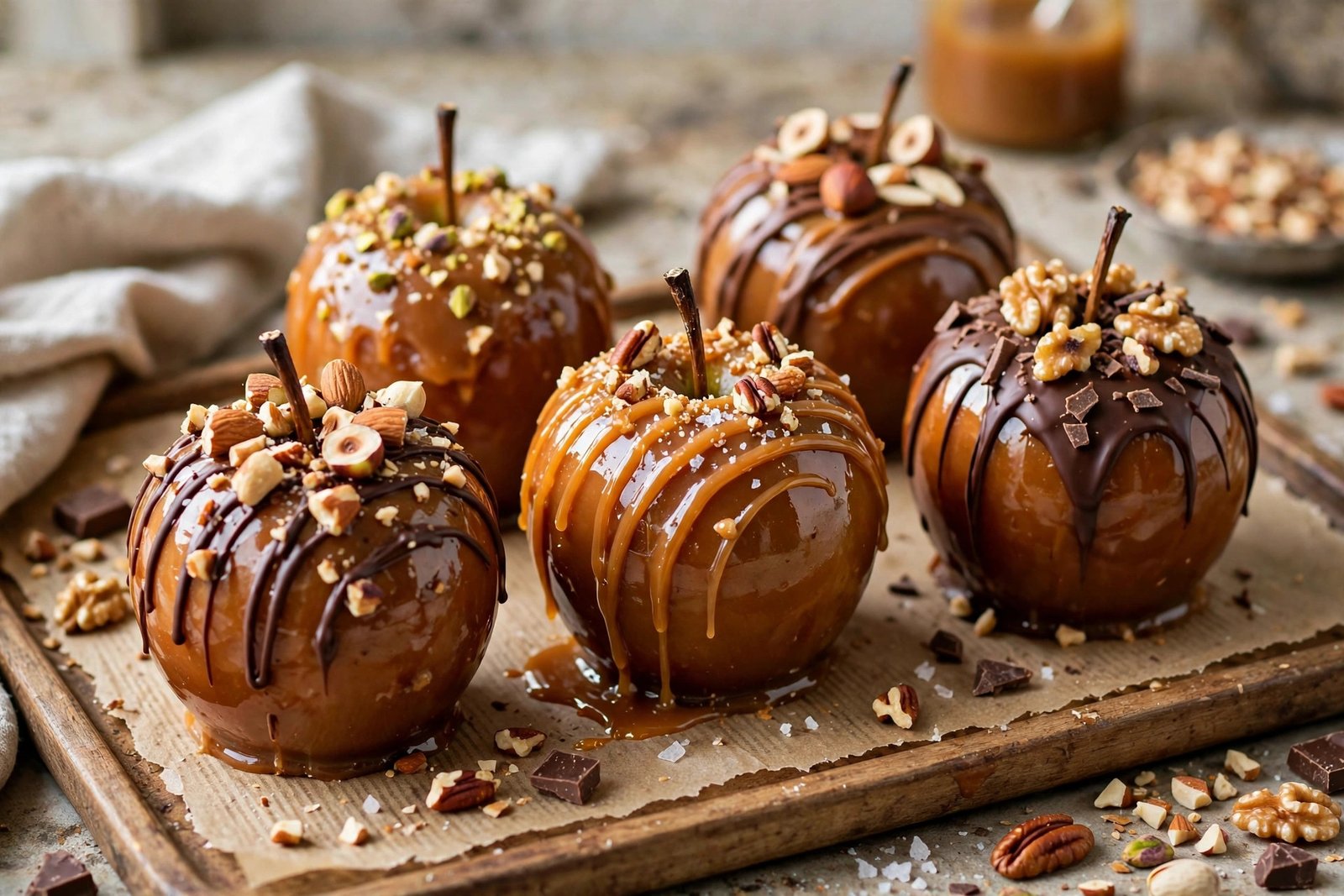
Toffee Apple Recipes for Bonfire Night (5 Ways)
Toffee apples are the most iconic Bonfire Night treat: shiny, sticky, sweet and a little bit dangerous to bite into, which is exactly why children and adults love them. They look spectacular on a tray, they cost very little to make, and they are the centrepiece of any Bonfire Night food table. But toffee apples have a reputation for being tricky — toffee that slides off, apples that crack, sugar that burns — and that reputation is mostly earned by skipping two simple rules: dry apples and the right temperature.
This guide gives you one reliable base recipe and five variations — classic toffee, chocolate, nut, caramel and a spiced autumn version — plus troubleshooting for every common failure. Make them the day of your Bonfire Night gathering, or the morning after for a weekend display on 7–8 November.
Key Takeaways
- Dry apples completely and remove wax with a hot-water wash — moisture is the number one reason toffee slides off.
- Use a sugar thermometer and boil to 150°C (hard-crack stage) for toffee that sets crisp and shiny.
- Work quickly when dipping, and reheat the toffee gently if it thickens.
- One base recipe gives five variations: classic, chocolate, nut, caramel and spiced.
- Toffee apples keep for one day at room temperature — make them fresh, not days ahead.
The Base Recipe: Classic Toffee Apples
Choose small, firm, tart apples — Granny Smith is the classic choice because its sharpness balances the sweet toffee, and its firm flesh holds up to biting. Wash the apples in hot water to remove any wax coating, then dry them completely with a clean towel. Push a sturdy lollipop stick or wooden skewer firmly into the top of each apple, through the core area, so it holds when dipped and bitten.
Ingredients (8 apples)
8 small apples, 400g granulated sugar, 100ml water, 1 tablespoon golden syrup, 1 tablespoon white vinegar, a knob of butter for greasing.
Method
Grease a baking tray or line it with baking paper. Put the sugar, water, golden syrup and vinegar in a heavy-based pan. Stir over low heat until the sugar dissolves completely — do not let it boil before the sugar has dissolved, or it will crystallise. Then boil without stirring until the mixture reaches 150°C on a sugar thermometer. This is the hard-crack stage: a drop in cold water forms hard, brittle threads.
Remove from the heat and work quickly. Dip each apple, twirling to coat evenly, letting excess drip off, and set on the greased tray. The toffee sets within minutes. If it thickens before you finish, warm it gently over low heat until fluid again. Do not stir the toffee while it cools — stirring encourages crystallisation.
Variation 1: Chocolate Toffee Apples
For a richer, less tooth-threatening version, dip the apple in toffee as above, let it set, then dip halfway into melted dark chocolate. The chocolate softens the crunch and adds a luxurious layer. Use 200g dark chocolate, melted in a bowl over simmering water, and dip the set toffee apples so the chocolate covers the lower half. Set on baking paper and drizzle with white chocolate for a two-tone finish. Chocolate toffee apples are the best choice for younger children, who often find pure toffee too hard.
Variation 2: Nut-Crunch Toffee Apples
After dipping in toffee, immediately roll the apple in chopped toasted nuts — hazelnuts, peanuts or pistachios all work beautifully — before the toffee sets. Work fast, as the window is only a minute or two. The nuts add crunch, flavour and a gorgeous, rustic look. Toast the nuts in a dry pan first for deeper flavour, and chop them finely so they stick evenly. Warn guests about nut allergies clearly — label the tray.
Variation 3: Salted Caramel Apples
For a softer, more grown-up apple, replace the hard toffee with a soft caramel. Melt 200g soft caramels with 2 tablespoons of cream over low heat, stirring until smooth, then dip the apples and sprinkle with flaky sea salt. Caramel apples are chewier, less likely to crack teeth, and pair beautifully with a mug of mulled cider. They also slice more easily than hard toffee apples, which makes them better for serving at a party where guests want a taste rather than a whole apple. For more seasonal baking and sugar work, our festive baking guide covers the same techniques.
Variation 4: Spiced Autumn Apples
Add half a teaspoon of ground cinnamon and a pinch of nutmeg to the sugar mixture before boiling, and you get a warmly spiced toffee that tastes like autumn itself. Dip as normal, then roll in a mixture of cinnamon sugar while the toffee is still tacky. These are wonderful served warm, and they pair perfectly with hot chocolate or spiced apple juice. A cranberry orange loaf alongside makes a complete autumn dessert table.
Variation 5: Mini Toffee Apples for Parties
For a party, mini toffee apples are a revelation. Use crab apples or small eating apples, dip them in the same toffee, and serve them on cocktail sticks. Guests can eat one in two bites, children can manage them easily, and they look adorable piled in a bowl. Make a double batch — minis disappear faster than full-size apples. They also make lovely take-home gifts in small cellophane bags tied with ribbon.
Serving and Presentation
Present toffee apples standing upright in a tray lined with baking paper, or stuck into a block of florist foam covered with autumn leaves for a dramatic display. Keep them at room temperature — refrigeration makes toffee sticky and damp. Serve with a knife nearby for guests who prefer slices, and warn everyone that freshly made toffee apples are extremely hard: bite carefully, or cut into wedges. For party table styling, our table decor ideas help you dress the dessert table beautifully.
Troubleshooting: Every Common Failure
Toffee Apples and Bonfire Night Safety
Toffee apples are made with boiling sugar, which causes serious burns. Keep children away from the pan, use a deep, heavy pan that cannot tip, and never leave boiling sugar unattended. Freshly dipped apples are extremely hot — let them cool and set fully before serving. For the wider safety picture on the night, our pet safety tips for festive seasons and warming soup recipes round out the evening’s planning — safe pets, warm food, and a dessert everyone remembers.
Frequently Asked Questions
How long do toffee apples keep?
One day at room temperature is best. After that, the toffee softens and the apple releases moisture. Make them the morning of your party for the best result.
Can I make toffee apples without a thermometer?
You can test by dropping syrup into cold water — hard, brittle threads mean it is ready — but a thermometer is far more reliable and inexpensive. It is worth the investment.
Why do my toffee apples crack when bitten?
That is normal for hard-crack toffee. For easier eating, make caramel apples instead, or cut toffee apples into wedges before serving.
Are toffee apples safe for young children?
Whole hard toffee apples are a choking and dental risk for very young children. Serve slices, or make mini caramel apples for little ones.
Can I use eating apples instead of Granny Smith?
Yes — any small, firm apple works. Tart varieties balance the sweetness best, but sweet apples make a sweeter, child-friendly version.
Toffee apples are one of those treats where the ritual matters as much as the recipe: the bubbling sugar, the glossy dip, the tray of shining apples cooling on the counter. Master the base recipe, try one variation this year, and you will have a Bonfire Night tradition your family asks for every November.