
Refrigerator Not Cooling? How to Fix It (Step-by-Step)
There is a special kind of panic that hits when you open the fridge and the milk feels room temperature. A refrigerator not cooling is one of the most urgent appliance problems a homeowner can face — every hour matters for the food inside. The good news: most cooling failures come down to a short list of simple causes you can check yourself before calling a technician.
This guide walks you through exactly how to fix a refrigerator not cooling — from the five-minute checks that solve half of all cases, to cleaning condenser coils, testing door seals, and decoding what it means when the freezer works but the fridge does not. Unplug the refrigerator before you touch anything behind it, under it, or inside any panel.
Key Takeaways
- Check the thermostat settings first — accidental bumps cause a surprising number of “not cooling” scares.
- Dirty condenser coils are the #1 fixable cause of poor cooling; clean them every 6–12 months.
- Weak door seals and blocked interior vents are easy DIY fixes that restore cooling fast.
- Freezer cold but fridge warm usually means blocked air vents or a failed evaporator fan — not a dead compressor.
- Call a technician for sealed-system issues (compressor, refrigerant leaks); replace if repair costs exceed half the price of a new fridge.
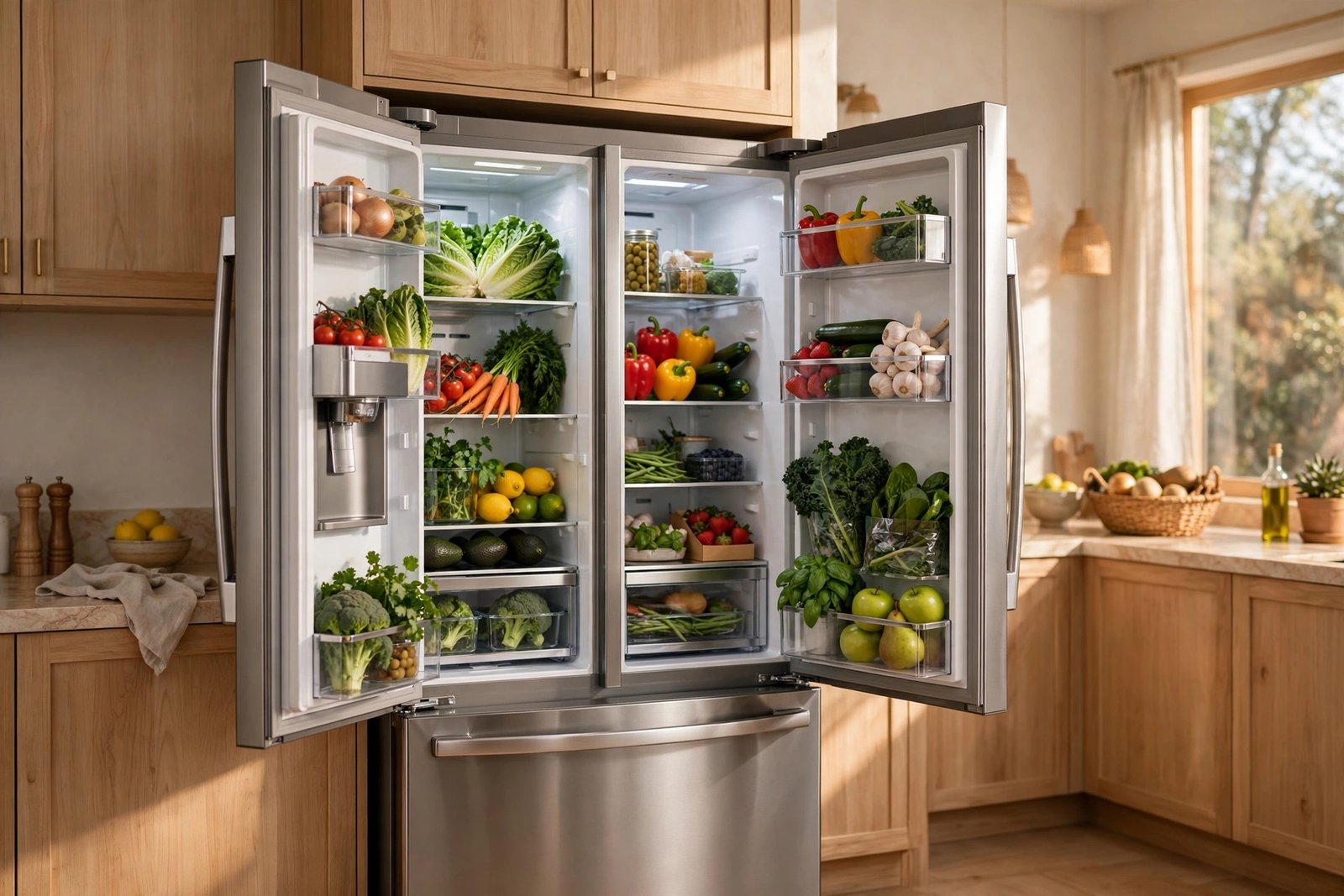
First, Rule Out the False Alarms
Not every warm-feeling fridge is actually broken. Run through these two-minute checks before doing anything else:
- Is it plugged in properly? Plugs work loose behind fridges, and a tripped breaker or GFCI outlet is a classic culprit. The interior light coming on is not proof — lights and compressors can run on different circuits.
- Was the door left ajar? A door left open for an hour makes everything feel warm. Close it firmly and give the fridge 4–6 hours to recover.
- Did you just load warm groceries? A big shopping trip raises the internal temperature for several hours. This is normal; the fridge should recover on its own.
- Check with a thermometer. “Feels warm” is unreliable. A fridge thermometer should read 35–38°F (2–3°C); the freezer should read 0°F (−18°C).
If the thermometer confirms a real cooling problem, move on to the checklist below. A well-kept kitchen makes appliance troubleshooting far less stressful — a tidy, welcoming kitchen like the ones in our cozy home decor ideas guide is worth protecting.
The 8-Step Refrigerator Fix Checklist
Work through these in order, from easiest to most involved. Stop as soon as cooling returns.
Step 1: Check the thermostat settings
Make sure the fridge is set to 35–38°F and the freezer to 0°F. Dials get bumped while loading groceries, and “demo” or “showroom” mode on some models runs the lights but not the compressor — check your manual if settings look right but nothing cools. After adjusting, wait several hours; a fridge needs time to pull down to temperature.
Step 2: Clear the interior vents
Cold air flows from the freezer into the fridge compartment through vents, usually at the back wall. If food containers or ice buildup block these vents, the fridge side starves for cold air while the freezer works fine. Rearrange items so air can circulate, and keep nothing pressed against the back wall.
Step 3: Test the door seals
Worn or dirty door gaskets leak cold air constantly, forcing the fridge to run nonstop without ever getting cold. Do the dollar-bill test: close the door on a bill and try to pull it out. If it slides out easily, the seal is weak. Clean sticky seals with warm soapy water, and check for cracks or tears. A damaged gasket is a cheap DIY replacement on most models — far cheaper than a service call.
Step 4: Clean the condenser coils
Dusty coils are the single most common fixable cause of a refrigerator not cooling. The coils — usually behind a grille at the bottom front or on the back — release heat. When they are caked in dust and pet hair, the fridge cannot shed heat and cooling collapses. Unplug the fridge, remove the grille, and vacuum the coils with a brush attachment, then finish with a coil brush. (Full how-to in the next section.) This one step fixes a remarkable number of “dying” fridges.
Step 5: Check for frost blocking the evaporator
If the freezer is packed with frost or ice blocks the back-panel vents, the evaporator coils may be frozen over, stopping cold air from circulating. Empty the freezer, unplug the fridge, and defrost for 24 hours with the doors open (towels on the floor catch meltwater). If cooling returns but frost comes back within weeks, the defrost heater, thermostat, or timer is failing — that is technician territory.
Step 6: Listen to the condenser fan
With the fridge running, put your ear near the bottom back. You should hear the condenser fan humming alongside the compressor. If the compressor hums but the fan is silent, the fan motor has likely failed — a relatively inexpensive part, and a common DIY repair for handy homeowners (unplug first, always).
Step 7: Check the evaporator fan
The evaporator fan circulates cold air from the freezer to the fridge. Open the freezer door and listen: on most models the fan stops when the door opens, so hold the door switch in. If you hear nothing while the compressor runs, the evaporator fan motor may be dead — this is the classic cause of “freezer cold, fridge warm.”
Step 8: Feel the compressor
The compressor is the large black pot-shaped component at the back bottom. While the fridge runs, it should feel warm and vibrate gently. If it is ice cold and silent, it may not be getting power (a start relay issue — sometimes a cheap fix). If it is burning hot and clicks on and off every few minutes, the compressor itself may be failing — call a professional.
How to Clean Refrigerator Condenser Coils (Safely)
Since dirty coils cause so many cooling failures, here is the full procedure:
- Unplug the refrigerator and pull it away from the wall if the coils are on the back.
- Find the coils behind the snap-off grille at the bottom front or on the back of the unit.
- Vacuum with the brush attachment to remove the thick layer of dust, lint, and pet hair.
- Brush between the coils with a long, flexible coil brush — work gently, since bent coil fins reduce efficiency.
- Plug back in and wait. Give the fridge 24 hours to stabilize, then check temperatures with a thermometer.
Make coil cleaning a twice-a-year habit — spring and fall — and do it quarterly if you have shedding pets. Clean coils can cut a fridge’s electricity use noticeably.
When to Call a Technician (and When to Replace)
DIY has limits, and refrigerant work requires licensed handling. Call a professional when:
- The compressor runs constantly but nothing cools, even after coil cleaning and defrosting — possible refrigerant leak.
- You see oily residue or a chemical smell near the compressor — signs of leaking refrigerant.
- The compressor clicks on and off rapidly or runs burning hot — compressor or start-relay failure.
- Frost returns within weeks of a full manual defrost — defrost system failure.
The replacement rule of thumb: if the repair quote is more than 50% of the cost of a comparable new refrigerator — or the unit is over 12–15 years old and needs a compressor — replacement is usually the smarter money, since newer models are far more energy-efficient and retailers haul away the old unit. A stylish new fridge can even anchor a kitchen refresh; see how a statement appliance fits into a designed space in our home bar decor ideas.
6 Habits That Prevent Cooling Problems
Mark spring and fall on your calendar. Five minutes with a vacuum prevents the #1 cause of cooling failure.
Never pack food against the back wall. Leave gaps so cold air circulates through both compartments.
An overstuffed fridge blocks airflow. Aim for about three-quarters full.
Do the dollar-bill test on every door once a year. Clean gaskets seal better and last longer.
Steaming pots force the compressor to work overtime and create frost-forming humidity.
An unlevel fridge stresses door seals and drainage. Check with a spirit level once a year.
Frequently Asked Questions
Why is my refrigerator not cooling but the freezer is fine?
The cooling system works but cold air isn’t reaching the fridge compartment. Check blocked vents, a frozen-over evaporator coil, a failed evaporator fan, or a stuck damper — in that order.
How long should a refrigerator take to get cold after being plugged in?
Typically 4–6 hours to reach safe temperatures, and a full 24 hours to stabilize. Don’t load perishable food until a thermometer inside reads 35–38°F.
Can dirty condenser coils really stop a fridge from cooling?
Yes — it’s the most common fixable cause. Dust-insulated coils can’t release heat, so the compressor works harder while temperatures creep up. A thorough coil cleaning fixes many “dying” refrigerators.
What temperature should my refrigerator and freezer be set to?
Set the fridge between 35°F and 38°F (2–3°C) and the freezer at 0°F (−18°C). Verify with an appliance thermometer — built-in dials and displays are often a few degrees off.
Is it worth repairing a 10-year-old refrigerator that isn’t cooling?
For cheap fixes like a thermostat, fan motor, or door gasket — absolutely. But if the compressor or sealed system has failed on a 10+ year-old unit, replacement usually wins on cost and on the energy savings of a modern model.
Cool Head, Cold Fridge
A refrigerator not cooling feels like an emergency, but most of the time it is a maintenance problem, not a death sentence. Work the checklist in order — settings, vents, seals, coils — and you will solve the majority of cases without spending a dollar.
The best fix is the one you never need: clean those coils twice a year, keep the vents clear, and your fridge will quietly do its job for a decade or more. While you are giving your kitchen some love, take a look at our cozy home decor ideas — the hardest-working room in the house deserves to look as good as it runs. And if you enjoy hands-on home fixes, browse our DIY home decor ideas for more weekend projects.
2 thoughts on “Refrigerator Not Cooling? How to Fix It (Step-by-Step)”