
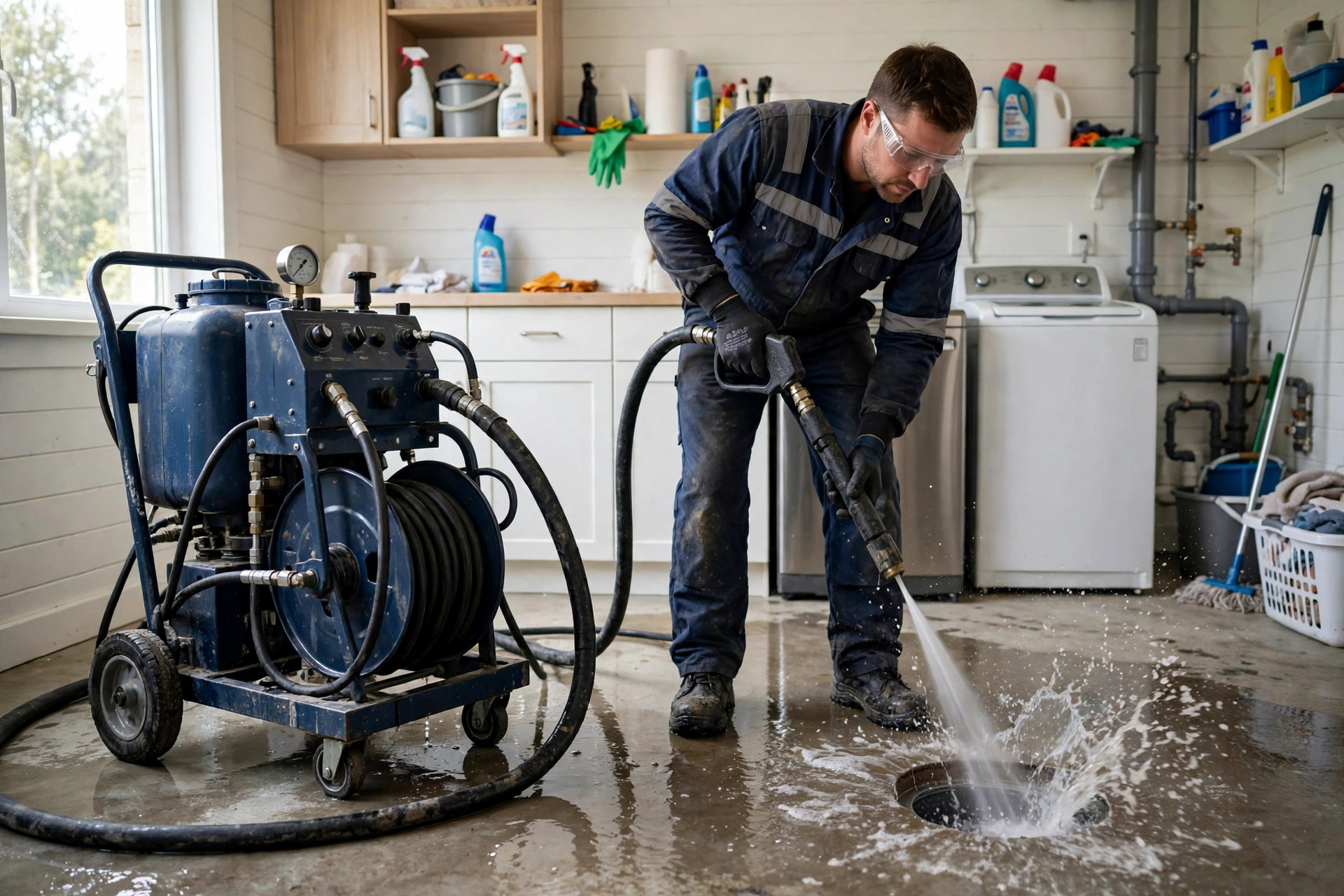

When a drain keeps clogging no matter how many times you snake it, or when the whole house drains slowly, the problem is usually not a single blockage — it is years of grease, scale, and sludge coating the inside of the pipes. That is the problem hydrojet drain cleaning is built to solve. Instead of pushing a hole through the clog, it uses a high-pressure jet of water to scour the entire pipe clean, from wall to wall. This guide explains how it works, what it costs, when you need it, and when you do not.
- Hydrojet drain cleaning uses water at 3,000 to 8,000 PSI to scour grease, scale, and roots from the inside of pipes.
- It typically costs $350 to $600 for a standard residential job, more for main sewer lines or severe root intrusion.
- It cleans the whole pipe, not just the clog — so drains stay clear far longer than after snaking.
- It is not safe for old, fragile, or damaged pipes — a camera inspection comes first.
- It is a professional-only job; the equipment is dangerous in untrained hands.
Hydrojet Drain Cleaning: How It Works
Hydrojet drain cleaning, also called hydro jetting, works like a pressure washer for the inside of your pipes. A plumber feeds a flexible hose with a specially designed nozzle into the drain, then pumps water through it at very high pressure — typically 3,000 to 8,000 PSI for residential work. The nozzle has jets that point backwards as well as forwards, which does two things: the forward jets break up the blockage, and the backward jets pull the hose through the pipe while scouring the walls clean. The water flushes all the debris out to the sewer, leaving the pipe close to its original diameter.
Before any jetting happens, a good plumber will run a camera down the drain first. The camera shows what is actually in the pipe — grease, scale, tree roots, a collapsed section — and, just as importantly, whether the pipe is in good enough condition to handle the pressure. Jetting a cracked or corroded pipe can make it worse, so the inspection is not optional. If your drains have been slow for a while, our unclog a drain without chemicals guide covers the simpler fixes to try first, before you call in the heavy equipment.
Hydrojet Drain Cleaning Cost
For a standard residential job, hydrojet drain cleaning typically costs $350 to $600. That usually includes the camera inspection, the jetting itself, and a follow-up camera check to confirm the pipe is clear. A main sewer line costs more — $700 to $1,200 or more, depending on the length of the line and how bad the blockage is. Severe tree root intrusion can push the price higher, because the plumber may need to jet the line more than once, or combine jetting with a root-cutting tool.
Several things affect the price: how easy it is to access the drain, how long the pipe run is, what is blocking it, and where you live. Emergency or after-hours calls cost more, as they always do. Get a quote that includes the camera inspection — a company that quotes a low price for jetting alone, without inspecting first, is cutting a corner that matters. And be wary of prices that seem too good to be true: a $99 hydro jetting offer is almost certainly a bait price that goes up once the plumber is in your house. If you are comparing the cost of fixing drains against other home maintenance, our carpet cleaning cost guide shows the same pattern — the professional job costs more upfront, but it lasts far longer than the DIY version.
Hydro jetting vs snaking: which is better?
Snaking and jetting solve different problems. A drain snake — a long, flexible metal cable with a cutting head — punches a hole through a clog so water can flow again. It is fast, cheap, and effective for a simple blockage, like a wad of hair or a small grease plug. But it does not clean the pipe: the grease and sludge coating the walls stay there, and the drain clogs again, often within weeks. Hydro jetting cleans the whole pipe, so the fix lasts far longer — usually years, not weeks.
The trade-off is cost and risk. Snaking costs $100 to $250 and is safe for almost any pipe. Jetting costs $350 to $600 and is not safe for fragile pipes. The right choice depends on the problem: a one-off clog in a healthy drain is a snaking job. A drain that keeps clogging, a whole-house slow drain, or a sewer line full of roots is a jetting job. A good plumber will tell you which one you need — and if they recommend jetting for a simple clog, get a second opinion.
When Do You Need Hydro Jetting?
There are a few clear signs. The most obvious is a drain that keeps clogging after snaking — if the same drain has blocked three times in a year, the pipe itself is the problem, not the clog. Slow drains throughout the house, rather than a single fixture, usually point to a problem in the main line, which is a jetting job. Gurgling sounds from drains, water backing up into other fixtures when you run the washing machine, and bad smells from drains that cleaning does not fix are all signs of a pipe that needs scouring, not just clearing.
Tree roots are the other classic case. If you have large trees near your sewer line, roots will find their way into the pipe through tiny cracks, and they grow into a dense mat that snaking can only punch through, not remove. Jetting cuts the roots out and scours the pipe, though it does not repair the crack the roots came through — for that, you need a pipe repair or relining, which is a bigger job. If your shower drain is the problem, our shower drain unclogging guide covers the simpler fixes that work for most bathroom clogs.
How Often Should You Hydro Jet Your Drains?
For most homes, hydro jetting is not a regular maintenance job — it is a fix for a specific problem. Once a pipe has been jetted clean, it usually stays clear for years, unless there is an underlying issue like tree roots or a sagging pipe. Some plumbers recommend jetting every 18 to 24 months for restaurants and commercial kitchens, where grease builds up fast, but for a typical home, every few years — or only when there is a problem — is enough.
The best maintenance is the boring kind: do not pour grease down the drain, use a strainer in the kitchen sink and the shower, and flush the drains with hot water once a week. Those three habits prevent most of the buildup that jetting is needed to remove. And if you have older pipes, get a camera inspection every few years — it is cheap, it is quick, and it catches problems like root intrusion and corrosion before they become emergencies. For more on keeping drains clear day to day, our drain fly removal guide covers the small pests that show up when drains are not draining properly.
Frequently Asked Questions
How much does hydrojet drain cleaning cost?
Typically $350 to $600 for a standard residential drain, and $700 to $1,200 or more for a main sewer line. The price usually includes a camera inspection before and after the work.
Is hydro jetting safe for old pipes?
Not always. It is safe for PVC, cast iron, and clay pipes in good condition, but it can damage old, corroded, or cracked pipes. A camera inspection before jetting is essential.
How long does hydrojet drain cleaning last?
Usually years. Because jetting cleans the whole pipe rather than just clearing the clog, drains stay clear far longer than after snaking — unless there is an underlying issue like tree roots.
Can I hydro jet my own drains?
No. Professional hydro jetting equipment runs at 3,000 to 8,000 PSI and is dangerous in untrained hands. It can injure you and damage your pipes. Hire a licensed plumber.
What is the difference between hydro jetting and snaking?
Snaking punches a hole through a clog so water flows again; jetting scours the entire pipe clean. Snaking is cheaper and good for simple clogs; jetting lasts far longer and is better for recurring problems.
Hydrojet drain cleaning is the heavy artillery of drain cleaning: more expensive than snaking, more thorough than any chemical, and the right answer when a drain keeps clogging or the whole house drains slowly. Get the camera inspection first, hire a professional, and enjoy drains that actually drain.