
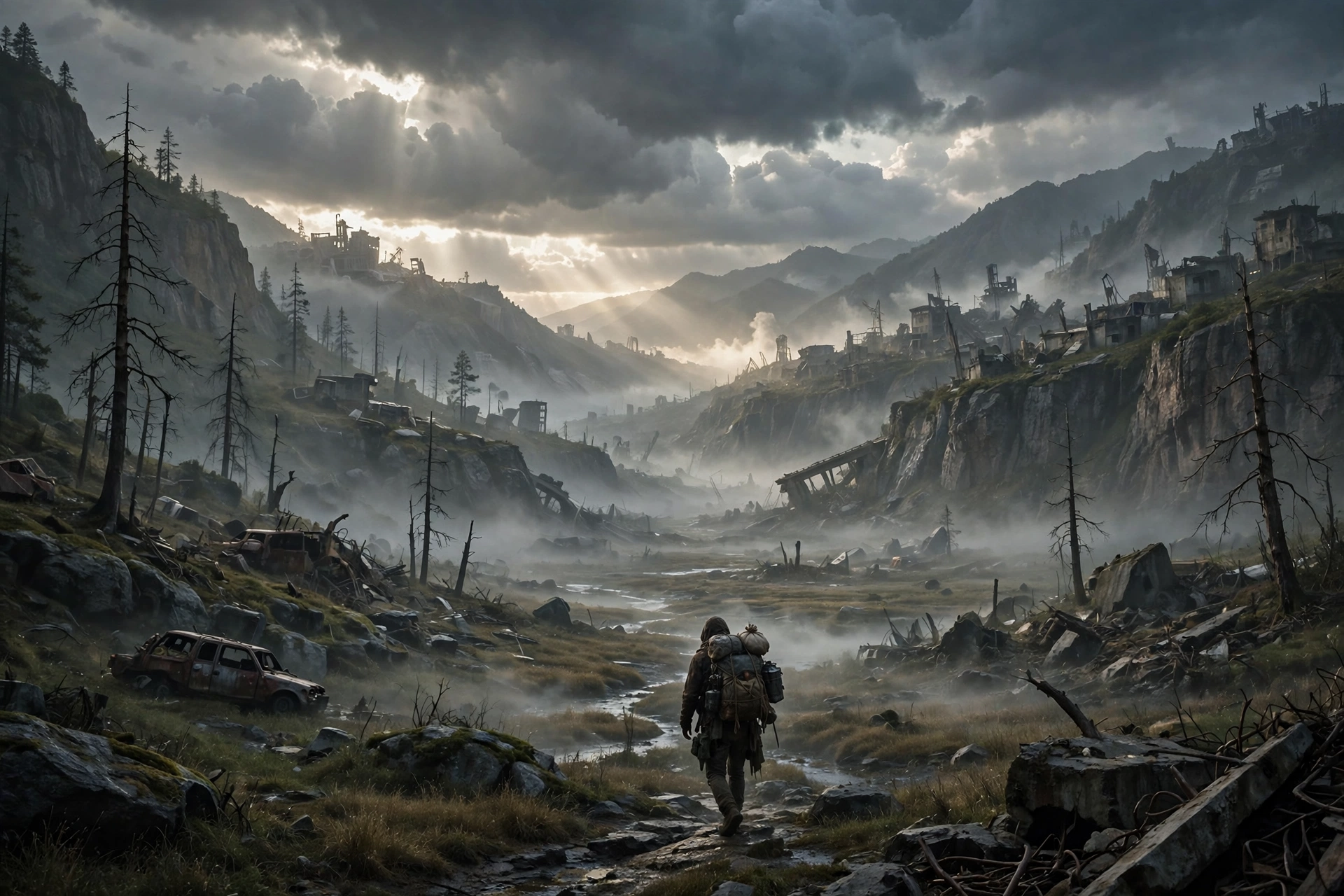
Death Stranding review searches spike every time the game goes on sale or a sequel trailer drops, and for good reason: this is one of the most argued-about games of the last decade. Some players call it a masterpiece about human connection. Others call it a walking simulator. Both sides are partly right, which is exactly why it is worth understanding before you buy. Created by Hideo Kojima and first released in 2019, Death Stranding puts you in the boots of Sam Porter Bridges, a courier crossing a fractured America to reconnect isolated cities. This review covers what the game is, how it plays, what works, what drags, and whether it is worth your time in 2026.
- Death Stranding is an open-world delivery game set in a post-apocalyptic America, built around traversal, planning and asynchronous multiplayer.
- Its story is strange, emotional and very Kojima — expect long cutscenes, big ideas and a slow-burn mystery.
- The Director’s Cut (PS5 and PC) is the best version, with new tools, missions and quality-of-life improvements.
- It is not for everyone: if you need constant combat or fast action, you will bounce off it. If you enjoy meditative, systems-driven play, it can be deeply absorbing.
- Death Stranding 2: On the Beach released in 2025, so the original is now the perfect starting point — and it is often heavily discounted.
What Is Death Stranding?
Death Stranding is set after a cataclysmic event called the Death Stranding blurred the line between the world of the living and the world of the dead. Rain now accelerates time — it is called Timefall — and invisible creatures known as BTs haunt the wilderness. Humanity survives in isolated underground cities, and couriers called porters carry supplies between them on foot. You play Sam, a porter hired by a company called Bridges to reconnect America to the Chiral Network, a kind of next-generation internet. Every delivery you complete brings another settlement back online, and the story unfolds from there.
The game was developed by Kojima Productions and uses the Decima engine, the same technology behind Horizon Zero Dawn. It looks extraordinary: vast empty landscapes, dramatic weather, and a haunting soundtrack that swells at just the right moments. The cast includes Norman Reedus as Sam, Mads Mikkelsen as the antagonist Cliff, and Léa Seydoux, Margaret Qualley and Troy Baker in supporting roles. The performances are strong, and the motion capture is some of the best in any game.
How the Game Actually Plays
At its core, Death Stranding is a game about walking — but walking with weight, literally. Sam carries cargo on his back, and the more he carries, the harder it is to balance. You plan routes across rivers, mountains and rocky plains, manage your stamina, watch the weather, and use tools like ladders, ropes, exoskeletons and vehicles to make the journey easier. A misstep can send Sam tumbling and damage your cargo. It sounds tedious on paper, and in the first few hours it can feel that way. But once the systems click, there is a quiet satisfaction to a perfectly planned route — the same pleasure you get from a well-organised day. If you enjoy methodical games, it is closer to a hiking simulator with a story than to a shooter, and that is the point.
The Social Strand System
The most clever idea in Death Stranding is its multiplayer. You never see other players directly, but you share the world with them: ladders they left behind, roads they helped build, warning signs they placed, and shelters they constructed. You can like their structures, and they can like yours. It creates a genuine feeling of connection with strangers, which fits the game’s theme perfectly — rebuilding a broken world together, one delivery at a time. Many players say the moment the system clicks is when the game goes from good to great.
Combat and Boss Fights
Combat exists but it is not the focus. BT encounters are tense stealth sequences: you move slowly, hold your breath, and avoid detection. Human enemies (the MULEs, who steal cargo) can be fought with non-lethal weapons. Boss fights against giant BTs are spectacular but relatively rare. If you are coming from a game like best gaming laptop territory expecting constant action, adjust your expectations — this is a game that rewards patience, and the combat serves the journey rather than the other way around.
What Works Brilliantly
The world design is the star. Every region feels distinct: the green valleys of the early game, the snowy mountains in the middle, the desolate tar belts near the end. The music — original songs by Low Roar and others — is perfectly placed, often kicking in on a long walk at exactly the emotional peak. The story, while confusing at times, lands its emotional beats: the relationship between Sam and the baby-like BB, the mystery of Cliff, and the final chapters are genuinely moving. And the sense of accomplishment is real: finishing a long, difficult delivery across a mountain in a storm feels earned in a way few games manage.
What Drags
The honest weaknesses are real. The first three to five hours are slow: long tutorials, repeated explanations and a lot of walking before the map opens up. Some story chapters lean on long, jargon-heavy cutscenes, and the game loves its own lore a little too much. A few late-game missions repeat earlier routes, and the inventory and menu systems can feel fiddly. None of this ruins the game, but it explains why some players quit early. The advice from most fans is simple: give it past the opening chapters before you judge it.
Death Stranding 2 and Where to Start in 2026
Death Stranding 2: On the Beach arrived in 2025 and continues Sam’s story with more vehicles, more combat options and an even stranger world. You do not need to have played the original to follow the sequel, but the first game makes the second far richer — the characters, the world rules and the emotional payoff all build on it. In 2026 the original is frequently available for a fraction of its launch price, and the Director’s Cut is the version to buy. If you are curious about the sequel, start here. For a broader sense of how the original compares with other big releases, our guide to the PS6 release date and the current console landscape is a useful companion read, and if you want something faster-paced afterwards, Street Fighter 2026 covers the other end of the spectrum.
Should You Play It?
If you like games that respect your patience — walking simulators with purpose, systems that reward planning, stories that take their time — Death Stranding is essential. If you want constant action and clear objectives, it will frustrate you, and that is fine: not every game is for everyone. The best test is the price: at a discount, it is one of the most interesting games of its generation, and the Director’s Cut smooths the roughest edges. Give it five honest hours. If the first time another player’s ladder saves you from a river crossing does not make you smile, it is probably not your game. If it does, you are in for one of the most memorable journeys in gaming.
Frequently Asked Questions
Is Death Stranding worth playing in 2026?
Yes, especially the Director’s Cut at a discount. It remains visually stunning, its multiplayer strand system is still unique, and it is the natural starting point before Death Stranding 2.
How long does Death Stranding take to finish?
The main story takes around 35 to 40 hours. A completionist run with all deliveries, roads and collectibles can take 60 to 100 hours or more.
Is Death Stranding a walking simulator?
Partly — traversal is the core mechanic. But it is a walking simulator with deep systems: cargo management, route planning, weather, terrain, vehicles, combat and a full multiplayer layer built around shared structures.
Do I need to play Death Stranding before Death Stranding 2?
Not strictly, but it is strongly recommended. The sequel continues Sam’s story and reuses many characters and world rules, so the original makes the sequel much more meaningful.
What is the best version of Death Stranding?
The Director’s Cut on PS5 or PC. It adds new tools, missions and quality-of-life features, and on PC it supports high frame rates and ultrawide screens.