
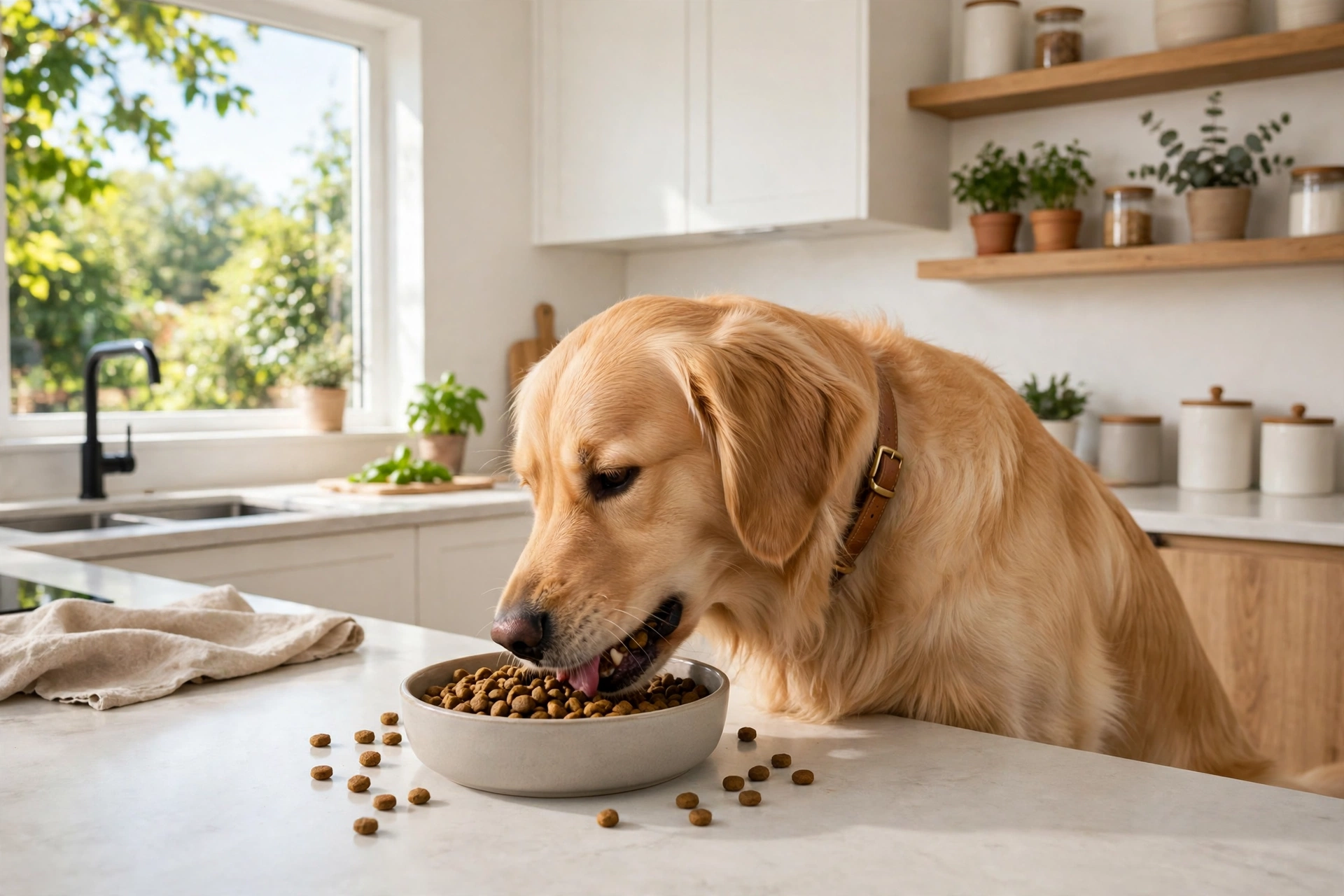

Walk down the dog food aisle and you will see hundreds of bags, all claiming to be the best. Grain-free, raw, fresh, vet-recommended, ancestral, holistic — the labels are designed to confuse you, and the prices range from a few dollars to a small fortune. Choosing the best dog food does not have to be this hard. What matters is not the marketing on the bag, but what is inside it, whether it is complete and balanced, and whether it suits your individual dog. This guide cuts through the noise: how to read a label, what to feed at each life stage, and how to switch foods without upsetting your dog’s stomach.
- Look for an AAFCO statement of nutritional adequacy — it means the food is complete and balanced.
- The first ingredient should be a named animal protein, like chicken, beef, or salmon — not “meat meal” or a vague by-product.
- Puppies, adults, and seniors need different food; large-breed puppies need food formulated for their growth rate.
- Grain-free is not better for most dogs, and the FDA has investigated a link between grain-free diets and heart disease.
- Switch foods gradually over 7 to 10 days to avoid stomach upset.
Best Dog Food: How to Read the Label
The single most useful thing on a bag of dog food is not the picture on the front — it is the AAFCO statement, usually in small print on the back. AAFCO is the Association of American Feed Control Officials, and its statement confirms the food is “complete and balanced” for a particular life stage. If a food does not have that statement, it is not a complete diet — it might be a treat, a topper, or a food that has not been tested. That one line is the fastest way to separate real dog food from marketing.
Next, look at the ingredient list. Ingredients are listed by weight before cooking, so the first few matter most. The first ingredient should be a named animal protein — chicken, beef, lamb, salmon — not a generic term like “meat” or “poultry by-product meal.” After that, look for whole foods you recognise: rice, oats, sweet potato, carrots, peas. A long list of chemical-sounding preservatives is not automatically bad — some, like mixed tocopherols (vitamin E), are natural — but if you cannot pronounce most of the list, keep looking. And ignore the front of the bag: “premium,” “holistic,” “natural,” and “vet recommended” are not regulated terms, and they mean whatever the manufacturer wants them to mean. If your dog has a sensitive stomach, our best dog foods for sensitive stomachs guide narrows the field to the gentlest options.
What to Feed at Each Life Stage
Dogs need different food at different ages, and feeding the wrong stage is one of the most common mistakes. Puppies need food with more protein, more fat, and more calories per cup, because they are growing fast — and large-breed puppies need food specifically formulated for them, with controlled calcium levels, because growing too fast can cause joint problems later. Adult dogs need a maintenance food matched to their activity level: a working farm dog and a couch-potato lapdog should not eat the same thing. Senior dogs, usually from age seven onwards depending on the breed, need fewer calories but the same quality protein, plus joint support like glucosamine.
Size matters too. Small breeds burn energy faster and need calorie-dense food in small kibble they can actually chew. Large breeds need food that supports their joints and does not encourage them to grow too fast. Most major brands make size-specific formulas, and they are worth using — the kibble size alone makes a real difference to whether a small dog can eat comfortably. If your dog is new to your home, our dog training tips cover the first weeks, including how feeding routines and training work together.
Grain-free, raw, and fresh: what is actually worth it?
Grain-free food is the most misunderstood trend in dog food. It was designed for dogs with a genuine grain allergy, which is rare — most food allergies in dogs are to proteins like beef or chicken, not grains. For most dogs, grains like rice and oats are perfectly healthy, and in 2018 the FDA began investigating a potential link between grain-free diets and dilated cardiomyopathy, a serious heart condition. Unless your vet has diagnosed a grain allergy, there is no reason to feed grain-free, and there may be a reason not to.
Raw diets have passionate fans and real risks. Raw meat can carry salmonella and other bacteria that affect both dogs and the humans in the house, and homemade raw diets are very easy to get nutritionally wrong. Fresh, gently cooked food delivered to your door is the newest trend, and the quality is often excellent — but it costs several times more than kibble, needs fridge space, and is not automatically better than a good kibble. The honest answer is that a well-chosen kibble or wet food from a reputable brand, with an AAFCO statement, is a perfectly good diet for most dogs.
Wet Food vs Dry Food
Neither is better in general — they solve different problems. Dry food is cheaper, easier to store, and better for dental health, because the crunch helps clean teeth. Wet food is more palatable, which matters for fussy eaters and older dogs, and it adds hydration, which is useful for dogs that do not drink enough. Many vets recommend a mix: dry food as the base, with a spoonful of wet food on top for taste and moisture. The best choice depends on your dog — a dog that inhales dry food and drinks plenty of water is fine on kibble alone, while a picky senior dog will do better with wet food mixed in.
Cost is a real factor. A good quality kibble costs roughly $1 to $2 a day for a medium dog, while wet food alone can cost $3 to $5 a day. Fresh food delivery can cost $5 to $10 a day. That adds up to thousands of dollars over a dog’s life, so be realistic about what you can sustain — a food you can afford for ten years is better than a premium food you switch away from after two months. Pet insurance can help with the vet bills that diet affects; our Spot pet insurance guide explains what to look for in a policy.
How to Switch Dog Foods Safely
Never switch a dog’s food overnight. A sudden change is the most common cause of diarrhoea and vomiting in otherwise healthy dogs, and it is entirely avoidable. The safe method takes seven to ten days: start with 25 percent new food and 75 percent old food for two or three days, then move to half and half, then 75 percent new, then fully new. If your dog’s stomach is upset at any stage, go back a step and stay there for a few extra days before moving on.
Watch for signs that the new food is not working: persistent loose stools after two weeks, itchy skin, ear infections, or a dog that refuses to eat. Any one of those means the food does not suit them, and it is worth trying a different protein — if the current food is chicken-based, try lamb or fish — before concluding the brand is the problem. And if your dog has a medical condition, ask your vet before switching: dogs with kidney disease, pancreatitis, or allergies need specific diets, and the wrong food can make things worse. If you are moving house with your dog, our moving with pets tips cover how to keep feeding and routines steady through the disruption.
Frequently Asked Questions
What is the best dog food in 2026?
There is no single best dog food — it depends on your dog’s age, size, activity, and health. Look for a food with an AAFCO complete and balanced statement, a named animal protein first, and a formula matched to your dog’s life stage.
Is grain-free dog food better?
Not for most dogs. Grain allergies are rare, and the FDA has investigated a link between grain-free diets and heart disease. Unless your vet diagnosed a grain allergy, a food with healthy grains is fine.
How much should I feed my dog?
Follow the feeding guide on the bag as a starting point, then adjust by your dog’s body condition — you should be able to feel the ribs easily without seeing them. Active dogs need more; older or less active dogs need less.
Can I switch my dog’s food suddenly?
No. Switch gradually over 7 to 10 days, mixing increasing amounts of the new food with the old, to avoid stomach upset.
Is wet food or dry food better for dogs?
Neither is better in general. Dry food is cheaper and better for teeth; wet food is more palatable and adds hydration. Many owners mix the two.
The best dog food for your dog is the one with a proper AAFCO statement, a named protein first on the label, and a formula that matches their age and size — and the one they actually eat happily, with firm stools and a shiny coat. Everything else on the bag is marketing. Trust the label, trust your dog, and when in doubt, ask your vet.