
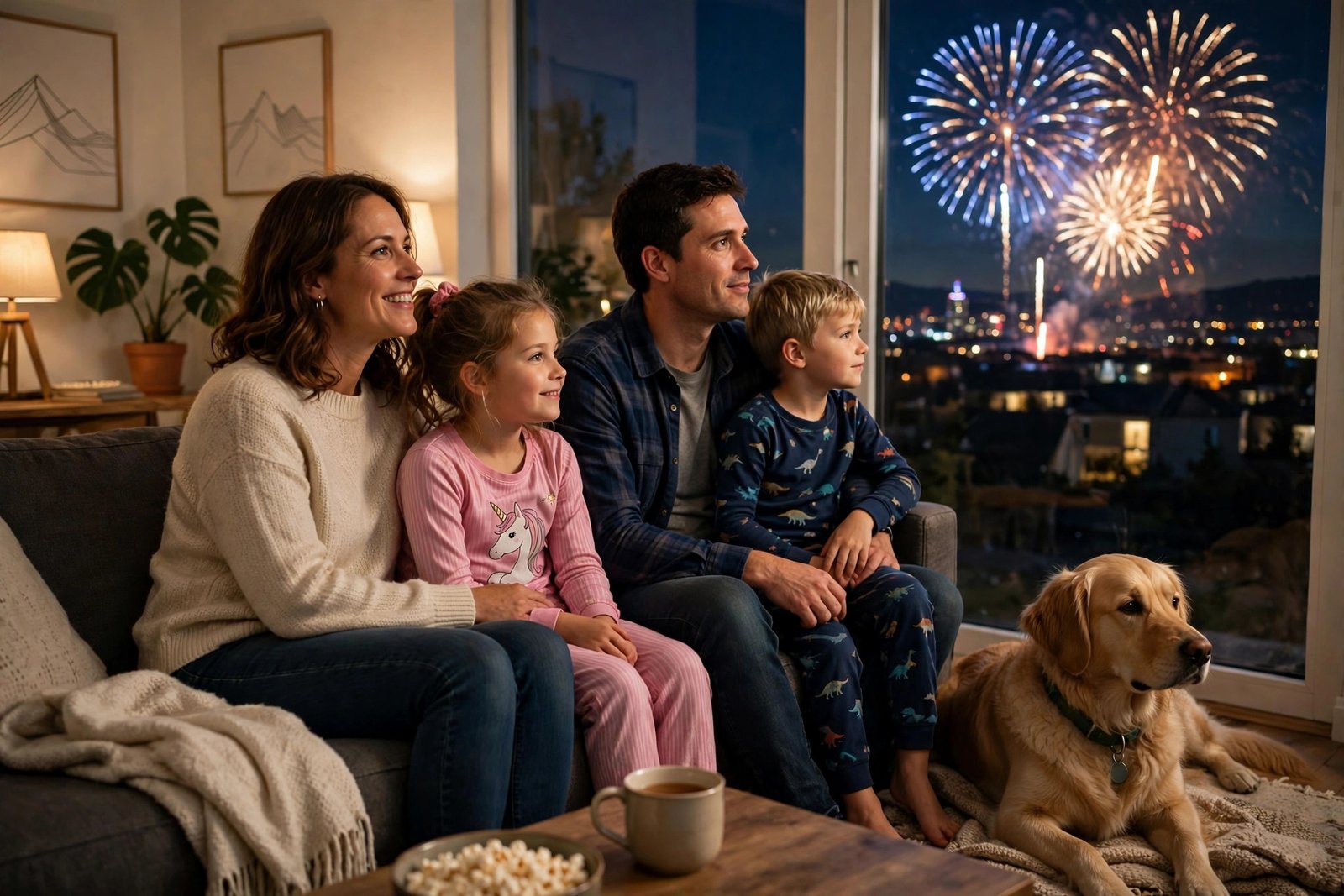
Bonfire Night Safety Tips for Pets and Kids
Bonfire Night is thrilling for adults, but for children and pets it can be frightening, overwhelming and genuinely dangerous. Fireworks are loud, unpredictable and hot; bonfires are open flames in the dark; and a garden full of excited people is easy for a small child or a panicked animal to get lost in. The good news is that almost every Bonfire Night accident is preventable with a little preparation.
This guide covers Bonfire Night safety for pets and kids in full: how to prepare your pet before the fireworks start, how to keep children safe around sparklers and bonfires, why organised displays are usually the safest choice, and what to do if something goes wrong. Bonfire Night 2026 falls on Thursday 5 November, with displays through the weekend — start preparing now, not on the night.
Key Takeaways
- Keep pets indoors during fireworks, with curtains closed, music on, and a safe hiding place available.
- Only adults light fireworks and sparklers; children watch from a safe distance and never hold fireworks.
- Sparklers burn hotter than a blowtorch — gloves on, one at a time, straight into water when finished.
- Organised displays are safer than garden fireworks for families with young children.
- Never leave a bonfire or firepit unattended, and fully douse it before going inside.
Pets and Fireworks: Why They Suffer
Animals hear far better than we do, and fireworks are sudden, loud and directionless — a dog or cat cannot understand where the noise is coming from or when it will stop. The result is panic: dogs bolt, cats hide for hours, and small animals like rabbits and guinea pigs can suffer serious stress. Every year, pets go missing on Bonfire Night because a frightened animal slipped through a gate or jumped a fence.
Preparation starts days before. Make sure your pet’s microchip details are up to date and that they wear a collar with an ID tag. Walk dogs early in the evening, before the fireworks start, so they are tired and settled. Bring outdoor pets — rabbits, guinea pigs, chickens — into a shed or garage, cover hutches with blankets to muffle sound, and give them extra bedding to burrow into.
Creating a Safe Room for Pets
On the night, set up a safe room: an interior room away from windows, with curtains closed, the television or radio on at a comfortable volume, and your pet’s bed, water, toys and a worn item of your clothing for comfort. Stay with your pet if you can — your calm presence is the single most reassuring thing. If you must go out, leave the radio on and do not leave your pet alone for long.
Do not try to drag a hiding pet out of its spot, and never punish fearful behaviour — a dog that is shaking is not misbehaving, it is terrified. Distraction helps some animals: a long-lasting chew, a puzzle feeder or a game can redirect attention from the noise. For pets with severe firework anxiety, talk to your vet well in advance — calming products and medication need to be trialled before the night, not started on it. Similar principles apply at other noisy festivals; our pet Christmas safety tips cover the same ground for the festive season.
Children and Fireworks: The Rules
Fireworks are explosives, and children should never handle them. In the UK, it is illegal for under-18s to buy fireworks, and sparklers should only be given to children over five, with adult supervision. At organised displays, keep children at the recommended distance, behind barriers, and hold younger children’s hands in crowds.
Explain fireworks to children before the night: what the bangs are, why they are loud, and that it is okay to feel scared. Ear defenders or noise-cancelling headphones are a brilliant investment for sensitive children — they turn a frightening experience into an exciting one. Bring a torch for the walk home, dress children in warm, visible clothing, and agree a meeting point in case anyone gets separated in a crowd.
Sparkler Safety: The Strict Version
Sparklers burn at over 1,000°C. That single fact should govern every decision about them. Never let children run with sparklers, never hold more than one at a time, and never relight a sparkler that has gone out.
Bonfire and Firepit Safety for Families
Keep children and pets well away from bonfires and firepits — a physical barrier, such as a ring of chairs or a rope line, helps younger children understand the boundary. Never use petrol, paraffin or other accelerants to light a fire, and never throw fireworks, aerosols or treated wood onto a bonfire. Build bonfires on the day itself so hedgehogs and other wildlife do not nest in them overnight, and check the pile thoroughly before lighting.
Keep a bucket of water, a hose or a fire extinguisher nearby all evening, and never leave the fire unattended. At the end of the night, douse the fire fully with water, stir the ashes, and check for hot embers before going inside. Embers can stay hot for hours and are a real risk to bare feet and paws the next morning.
Organised Displays vs Garden Fireworks
For most families, an organised display is the safest and most spectacular choice. Professional displays are set up at safe distances, managed by trained operators, and insured. Garden fireworks, by contrast, are lit by amateurs in small spaces, often with children nearby and alcohol involved — a combination that accounts for most Bonfire Night injuries.
If you do use garden fireworks, buy only fireworks that meet safety standards, read the instructions in daylight, and follow them exactly. Light fireworks at arm’s length with a taper, stand well back, and never return to a firework that has not gone off — leave it, and dispose of it safely the next day. Never let children light fireworks, and never drink and light fireworks. For wider home safety planning, our home security guide and room-by-room security upgrade guide cover the practical side of keeping a household safe.
If Something Goes Wrong
- Burns: Cool with cold running water for at least 20 minutes, cover loosely with cling film, and seek medical help for anything larger than the person’s palm, on the face, or on a child.
- A frightened pet that bolts: Do not chase — a panicked animal runs further. Call calmly, check usual hiding spots, and alert neighbours and local shelters quickly.
- A child who is distressed: Move them somewhere quiet and warm, validate their feelings, and do not force them to watch more fireworks.
- A fire out of control: Move everyone away, call the fire service, and do not try to fight a large fire yourself.
Frequently Asked Questions
Should I keep my dog indoors on Bonfire Night?
Yes, always. Keep dogs indoors with curtains closed and background noise on, and walk them early before fireworks start.
What age can children hold sparklers?
Children under five should not hold sparklers at all. Older children may hold one sparkler at a time, with gloves and adult supervision.
Are organised displays safer than garden fireworks?
Yes, significantly. Professional displays are managed at safe distances by trained operators, while garden fireworks are the source of most Bonfire Night injuries.
How do I calm a cat during fireworks?
Give them a hiding place, keep them indoors, close curtains, play background music, and let them hide without forcing interaction. Feliway diffusers can help some cats.
What should I do with a firework that does not go off?
Leave it alone. Do not approach it for at least 30 minutes, do not try to relight it, and dispose of it safely the following day according to the manufacturer’s instructions.
Bonfire Night is meant to be a celebration, and with preparation it can be one for every member of the family — including the four-legged ones. Keep pets safe indoors, keep children at a safe distance with clear rules, respect sparklers and fire, and choose an organised display when in doubt. A safe Bonfire Night is a happy one.