
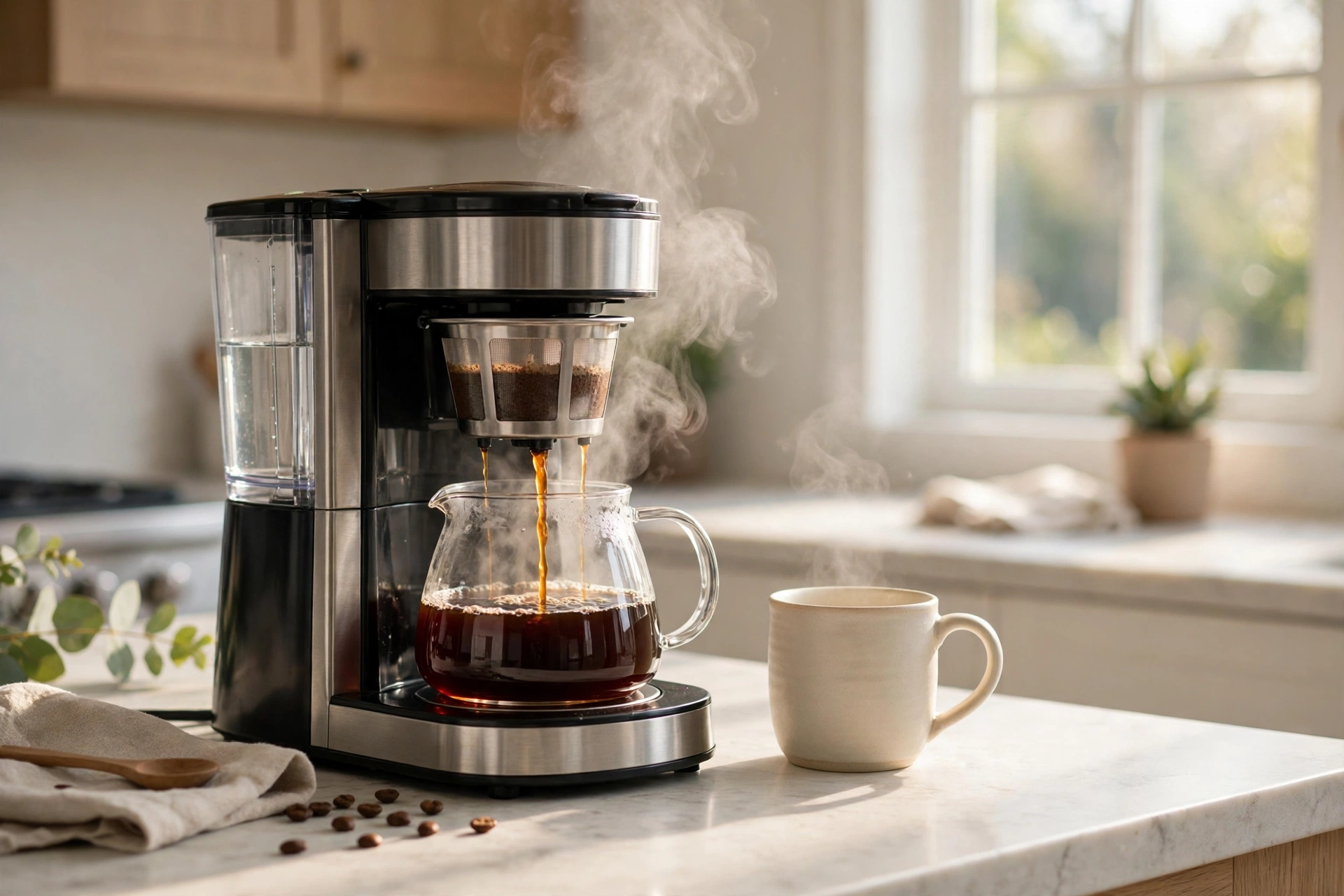
There is no single best coffee maker — there is only the best one for how you drink coffee. A household that makes one quiet cup at 6 a.m. needs a different machine from a house that brews a full pot for four people, and both need something different from the person who wants a proper espresso. The good news is that every type has a genuinely good option in 2026, and most of them cost less than you would expect. Here is how to match the machine to the drinker, and what to buy in each category.
- Pick the type first — drip, pour-over, espresso, single-serve, or French press — then pick the machine.
- Drip makers are best for households; single-serve pods are best for one person in a hurry.
- Look for a machine that brews at 92 to 96 degrees Celsius — too cool and the coffee tastes sour.
- A thermal carafe keeps coffee hot without a warming plate that burns it.
- Fresh beans and a clean machine matter more than the price of the brewer.
First, What Kind of Coffee Do You Drink?
Start with the drink, not the machine. If you drink a big mug of black coffee every morning and sometimes a second, a drip coffee maker is the obvious choice: it brews a full pot, it is simple to use, and a good one costs less than a month of cafe coffee. If you drink one small cup and you are always in a rush, a single-serve pod machine like a Keurig or a Nespresso is faster and wastes less. If you love the ritual — the pouring, the timing, the smell — a pour-over or a French press will make you happier than any automatic machine.
Espresso is its own world. If you want lattes and cappuccinos at home, you need an espresso machine, and it will cost more and take more learning than any other type. There is no shortcut: a cheap espresso machine makes bad espresso, and the good ones start around a few hundred dollars. If you are not sure you want that commitment, a French press or a pour-over gives you a rich, full cup for a fraction of the price and effort. Our how to make French press coffee guide is a good place to start if the simple route appeals to you.
The Best Drip Coffee Makers
For most households, a drip maker is the right answer, and the difference between a good one and a bad one is temperature. Coffee needs water between 92 and 96 degrees Celsius to extract properly. Cheap drip makers often brew too cool, which is why their coffee tastes weak and sour. The machines that get this right have a certification from the Specialty Coffee Association, and the best-known is the Technivorm Moccamaster — expensive, handmade, and consistently excellent. The OXO Brew 9-Cup and the Bonavita 8-Cup are the more affordable certified options, and both make a genuinely good pot.
What to look for: a thermal carafe instead of a glass one on a hot plate, because a hot plate keeps cooking the coffee and turns it bitter within half an hour. A thermal carafe keeps it hot for hours without changing the taste. A removable water tank makes filling easier, and a programmable timer means the coffee is ready when you wake up. A drip maker does not need to be smart or connected — it needs to be hot, simple, and reliable. If your kitchen is getting an upgrade alongside the coffee setup, our kitchen design ideas cover counter space and storage for the whole coffee station.
Single-serve and pod machines
Pod machines win on speed and convenience. A Keurig brews a cup in under a minute with no measuring and no mess, and a Nespresso makes a better-tasting cup with a real crema on top, at a higher price per pod. The trade-off is cost per cup — pods cost several times more than ground coffee — and waste, since most pods are not easily recyclable. If you drink one cup a day and you value the convenience, that trade-off is fine. If you drink four cups a day, a drip maker will save you real money within months.
Espresso, Pour-Over, and the Rest
For espresso at home, the Breville Barista Express is the most recommended starter machine for a reason: it has a built-in grinder, it is forgiving to learn on, and it makes genuinely good espresso once you dial it in. It costs a few hundred dollars, which is a lot for a coffee maker and a bargain for an espresso machine. Cheaper espresso machines exist, but they usually make weak, thin espresso that no amount of milk can fix.
Pour-over is the cheapest route to excellent coffee: a Chemex or a V60 dripper costs very little, and the coffee it makes is clean, bright, and aromatic. The catch is that you are the machine — you heat the water, you pour it, you time it. Some people love that. Others find it a chore at 6 a.m. A French press sits in the middle: simple, cheap, full-bodied coffee with almost no technique required. If you take your coffee to go, our best thermoses for coffee guide will keep it hot until you get there.
Keeping Your Coffee Maker Clean
A dirty coffee maker is the most common reason home coffee tastes bad. Run a descaling cycle every one to three months, depending on how hard your water is — white vinegar and water, or a descaling solution, through a brew cycle, followed by two cycles of plain water. Wash the carafe and the filter basket daily, and wipe the warming plate. Coffee oils go rancid quickly, and they are what make a neglected machine taste bitter and stale.
Change the water filter if your machine has one, and use filtered water if your tap water is hard or tastes of chlorine. It is a small thing that makes a noticeable difference. And if you brew with beans, our best coffee beans for espresso guide covers what to buy once the machine is sorted.
Frequently Asked Questions
What is the best coffee maker for home use?
For most households, a certified drip maker like the Technivorm Moccamaster, OXO Brew, or Bonavita. For one person in a hurry, a Keurig or Nespresso pod machine. For the best-tasting cup, a pour-over or French press.
How much should I spend on a coffee maker?
A good drip maker costs $100 to $300. A pod machine costs $80 to $200 plus pods. A starter espresso machine costs $400 to $700. A pour-over or French press costs under $50 and makes excellent coffee.
Why does my coffee taste bitter?
Usually the machine is too hot, the coffee is over-extracted, or the machine is dirty. Descale it, use fresh beans, and check your grind size — too fine a grind makes bitter coffee.
Glass carafe or thermal carafe?
Thermal. A glass carafe on a hot plate keeps cooking the coffee and turns it bitter within half an hour. A thermal carafe keeps it hot for hours without changing the taste.
How often should I descale my coffee maker?
Every one to three months, depending on your water hardness. If your coffee starts tasting flat or the machine brews more slowly, it is time to descale.
The best coffee maker is the one that fits your morning: a drip maker for the household, a pod machine for the rush, a French press for the ritual, an espresso machine for the latte lover. Pick the type, buy the best version you can afford, keep it clean, and use fresh beans. The machine is the easy part. The beans do the rest.
2 thoughts on “Best Coffee Maker for Every Kind of Coffee Drinker”