
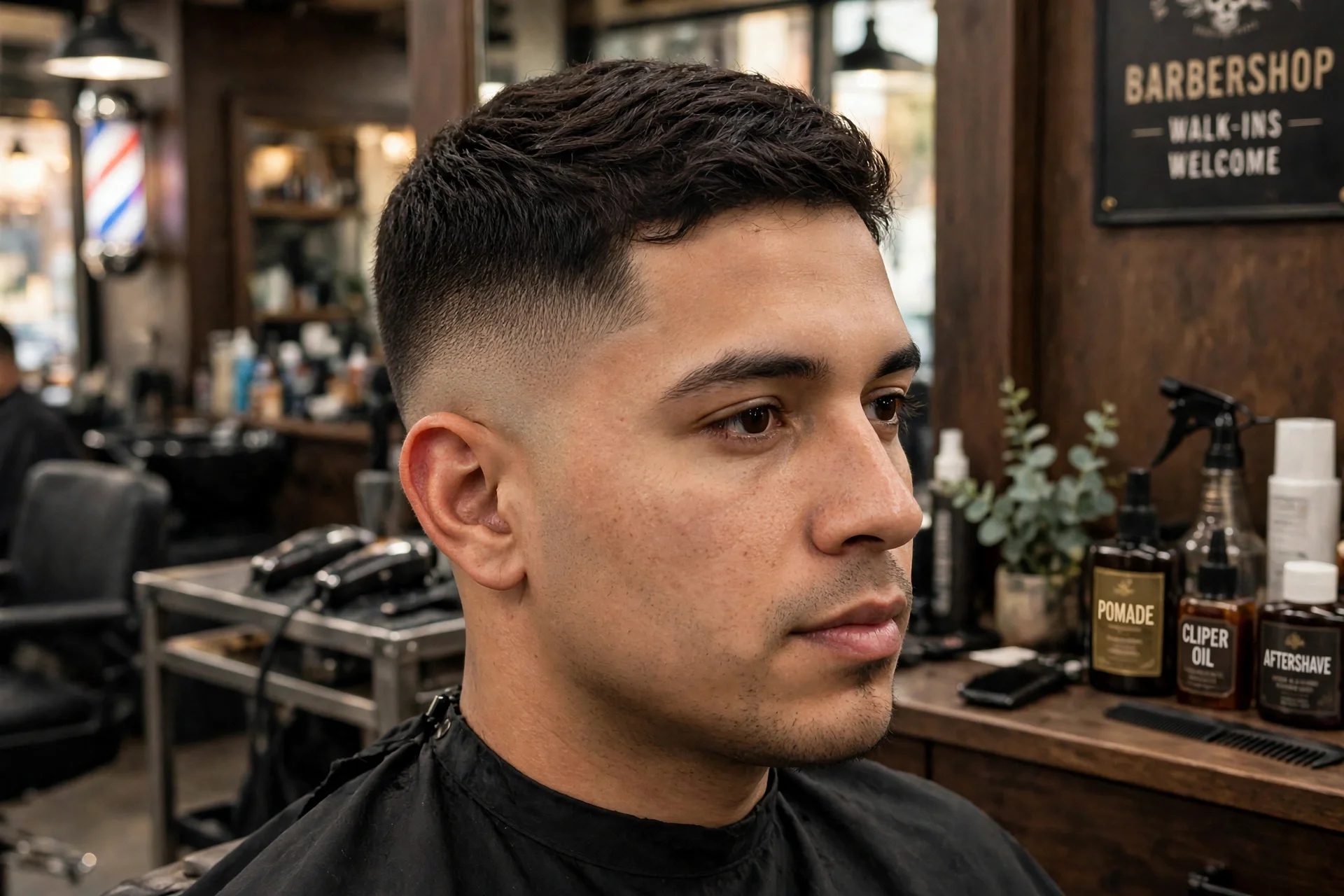
Walk into any good barbershop right now and you will hear it: “low drop fade.” It is the fade everyone is asking for, and for good reason. The low drop fade is clean without being severe, sharp without looking try-hard, and it suits more face shapes and hair types than almost any other fade. But it is also one of the most misunderstood cuts — half the people asking for it are describing something else entirely. Here is what it actually is, how it differs from the fades it gets confused with, and exactly what to say to your barber so you walk out with the cut you pictured.
- A low drop fade starts low and curves down behind the ear, following the shape of your head.
- It is different from a low taper fade: the drop fade goes shorter, faster, and drops lower at the back.
- It works with short crops, textured tops, curls, and even longer hair on top.
- The cut needs a tidy-up every 2 to 3 weeks to keep the line sharp.
- Bring a photo — “low drop fade” means slightly different things to different barbers.
What Is a Low Drop Fade?
A low drop fade is a haircut where the faded section starts low on the sides — just above the ear — and then curves downward as it goes around the back of the head, following the natural curve of the skull. The “low” part tells your barber where the fade begins. The “drop” part tells them the fade line is not straight around the head; it drops lower at the back. The result is a clean, rounded shape that looks natural from every angle, with the shortest hair sitting low and the blend rising gently into the longer hair on top.
What makes it so popular is the balance. A high fade can look aggressive and needs constant upkeep. A taper is subtle but sometimes too subtle — from a distance, it can look like you have not had a cut at all. The low drop fade sits in the middle: clearly fresh, but not shouting about it. It works in an office, at a wedding, and on a night out, which is more than you can say for most statement cuts. If you like the idea of a fade but want something softer, our low taper fade guide covers the gentler cousin of this cut.
Low Drop Fade vs Low Taper Fade: What Is the Difference?
This is where most confusion happens, so let us clear it up. A low taper fade keeps the hair relatively long and only gradually shortens it near the sideburns and neckline. The change is subtle, and the overall shape of the hair stays the same. A low drop fade goes much shorter, much faster — usually down to skin or near-skin at the bottom — and the fade line visibly drops as it curves around the back of the head. The drop fade is a bolder, more defined look. The taper is the quiet version.
There is also the mid and high drop fade. A mid drop fade starts higher up the side and shows more skin, which suits people who want the fade to be the main feature. A high drop fade starts near the top of the head and is the boldest of the three — great on thick hair, but it grows out fast and looks messy within two weeks. For most people, low is the right call: it grows out gracefully, it suits most head shapes, and it does not demand a barber visit every ten days. Our high taper fade guide explains the other end of the spectrum if you want to compare.
The best styles to pair with a low drop fade
The fade is the frame — the top is the picture. A short textured crop is the easiest pairing and the most popular: messy on top, clean on the sides, done in two minutes with a bit of matte clay. A buzz cut with a low drop fade looks sharp and military-clean, and it is the lowest-maintenance option of all. If you have curls, the drop fade is a gift: it takes the bulk off the sides while leaving the curls on top to do their thing, and the curved fade line follows the curl pattern naturally.
Longer hair on top works too. A slick back or a side part with a low drop fade looks smart and deliberate, and the fade keeps the sides from puffing out as the top grows. The one pairing to be careful with is a very long, heavy top with a very short fade — the contrast can look top-heavy unless your barber blends the transition properly. That blend is the whole skill of the cut, and it is why a good barber is worth paying for. If you are experimenting with fades more broadly, our burst fade mullet guide covers the boldest fade combination going right now.
How to Ask Your Barber for a Low Drop Fade
Here is the sentence that gets you the right cut: “Low drop fade, skin at the bottom, blended up to a [number] guard on top.” Then add what you want on top — “textured crop”, “leave the curls”, “short back and sides with length on top”. The guard number matters: a 0 or 1 at the bottom means skin fade, a 2 means short but not bald. If you are not sure, say “skin fade” or “shadow fade” and let the barber judge.
Bring a photo. Seriously. Barbers see dozens of variations of every fade, and “low drop fade” can mean slightly different things to different people. A photo of the exact cut you want — from the front, side, and back if you can find one — removes all guesswork. Save two or three photos on your phone, show the barber, and point at the parts you like: the height of the fade, the sharpness of the line, the length on top. A good barber will tell you honestly if your hair type suits the cut, and adjust the plan if it does not.
Frequently Asked Questions
How long does a low drop fade last?
About 2 to 3 weeks before the line softens and the grow-out shows. A quick edge tidy-up between cuts can stretch it to 4 weeks.
Does a low drop fade suit curly hair?
Yes — it is one of the best fades for curly hair. It removes bulk from the sides while keeping the curls on top, and the curved fade line follows the natural shape of the head.
What is the difference between a drop fade and a regular fade?
A regular fade runs in a straight line around the head. A drop fade curves downward behind the ear and at the back, following the shape of the skull for a more rounded, natural finish.
Can I get a low drop fade with long hair on top?
Yes. The fade works with almost any length on top, from a buzz cut to a slick back. The key is a good blend between the short sides and the longer top.
What guard should I ask for?
A 0 or 1 guard at the bottom gives a skin fade. A 2 guard gives a short shadow fade. If you are unsure, ask your barber what suits your hair — they will know.
The low drop fade earns its popularity: clean, versatile, and flattering on almost everyone. Bring a photo, say the words clearly, and find a barber who blends well. Do that, and you will understand why this is the cut half the shop is asking for.