
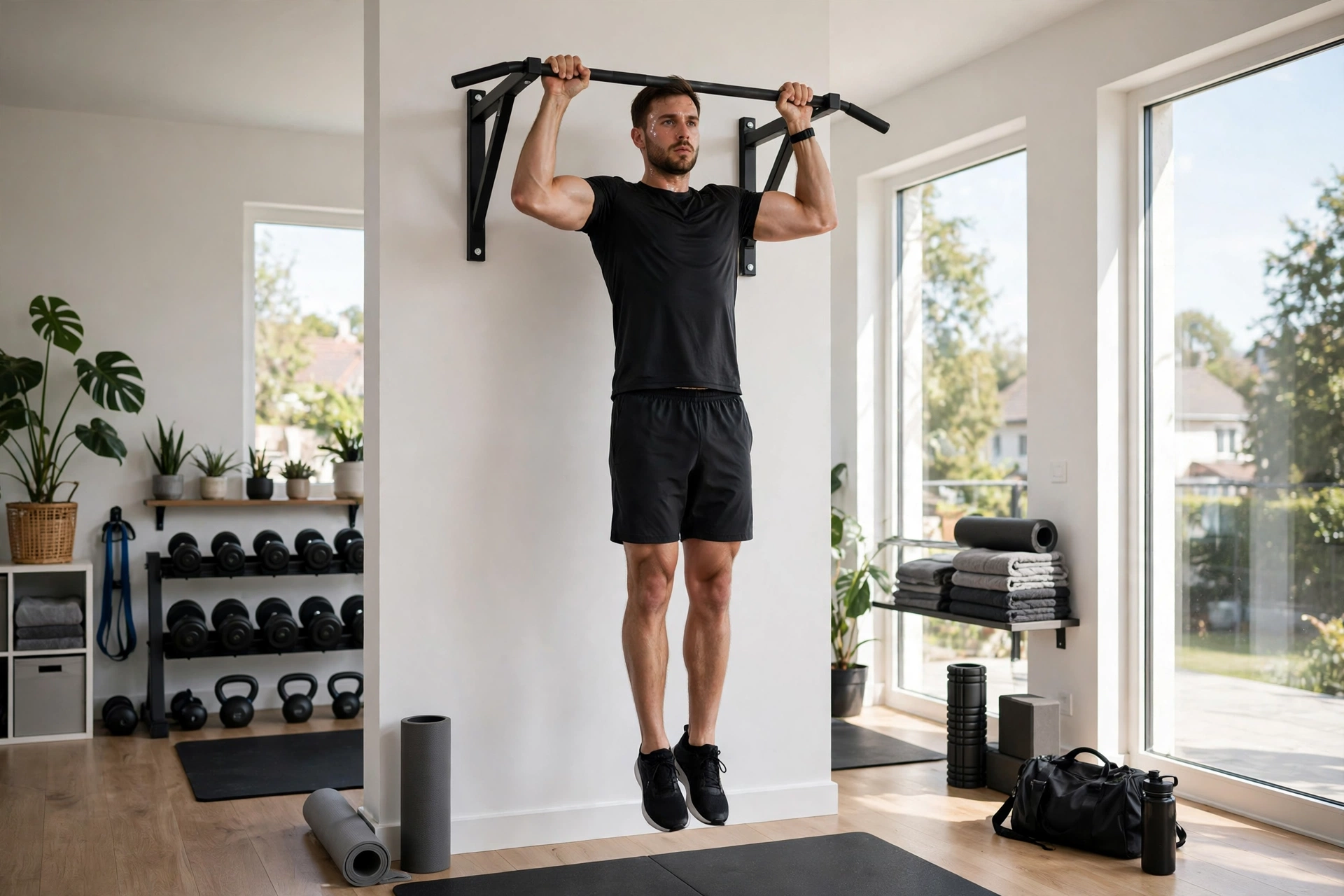

If the pushup is the first bodyweight exercise everyone learns, the pullup is the one that separates the beginners from the rest. It is hard. Most people cannot do a single one on their first try, and that is completely normal. Learning how to do a pullup is a process of weeks, not days, and it follows a clear path: build the base strength, practise the movement in pieces, and then put it together. This guide covers the form, the progressions that actually work, the mistakes that stall progress, and how to go from zero to five reps.
- Grip the bar just wider than shoulder width, palms facing away, arms fully extended at the start.
- Pull your chest to the bar by driving your elbows down — do not swing or kick your legs.
- Full range of motion matters: start from a dead hang and finish with your chin over the bar.
- Beginners should start with dead hangs, scapular pulls, and negative pullups.
- Three sessions a week, with rest days between, is the fastest safe path to your first pullup.
How to Do a Pullup: Proper Form Step by Step
Here is how to do a pullup with correct form. Grip the bar with your palms facing away from you, hands just wider than shoulder width. Hang from the bar with your arms fully extended — this is the dead hang, and it is your starting position. Engage your shoulders by pulling your shoulder blades down and together, without bending your arms yet; this is called the scapular pull, and it protects your shoulders. Then pull yourself up by driving your elbows down toward your ribs, keeping your body straight and your legs still. Your chin should clear the bar at the top. Pause for a beat, then lower yourself slowly — aim for two to three seconds — back to the dead hang. That is one rep.
The lowering phase matters as much as the pull. Most of the strength for a pullup is built on the way down, and lowering yourself slowly is what trains the muscles to handle your full body weight. If you drop from the top, you are skipping the most useful part of the exercise and putting your shoulders at risk. Breathe out as you pull up, breathe in as you lower down, and keep your core braced throughout so your body does not swing. A swinging body is a cheating body — it uses momentum instead of muscle, and it does not count.
How to Do Your First Pullup: The Progression
If you cannot do a pullup yet, do not keep trying and failing — follow the progression instead. Step one is the dead hang: hang from the bar for as long as you can, building up to 30 seconds. This builds grip strength, which is the first thing that fails in a pullup, and it gets your shoulders used to supporting your weight. Step two is the scapular pull: from a dead hang, pull your shoulder blades down and together without bending your arms, lifting your body a few inches. Do three sets of 8 to 10.
Step three is the negative pullup, and it is the most important step of all. Jump or step up to the top position, chin over the bar, then lower yourself as slowly as you can — aim for five seconds, then eight, then ten. Do three sets of five negatives, three times a week. Negatives build the exact strength you need for the pulling phase, and most people who can do a ten-second negative can do a full pullup within a few weeks. Step four is the assisted pullup, using a resistance band looped over the bar and under your knee or foot, which takes some of your weight. Use the thinnest band you can manage, and move to a thinner one as you get stronger. When you can do three assisted pullups with the thinnest band, try a full one. If you are building a routine that includes rest and recovery, our meditation guide covers the calm, focused breathing that helps between hard sets.
How long does it take to learn a pullup?
It depends on where you start, and honesty helps here. Someone who is already active and can do ten pushups might get their first pullup in four to six weeks. Someone starting from scratch, or carrying extra body weight, might need two to three months. Body weight matters a lot in pullups — you are lifting your whole body, so every extra kilo makes it harder, and losing a little weight is often the fastest way to get your first rep. The key is consistency: three short sessions a week, every week, without fail. The people who get their first pullup are not the ones who train hardest; they are the ones who train most regularly.
The Most Common Pullup Mistakes
The first mistake is swinging. If your body is swinging back and forth, you are using momentum, not muscle, and you are also putting your shoulders in a bad position. The fix is to start from a dead stop, brace your core, and keep your legs still. If you cannot stop swinging, do your pullups from a bar that is low enough to control, or use negatives until you are strong enough to pull without momentum. The second mistake is the half rep: pulling up a few inches and calling it a pullup. Like the pushup, the hardest part is the part that builds the most strength — so do the full range, from a dead hang to chin over the bar, every time.
The third mistake is gripping too narrow or too wide. A grip just wider than shoulder width is the sweet spot: too narrow and the exercise becomes a biceps curl, too wide and your shoulders take a beating. The fourth mistake is training pullups every day. Your back and arms need rest to recover and grow, and daily pullups lead to sore elbows and stalled progress. Three sessions a week is the right amount. And the fifth mistake is ignoring your grip: if your hands give out before your back does, hang from the bar every day for a few seconds — grip strength responds fast to daily practice, unlike the pull itself. Good nutrition supports the training too — our rice cooking guide is a simple starting point for the kind of easy, protein-friendly meals that fuel recovery after a hard session.
Pullup Variations to Try Once You Have the Basics
Once you can do five good pullups, variations keep you progressing. Chin-ups, with your palms facing you, are easier and work the biceps more. Wide-grip pullups are harder and target the lats. Commando pullups, with your hands together on the bar, build grip and core strength. Weighted pullups, with a backpack or a dip belt, are the way to keep getting stronger once bodyweight reps get easy — add a small amount of weight and build back up to five reps before adding more.
The goal after your first pullup is not to do a hundred of them; it is to do more good ones. Five clean, controlled pullups are worth more than fifteen sloppy ones, and the strength you build from clean reps carries over into everything else — carrying groceries, lifting luggage, and keeping up with an energetic dog on long walks, which our dog training tips guide covers.
Frequently Asked Questions
How many pullups should a beginner do?
Start with what you can do with good form — even one. Aim for three sets of 5 over time, three times a week, and use dead hangs, scapular pulls, and negatives to build up to your first rep.
What muscles do pullups work?
Mainly the lats, biceps, and forearms, plus the shoulders, core, and grip. It is the best bodyweight exercise for back strength.
Why can I not do a single pullup?
Pullups require you to lift your entire body weight, which is hard. Most people need 4 to 12 weeks of negatives, dead hangs, and assisted pullups before their first full rep. Body weight matters — losing a little weight often helps as much as training.
Are pullups bad for your shoulders?
Not when done correctly. Start from a dead hang with a scapular pull, keep your shoulders down and back, and lower yourself slowly. Pain usually comes from swinging, half reps, or too much volume too soon.
How often should I train pullups?
Three times a week, with a rest day between sessions. Your back and arms need time to recover and grow stronger.
Learning how to do a pullup is a slow, honest process: dead hangs, scapular pulls, negatives, and then — one day, without warning — a full rep. It is one of the most satisfying moments in training, because nobody can fake it. Keep showing up three times a week, and it will come.