
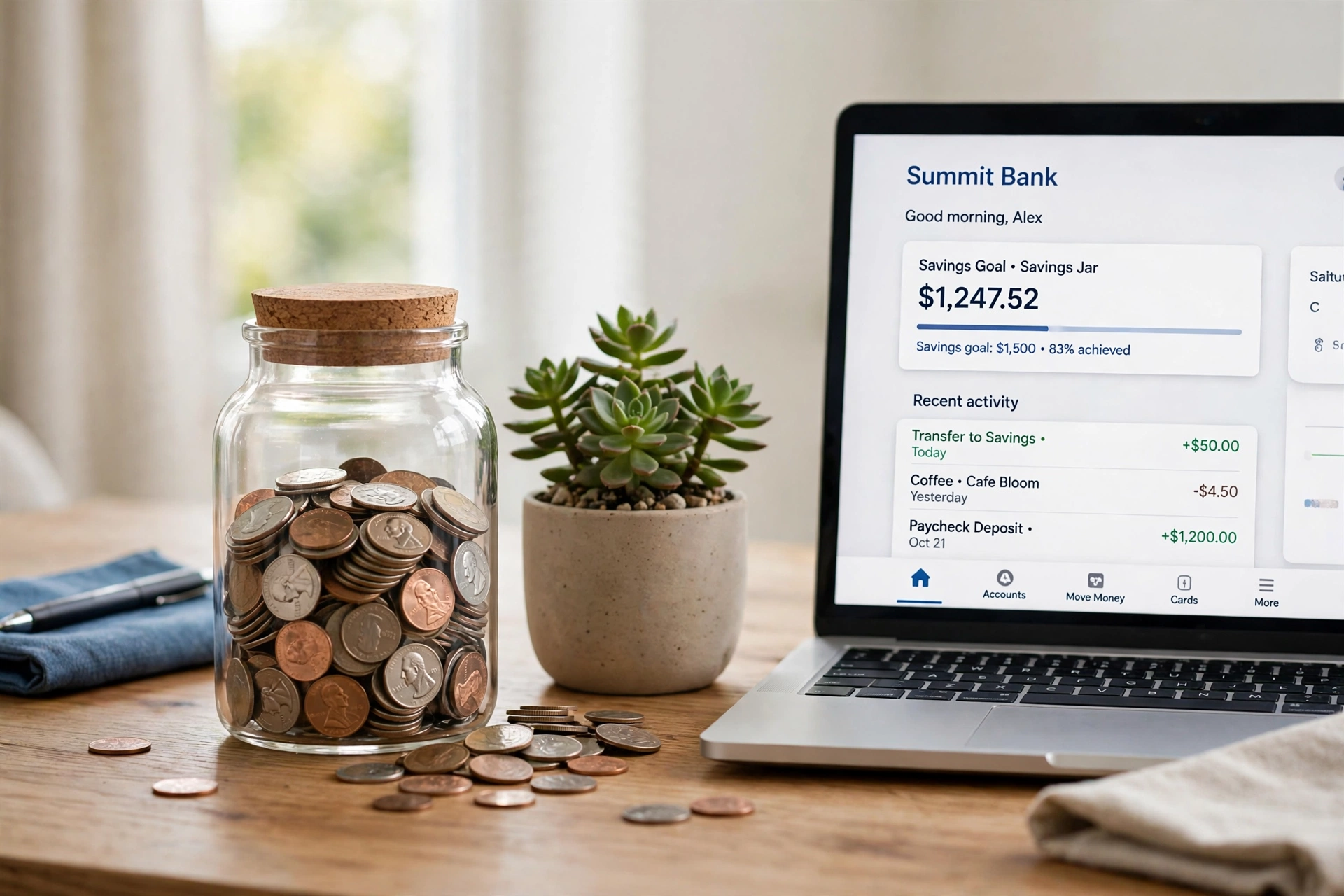
If your savings are sitting in a regular bank account earning almost nothing, you are leaving money on the table. The best high yield savings accounts in 2026 pay interest rates many times higher than the national average, with the same safety and the same access to your money. This guide explains how they work, what rates to expect, which accounts are worth opening, and the traps to watch out for before you move your money.
- A high-yield savings account pays far more interest than a regular savings account, often 10 to 20 times more.
- Rates are variable and follow the central bank rate, so they can rise and fall over time.
- Online banks usually offer the best rates because they have lower running costs than high-street banks.
- Check that the account is FDIC-insured (US) or FSCS-protected (UK) before you deposit anything.
- Watch for withdrawal limits, minimum balances, and teaser rates that drop after a few months.
What Is a High Yield Savings Account?
A high-yield savings account is a savings account that pays a much higher interest rate than a standard savings account. In the US, the national average savings rate has hovered around 0.4 to 0.6 percent for years, while the best high-yield accounts pay 4 to 5 percent or more. On $10,000 of savings, the difference is roughly $400 to $500 a year in interest versus about $50 — for the same money, in the same kind of account, with the same protection.
The account works like any other savings account. You deposit money, it earns interest daily or monthly, and you can withdraw it when you need it. There is no lock-in period, unlike a fixed-term deposit, and your money is protected up to the insurance limit — $250,000 per depositor per bank under FDIC insurance in the US, or £85,000 under the FSCS in the UK. The only real difference is the rate, and the rate is the whole point.
How to Choose the Best High Yield Savings Account
Compare the annual percentage yield (APY)
The APY is the number that matters, and it is the first thing to compare. But do not just take the headline rate at face value. Some accounts advertise a high rate that only applies to the first few months, or only to balances below a certain amount, or only if you meet conditions such as a monthly direct deposit. Read the terms and check what the rate will be after any introductory period ends. A steady 4.5 percent beats a 5.5 percent teaser that drops to 3 percent after three months.
Check the fees and minimums
The best high-yield accounts have no monthly fees and no minimum balance, or a very low one. Avoid accounts that charge a monthly fee, because the fee eats into the extra interest you are earning. Also check for minimum deposit requirements to open the account — some ask for $1,000 or more, while others let you start with $1. If you are saving a small amount, a no-minimum account is the better choice.
Look at access and transfers
Check how fast you can get your money out. Transfers to an external bank account usually take one to three business days, though some banks offer same-day or instant transfers. If you might need the money in an emergency, a fast transfer matters more than a slightly higher rate. Also check whether the account has a mobile app you actually like using, because you will check your balance more often than you think.
Confirm the insurance
Before you deposit a single dollar, confirm that the bank is FDIC-insured in the US, or FSCS-protected in the UK. This is non-negotiable. Every legitimate high-yield account from a real bank carries this protection, and any account that does not is not worth the risk, whatever rate it offers.
The Best High Yield Savings Accounts for 2026
Best overall: a top online bank
The best all-round accounts come from established online banks and the online arms of well-known names. They typically offer rates around 4 to 5 percent APY, no monthly fees, no minimum balance, and a solid mobile app. Because these banks have no branches, they pass the savings on to you in the form of a higher rate. If you want one account that does the job well with no fuss, this is the category to start in.
Best for a big balance
If you have a large amount to save, some accounts offer tiered rates that pay more on higher balances, or a higher rate if you keep a minimum balance. The difference between tiers is usually small — a quarter of a percent or so — so it is only worth chasing if your balance is large enough for the extra interest to matter. On $50,000, an extra 0.25 percent is $125 a year, which is worth having, but not worth switching banks for on its own.
Best for beginners
If you are opening your first savings account, choose one with no minimum deposit, a simple app, and automatic saving features such as round-ups or scheduled transfers. The rate matters, but the habit matters more: an account that makes it easy to save a little every payday will build more wealth than a slightly higher rate on an account you never use.
Common Mistakes to Avoid
The most common mistake is chasing the highest rate and switching accounts every few months. Rates change constantly, and the account with the best rate today may not have it in six months. Pick a consistently competitive account from a bank you trust, and review it once or twice a year instead of chasing every new offer. Another mistake is keeping all your savings in a low-rate account at your main bank out of habit — moving money to a high-yield account takes about fifteen minutes and costs nothing.
Also be careful with accounts that require a direct deposit or a minimum number of transactions to earn the headline rate. If you do not meet the conditions, you earn the base rate instead, which is often barely better than a regular savings account. Read the conditions before you open the account, and be honest about whether you will actually meet them.
For the wider money picture, our guide to high-yield savings accounts covers the basics in more depth, our FSA vs HSA comparison explains another way to save on tax, our guide to making money online covers building income, and our budget Christmas gifts under $50 will help you keep the festive spending under control.
Frequently Asked Questions
What is a good interest rate for a savings account in 2026?
The best high-yield savings accounts pay around 4 to 5 percent APY in 2026, compared with a national average of roughly 0.5 percent for a regular savings account. Rates follow the central bank rate and can change.
Are high yield savings accounts safe?
Yes, if the bank is FDIC-insured in the US or FSCS-protected in the UK. Your deposits are protected up to $250,000 in the US or £85,000 in the UK per bank, per depositor.
Can I lose money in a high yield savings account?
No. Your deposits are insured, and the balance cannot fall unless you withdraw money or pay a fee. The rate can fall, but your principal is protected.
How fast can I withdraw money from a high yield savings account?
Transfers to an external bank usually take one to three business days. Some banks offer same-day or instant transfers. There is no lock-in period, so you can withdraw at any time.
Should I keep my emergency fund in a high yield savings account?
Yes. It is the best place for an emergency fund: safe, insured, earning interest, and accessible within a day or two when you need it.
The best high yield savings accounts are one of the simplest wins in personal finance. Same money, same safety, ten times the interest — and it takes fifteen minutes to open one. If your savings are still earning almost nothing, today is the day to move them.
3 thoughts on “Best High Yield Savings Accounts for 2026”