
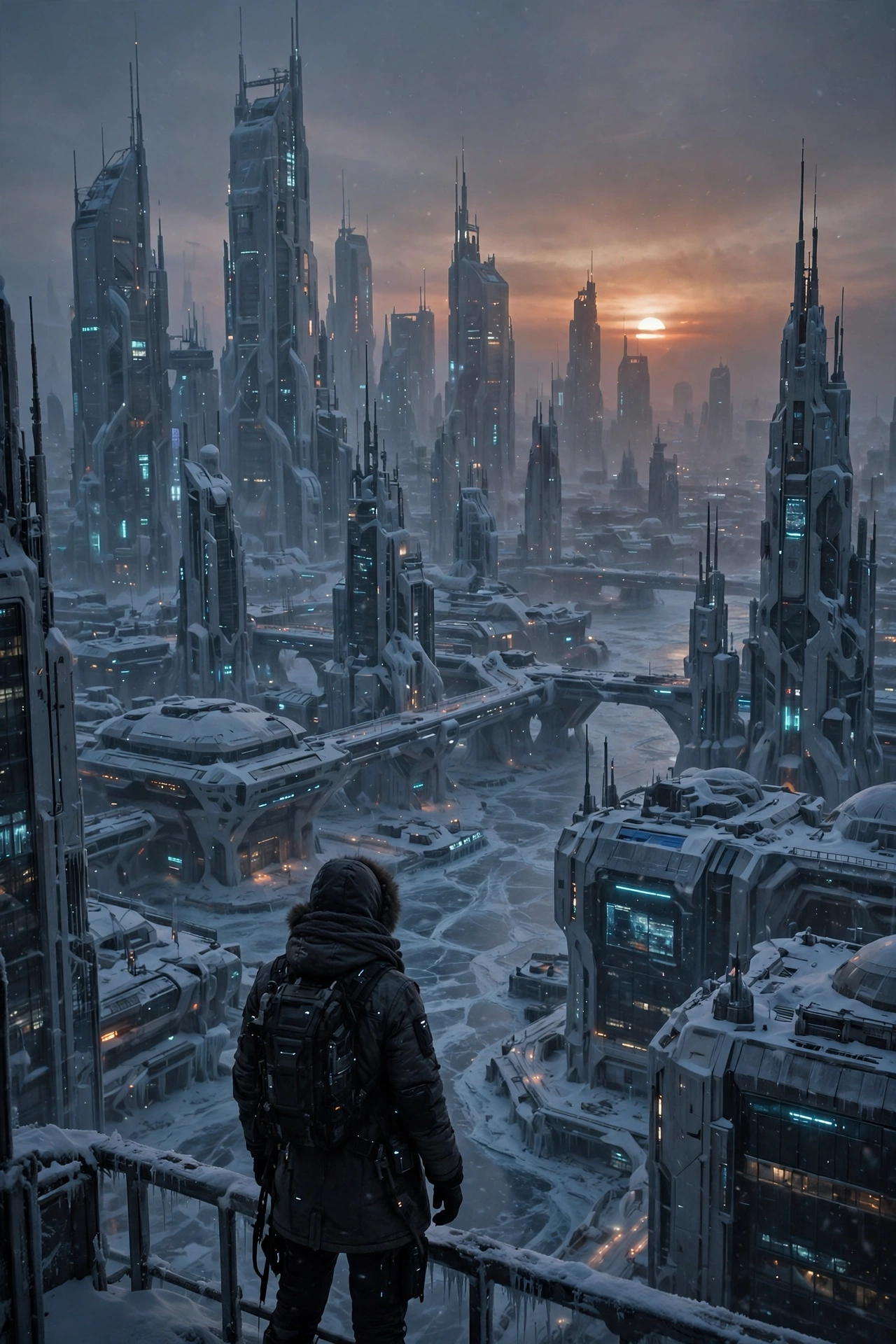
The last sunrise is a 2019 Chinese science-fiction film that proves you do not need a blockbuster budget to tell a story about the end of the world. Directed by Wen Ren, it imagines a near future in which China runs almost entirely on solar power — and then the sun suddenly disappears. What follows is not an action spectacle but a slow, human journey: a reclusive astronomer and his cheerful neighbour fleeing a freezing, darkening city in search of the last place where light might still exist. It won the grand prize at Fantasporto 2019 and has quietly become a favourite among thoughtful sci-fi fans.
- The Last Sunrise (Chinese: 最后的日出) is a 2019 Chinese sci-fi film directed by Wen Ren, starring Zhang Jue and Zhang Yue.
- It was made for under $250,000 and shot in just 14 days — a tiny budget next to the sci-fi blockbusters of the same year.
- The story: the sun vanishes in a solar-powered future, and astronomer Sun Yang and his neighbour Chen Mu journey to District Four, the last safe place.
- It won Best Film at Fantasporto 2019 and screened at festivals including CAAMFest and Trieste Science+Fiction.
- It is a slow, melancholic drama about survival and connection — closer in spirit to an indie film than to a Hollywood disaster movie.
What Is The Last Sunrise About?
The film opens in a future where solar energy powers almost everything. A national hero named Wang Yun built the company Helios, which converted most of the country to clean solar power. Then the sun begins to flicker — and, eight minutes and twenty seconds later, the light that left the sun reaches Earth and everyone realises it has gone out. Temperatures plunge, the air thins, and society collapses within days as the rich flee in rockets and everyone else is left in the dark.
At the centre of it all are two very different people. Sun Yang, played by Zhang Jue, is a lonely freelance astronomer who noticed a distant star vanishing before anyone else believed him. Chen Mu, played by Zhang Yue, is his bubbly young neighbour, who hides her own troubles behind a bright smile. Together they leave the dying city and head for District Four, the last place rumoured to still have light. The film is really about their relationship — two strangers learning to rely on each other as the world ends around them. If you like character-driven genre stories, our guide to Monarch Legacy of Monsters covers another sci-fi story built on human drama first.
A Tiny Budget, A Big Achievement
The numbers behind The Last Sunrise are almost as interesting as the film itself. It was made for under $250,000 — roughly 150 times less than The Wandering Earth, the Chinese sci-fi blockbuster released the same year — and shot in just 14 days. Director Wen Ren, a Chinese-American filmmaker making his feature debut, leaned into the limitations instead of fighting them: long, quiet shots of frozen streets, ice forming on a windshield, a sky full of stars that suddenly look wrong. Critics praised the cinematography and the atmosphere, even when they found the pacing uneven.
The film premiered in China on 22 February 2019, then played the festival circuit, winning the grand prize at Fantasporto in Portugal and screening at CAAMFest in San Francisco and the Trieste Science+Fiction Festival in Italy. For a debut feature made on a shoestring, that is a remarkable run — and it helped mark 2019 as the year Chinese science fiction truly arrived. Fans of big-screen spectacle might also enjoy our Scary Movie 6 guide for something at the opposite end of the budget scale.
The Science Behind the Story
The film plays loosely with physics, and the director has been open about that. The eight-minute-twenty-second delay — the time sunlight takes to reach Earth — is real, and it is the film’s cleverest idea: the sun could go out and nobody would know for over eight minutes. After that, the science gives way to emotion: the film is more interested in what people do when the systems they depend on fail than in the exact mechanics of a dying star.
That is also the film’s quiet political point. A civilisation that put all its energy into one source discovers how fragile that choice was, and the people who suffer first are the ordinary ones without rockets to escape on. It is a climate story dressed as a space story, and it lands harder now than it did in 2019.
Where to Watch The Last Sunrise
Because it is an independent festival film, The Last Sunrise is not always easy to find on the big streaming services, and availability changes by country. Check specialist platforms and rental stores first — it has appeared on various arthouse and Asian-cinema streaming services over the years — and look for it under both its English title and its Chinese title, 最后的日出. Film festival streaming programmes and library services are also worth checking.
If you cannot find it, the film is still worth seeking out: at 104 minutes it is a short, self-contained watch, and it rewards patience. For more viewing ideas after the credits roll, see our guide to Dutton Ranch Season 2 for a very different kind of epic.
Frequently Asked Questions
What is The Last Sunrise about?
It is a 2019 Chinese sci-fi film about a future powered by solar energy. When the sun suddenly disappears, astronomer Sun Yang and his neighbour Chen Mu flee the freezing city in search of District Four, the last safe place.
Who directed The Last Sunrise?
Wen Ren, a Chinese-American filmmaker. It was his feature debut, co-written with Elly Li, Yankang Mei and Min Yu, and it won Best Film at Fantasporto 2019.
How much did The Last Sunrise cost to make?
Under $250,000, shot in 14 days — a fraction of the budget of The Wandering Earth, the Chinese sci-fi blockbuster released the same year.
Is The Last Sunrise based on a true story?
No, it is fiction. Its central idea — that we would not know the sun had gone out for eight minutes and twenty seconds — is based on the real time light takes to travel from the sun to Earth.
Where can I watch The Last Sunrise?
Availability varies by country. Check arthouse and Asian-cinema streaming services, rental platforms, and library streaming services, searching for both “The Last Sunrise” and its Chinese title 最后的日出.