
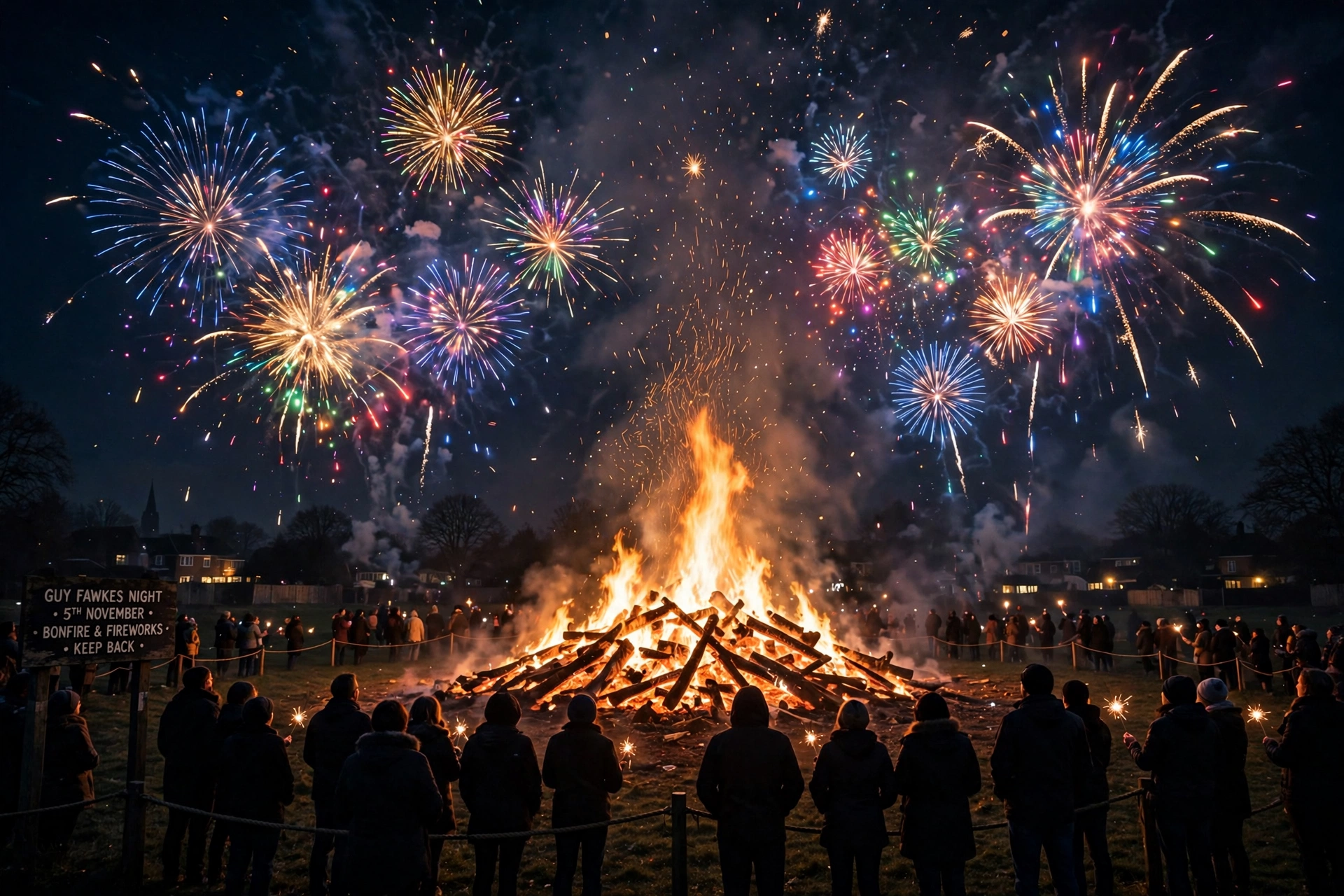
Bonfire Night 2026 UK Events Guide: Where to Go, When, and What to Book
Bonfire Night 2026 falls on Thursday 5 November, marking 421 years since the failed Gunpowder Plot of 1605, when Guy Fawkes and his fellow conspirators tried to blow up the House of Lords. Because the 5th is a Thursday this year, most of the UK’s biggest displays move to the weekend after — Friday 6 to Sunday 8 November — while a few famous traditions, including Lewes and Ottery St Mary, stay on the night itself. This guide brings together the key events, what is ticketed, and how to plan.
Always check the organiser’s listing before travelling: dates, times and ticket availability can change, and several free council displays are not running in 2026. Book ticketed events in advance — the big London shows sell out.
- Bonfire Night itself: Thursday 5 November 2026. It is not a bank holiday.
- Most large displays: Friday 6 – Sunday 8 November 2026.
- London’s biggest shows: Alexandra Palace (7–8 Nov) and Battersea Park (7–8 Nov), both ticketed.
- Traditions on the 5th itself: Lewes Bonfire (Sussex) and Ottery St Mary Tar Barrels (Devon).
- Classic Bonfire Night food: toffee apples, jacket potatoes, parkin, bonfire toffee, hot soup and mulled drinks.
London: Alexandra Palace and Battersea Park
Alexandra Palace — Ally Pally — hosts one of London’s biggest Bonfire Night events: a two-day Fireworks Festival on 7–8 November 2026, with a drone display, a funfair, an ice rink and more than 50 street food traders, plus panoramic views across London from the hilltop. It is ticketed and popular, so book ahead and arrive early for a good viewpoint.
Battersea Park, on the Thames in South London, hosts the biggest fireworks display in that part of the city, on Saturday 7 November at around 8:30pm and Sunday 8 November at around 7pm in 2026, with food stalls and a funfair alongside. Access is by ticket only. Elsewhere in London, Wimbledon Park runs a child-friendly display on the 5th itself, with an early show at 6:45pm — a good option for families who do not want a late night.
Lewes, Ottery St Mary and the Great Traditions
Lewes, in East Sussex, is the most famous Bonfire Night of all: more than 30 torchlight processions run through the town on 5 November from about 5pm to 1am, organised by the town’s bonfire societies, with fireworks and the burning of effigies. It is crowded, it is loud, and it is unforgettable — but it is not a casual family outing with small children, and visitors should plan transport carefully, as roads close and trains are busy.
Ottery St Mary, in Devon, is the most unusual: locals carry burning tar barrels on their shoulders through the packed streets, with junior barrels in the afternoon, the main barrels in the evening and a final barrel around midnight, all on 5 November. It is a tradition that has run for centuries and draws large crowds to a small town — arrive early, expect crowds, and follow local safety guidance closely.
Around the UK: Wales, the North and Scotland
Across Wales, displays run over several days around 5 November, including Bangor, Holyhead (bonfire at 6pm on the 5th, fireworks after dark, suggested donation £5 per adult), Llanidloes, Aberystwyth, Cardiff’s Sophia Gardens and Swansea — many with food stalls, live music and fairgrounds alongside. In the north of England and Scotland, community bonfires and firework displays cluster on the 6–8 November weekend; the Inverness fireworks over the River Ness are among Scotland’s best-known.
Community displays are often free or donation-based, but they can be cancelled at short notice in bad weather. Check the organiser’s page on the day, wrap up warm, and take cash — many smaller events are cash-only for food and donations.
Food, Safety and Planning
Bonfire Night food is part of the tradition: toffee apples, jacket potatoes cooked on the fire, parkin (the sticky ginger-and-oatmeal cake from Yorkshire), bonfire toffee, hot soup, sausages and mulled wine or hot chocolate. Many events now add street food of every kind, from hog roasts to curry, so there is something for every taste. Our traditional Bonfire Night food recipes will help you recreate the classics at home, and our toffee apple recipes are a family favourite.
Safety matters: go to organised displays rather than lighting your own fireworks, keep children and pets at a safe distance, and dress for standing outside in November — warm layers, waterproofs and sturdy shoes. Our Bonfire Night safety tips for pets and kids and warm-layer outfit ideas cover both. If you are staying home instead, our Bonfire Night party ideas at home and kids’ activities will help you celebrate safely indoors.
Getting Home Safely
Plan the journey home before you go out. Bonfire Night crowds, road closures and busy trains can turn a short trip into a long one, especially after the big displays end and everyone leaves at once. Check last train times, book a taxi in advance if you need one, and agree a meeting point with your group in case phones die or signals fail. If you are driving, remember that many roads near display venues close for the event — check diversion routes beforehand and allow extra time. A warm drink and a clear plan make the end of the night as enjoyable as the fireworks themselves.
Frequently Asked Questions
When is Bonfire Night 2026?
Thursday 5 November 2026. Most large displays run on the weekend of 6–8 November, while Lewes and Ottery St Mary keep to the 5th itself.
Do I need tickets for Bonfire Night displays?
For the big London shows (Alexandra Palace, Battersea Park) yes — they are ticketed and sell out. Many community displays are free or donation-based, but always check the organiser’s listing first.
What should I wear to a Bonfire Night display?
Warm layers, a waterproof outer layer, sturdy shoes and a hat and gloves. You will be standing outside for an hour or more, often on grass or mud.
Read next: Bonfire Night garden decor ideas for celebrating at home in style.