
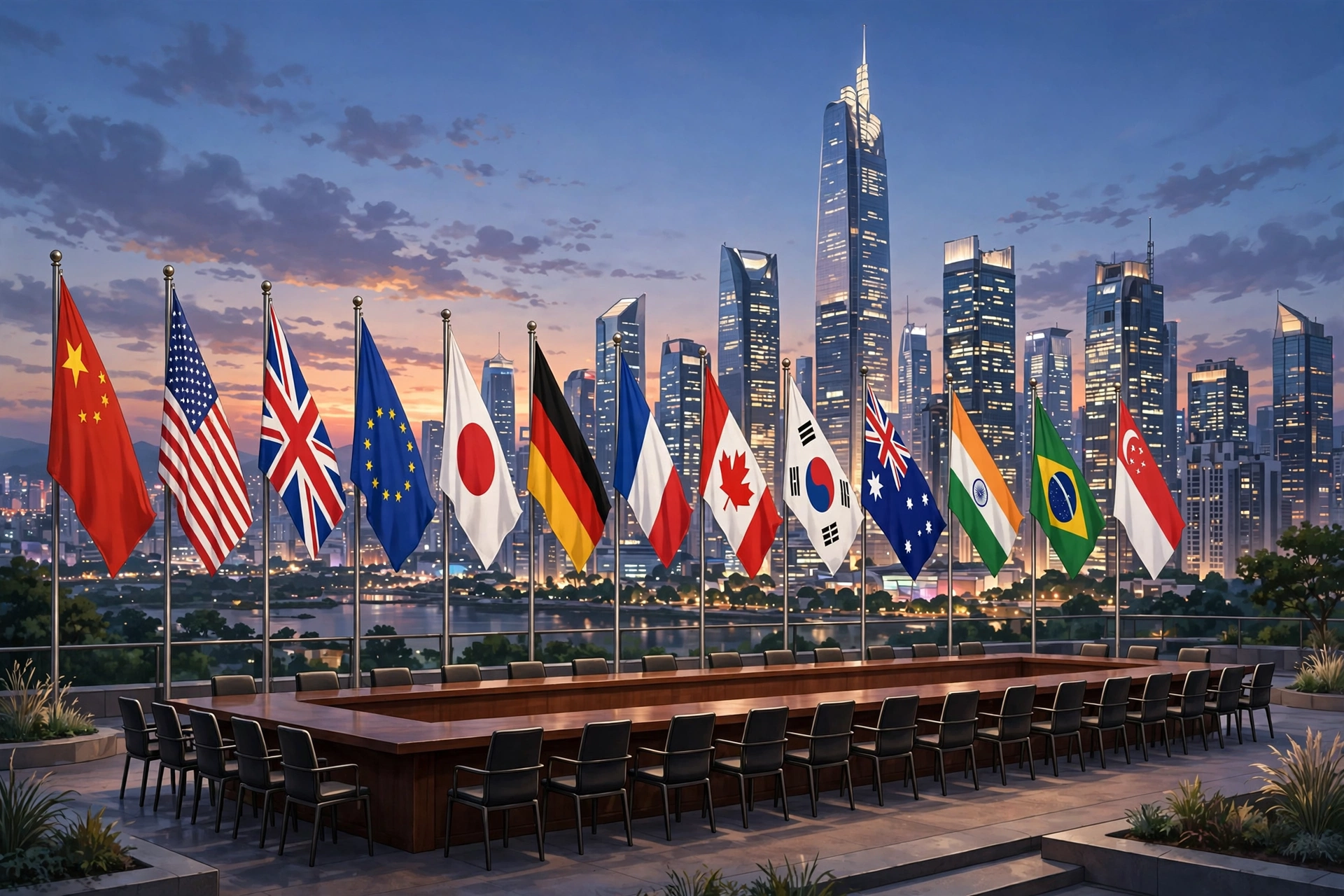
Xi Jinping, Trump and the APEC Shenzhen Trade Truce 2026: What Is at Stake
When leaders of the 21 Asia-Pacific Economic Cooperation (APEC) economies meet in Shenzhen on 18–19 November 2026, most of the world’s attention will be on one meeting on the sidelines: Chinese President Xi Jinping and United States President Donald Trump, sitting down for the third time in six months. The question hanging over that meeting is whether the US–China trade truce — which currently runs only until 10 January 2027 — gets extended again, or whether the two sides can agree on something more lasting.
This explainer sets out, factually and neutrally, what the truce is, what has happened so far, what Shenzhen is expected to decide, and what happens if the deadline passes without a deal. It is based on reporting from Nikkei Asia, the Council on Foreign Relations, CBS, the South China Morning Post and China’s Foreign Ministry readouts, as summarised in early November 2026.
- APEC Economic Leaders’ Meeting: 18–19 November 2026, Shenzhen, China; APEC CEO Summit 17–18 November.
- The US–China trade truce currently runs until 10 January 2027, after an extension announced during Xi’s September 2026 state visit to the United States.
- China’s APEC theme: “Building an Asia-Pacific Community to Prosper Together”, with three priorities announced in December 2025.
- A possible Trump–Xi–Putin sideline contact has been reported, but it is NOT confirmed and should not be treated as settled.
- Shenzhen is preparing with traffic restrictions and school closures (elementary and middle schools closed 17–20 November, per local media reports).
How the Truce Got Here
The timeline, as reported, runs in three steps. In September 2026, Xi made a state visit to Washington (23–26 September), during which US Treasury Secretary Scott Bessent announced that the trade truce would be extended to 10 January 2027. The two sides also agreed to set up a US–China AI dialogue, a crisis-communication memorandum and Chinese purchases of US coal, according to reporting of the visit. Both leaders said they would attend each other’s summits — APEC in Shenzhen and the G20 in Miami in December 2026.
Earlier, Xi had announced at the APEC chairmanship handover in Gyeongju, South Korea, on 1 November 2025 that Shenzhen would host the 2026 APEC Economic Leaders’ Meeting — China’s third time hosting, after Shanghai in 2001 and Beijing in 2014. Xi described Shenzhen, which grew from a fishing village into a major technology hub, as a showcase of China’s reform and opening-up. That framing is why the choice of Shenzhen is symbolic as well as practical.
What Shenzhen Must Decide
The central issue is the truce clock. If the truce expires on 10 January 2027 without an extension or a replacement agreement, tariffs and trade restrictions that were paused could return, raising costs for businesses and consumers on both sides and rippling through supply chains across Asia. If it is extended, the extension’s length and conditions will matter as much as the extension itself: a short rollover keeps uncertainty alive, while a longer deal with clear terms would give businesses something to plan around.
Beyond trade, the Shenzhen agenda includes the APEC theme of regional cooperation, supply-chain resilience and the digital economy. The reported US–China AI dialogue and crisis-communication arrangements are part of a wider effort to keep channels open even where the two countries disagree. For readers, the practical takeaway is that Shenzhen is a staging post, not a finale: APEC in November, the G20 in Miami in December, and the truce deadline in January form one connected calendar.
Shenzhen Prepares: Traffic, Schools and Security
Hosting 21 leaders in a city of about 18 million people takes visible preparation. Nikkei Asia reported on 3–4 November 2026 that Shenzhen is introducing traffic restrictions around the summit venue, with congestion expected in surrounding areas, and that elementary and middle schools across the city will be closed from 17–20 November for an autumn break, according to local media. Residents and visitors should expect road closures, security checks and changed public transport arrangements during summit week.
Those preparations are routine for a major summit, but they also underline the scale of the event: this is not a small diplomatic gathering but a full leaders’ meeting with a CEO summit, ministerial sessions and extensive media coverage. Travellers planning to be in Shenzhen in mid-November should check local transport notices and allow extra time.
What Happens Next
Three dates to watch. First, 17–19 November: the CEO Summit and the Leaders’ Meeting in Shenzhen, and any announced Trump–Xi meeting on the sidelines. Second, December 2026: the G20 summit in Miami, where the two leaders are expected to meet again. Third, 10 January 2027: the truce deadline. What happens at Shenzhen will shape expectations for both later dates, but it is unlikely to settle everything — summits of this kind usually produce statements and next steps, not final deals.
For the wider region, the stakes are shared. APEC’s 21 economies include most of the world’s largest trading nations, and a stable US–China trading relationship affects prices, supply chains and growth far beyond the two countries. That is why a meeting in Shenzhen matters to readers who will never visit Shenzhen — and why it is worth following beyond the headlines. Our Xi Jinping to host APEC 2026 in Shenzhen guide covers the summit’s agenda and background in more detail.
Frequently Asked Questions
When is APEC 2026?
The APEC Economic Leaders’ Meeting is on 18–19 November 2026 in Shenzhen, China. The APEC CEO Summit runs on 17–18 November.
What is the US–China trade truce deadline?
10 January 2027, following the extension announced during Xi Jinping’s September 2026 state visit to the United States, as reported at the time.
Will Trump, Xi and Putin meet at APEC?
A three-way sideline meeting has been reported as a possibility, but it is not confirmed. Treat it as unconfirmed until an official announcement is made.
Read next: Could Xi Jinping come to Manila? and Xi Jinping on the Middle East for the wider diplomatic picture.