
Winter Lip Care Tips for Soft, Chapped-Free Lips
Chapped lips are winter’s most universal complaint — and one of the most misunderstood. Lips have no oil glands of their own, which means they cannot moisturise themselves the way the rest of your skin can. Add cold wind outside, dry heated air inside, and the habit of licking lips for instant relief (which actually makes things worse), and it is no wonder that by January, most of us are dealing with dryness, flaking and painful splits at the corners.
The good news is that chapped lips respond fast to the right routine. This is not about buying the most expensive balm — it is about understanding why lips dry out, which ingredients genuinely help, and which everyday habits quietly undo all your good work. Fix those three things, and soft lips all winter is a realistic goal, not a hope.
Key Takeaways
- Lips have no oil glands, so they need external moisture — especially in cold, dry winter air.
- Never lick chapped lips: saliva evaporates and leaves lips drier than before, creating a vicious cycle.
- Use a balm with occlusives (beeswax, petrolatum, shea butter) to seal moisture in, not just wax alone.
- Exfoliate gently once a week — over-scrubbing damages the thin lip skin and worsens flaking.
- Apply balm before bed, before going outside, and before lipstick — three non-negotiable moments.
- Drink water and run a humidifier indoors: lip care starts with the air around you, not just the balm.
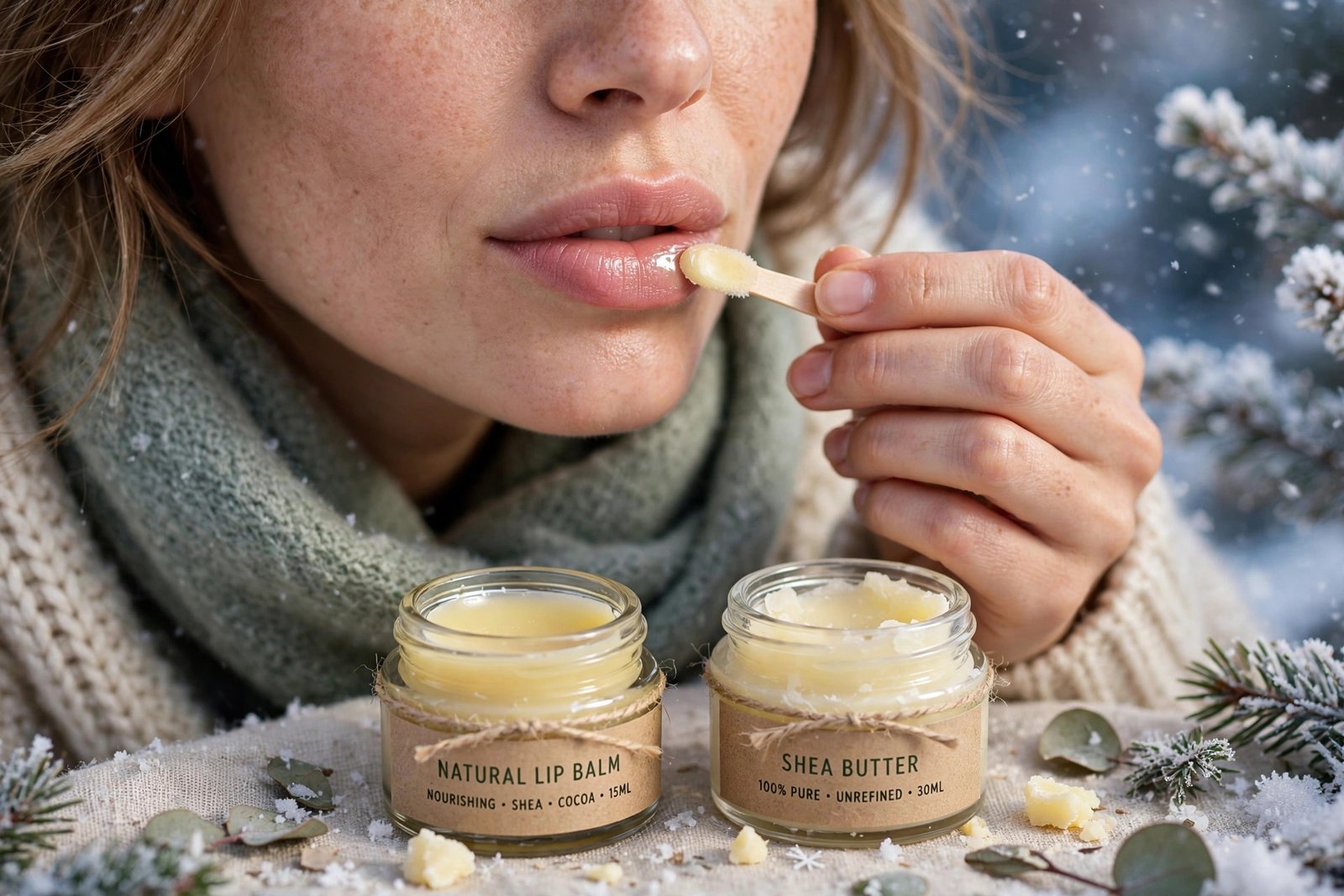
Why Winter Is So Hard on Lips
Lip skin is thinner than facial skin and, crucially, it has no sebaceous glands — the glands that produce the skin’s natural oils. Everywhere else, your skin makes at least some of its own moisture barrier; your lips make none. In summer, humidity helps compensate. In winter, cold air outside holds very little moisture, and heated indoor air is often even drier, so lips lose water from both sides with nothing to replace it.
Then come the habits that make it worse. Licking lips feels soothing for about thirty seconds, but saliva contains digestive enzymes that irritate lip skin, and as the saliva evaporates it takes even more moisture with it. Breathing through the mouth in cold air, common during winter colds, dries lips further. And many lip products themselves are part of the problem: balms heavy on camphor, menthol or eucalyptus feel tingly and “medicated” but actually irritate and dry the lips, creating a dependency cycle where you apply more and more of the very product causing the problem. If your balm stings, it is not working — it is harming.
The Ingredients That Actually Work
Lip care ingredients fall into three jobs, and a good balm does at least two of them. Humectants (glycerin, hyaluronic acid, honey) draw moisture into the lips. Emollients (shea butter, cocoa butter, jojoba oil, squalane) soften and smooth the surface. Occlusives (beeswax, petrolatum, lanolin) seal everything in and block moisture loss — and for winter, the occlusive layer is the most important of the three. A balm that is mostly wax with no sealing power will feel nice for ten minutes and then leave lips exactly where they started.
For daytime, choose a balm with SPF — winter sun, especially reflected off snow or bright pavements, still damages lip skin, which is also prone to sun-related ageing. For night, go heavier: a thick lip mask or a layer of pure lanolin or petrolatum-based ointment works as an overnight repair treatment. And if your lips are already cracked, skip anything with fragrance, flavouring or “plumping” ingredients until they heal; plain and boring is what damaged lips need. The same barrier logic applies to the rest of your winter skincare — our winter skincare routine for dry skin explains how to protect the whole face in the same conditions.
A Simple Winter Lip Routine
The routine that works is short enough to actually stick to. Morning: after brushing your teeth, apply a hydrating balm with SPF. Toothpaste residue, especially whitening formulas, can irritate lips, so balm after brushing, not before. Before going outside: add a second layer, or switch to a thicker balm — think of it as a coat for your lips. Before lipstick: apply balm first and let it sink in for a few minutes, then blot lightly and apply colour on top; this prevents lipstick from settling into dry lines and flaking by lunchtime.
Evening: once a week, exfoliate very gently — a soft toothbrush, a damp flannel, or a sugar-and-honey scrub used with light pressure for thirty seconds, then balm immediately. Over-exfoliating is worse than not exfoliating at all, so once a week is plenty, and skip it entirely if your lips are cracked or bleeding. Then apply a thick overnight layer before bed. This is the single highest-impact step: eight hours of sealed, undisturbed repair does more than a full day of reapplying thin balm. Keep a balm by the bed, one in your bag, and one at your desk — if it is not within reach, you will not use it. Dry hair faces the same winter battle; our winter hair care tips for dry hair cover the matching routine.
Mistakes That Keep Lips Chapped
Saliva evaporates and strips moisture, while its enzymes irritate lip skin. Break the cycle with balm, not your tongue.
Camphor, menthol and eucalyptus irritate and dry lips. If it stings, it is harming, not healing.
Scrubbing daily damages thin lip skin. Once a week, gently, is enough — never on cracked lips.
Winter sun still damages lips. A daytime balm with SPF protects against sun and wind together.
Matte formulas cling to flakes. Prep with balm first, or switch to a creamy formula until lips heal.
Heated, dry rooms are half the problem. A humidifier or a bowl of water near radiators helps lips and skin.
When Chapped Lips Need More Than Balm
Most winter chapping clears within a week or two of a proper routine. But some lip problems need a different response. Cracks at the corners of the mouth that will not heal (angular cheilitis) can be caused by a fungal or bacterial infection, drooling during sleep, or a vitamin B deficiency, and they need a pharmacist’s or doctor’s advice, not more balm. Lips that are persistently swollen, blistered or peeling in patches may signal an allergic reaction — often to a new lip product, toothpaste or food — and the fix is identifying and removing the trigger.
Also watch for the “lip-licker’s dermatitis” pattern: a red, irritated ring around the mouth, especially in children, caused by chronic licking. The treatment is barrier protection (a thick ointment around the mouth, not just on the lips) and breaking the habit. And if you take medications that dry the skin, such as retinoids or certain acne treatments, your lips will need extra care all winter — tell your prescriber if lip dryness becomes severe, as they can adjust the routine. For overall winter comfort, our benefits of a hot bath before bed offer a relaxing way to end a cold day — just remember to apply lip balm after, since hot water can dry lips too.
Frequently Asked Questions
Why do my lips get chapped every winter?
Lips have no oil glands, so they cannot moisturise themselves. Cold outdoor air and dry heated indoor air strip moisture from both sides, and habits like licking make it worse.
Does licking your lips actually make chapping worse?
Yes. Saliva evaporates quickly, taking moisture with it, and its enzymes irritate lip skin. It feels soothing for seconds and leaves lips drier within minutes.
What is the best lip balm ingredient for winter?
Look for occlusives that seal moisture in: beeswax, petrolatum, lanolin or shea butter. A balm that only contains wax without sealing ingredients will not last.
How often should I exfoliate my lips?
Once a week, gently, with a soft toothbrush or sugar scrub — and never when lips are cracked or bleeding. Over-exfoliating damages the thin skin and worsens flaking.
When should I see a doctor about chapped lips?
If cracks at the corners will not heal after two weeks, if lips are swollen or blistered, or if chapping persists despite a proper routine — these can signal infection, allergy or deficiency.
Soft Lips by Next Week
Pick up a plain, sealing balm today — no tingle, no fragrance, just beeswax, shea or petrolatum — and use it three times a day: morning, before going out, and thickly before bed. Add a gentle weekly exfoliation and a humidifier if your home air is dry. Most people notice a real difference within a week, and by the time the coldest weeks arrive, lip care will be a habit you no longer think about. Winter is hard enough on your skin; your lips do not have to suffer for it.