

Rustic Home Decor Ideas for a Warm, Natural Home
Rustic home decor ideas bring warmth, texture, and a relaxed sense of character into your home. By combining natural wood, stone, linen, earthy colors, vintage accents, and thoughtfully reused pieces, you can create rooms that feel welcoming rather than overly polished. You do not need a farmhouse or a large budget: a few natural materials, soft lighting, and carefully chosen accessories can give an apartment, bedroom, living room, or entryway a rustic look.
This guide explains practical ways to decorate in rustic style, choose colors and materials, work with furniture you already own, and avoid making a room feel dark or cluttered.

What Is Rustic Home Decor?
Rustic home decor is an interior design style inspired by natural materials, traditional craftsmanship, countryside homes, and the beauty of imperfect surfaces. Common features include visible wood grain, stone, woven fibers, handmade ceramics, aged metal, and fabrics with a relaxed texture.
Unlike a highly formal interior, rustic decorating does not depend on everything matching perfectly. A reclaimed-looking wooden table can sit beside a modern sofa, while a vintage basket can add warmth to a clean, contemporary room. The goal is to create a balanced space that feels grounded, practical, and personal.
Rustic style also has several variations. Traditional rustic decor often uses darker wood, rugged finishes, and substantial furniture. Modern rustic decor combines those natural details with cleaner shapes, brighter walls, and fewer accessories. Farmhouse interiors may share rustic elements but often include more traditional country-inspired details.
1. Use Natural Wood to Add Character
Wood is one of the most recognizable elements of rustic interiors. Its grain, knots, and natural color variation add depth without requiring complicated decoration.
Try a wooden coffee table, floating shelves, a solid dining table, a simple bench, or a natural wood picture frame. If replacing furniture is not practical, introduce smaller wooden accents such as trays, bowls, candle holders, or storage boxes.
How to choose the right wood tones
- Light oak and pine: Work well in small rooms and brighter modern rustic spaces.
- Medium brown wood: Creates a traditional, comfortable look that pairs easily with cream and beige.
- Dark wood: Adds depth, but use it selectively in rooms with limited natural light.
- Reclaimed or distressed finishes: Provide visual texture and a sense of age without requiring every piece to be antique.
Choose furniture that is stable and suited to everyday use. A weathered appearance is a design choice, not a reason to accept loose joints, sharp splinters, or damaged finishes.
2. Build a Rustic Color Palette with Earthy Neutrals
A rustic room often feels cohesive because its colors are drawn from nature. Cream, warm white, sand, taupe, clay, muted green, and brown create a calm background for wood and textured fabrics.
Start with one main wall or upholstery color, then choose two or three supporting shades. For example, warm white walls, a beige sofa, walnut-colored furniture, and olive-green cushions can feel rustic without making the space look old-fashioned.
Easy rustic color combinations
- Cream + oak + sage: Light, relaxed, and suitable for living rooms or bedrooms.
- Sand + walnut + muted blue: Warm with a subtle contrast.
- Warm white + charcoal + natural wood: A clean modern rustic palette.
- Terracotta + beige + olive: Earthy and welcoming for accessories or accent cushions.
Test paint colors in the actual room before committing. Natural and artificial light can change how a shade looks throughout the day. If a room is small or north-facing, lighter wall colors and reflective surfaces can help it feel more open.
3. Add Texture with Linen, Cotton, Wool, and Jute
Texture is what keeps a neutral rustic room from looking flat. Layered fabrics introduce softness against hard surfaces such as wood, stone, brick, or metal.
Consider linen curtains, cotton cushion covers, a wool-look throw, a jute-style rug, or a woven basket. These materials can make a room feel more comfortable without adding lots of decorative objects.
Simple ways to layer textures
- Place a soft throw over one end of a sofa rather than covering the whole seat.
- Combine smooth cotton cushions with one or two visibly woven fabrics.
- Use a natural-fiber rug to define a seating area, provided it suits the room and floor.
- Choose curtains that soften the window while still allowing enough daylight.
Check care labels before buying. Jute and other natural fibers can be sensitive to moisture, while loose weaves may not be ideal for high-traffic areas or homes with pets. A washable cotton blend can provide a similar relaxed appearance with easier maintenance.

4. Choose Rustic Furniture That Is Practical and Timeless
Rustic furniture often features simple shapes, visible wood, sturdy construction, and finishes that do not look overly glossy. However, you do not need to furnish an entire room with heavy wooden pieces.
Mix one or two characterful items with lighter furniture. A reclaimed-style coffee table can work with a plain upholstered sofa, while a wooden bench can balance a clean-lined dining table. This combination keeps the room from feeling like a themed set.
Furniture worth considering
- A wooden coffee table with a simple, durable finish.
- A dining table with visible grain and comfortable seating.
- Open shelves for books, pottery, and a few meaningful objects.
- A storage bench or sideboard that hides everyday clutter.
- A secondhand cabinet that can be cleaned and refreshed safely.
Before buying a large item, measure the room, doorways, and walking routes. Rustic furniture can be visually substantial, so leaving enough open floor space is as important as choosing the right finish.
5. Create a Cozy Rustic Living Room
A rustic living room should feel comfortable first and decorative second. Start with the seating arrangement, then build character through lighting, textiles, wood tones, and a few accessories.
Place a textured rug under the main seating area, add a wooden coffee table, and use cushions in coordinated earthy colors. A woven basket can store blankets, while a framed landscape print or botanical artwork can create a natural focal point.
Make the room feel balanced
- Keep the largest furniture pieces in relatively simple colors.
- Use a table lamp or floor lamp to create a softer evening atmosphere.
- Group small accessories in odd numbers when that arrangement looks natural, rather than filling every surface.
- Leave some empty space around decorative objects so each one can be noticed.
If you have a fireplace, a simple wood or stone surround can reinforce the rustic style. In homes without one, a large artwork, a substantial console, or a thoughtfully arranged bookshelf can serve as the visual anchor instead.
6. Bring Rustic Charm into the Bedroom
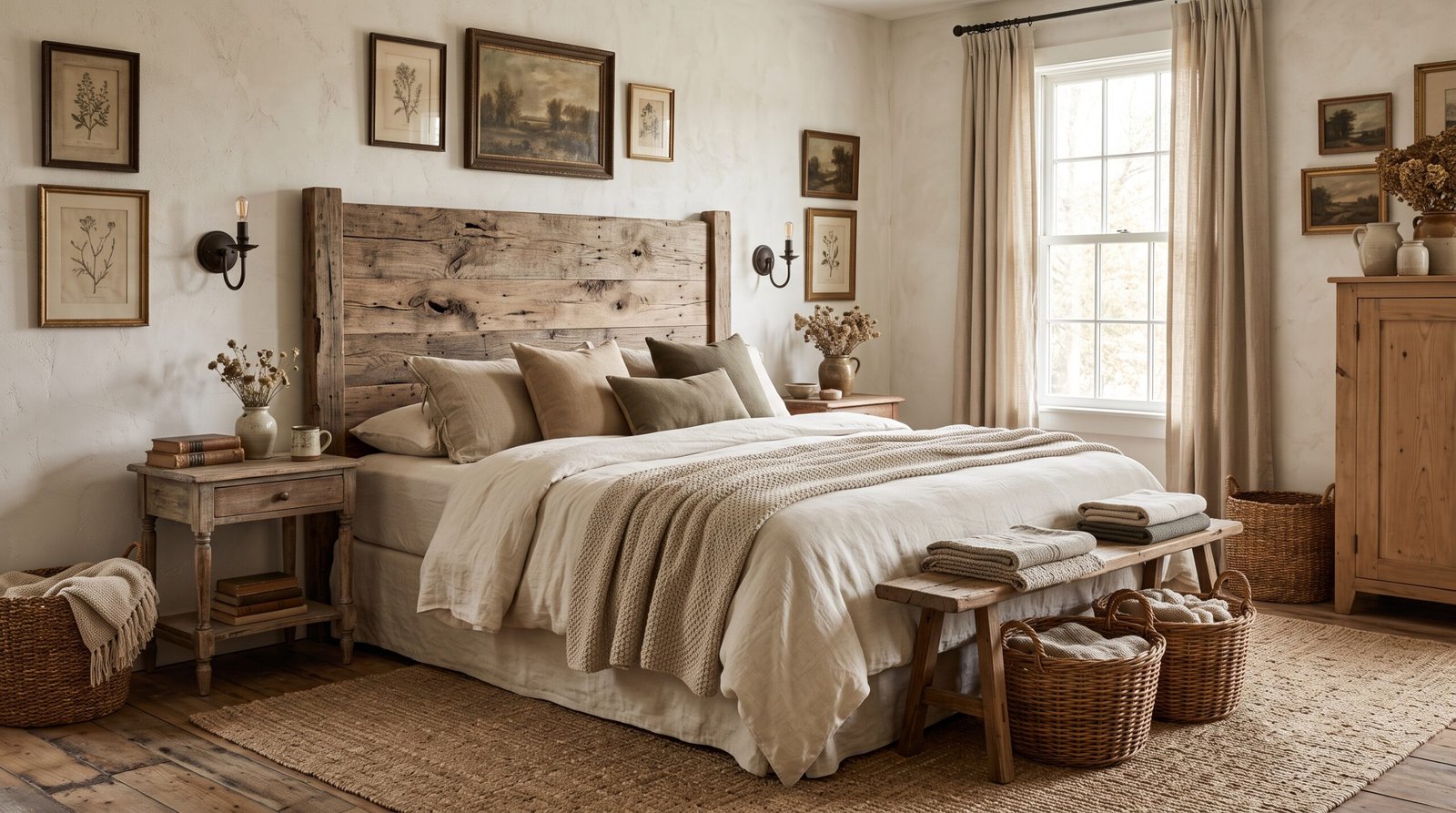
Rustic bedroom decor works best when the room feels restful and uncluttered. A wooden bed frame, soft bedding, warm lighting, and a limited color palette can create the desired atmosphere without major renovation.
Layer white or cream bedding with a textured throw and a few cushions in muted green, taupe, or clay. Bedside tables do not need to match exactly, but keeping their height and visual weight reasonably balanced can make the room feel intentional.
Small bedroom updates
- Replace overly bright bulbs with warm-toned lighting suitable for the fixture.
- Use baskets or closed storage to keep visible clutter under control.
- Hang simple landscape, botanical, or nature-inspired artwork.
- Choose curtains that soften the room without blocking more daylight than necessary.
Avoid filling every corner with rustic accessories. Clear bedside surfaces and easy access around the bed contribute more to a relaxing room than extra decorations.
7. Use Vintage Finds and Secondhand Accessories
Vintage and secondhand objects can add individuality to rustic interiors. A wooden stool, ceramic vase, framed print, old-style mirror, or well-made basket may bring more character than a matching set of new accessories.
Visit thrift shops, flea markets, estate sales, or local resale listings if those options are available in your area. Focus on condition, scale, usefulness, and whether the object fits your existing palette instead of buying something simply because it looks old.
Before bringing secondhand furniture indoors, inspect it for structural damage, pests, strong odors, and peeling finishes. Older painted items may require extra caution if their paint composition is unknown. Avoid sanding or disturbing a potentially hazardous coating until you understand the appropriate safety steps.
For a related craft project, see our guide to creative home decor ideas and consider how a small vintage-inspired accent could complement your room.
8. Decorate with Baskets, Pottery, and Handmade Details
Handmade-looking objects help a rustic room feel collected and personal. Ceramic bowls, stoneware vases, woven baskets, wooden trays, and simple handmade pieces add variety through their shape and surface rather than bright colors.
Use baskets to store throws, magazines, toys, or everyday items. Display pottery in small groups, mixing different heights while repeating one or two colors. A wooden tray can bring candles, a vase, and a small decorative object together on a coffee table.
Practicality matters: use stable containers for heavy items, keep breakable objects away from busy walkways, and choose materials that can be cleaned easily where dust accumulates.

9. Use Lighting to Make Rustic Rooms Feel Warm
Lighting changes how wood, fabrics, and wall colors appear. A room with only one bright overhead light can feel flat, while several well-placed light sources create a more comfortable atmosphere.
Combine general room lighting with task lighting for reading or working and softer accent lighting for evenings. Lamps with linen shades, understated metal finishes, or ceramic bases can complement rustic interiors without becoming the main attraction.
Lighting tips for rustic interiors
- Choose bulbs with a warm color appearance for relaxing areas, while keeping workspaces sufficiently bright.
- Use table lamps beside sofas or beds to create useful pools of light.
- Keep window areas open where possible to make the most of natural daylight.
- Choose fixtures that are suitable for the bulb type and location, and follow electrical safety instructions.
Rustic style does not require dim rooms. A bright, airy interior can still feel rustic when natural materials and warm colors provide the character.
10. Add Greenery and Natural-Inspired Artwork
Plants can soften the straight lines of furniture and introduce another natural element. Choose plants according to the actual light, humidity, temperature, and care time available in your home. If live plants are not practical, botanical prints or good-quality artificial greenery can provide a similar visual accent.
Pair greenery with terracotta, ceramic, or simple woven planters. Place larger plants where they will not block walkways, and protect wooden surfaces from water by using suitable saucers or mats.
Landscape artwork, botanical illustrations, and nature-inspired photography also work well. Use frames in wood, black, or muted metal to connect the artwork with other finishes in the room.
11. Try Rustic Kitchen and Dining Decor
A rustic kitchen can feel warm without sacrificing cleanliness or practical storage. Introduce wood through a cutting board displayed as decor, a wooden tray, open shelving, or dining furniture. Keep surfaces used for food preparation clean and suitable for that purpose.
Simple ceramic dishes, linen-style napkins, a neutral runner, and a modest centerpiece can give a dining table a relaxed look. For everyday use, choose washable fabrics and objects that can be moved easily when the table is needed.
Open shelving can look attractive, but it collects dust and cooking residue more quickly than closed cabinets. Display items you use regularly, keep the arrangement simple, and store less attractive essentials behind doors.
12. Make a Small Entryway Feel Rustic and Welcoming
An entryway is a useful place to introduce rustic style because even a few pieces can make a noticeable difference. A wooden bench, wall hooks, a small mirror, and a basket for shoes or accessories provide both character and function.
If space is limited, use a narrow shelf or wall-mounted hooks rather than bulky furniture. A small framed print or a natural-texture mat can complete the look without blocking the entrance.
Keep the floor easy to walk through, especially near doors and stairs. The best entryway decor supports everyday routines instead of creating another surface that collects clutter.
13. Rustic Decor Ideas on a Budget
You can create a rustic look gradually instead of buying everything at once. Begin with the room’s existing furniture, then identify the one or two changes that would make the greatest difference.
| Budget idea | What to do | Why it helps |
|---|---|---|
| Rearrange furniture | Improve spacing and create a clear focal point. | Changes the room without buying new items. |
| Refresh textiles | Add a neutral throw or textured cushion covers. | Introduces softness and earthy colors. |
| Reuse wooden items | Clean and restyle a sound tray, stool, or frame. | Adds natural texture with minimal new material. |
| Shop secondhand | Look for useful furniture and accessories in good condition. | Can offer character at a lower purchase price. |
| Change the lighting | Add a suitable lamp or adjust the lighting layers. | Helps the room feel warmer and more inviting. |
| Edit accessories | Group a few meaningful pieces and remove extras. | Makes the space feel calmer and more deliberate. |
Set a spending limit before shopping and measure the available space. Reusing what you own is often the most economical first step, while secondhand items should still be assessed for safety, condition, transport costs, and any repairs they need.
14. Modern Rustic vs. Traditional Rustic Decor
Both styles use natural materials, but they create different moods. Traditional rustic interiors often emphasize darker finishes, visible wear, heavier furniture, and a more layered appearance. Modern rustic rooms use simpler lines, lighter colors, and fewer decorative pieces.
| Feature | Traditional rustic | Modern rustic |
|---|---|---|
| Wood tones | Often medium to dark | Often light to medium |
| Furniture | Substantial and classic | Simple and streamlined |
| Color palette | Earthy browns and deep neutrals | Warm whites, beige, and muted accents |
| Accessories | More layered and collected | Selective and uncluttered |
| Overall mood | Cozy and timeworn | Airy, warm, and contemporary |
You can combine the two approaches. For example, use a traditional wooden dining table with modern chairs, or pair a streamlined sofa with a vintage-style cabinet. Repeating a few materials and colors helps the combination feel coherent.
15. Common Rustic Decorating Mistakes to Avoid
- Using too much dark wood: Balance darker finishes with light walls, pale textiles, or brighter lighting.
- Making every item distressed: Mix aged-looking details with clean, well-maintained surfaces for a more natural result.
- Overfilling shelves: Leave breathing room between objects and avoid displaying everything at once.
- Mixing too many colors: Repeat a small group of earthy shades to connect furniture and accessories.
- Choosing style over comfort: Furniture should fit the room and support how you actually live.
- Ignoring maintenance: Natural materials may need specific cleaning methods or protection from moisture and sunlight.
- Buying everything new: Consider restyling existing pieces or buying secondhand items when they meet your needs.
How to Create a Rustic Look Step by Step
- Choose your direction. Decide whether you prefer traditional rustic, modern rustic, or a blend of both.
- Set a color palette. Pick a main neutral and two or three supporting colors.
- Work with existing furniture. Identify which pieces can stay, be moved, or be refreshed.
- Add natural texture. Introduce wood, woven materials, linen, ceramics, or stone-inspired finishes.
- Layer the lighting. Combine suitable general lighting with lamps or accent lighting.
- Style with restraint. Use a few meaningful accessories, plants, or artworks rather than filling every surface.
- Review the result. Walk through the room and check comfort, lighting, clear pathways, and storage.
Key Takeaways
- Rustic home decor relies on natural materials, earthy colors, visible texture, and a comfortable atmosphere.
- Wood, linen, woven baskets, pottery, stone-inspired finishes, and vintage accents are useful starting points.
- Light neutral colors can keep rustic rooms feeling open, while darker wood adds depth when used selectively.
- Modern rustic design combines natural character with simpler shapes and less visual clutter.
- Secondhand furniture and existing household items can help reduce the cost of decorating.
- Layered lighting, practical storage, and comfortable furniture are as important as decorative details.
- Start with one room and make changes gradually instead of purchasing an entire matching set.
Frequently Asked Questions About Rustic Home Decor Ideas
What are the main elements of rustic home decor?
The main elements are natural wood, earthy colors, textured fabrics, woven accessories, simple furniture, and handmade or vintage-inspired details. The aim is to create a warm, relaxed, practical space.
How can I make my home look rustic on a budget?
Start by rearranging existing furniture, adding textured cushion covers, displaying wooden accessories, and shopping secondhand. Small changes can create a rustic feel without a full room makeover.
Which colors work best for rustic interiors?
Warm white, cream, beige, taupe, brown, muted green, and terracotta are popular choices. Combine a few shades rather than using every earthy color in the same room.
Can rustic decor work in a small apartment?
Yes. Use lighter wood, compact furniture, simple storage, and a limited color palette. A few textured accessories can provide rustic character without making the room feel crowded.
What is the difference between rustic and farmhouse decor?
Rustic decor focuses on natural materials, texture, and a rugged or handmade appearance. Farmhouse decor often shares those features but may include more traditional country details, painted furniture, and classic farmhouse accents.
How do I make rustic decor look modern?
Combine natural wood and textured fabrics with clean-lined furniture, warm neutral walls, simple lighting, and fewer accessories. This keeps the room grounded without making it feel old-fashioned.
Which materials are common in rustic interiors?
Wood, stone, linen, cotton, wool, jute, ceramics, and metal are common materials. Choose each according to its durability, maintenance needs, and suitability for the room.
How do I keep a rustic room from looking cluttered?
Limit decorative objects, group accessories thoughtfully, use baskets or closed storage, and leave open space around furniture. A restrained color palette also helps the room feel cohesive.
Can I mix rustic decor with modern furniture?
Yes. Pair a wooden table or vintage cabinet with a simple sofa, streamlined chairs, or contemporary lighting. Repeating wood tones and neutral colors helps connect the styles.
How can I make a rustic bedroom feel cozy?
Use soft bedding, layered textures, warm-toned lighting, natural wood, and a few calming accessories. Keep bedside surfaces and walking areas clear for a more restful room.
Conclusion: Make Rustic Style Your Own
The best rustic home decor ideas combine natural materials, comfortable furniture, earthy colors, and personal details in a way that suits your everyday life. You can create this look with a few wooden accents and soft textiles, or build it gradually through furniture, lighting, vintage finds, and thoughtful room styling.
Start with the room you use most, work with the pieces you already own, and add only what improves the space. A well-balanced rustic home does not need to look perfectly coordinated. It should feel welcoming, functional, and connected to the materials and objects you enjoy.
Looking for More Home Decor Inspiration?
Explore more creative decorating ideas, DIY projects, and practical inspiration to make your home feel personal and inviting.
Explore The Home Decor IdeaEditorial note: This article provides general decorating guidance. Check product care instructions and safety information before refinishing furniture, installing fixtures, or using unfamiliar materials.
7 thoughts on “Rustic Home Decor Ideas”