
Preventative Home Maintenance: The Small Habits That Save You Thousands
Every expensive home repair starts as a cheap, ignorable problem. The roof leak that costs thousands began as a cracked tile. The burst pipe began as a slow drip. The failed heating system began as a filter nobody changed. Preventative home maintenance is the discipline of finding those small problems while they are still small — and it is, by a wide margin, the cheapest form of home ownership there is. Industry estimates consistently show that every dollar spent on prevention saves several dollars on repair, and the real figure is often higher, because prevention also avoids the collateral damage: the ruined ceiling below the leak, the flooded floor below the pipe, the week without heating in January.
This guide explains preventative maintenance as a system rather than a chore list: the philosophy behind it, the highest-value habits for each part of the home, how to build a prevention routine that actually survives contact with real life, and how to decide what to do yourself versus what to hand to a professional. It is not about becoming a handyman. It is about spending a few hours a year to avoid spending thousands.
Key Takeaways
- Preventative maintenance means fixing small problems before they cause big damage — it is cheaper, calmer, and safer than reactive repair.
- Water is the enemy: most catastrophic home damage starts as an unnoticed leak, so leak detection is the highest-value habit.
- Filters, seals, and moving parts are the three things that degrade fastest and cost least to maintain.
- A simple annual inspection schedule, plus monthly five-minute checks, covers nearly all preventable failures.
- Professional servicing for heating, gas, and electrical systems is prevention, not luxury — it catches dangers DIY cannot.
- Document everything: a dated maintenance log protects your wallet, your insurance claims, and your resale value.
Why Prevention Beats Repair, Every Time
The maths of prevention is brutally simple. A tube of caulk costs a few dollars; the rot it prevents in a window frame costs hundreds. A furnace filter costs a few dollars; the compressor it protects costs over a thousand. A gutter cleaning costs an afternoon; the foundation damage from overflowing gutters costs tens of thousands. In almost every case, the preventive action is one-tenth to one-hundredth the price of the repair it avoids, and it takes a fraction of the time.
But the real cost of reactive repair is not just money. Emergency repairs happen on the tradesperson’s schedule, not yours, which means premium rates, waiting lists, and disruption. A planned gutter clean happens on a sunny Saturday; an emergency roof repair happens during a storm, at double the price, with water already inside. Prevention buys you something money cannot buy after the fact: control over timing. You choose when the work happens, who does it, and what it costs.
Prevention also protects things that cannot be repaired at any price: original woodwork damaged by a long leak, a family heirloom ruined by damp, or the structural integrity of a wall that has been wet for a year. And it protects safety. Gas leaks, electrical faults, and carbon monoxide risks are all things that preventive servicing catches before they become emergencies. A home that is maintained is not just cheaper to own; it is safer to live in.
Water: The First Priority
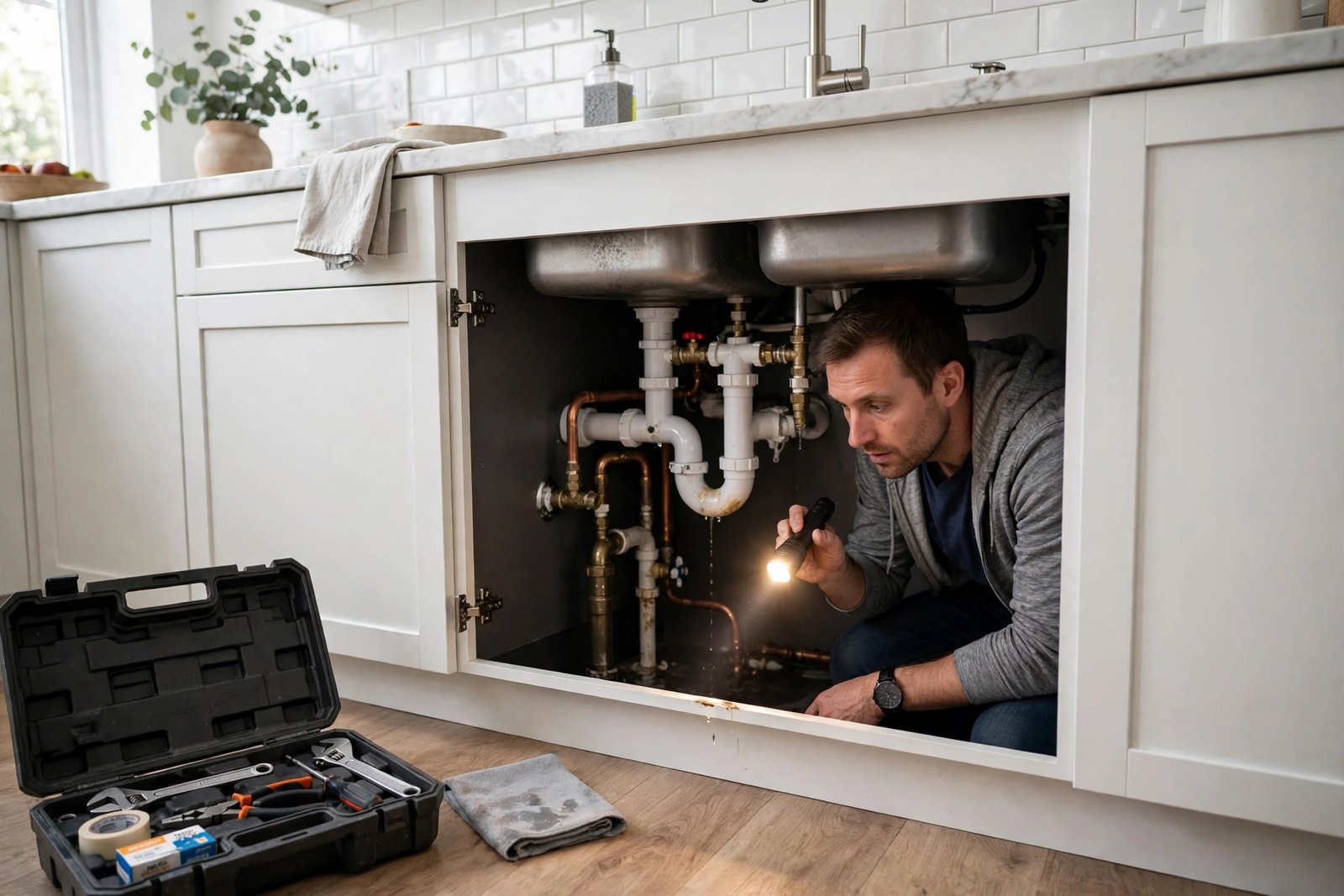
If you do only one category of preventative maintenance, make it water. Water damage is the most common and most expensive home insurance claim, and it is almost always preventable. The routine is straightforward: check under every sink monthly for drips, stains, and musty smells; inspect around toilets for wobbling or damp at the base; look at the water heater area for puddles or rust; and check washing machine hoses, which should be replaced every three to five years before they burst rather than after.
Outside, water prevention means gutters, downspouts, and grading. Gutters must be clear so water flows away from the house, downspouts must discharge at least several feet from the foundation, and the ground around the house should slope away from the walls, not toward them. Water pooling against the foundation seeps into basements, cracks walls through freeze-thaw cycles, and undermines the structure over years. A walk around the house after heavy rain tells you everything: if water stands near the walls, the grading or drainage needs attention now, not next year.
Know your shut-offs before you need them. Every adult in the household should know where the main water shut-off valve is and how to operate it, because the difference between a burst pipe that runs for five minutes and one that runs for five hours is the difference between a mop and a renovation. Label the valve, test it annually so it does not seize, and keep the number of a reliable plumber somewhere obvious. The same logic applies to the electrical panel and the gas shut-off: know them in calm weather, not in a crisis.
Filters, Seals, and Moving Parts
Almost everything in a home that wears out belongs to one of three categories, and each has a simple preventive habit. Filters clog: HVAC filters, range hood filters, dryer lint filters, vacuum filters, and water filters all lose effectiveness as they load up, forcing motors to work harder and air or water quality to drop. Replace or clean them on schedule — monthly for HVAC filters in heavy-use seasons, after every load for the dryer lint filter — and the appliances they serve last years longer. Our guide to how often to change your HVAC filter gives the full timing.
Seals fail: door seals, window seals, fridge seals, washing machine door gaskets, and shower seals all degrade with age, heat, and cleaning chemicals. A failed seal lets in water, air, or pests, and the damage is silent until it is serious. Inspect seals annually, clean them rather than bleaching them aggressively, and replace them at the first sign of cracking or gaps — seals are among the cheapest parts in the house and among the most consequential when they fail.
Moving parts need lubrication and adjustment: door hinges, garage door tracks and springs, window mechanisms, and tap cartridges all wear through friction. A squeak, a stick, or a drip is a moving part asking for attention, and a drop of lubricant or a minor adjustment now prevents a seized mechanism or a broken spring later. Garage door springs in particular deserve professional attention — they are under enormous tension and are not a DIY job — but the tracks, rollers, and auto-reverse test are easy monthly checks.
Systems That Deserve Professional Servicing
Some prevention is not DIY, and pretending otherwise is dangerous. Heating systems should be serviced annually by a qualified technician, who checks combustion, flues, controls, and safety devices that no homeowner inspection can assess. Gas appliances need the same annual attention, and the technician’s visit is also the moment to confirm carbon monoxide detectors are working and correctly placed. Electrical systems deserve a professional inspection every few years, or immediately if you notice flickering lights, warm outlets, buzzing, or breakers tripping repeatedly.
Roof inspections belong to professionals too, at least every few years and after major storms. A roofer spots failing flashing, cracked tiles, and soft decking from the roof itself, where a ground-level look misses them. Chimneys need sweeping and inspection before each heating season. And pest inspections — particularly for termites in susceptible regions — are cheap insurance against damage that is often excluded from standard home insurance. For the pest side of prevention, our guide to signs of termites in your home shows what to watch for between professional visits.
The cost of professional servicing often surprises people by being low: an annual boiler service, a roof inspection, and a pest check together typically cost less than a single emergency call-out. Treat them as subscriptions, not expenses, and schedule them at the same time each year so they never slip. The technicians themselves will often flag small issues — a weeping valve, a cracked tile, a worn belt — that cost almost nothing to fix on the spot and a great deal to fix later.
Building a Prevention Routine That Survives Real Life
Test detectors, check under sinks, glance at the water heater, and walk the exterior. Small, frequent checks catch fast problems.
Two or three weekends a year for the bigger jobs: gutters, filters, seals, and exterior inspection. Tie them to season changes.
Book heating service, roof inspection, and pest check at the same time each year. Put them in the calendar as recurring events.
When a check finds a problem, set a one-week deadline. “Later” is how small problems become big ones.
Date every job, service, and replacement. The log shows what is due, supports insurance claims, and impresses buyers.
A small monthly maintenance fund turns a surprise repair into a planned expense. Prevention is budgeting, not luck.
The routine fails when it depends on willpower alone, so attach it to existing habits. Test detectors on the first of the month, check under sinks when you change the bedding, inspect the exterior when you mow the lawn. The best maintenance system is the one that runs on autopilot, and the second-best is the one written on a list on the fridge. What does not work is a system that lives only in someone’s head, because heads forget, get busy, and move house.
It is also worth preventing the damage that cleaning itself can cause. Harsh chemicals on seals, over-wetting wooden floors, and aggressive scrubbing of grout all shorten the life of the things they are meant to preserve. Gentle, regular care beats aggressive, occasional care for almost every surface in the home — the same principle that makes cleaning hardwood floors without damaging them a matter of method, not effort.
Frequently Asked Questions
What is preventative home maintenance?
It is the practice of inspecting, servicing, and repairing small issues before they cause major damage — cleaning gutters before they overflow, replacing hoses before they burst, servicing heating before it fails. It costs a fraction of reactive repair and gives you control over timing.
How much money does preventative maintenance actually save?
Estimates vary, but prevention typically costs one-tenth to one-hundredth of the repair it avoids. Beyond the direct saving, it avoids emergency call-out premiums, collateral damage, and the disruption of living through a major repair.
What is the single most important preventative task?
Water control: checking for leaks monthly, keeping gutters clear, and making sure water drains away from the foundation. Water damage is the most common and most expensive preventable home disaster.
How much time does preventative maintenance take?
About five minutes a month for the basic checks, plus two or three half-days a year for seasonal jobs, plus annual professional servicing. For most homes that totals under twenty hours a year — less than a single emergency repair visit.
Should I hire professionals or do it myself?
Do the inspections, cleaning, filters, and seals yourself. Hire professionals for gas, electrical, roofing at height, chimney sweeping, and anything under high tension like garage door springs. The rule is: if a mistake could hurt you or cost more than the service, hire it out.
Start With One Hour This Weekend
Preventative maintenance sounds like a project, but it starts as a single hour. This weekend, test your detectors, check under every sink, look at your water heater, walk around the outside of the house, and write down anything you find. Fix what you can, book what you cannot, and put a monthly reminder in your phone for the same five-minute round.
That one hour is the whole system in miniature: look, find, fix, record, repeat. Do it monthly, add the seasonal jobs as they come due, and your home will quietly become the cheapest, calmest, safest version of itself. The most expensive repair is always the one you could have prevented — and now you know how.