
How Often Should You Clean Your Dryer Vent? The Schedule That Prevents Fires
Most people clean the lint filter after every load and assume the dryer is looked after. It is not. The lint filter catches only part of the lint your dryer produces; the rest slips past it and settles inside the vent duct, the exhaust hose, and the vent opening outside your home. Over months and years that hidden lint builds into a thick, highly flammable mat, and the results are measurable: longer drying times, higher energy bills, a dryer that overheats — and, in thousands of homes every year, a fire that starts in the laundry room.
Cleaning the vent is one of the highest-value maintenance jobs in the entire house. It costs little, takes under an hour, and directly reduces fire risk while making your dryer work better. This guide gives you the definitive answer on how often to clean your dryer vent, how the schedule changes with your household and vent type, the warning signs that mean “clean it now, not next month,” and a simple routine that keeps the whole system safe.
Key Takeaways
- Clean your dryer vent at least once a year; most households should do it every 6 to 12 months.
- Clean the lint filter after every single load — that is separate from vent cleaning and non-negotiable.
- Large families, pet owners, and homes with long or bent vent runs need cleaning every 3 to 6 months.
- Longer drying times, a hot dryer exterior, and a musty smell are warning signs of a blocked vent.
- Lint build-up is a genuine fire hazard: it is flammable, it traps heat, and it is the leading cause of dryer fires.
- A professional vent cleaning once a year is worth it for long, complex, or roof-vented duct runs.
The Short Answer: At Least Once a Year
The standard recommendation from fire services and appliance manufacturers is the same: have your dryer vent cleaned at least once a year. For a small household doing a few loads a week through a short, straight vent, annual cleaning is enough to keep lint from reaching dangerous levels. Treat it as an annual appointment, like servicing a boiler or checking smoke alarms, and put it on the calendar at the same time each year so it does not slip.
But “at least once a year” is a floor, not a target. Many homes need it more often, and the difference between annual and six-monthly cleaning is not fussiness — it is how much lint your household actually produces and how hard your vent system finds it to clear. The sections below explain how to work out your own interval, because a family of six with two dogs and a vent that runs up through the roof is living with a very different lint load than a single person with a short vent through the wall.
One thing is not up for negotiation at any interval: the lint filter. Clean it after every load, without exception. A clogged filter forces lint past the filter and into the duct, restricts airflow, and makes the dryer run hotter and longer. It takes five seconds, and it is the single most effective dryer habit you can have. If your filter looks coated with a waxy film even after cleaning, wash it in warm soapy water — fabric softener residue can seal the mesh and block airflow almost as effectively as lint itself.
What Changes Your Cleaning Interval
Household size is the biggest factor. Every load produces lint, so a household doing ten or more loads a week generates several times the lint of one doing three. Large families, homes with children in sports kits, and anyone washing bulky items like towels and bedding frequently should plan on cleaning every six months. If you are doing laundry almost daily, consider every three to four months.
Pets add a second layer. Pet hair bypasses the lint filter more readily than fabric lint, and it mats together inside the duct into dense clumps that restrict airflow faster. If your home has a shedding dog or cat, treat your vent as a high-lint household regardless of load count, and check the exterior vent flap regularly — pet hair loves to collect there and glue the flap shut.
Vent length and shape matter just as much. A short, straight, rigid-metal duct through the nearest wall clears lint efficiently. A long duct with bends, a flexible foil hose, or a vertical run up to the roof does not: every bend slows airflow and gives lint a place to settle, and flexible hoses have ridges that trap lint along their whole length. If your vent run is longer than about 25 feet, has more than two bends, or rises vertically, clean every six months at most, and consider replacing flexible foil ducting with smooth rigid metal, which is both safer and easier to keep clean.
Usage patterns count too. Commercial-style use — home businesses, rental properties, large families — wears the schedule down further. And if your dryer is older, its airflow may already be weaker, meaning lint settles sooner. Our guide to dryer not heating: how to fix it covers the other symptoms of restricted airflow, which often share the same root cause as a dirty vent.
Warning Signs: Clean It Now, Not Next Month
Do not wait for the calendar if your dryer starts telling you the vent is blocked. The most obvious sign is drying time: loads that used to take forty minutes now need sixty, or need a second cycle to get fully dry. That means hot, moist air is not escaping properly, and the dryer is working harder and longer to do the same job. Energy bills creep up alongside, since every extra cycle costs electricity or gas.
Heat is the second warning. If the top of the dryer feels unusually hot, the laundry room feels warmer than it should, or clothes come out hotter than normal, airflow is restricted and heat is building up inside the machine. In extreme cases you may notice a burning smell — that is lint scorching, and it means stop using the dryer until the vent is cleaned. Other signs include the exterior vent flap barely opening during a cycle, visible lint around the outside vent, and a musty smell on clothes that suggests moisture is trapped in the duct.
If you notice any of these, clean the vent before the next load if you can, and do not run the dryer unattended in the meantime. A blocked vent plus an overheating dryer is exactly the combination that starts fires, and laundry-room fires spread fast because the room is full of fuel: lint, fabric, and often cleaning products.
How to Clean a Dryer Vent
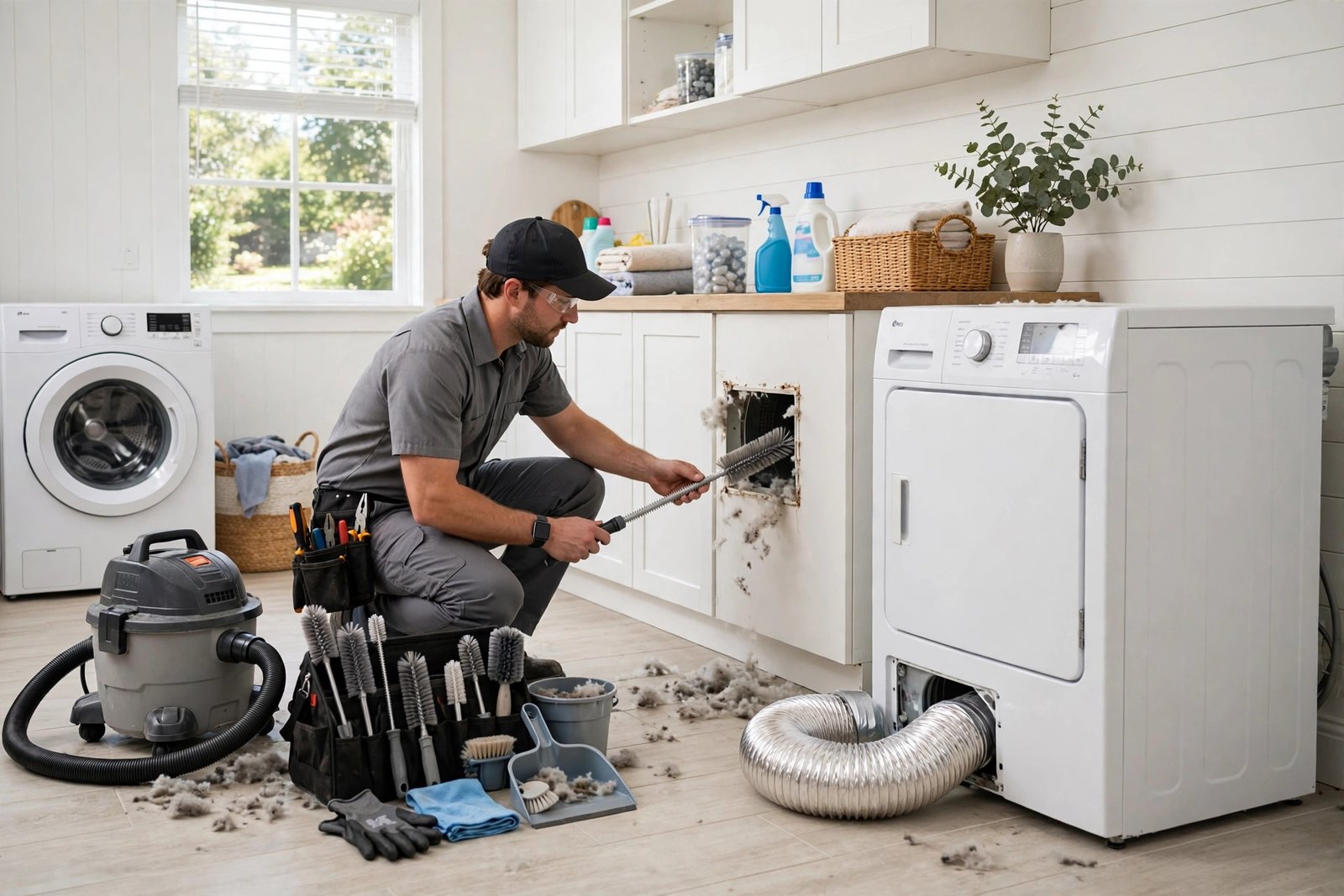
For a straightforward vent, this is a manageable DIY job. Unplug the dryer and, for gas models, turn off the gas supply. Pull the dryer away from the wall and disconnect the duct from the back of the machine. Vacuum the duct opening on the dryer itself, then use a vent cleaning kit — a flexible rotary brush on extendable rods, widely available and inexpensive — working it through the duct from both ends if you can reach them. Vacuum up the dislodged lint as you go, and finish by cleaning the exterior vent cover, checking that the flap moves freely and is not caked with lint.
Reassemble carefully: use metal foil tape, not screws, on duct joints, since screw tips inside the duct catch lint. Push the dryer back without kinking or crushing the duct, and run a short empty cycle to check that air is flowing strongly from the exterior vent. The whole job typically takes thirty to sixty minutes, and the amount of lint that comes out of a year-old vent surprises almost everyone the first time.
Call a professional when the run is long, goes through the roof, passes through walls you cannot access, or has not been cleaned in years. Professionals use high-powered vacuums and rotary systems that clean the full length, and they can spot problems like crushed ducting, disconnected joints, or bird nests in the exterior vent. The cost is modest compared with a dryer repair or, obviously, a fire, and an annual professional clean is the right choice for complex installations. For the step-by-step version of this job, see our guide to how to clean a dryer vent.
A Maintenance Schedule You Can Actually Keep
Clean the lint filter. Wash it in soapy water monthly to remove softener film.
Check the exterior vent flap and vacuum the duct opening behind the dryer.
Full vent cleaning for large families, pet owners, and long or bent vent runs.
Full vent cleaning as the minimum for every household, plus an inspection of the whole duct.
Clean the vent before first use. You have no idea when the previous occupants last did it.
Longer drying, excess heat, burning smell, or a stuck vent flap means clean now, not on schedule.
Pair the schedule with the rest of your appliance routine. A dryer vent check sits naturally alongside cleaning the washing machine filter, descaling the kettle, and checking the fridge coils — the small jobs that keep appliances efficient and safe. If your washing machine is also showing strain, our guide to how to clean a washing machine covers the equivalent routine for the other half of the laundry room.
Frequently Asked Questions
How often should you clean your dryer vent?
At least once a year for every household. Clean every six months if you have a large family, pets, or a long or bent vent run, and every three to four months for very heavy use. The lint filter itself must be cleaned after every load.
Can a dirty dryer vent really cause a fire?
Yes. Lint is highly flammable, and a blocked vent traps heat inside the dryer. Dryer fires are a leading cause of laundry-room fires, and failure to clean is the leading factor in them. Regular vent cleaning is one of the most effective fire-prevention steps in the home.
Is cleaning the lint filter enough?
No. The filter catches only part of the lint; the rest passes into the duct and accumulates there. Filter cleaning is essential but it does not replace vent cleaning, which reaches the duct, hose, and exterior vent.
Can I clean a dryer vent myself?
Yes, for short, accessible vents, using a rotary brush kit and a vacuum. Hire a professional for long runs, roof vents, ducts inside walls, or vents that have not been cleaned in years — they have the equipment to clean the full length safely.
How do I know if my dryer vent is clogged?
Clothes take longer to dry or need extra cycles, the dryer feels hotter than usual, the laundry room gets warm, the exterior vent flap barely opens, lint is visible around the outside vent, or there is a burning or musty smell. Any of these means clean the vent before the next load if possible.
Put It on the Calendar Today
Dryer vent cleaning is the rare home task that is cheap, quick, and genuinely safety-critical. Pick a date — today if your vent has not been cleaned in over a year — and set a recurring reminder for the interval that fits your household: six months for busy homes, twelve for quiet ones. Clean the filter after every load, watch for the warning signs, and never run a struggling dryer unattended.
Your dryer will dry faster, use less energy, and last longer. More importantly, you will have removed one of the most preventable fire risks in the house. That is a very good return on an hour a year.