
November Garden Jobs to Prepare for Winter
November is the garden’s most underrated month. The showy work of spring and summer is over, but what you do now decides how your garden survives winter — and how quickly it wakes up in spring. A few focused weekends of protection, tidying and planting in November can save you dead plants, broken pots, flooded lawns and a mountain of catch-up work in March. The trick is knowing which jobs genuinely matter and which can wait.
This guide covers the November essentials in priority order: protecting tender plants before the first hard frost, planting bulbs for spring, tidying without destroying wildlife habitat, and shutting down the garden’s water and tool systems for winter. Do these, and your garden will not just survive winter — it will be ahead of schedule when spring arrives.
Key Takeaways
- Protect tender plants BEFORE the first hard frost — fleece, mulch and moving pots under cover.
- November is the last good window for planting spring bulbs: tulips, daffodils, crocus and alliums.
- Tidy selectively: clear diseased material and slippery paths, but leave seed heads and leaf piles for wildlife.
- Mulch beds 5–8 cm deep to insulate roots and suppress winter weeds.
- Drain hoses, outdoor taps and irrigation before a freeze bursts them.
- Clean and oil tools now — sharp, dry tools stored properly last years longer.
Protect Tender Plants Before the First Hard Frost
This is November’s most urgent job, because frost does not wait for your schedule. Tender plants — pelargoniums, fuchsias, dahlias, citrus, agaves, banana plants and anything you bought as a “patio” plant — need protection or a move indoors before temperatures drop below freezing for a sustained night. The simplest protection is horticultural fleece: wrap it loosely around the plant (never tight plastic, which traps moisture and causes rot) and secure it so wind cannot strip it off. For plants in pots, the pot itself needs insulation too — bubble wrap around the pot, or moving the pot against a sheltered wall, protects roots that would otherwise freeze solid.
Dahlias deserve special mention: after the first light frost blackens their foliage, lift the tubers, dry them for a few days, and store them in a frost-free shed or garage in dry compost or sawdust. It sounds like effort, but it is the difference between buying new dahlias every spring and keeping the same plants for years. Perennials that are borderline hardy in your area benefit from a thick mulch over the crown — 5–8 cm of bark, compost or straw — which insulates the roots even when the top growth dies back. For the wider home winter-prep picture, our guide to winterizing your home covers the house side of the same freeze.
Plant Bulbs Now for Spring Colour
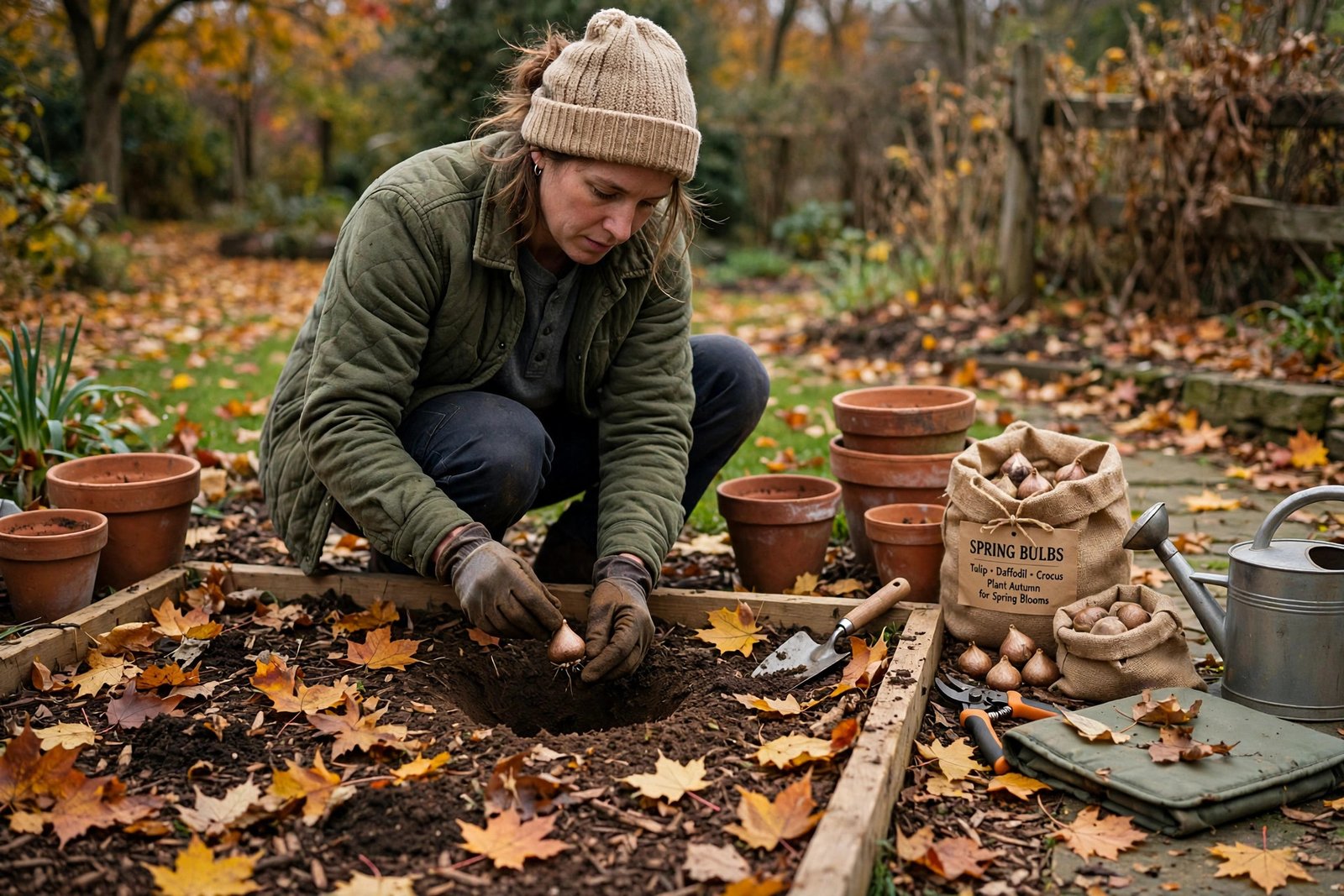
November is the last reliable month for planting spring-flowering bulbs, and tulips actually prefer it — they need cold soil to root well and are less prone to disease when planted late. Plant daffodils, crocus, hyacinths, snowdrops and alliums now, at roughly three times the bulb’s own depth, in well-drained soil or pots. In heavy clay, add grit to the planting hole; bulbs rot in waterlogged soil far more often than they fail from cold.
For maximum impact, plant in drifts and layers rather than lonely rows: a “lasagne” pot — large bulbs at the bottom, medium in the middle, small on top — gives weeks of successive flowering from a single container. Mark where you planted, so spring digging does not accidentally destroy them, and water once after planting if the soil is dry. Then leave them alone: bulbs need winter cold to trigger flowering, so a cold, quiet winter is exactly what they want. If your November task list also includes the house, our November home maintenance checklist pairs garden jobs with indoor ones.
Tidy Selectively — Not Ruthlessly
The old advice was to cut everything down in autumn. Modern gardening knows better: many plants and animals depend on what looks like “mess”. Seed heads feed birds through winter, hollow stems shelter overwintering insects, and leaf piles are habitat for hedgehogs and frogs. So tidy with a purpose, not a scorched-earth policy. Do clear: diseased plant material (which harbours infection over winter), fallen leaves from lawns (where they smother grass) and paths (where they become slippery), and anything blocking drains or gutters.
Do leave: ornamental grass seed heads, which look beautiful frosted and feed birds; a corner pile of leaves under a hedge for wildlife; and perennial stems until late winter, when new growth appears and you can cut back cleanly. Rake leaves off the lawn onto beds instead — they make excellent free mulch. And compost everything healthy: a November compost heap, built with a mix of green and brown material and kept damp, will quietly turn into spring’s best soil improver. For a year-round structure to these jobs, our seasonal home maintenance checklist keeps garden and house tasks in one place.
Lawn, Water and Tool Shutdown
Lawns need one last mow in November if growth continues, on a high cut setting and only when the grass is dry — never mow frosty or waterlogged grass. Clear moss and aerate compacted areas with a fork if you have time; a lawn that drains well in November survives winter waterlogging far better. Avoid walking on frozen lawns, which damages the grass blades and leaves footprints that show in spring.
Water is the other shutdown job, and it is the one people forget until a pipe bursts. Drain garden hoses and store them coiled indoors. Turn off outdoor taps from the inside stopcock and drain the external pipe, or fit an insulated tap cover. Empty and store watering cans, and if you have an irrigation system, drain or blow it out before a hard freeze. Clean tools now too: scrape off soil, sharpen blades, wipe metal with an oily rag, and store everything dry. Tools cleaned in November are a pleasure to pick up in March; tools left dirty all winter are a chore to rescue. Our exterior home maintenance guide covers the wider outdoor shutdown, including gutters and drains.
November Garden Tips
Plastic traps moisture and causes rot. Horticultural fleece insulates while letting the plant breathe.
Thick mulch insulates roots and suppresses weeds. Keep it off plant stems to avoid rot.
Tulips prefer November planting in cold soil. Three times the bulb’s depth, with grit in clay.
Seed heads, hollow stems and leaf piles shelter birds, insects and hedgehogs all winter.
Hoses, taps and irrigation burst in a freeze. Drain them now, not after the first cold snap.
Scrape, sharpen and oil tools before storage. March-you will be grateful.
Frequently Asked Questions
Is November too late to plant spring bulbs?
No — November is the last good window, and tulips actually prefer late planting in cold soil. Plant before the ground freezes solid, at three times the bulb’s depth.
How do I protect tender plants from frost?
Wrap with horticultural fleece (never plastic), insulate pots with bubble wrap or move them to a sheltered wall, and mulch the crowns of borderline-hardy perennials. Move the most tender plants indoors.
Should I cut everything back in November?
No. Clear diseased material and leaves from lawns and paths, but leave seed heads, grasses and perennial stems — they feed wildlife and protect the plants themselves.
Do I need to drain outdoor taps for winter?
Yes. Turn off the inside stopcock, drain the external pipe, or fit an insulated cover. A burst outdoor pipe is one of winter’s most common and preventable repairs.
Can I still mow the lawn in November?
Yes, if grass is still growing and conditions are dry — use a high cut and never mow frosty or waterlogged grass. Avoid walking on a frozen lawn.
Two Weekends, a Better Spring
November garden work is not glamorous, but it is the highest-return gardening you will do all year. One weekend for protection and bulbs, one for tidying and shutdown, and your garden enters winter defended, planted and organised. When spring arrives and your neighbours are replacing dead plants and clearing winter damage, yours will simply wake up — bulbs first, then everything else, right on schedule. That is the quiet reward of a November well spent.