
Moving With Kids Tips: How to Make Moving Day Calm, Fun, and Tear-Free
For adults, moving is a logistics project: boxes, quotes, contracts, and a truck. For children, it is something much bigger. Their home is their whole world — the bedroom where they feel safe, the friends next door, the school route they know by heart, the park where they play. When that world is packed into boxes, even the most easy-going child can feel anxious, sad, or unsettled, and those feelings often arrive as tears, tantrums, clinginess, or sudden silence.
The good news is that children cope with moving remarkably well when they understand what is happening, feel some control over it, and see that the important things — their people, their routines, and their favourite belongings — are coming too. This guide gives you practical, age-tested tips for every stage: telling the kids, packing together, surviving moving day itself, and settling into the new home and school with confidence.
Key Takeaways
- Tell children early, honestly, and positively — surprises and overheard conversations create more anxiety than facts.
- Let kids pack their own special box of favourite toys, books, and comfort items that travels with you.
- Keep routines steady through the move: mealtimes, bedtime stories, and familiar rituals anchor children.
- Pack a moving-day survival kit per child with snacks, entertainment, chargers, and a change of clothes.
- Arrange childcare or a trusted helper for moving day if possible — it is safer and calmer for everyone.
- Set up children’s rooms first in the new home so they have a familiar, safe space from night one.
Tell Them Early — and Tell Them Well
The single most common mistake parents make is waiting too long to tell the children, hoping to spare them worry. In practice, children almost always sense that something is changing long before they are told — they hear phone calls, see estate agents, notice boxes appearing — and an unexplained change feels far scarier than an explained one. Tell them as soon as the move is reasonably certain, in a calm family conversation, and frame it positively without pretending there are no downsides.
Keep the language simple and concrete. Younger children need to hear where you are going, what their new room will look like, and what stays the same: “We are moving to a new house near the park. You will have your own room, your bed and toys are coming with us, and we will still read stories every night.” Older children and teenagers need more honesty and more respect: explain why the move is happening, acknowledge that leaving friends and school is hard, and invite their opinions about the new home, the new school, and the timing. Teenagers who feel a move was imposed on them without discussion are far more likely to resent it.
Let children ask questions, and answer them truthfully even when the answer is “we don’t know yet.” Visit the new home and neighbourhood together if you can, or show photos and videos and explore the area on a map. Point out the positives that matter to them specifically — a bigger garden, a park nearby, a bedroom they can decorate — rather than adult positives like a shorter commute. If you are moving to a new school, arrange a visit before the first day wherever possible; walking the corridors and meeting a teacher in advance turns an unknown place into a known one.
Pack Together: Give Kids Real Jobs
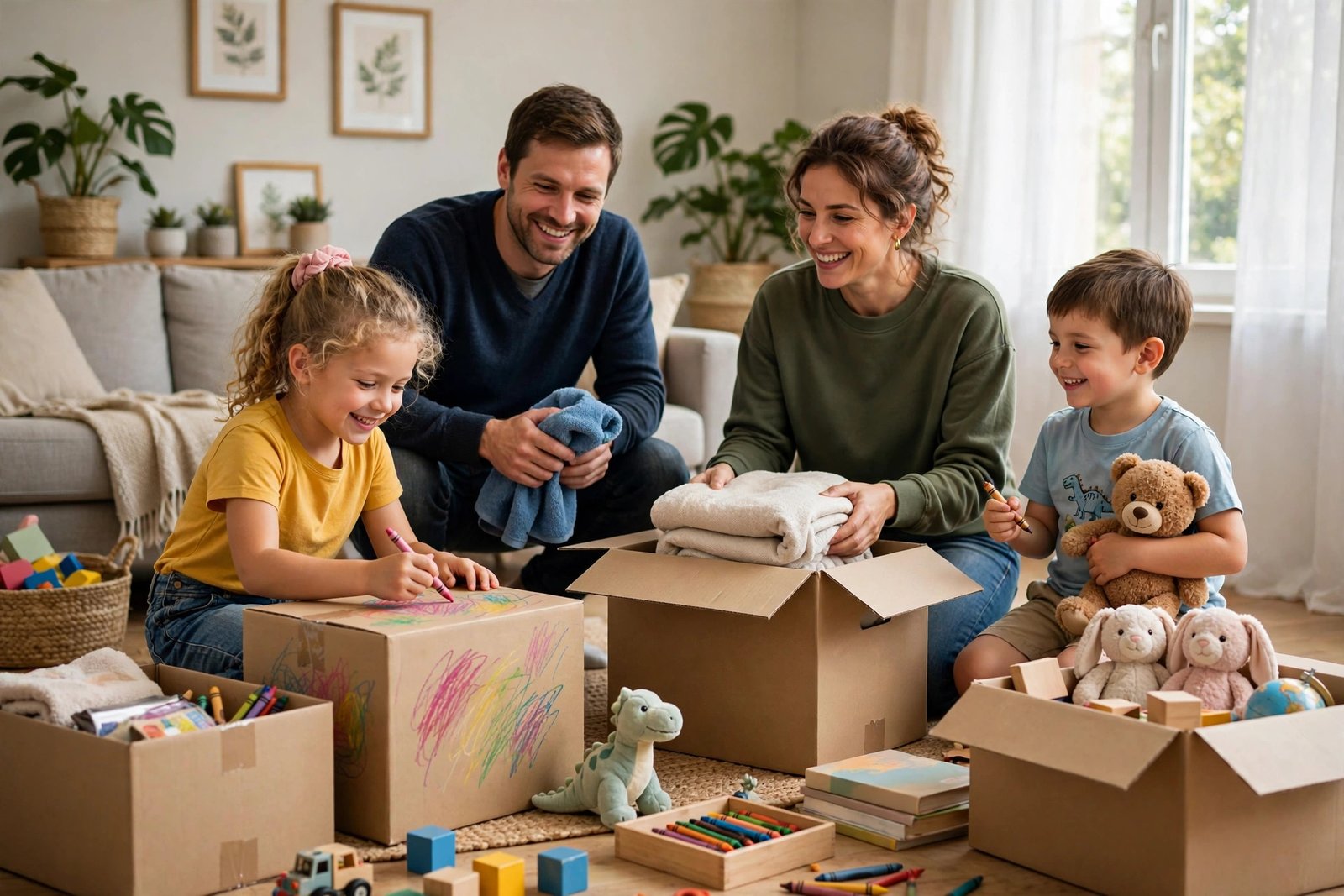
Packing is where children can move from anxious bystanders to proud participants, but only if their jobs are real. Inventing busywork fools nobody. Give each child their own box — decorated, labelled with their name, and filled by them — for the things they care about most: favourite toys, books, blankets, and comfort items. This box travels with you in the car, not on the truck, and it is opened first in the new home. Knowing their most precious things are safe and close by removes a huge source of moving anxiety.
Let children make genuine choices about their belongings. Sorting toys into keep, donate, and give-to-a-friend piles teaches decision-making and lightens the load, but respect their decisions: forcing a child to give away a beloved toy “because we are moving” creates resentment that outlasts the move. For younger children, make sorting a game with a timer and music. For older children, let them pack and label their own room boxes, and let them choose the colour scheme or layout of their new room. Ownership over small decisions builds confidence for the bigger change.
Protect the comfort items at all costs. The worn teddy, the special blanket, the bedtime book — these are not clutter, they are emotional anchors, and they should never be packed in a sealed truck box “just for moving day.” Keep them accessible throughout the entire process, including the car journey and the first night. If a comfort item is accidentally packed, you will discover its importance at bedtime, which is the worst possible moment. The same principle applies to routines: keep bedtime stories, morning rituals, and favourite meals going through the chaos, because routine is what tells a child that life is still normal even when the house is full of boxes.
Moving Day Survival: Safety, Snacks, and Sanity
Moving day itself is the hardest part for children, and the kindest option, where possible, is to arrange for them to be elsewhere: with grandparents, a trusted friend, or a babysitter. A home full of movers, open doors, heavy boxes, and a reversing truck is not a safe or enjoyable place for a small child, and parents who are directing a crew cannot supervise properly at the same time. If childcare is not possible, designate one adult whose only job is the children, and set up a safe room away from the loading route with entertainment, snacks, and a door that stays closed.
Whether children are present or with a carer, pack a moving-day survival kit for each child. Include snacks and water, a change of clothes, pyjamas, toiletries, medication, phone or tablet chargers, headphones, colouring books or games, and their comfort item. Add anything they will need before the boxes are unpacked — and remember that unpacking takes days, not hours. Snacks matter more than they sound: hungry children are unhappy children, and moving day meals are often late, improvised, or forgotten entirely.
Prepare children for what moving day will look like so nothing shocks them: strangers in the house, their furniture disappearing into a truck, rooms becoming empty. Walk them through it the night before, and give them a small role if they are present, such as labelling boxes or doing a final check of empty rooms with you. Say goodbye to the old home properly. A last walk through the empty rooms, a photo together on the doorstep, and a chance to say what they will miss gives children closure. Rushing out without a goodbye leaves the old home feeling unfinished in a child’s mind.
Settling In: Rooms, Schools, and New Friends
The first night in the new home sets the tone for everything that follows, so prioritise children’s rooms above almost everything else. Assemble beds first, unpack their special boxes, put up familiar bedding and curtains, and recreate the bedtime routine exactly as it was. A child who sleeps well on night one wakes up feeling that the new house is already home. Leave adult spaces — the office, the garage, the spare room — for later. The living room and kitchen can function imperfectly for a week; a child’s bedroom should feel finished on day one.
School transitions need the same deliberate care. Inform the old school early, collect records, books, and contact details for friends, and help children exchange numbers or addresses with close friends before leaving. At the new school, introduce yourselves to teachers, explain the move, and ask about buddy systems or welcome routines. Expect a settling-in period of several weeks, and watch for signs of struggle: changes in appetite, sleep, mood, or school enthusiasm. Most children adjust well, but a child who is still deeply unhappy after a month or two may benefit from a conversation with the school counsellor or their teacher.
Help children build a new life actively rather than waiting for it to happen. Explore the neighbourhood together in the first week: find the park, the shop, the library, and the best route to school. Join local clubs, sports teams, or activities that match their interests, because shared activities are the fastest route to new friendships. Keep old friendships alive too — video calls, letters, and planned visits reassure children that moving does not mean losing people. And celebrate the move: a first pizza night in the new home, a housewarming for their friends, or a small treat for helping makes the new house feel like a happy place from the start.
Practical Tips by Age
Keep explanations short and concrete, keep comfort items close, and keep routines identical. Expect clinginess and sleep disruption — it passes.
Give them packing jobs, let them decorate their box, and visit the new school and park together before moving day.
Let them choose their new room layout and help plan the move. Acknowledge friendship worries honestly and help them stay in touch.
Involve them in decisions, respect their feelings about leaving friends, and give them space to grieve the old home without minimising it.
Snacks, water, clothes, pyjamas, medication, chargers, entertainment, and the comfort item — packed per child, travelling in the car.
Children’s beds made, special boxes opened, bedtime routine unchanged. A good first night makes the whole move feel safe.
For the wider logistics of the move itself, our guides to moving checklist and how to prepare for movers to pack cover the adult side of the plan, while moving with pets tips helps if animals are part of the family too. And if you are still deciding how much help to hire, do movers pack for you explains what a full packing service actually includes.
Frequently Asked Questions
How do I tell my kids we are moving?
Tell them early, calmly, and honestly, in a family conversation. Explain where you are going, what stays the same, and what will be exciting for them. Let them ask questions and answer truthfully, even when the answer is that you do not know yet.
Should kids be present on moving day?
If possible, arrange childcare with a trusted person — moving day is busy, dusty, and unsafe for small children. If they must be present, designate one adult to supervise them in a safe room away from the loading route.
What should kids pack for moving day?
A personal survival kit travelling in the car: snacks, water, a change of clothes, pyjamas, toiletries, medication, chargers, entertainment, and their comfort item. Their own decorated special box of favourite toys should travel with you too.
How long does it take kids to settle after a move?
Most children settle within a few weeks once routines are restored and new friendships begin. A good first night, a finished bedroom, and early school and club involvement all speed the process. Seek school support if unhappiness persists beyond a month or two.
How can I help my child keep old friends after moving?
Exchange contact details before leaving, schedule regular video calls, and plan return visits. Reassure children that moving changes the address, not the friendship — and help them build new friendships through clubs and activities at the same time.
They Will Remember How the Move Felt
Years from now, your children will not remember how many boxes there were or whether the truck arrived on time. They will remember whether they felt scared or excited, included or ignored, and whether their new bedroom felt like home on the first night. Those are the things you control, and they cost nothing: an early honest conversation, a decorated box of their own, a comfort item kept close, and a bedtime story told exactly as always in a brand-new room.
Start with the conversation, then the special box, then the first-night plan. Do those three things well and the rest of the move — the boxes, the truck, the unpacking — becomes something your family handles together, rather than something that happens to your children.